 WhatsApp
 Emergency:
  WhatsApp













Subscribe to our
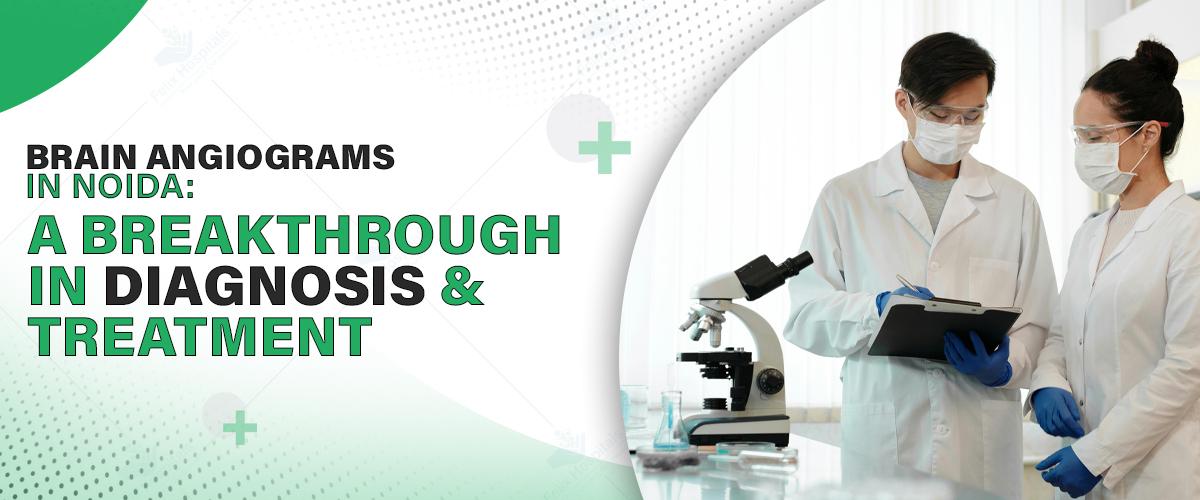
Brain angiograms in Noida have become a game-changing tool on the route to getting the proper diagnosis for good neurological care. This new imaging technique gives doctors a clear view of the brain's blood veins, which helps them find and treat critical diseases like strokes and aneurysms early on, before they may get worse. If you're in Noida and you're having sudden headaches, blurry vision, or strange neurological episodes, your doctor may prescribe a cerebral angiography as the next step in figuring things out. This blog tells you about the procedure, brain angiogram test preparation, and recovery.
Go with Felix Hospital if you want reliable brain scans. Call at +91 9667064100.
A brain angiography is a type of medical imaging that shows the blood arteries in the brain. It uses X-ray equipment and a contrast dye to make clear pictures that let doctors check the health of the blood arteries and find any problems or abnormalities. This imaging method, which is sometimes called a cerebral angiography, shows us the blood veins in the brain. This helps find vascular problems like:
Aneurysms in the brain
Arteriovenous malformations, or AVMs for short,
Stroke, whether it's ischemic or hemorrhagic
Tumors or lesions in blood vessels
A neurologist or an interventional radiologist usually does a brain angiography in Noida. The method involves carefully putting a narrow catheter into a blood vessel, generally in the groin or wrist, and guiding it toward the brain. Next, doctors inject a contrast dye that lets them see crisp and detailed X-ray or CT images of blood flow in the brain.
The real strength of brain angiography is in its clear and accurate information. A brain angiography gives a complete picture of the vascular structure, which is important for pinpointing: unlike non-invasive scans like MRI or CT:
Blockages or narrowing in blood vessels
The chance that an aneurysm will burst
Strange connections between veins and arteries
Tumors get blood from blood vessels.
Brain angiograms in Noida now help doctors diagnose and arrange therapy for patients with complicated neurological diseases faster and more safely, thanks to better access to contemporary equipment.
The brain angiography procedure is made up of a set of carefully planned steps that put the safety of the patient and accurate results first:
You could be asked to stop eating for a few hours, stop taking some medications, and have blood tests done to check for any allergies or kidney problems that might be caused by the dye.
Local anesthesia is usually used, although there are times when general anesthesia may be needed.
A thin tube is carefully put into a big artery, which is usually in the groin area. X-ray imaging helps precisely route this catheter to the blood arteries in the brain.
Once everything is in place, a contrast dye is carefully administered to make the blood vessels shine out. The dye moves through the apparatus and takes pictures.
After the catheter is removed, gentle pressure will be put on the place of insertion, and you may be told to rest flat for a while.
Before getting a brain angiogram you should know about the and after the surgery, you can expect the following:
You shouldn't eat or drink anything for 6 to 8 hours before your test.
Please tell your doctor about any sensitivities you have or medications you are taking.
We'll do blood tests to see how well your blood clots and how well your kidneys work.
Please lie down for a few hours to help stop any bleeding.
For at least 24 to 48 hours, try not to do any heavy lifting or hard work.
It's very natural for the area where the needle went in to hurt or swell a little.
Please tell someone right away if you feel dizzy, numb, or have chest pain.
The best neurology hospitals in Noida that do brain angiograms also offer good aftercare and follow-up strategies to help with a smooth recovery.
These balloon-like bumps in the brain's arteries can rupture and lead to significant bleeding. Angiography is very important for finding and accurately evaluating them so that a good treatment plan may be made.
AVMs are groups of strange blood vessels that stop blood from flowing normally. Brain angiograms are vital for diagnosing and treating these issues with surgery or endovascular therapy.
In cases of ischemic stroke, angiography shows us clogged or restricted blood vessels, and in cases of hemorrhagic stroke, it shows us where the bleeding is coming from. This lets us act quickly and make important decisions. Modern hospitals in Noida today have powerful neuroimaging facilities and competent neurology teams, which makes brain angiograms safer and easier to get than ever before.
Choosing a trustworthy clinic for your brain angiography in Noida can make a big difference in your healthcare experience by making sure you get the right diagnosis and treatment right away.
Your doctor might prescribe a brain angiography if you have certain health problems.
Severe, sudden headaches
Neurological symptoms that are hard to understand, include confusion, weakness, and loss of eyesight.
Experiences with having a stroke or a mini-stroke (TIA)
There is a history of aneurysms or AVMs in the family.
Worries about a probable brain tumor or blood vessel problem
Neurologists in Noida frequently look into different imaging modalities before moving forward. They will do a cerebral angiography if they need to achieve a better diagnosis.
Need some help from a professional?
If you need a specialized brain angiography in Noida, contact the neurology team at Felix. Call +91 9667064100 Your mind needs the greatest care. Start with a correct diagnosis.
Brain angiograms are a big step forward in understanding and dealing with complicated neurological problems. Brain angiograms in Noida are becoming more and more important as technology improves specialized care. Getting a brain angiography on time can really help save lives, whether it's detecting an AVM, spotting an aneurysm, or looking into the reasons of a stroke. Getting a brain angiography in Noida is now safer and easier for everyone because of the great facilities and expert neurologists. Felix Hospital offers comprehensive brain angiography treatments with expert staff and cutting-edge equipment.
Q1. Can I have brain angiography at Felix Hospital in an emergency?
Ans: Definitely! Felix Hospital is ready to do emergency brain angiograms for things like strokes or ruptured aneurysms so that people can get a speedy diagnosis and treatment.
Q2. Can a brain angiography find brain tumors?
Ans: While it does not directly diagnose cancers, brain angiography is crucial for planning surgeries or other treatments by assessing the blood flow to the tumor.
Q3. What alternative tests may you get instead of a cerebral angiogram?
Ans: You can use non-invasive tests like MRI angiography or CT angiography, but these might not provide you as much detail. The doctor at Felix Hospital is there to assist you find the best option for you.
Q4. Is this surgery safe for people who are older?
Ans: Yes, the team at Felix Hospital takes the time to carefully look at risk factors like kidney function and other health issues before moving forward.
Q5. Should I ask someone to go with me to the test?
Ans: Yes, it's wise to have someone with you on the day of your angiogram since you may be sedated and need monitoring.

Advanced neurosurgery improves treatment for brain and spine disorders with better outcomes.

Experiencing tingling in your hands or feet? It could signal a nerve-related issue. Consult our expert neurologists at Felix Hospitals to find the cause and get the right treatment today.
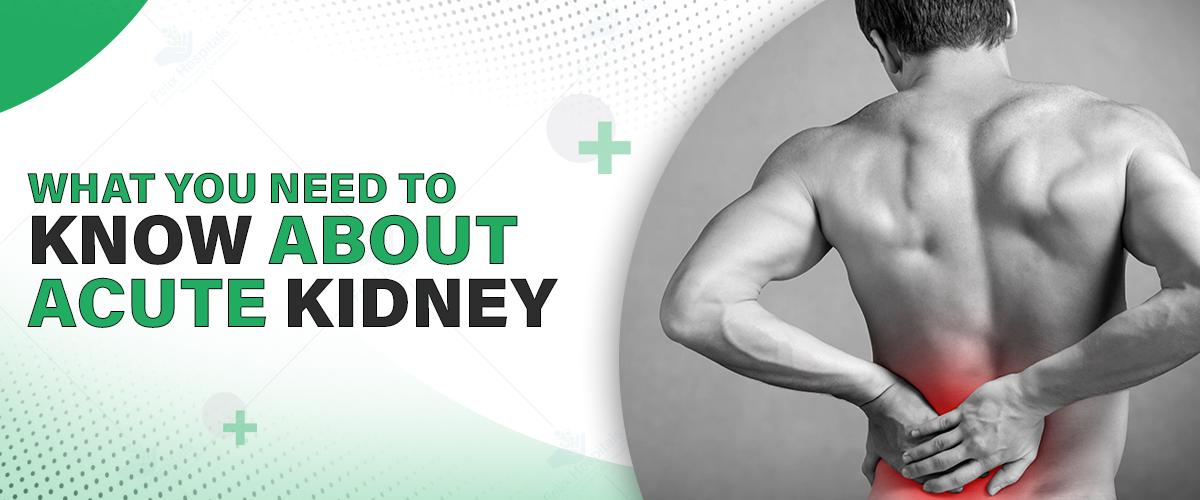
Acute kidney failure, also known as acute renal failure or acute kidney injury (AKI), is a serious medical condition in which the kidneys suddenly stop working properly. It is a serious illness that has to be treated right away by a doctor. The prognosis depends on how quickly the infection, injury, or sudden drop in blood flow to the kidneys is diagnosed and treated.
People living in and around Delhi-NCR can now get acute kidney failure treatment in Noida more easily than ever before because hospitals like Felix Hospital have state-of-the-art equipment and offer personalized rehabilitation plans.
If you are experiencing renal problems, phone +91 9667064100. Start early for a better result.
Acute renal failure occurs when the kidneys stop working suddenly, usually over a short period of time like hours or days. It develops quickly and can be stopped if treated right once. Chronic kidney disease, on the other hand, becomes worse over time.
The kidneys assist maintain blood pressure in check, balancing electrolytes, and getting rid of waste. When they don't work right, toxins and extra water build up in the body, which can cause problems with the heart, lungs, and other important organs.

Acute kidney failure can occur due to various factors. The most common reasons are:
Severe blood loss or dehydration, which is usually caused by surgery or trauma
Infections, such as sepsis, which cuts off blood supply to the kidney.
Drugs: Some antibiotics, painkillers, and dyes for imaging tests
Obstruction of the urinary tract can happen because of kidney stones, tumors, or an enlarged prostate.
Heart failure or low blood pressure can cause the kidneys to not get enough blood.
Finding out what caused the acute renal failure is the key to treating it successfully. The faster it is found and treated, the better the chances of recovery.
Not always the signs of acute renal damage are there. However, as the injury gets worse, the following symptoms may appear:
Less pee or no urine at all
face, ankles, or legs swelling
Feeling weak and tired
Trouble breathing
Feeling sick and throwing up
Confusion or trouble concentrating
Heartbeat that is not normal
If you or someone you care about has these symptoms, especially after a severe surgery, trauma, or significant infection, you should see a nephrologist or a medical doctor straight away for emergency care.
A diagnosis is made by looking at the person's medical history, doing a physical exam, and running tests in a lab. These are:
Blood tests to check the levels of urea and creatinine
Tests on urine to look for problems
Using ultrasound to find problems
In rare situations, a kidney biopsy is done to find out what is wrong. Finding out about kidney problems early helps stop harm that can't be fixed. Hospitals in Noida that treat acute renal failure use cutting-edge diagnostic technologies to do tests quickly and accurately.
The kind and severity of Acute kidney failure determine how it will be treated. It could include:
1. Going to the hospital
Most people need to stay in the hospital. Doctors always assess how well the kidneys are working, the levels of electrolytes, and the amount of fluid in the body.
2. Medicines
Doctors may suggest the following, depending on the situation:
Diuretics to help with too much fluid intake
Antibiotics to treat infections
Drugs that keep calcium and potassium levels in check by balancing electrolytes
Blood pressure medicines if needed
These are usually the initial things that doctors do to treat acute renal failure in Noida. After the initial tests, doctors would provide additional care tailored to the patient's specific needs.
3. Dialysis
If the kidneys are unable to filter waste, the only choice is dialysis for acute renal injury. In this, excess fluids, salts, and poisons are taken out of the circulation for a short time.
There are two kinds of dialysis:
Hemodialysis is a machine that filters blood.
Peritoneal dialysis uses the lining of the abdominal cavity.
Most of the time, dialysis is only needed for a brief time until the kidneys start working again.
The good news is that a lot of patients with Acute kidney failure get better quickly with the right care.
After treatment, care includes:
Regular visits to a nephrologist
A healthy diet for the kidneys
Keeping blood sugar and blood pressure in check
Stay away from drugs that are bad for your kidneys.
Patients must stay under medical care as they heal, especially if they already have diabetes or high blood pressure.
It is important to understand the financial side of things before getting treatment. The cost of treating acute kidney failure in Noida, or more properly, the cost of renal treatment, can be very different:
First blood tests and diagnoses: ₹2,000–₹6,000
The cost of medicine and a hospital stay ranges from ₹15,000 to ₹40,000, depending on how bad illness is.
Dialysis sessions cost between ₹2,500 and ₹4,000 apiece, if needed.
Intensive care or critical care unit: ₹10,000 to ₹25,000 per day
The real cost of treatment of acute kidney failure in Noida will depend on the hospital, the treatment plan, and the patient's condition. Only ask a doctor for a personalized estimate.
To get better recovery from acute kidney injury, making long-term changes to your lifestyle can help:
Drink a lot of water, but not too much.
To keep your blood pressure in check, eat less salt.
A dietician can help you cut back on protein.
Don't take painkillers that you don't need, such NSAIDs.
Preventive care and education are very helpful for protecting renal function over the long run.
Do you need help right now?
Call Felix Hospital right now for expert nephrology care. Because your kidneys deserve the best. Call +91 9667064100.
Acute renal failure is an emergency, but with quick treatment, full recovery is typically guaranteed. At hospitals in Noida that treat acute renal failure, like Felix Hospital, professionals ensure that patients receive the correct care from diagnosis to recovery.
You need to find a good nephrology doctor in your neighborhood for treating acute kidney failure. For everything from emergency dialysis for acute liver injury to personalized rehabilitation plans, the right assistance is vitally important.
Q1. Can dehydration cause acute renal failure all by itself?
Ans: Yes, when someone is really dehydrated, it can slow down blood flow to the kidneys, which can lead to acute renal damage.
Q2. Is acute renal failure more common in older people?
Ans: Definitely, older people are at a higher risk since their kidneys naturally stop working as well as they used to, and they may also have other health problems.
Q3. Do all patients with acute renal failure need dialysis?
Ans: Dialysis is only necessary for people who have a lot of waste buildup, too much fluid, or very dangerous electrolyte abnormalities.
Q4. Do they check your kidneys after you leave the hospital?
Ans: Yes, it's really important to keep up with regular kidney function testing to keep an eye on recovery and avoid any relapse.
Q5. Can taking over-the-counter drugs cause acute renal failure?
Ans: For sure, using too many NSAIDs and some antibiotics can hurt how well your kidneys work.
Find out the best methods to pass kidney stones quickly, ease pain, and protect your kidneys with proven home remedies and advanced treatment options.
In Noida hospitals, recognized for being among the best heart health hospitals in Noida, are at the forefront of offering critical care for heart-related issues.
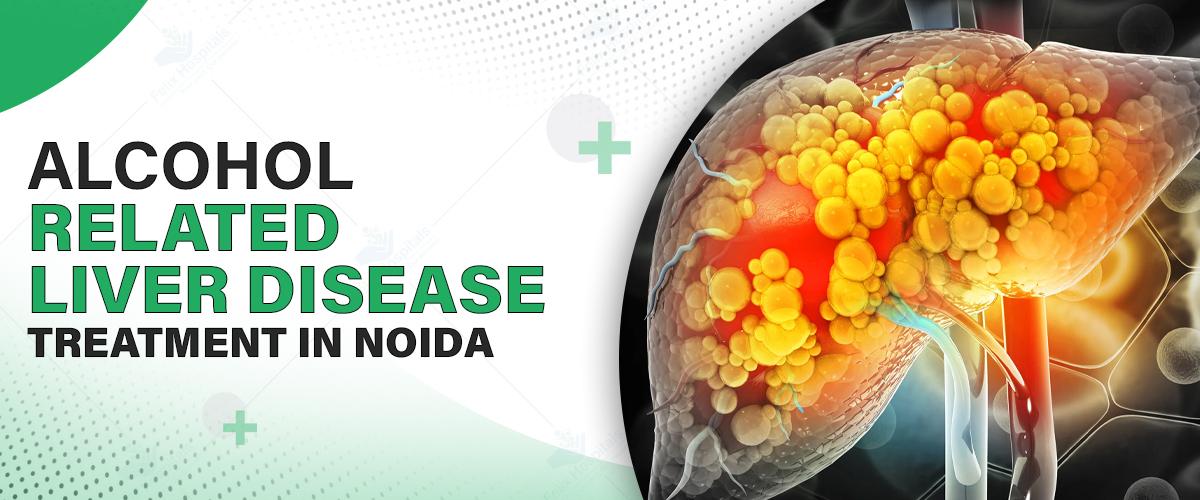
Alcohol-related liver disease (ALD) is becoming an increasing health issue in India, as lifestyle choices and extended alcohol consumption lead to liver damage among people of all ages. It's encouraging to see that alcohol related liver disease treatment in Noida has progressed significantly, places like Felix Hospital are leading the way with their modern diagnostics, tailored therapies, and ongoing support for recovery. No matter if you're noticing the first signs or dealing with more serious liver problems, getting help when you need it can truly change everything.
Worried about how drinking might hurt your liver? Get expert help at the Best Gastroenterology Hospital in Noida. Specialized care for Alcohol Related Liver Disease (ARLD) includes liver detox, medications, and advanced therapies. Call +91 9667064100 for consultation.
Alcoholic Liver Disease encompasses a range of liver issues that arise from long-term and heavy drinking. The liver plays a vital role in keeping us healthy by breaking down alcohol and detoxifying harmful substances. However, excessive drinking over time can put a strain on the liver, leading to inflammation, fat buildup, and ultimately, lasting damage.
Liver damage takes time to develop; it doesn't occur all at once. Often, individuals don't realize things are getting worse until they start experiencing significant symptoms. Thankfully, when addressed early on, particularly in the initial stages, ALD can be treated and, in some instances, even reversed.
The progression of alcoholic liver damage unfolds gradually, with stages of alcoholic liver damage:
Fatty Liver (Steatosis): A preliminary and reversible phase characterized by the accumulation of fat in liver cells.
Alcoholic Hepatitis: A condition characterized by inflammation that can show up with symptoms like jaundice, discomfort, or fever.
Cirrhosis: The final stage, characterized by permanent scarring and a decline in liver function.
While not everyone goes through every stage, ongoing drinking can heighten the risk of liver failure.
In the beginning stages, ALD might not show any signs at all. As damage progresses, the signs become increasingly noticeable:
When the skin or eyes take on a yellowish hue, it's known as jaundice.
Ongoing tiredness
Feeling less hungry or experiencing nausea
Swelling in the legs or belly
Changes in thinking or confusion (hepatic encephalopathy)
At Felix Hospital, our doctors suggest getting screened early if you have a background of heavy alcohol use, even if you think your symptoms are minor, which helps in getting Alcohol-related liver disease treatment in Noida more efficient
Alcohol is the main culprit behind ALD, but there are additional factors that can speed up its development. Here are some examples:
Women face a greater risk.
Genetic factors or a family background of liver disease
Unhealthy eating patterns or lack of proper nutrition
Conditions such as hepatitis or obesity that exist alongside one another
Length of time and quantity of alcohol consumption
Your evaluation takes these risk factors into account to help find the most suitable alcohol-induced liver failure treatment
Diagnosing ALD includes a combination of clinical evaluations, various tests, and imaging techniques. The diagnosis process begins with gathering a detailed medical history and performing blood tests. Imaging studies such as ultrasound or Fibro Scan are useful tools for evaluating liver stiffness and inflammation.
Sometimes, a liver biopsy is done to check how much scarring there is. These tools assist in understanding the extent of the damage and help shape your treatment plan in a thoughtful way.
The initial step in alcohol-induced liver failure treatment is to stop drinking alcohol. For ALD, achieving effective treatment hinges on the commitment to abstain from alcohol. That's why stopping alcohol use is essential for any recovery journey. Stopping alcohol can prevent more harm and gives the liver an opportunity to recover, particularly in the initial stages.
Once you've made the decision to stop drinking, the following step involves taking care of the challenges that come with liver damage. Alcohol-related liver disease treatment in Noida is customized to fit your unique situation, whether you're dealing with hepatitis or cirrhosis. Based on how serious the liver injury is, doctors might recommend:
Medications to help alleviate liver inflammation
Lactulose for handling encephalopathy
Diuretics to help manage fluid overload (ascites)
Supplements that provide vitamins and nutrients to help with liver recovery
In more serious situations, a hospital stay might be necessary for careful observation.
Nutrition is essential for healing, particularly because alcohol can strip the body of important nutrients. The dietitians at Felix Hospital create meal plans that are gentle on the liver, aiming to enhance the well-being of their patients.
Some important nutritional goals are:
Restoring muscle strength and alleviating tiredness
Keeping an eye on sodium consumption to help prevent fluid accumulation
Helping the liver detox by ensuring sufficient protein and essential micronutrients
It's important for patients to steer clear of over-the-counter painkillers and any medications that aren't necessary, as these can put extra stress on the liver.
Your liver health is important. If you need help with liver problems linked to alcohol, call +91 9667064100.
Alcohol related liver disease isn’t the end of the road. With early detection, total abstinence from alcohol, and skilled support, many individuals find their way back to health and well-being. Whether you’re just starting your journey or looking for Alcohol related liver disease treatment in Noida, Felix Hospital in Noida is here to guide you through every step of the process. With access to the Best gastroenterologist in Noida, patients receive expert care tailored to their liver health needs. Begin your journey—your liver and your life truly deserve it.
Q1. Is it possible for moderate drinking to cause liver damage?
Ans: Absolutely, even moderate drinking over a long period can lead to fatty liver and inflammation in certain people.
Q2. How fast does the liver start to heal after stopping alcohol consumption?
Ans: You can start to see improvement in just 2 to 6 weeks, particularly in the early stages such as fatty liver.
Q3. Is it safe for ALD patients to use painkillers or paracetamol?
Ans: Certain painkillers, particularly NSAIDs, can be detrimental to health. It's important to talk to your liver specialist before starting any medication.
Q4. Is hospitalization necessary for treating ALD?
Ans: That's not the case all the time. For those dealing with mild to moderate ALD, outpatient care can usually be a viable option, provided that complications remain manageable.
Q5. Is cirrhosis the same thing as liver cancer?
Ans: Absolutely not. Cirrhosis refers to the scarring of the liver. Yet, it raises the likelihood of developing liver cancer.
Q6. What kind of long-term follow-up care do ALD patients require at Felix Hospital?
Ans: We've arranged for regular liver function tests, imaging, nutritional counseling, and support sessions for addiction.

Felix Healthcare Private Limiteds main goal is to provide top-notch healthcare services to individuals of their background.
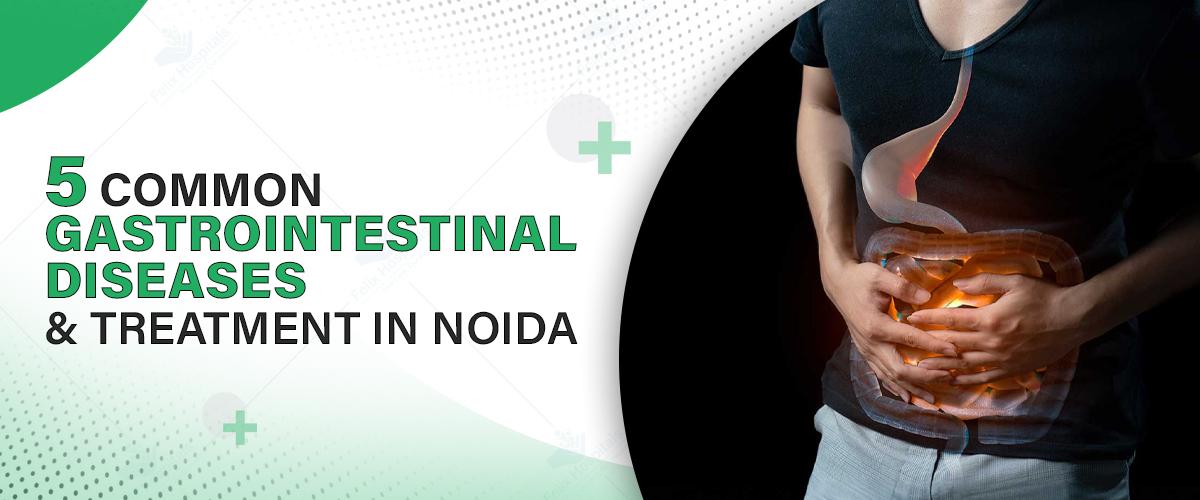
It's important to take care of your gut health if you want to feel good overall, but when you have GI difficulties, they may truly get in the way of your daily life. As more individuals are having digestive problems because of stress, lack of exercise, and bad eating habits, the need for specialized treatment for gastrointestinal ailments has grown. This blog talks about five common digestive diseases: constipation, hemorrhoids, gastritis, gastroenteritis, and acid reflux/GERD. It also gives tips on how people can get Gastrointestinal disease treatment in Noida for quick diagnosis and healing.
Don't neglect stomach pain. Make an appointment with a GI specialist at Felix Hospital right now. call +91 9667064100.
Gastrointestinal illnesses are health problems that affect the digestive system, which includes the stomach, intestines, liver, esophagus, and rectum. Some remedies work for a short time and are easy to use, while others may need more permanent or surgical methods. Finding common gastrointestinal diseases early and giving the correct care are important for keeping your digestive system healthy and avoiding complications.
Constipation is a common intestinal problem that affects people of all ages. It talks about times when it's hard or infrequent to have a bowel movement, which is typically related to what we eat, how much we drink, the drugs we take, or our daily behaviors.
You might notice some of the following signs:
Stools that are dry or firm
Going to the bathroom less than three times a week
Feeling full and having some pain in your stomach
A sense of clearing up
Functional constipation arises when there are no obvious changes in the digestive system. It happens a lot because people don't get enough fiber in their diets, don't exercise enough, put off going, or even feel anxious.
There are many ways to get Gastrointestinal disease treatment in Noida:
Changing your diet to eat more fiber
Staying hydrated and working out on a daily basis
You should only use laxatives with a doctor's permission.
If the problems keep happening, a gastroenterologist in Noida may advise motility studies or other tests.
Hemorrhoids are swollen veins that are found in the lower rectum or anus. These problems happen a lot, especially in people over 45, and they can make bowel motions uncomfortable, painful, and even cause bleeding.
You might have some of the following signs:
Pain or discomfort in the anal area
Seeing blood in your poop or on toilet paper
A bulge or swelling at the anus
Hemorrhoids can be caused by several things, including being overweight, sitting for long periods of time, experiencing constipation all the time, and pushing too hard when you have a bowel movement.
Gastrointestinal disease treatment in Noida usually includes:
Soothing ointments and sitz baths
How to change your everyday behaviors to avoid constipation
For ongoing problems, think about rubber band ligation or sclerotherapy.
Surgery to remove hemorrhoids for severe or recurring cases
In Noida, specialist clinics are available to help with digestive problems. They use minimally invasive methods to treat hemorrhoids in a way that is both successful and friendly.
Gastritis is when the lining of the stomach becomes inflamed. It can happen in both short-term and long-term forms. This syndrome is often caused by infections, especially H. pylori, as well as taking too many NSAIDs, drinking too much alcohol, or having an immunological condition.
You can notice these common signs:
A feeling of pain or discomfort in the upper abdomen
Feeling sick to your stomach or throwing up
Feeling full and having trouble digesting food
Usually, a diagnosis includes an endoscopy and tests for H. H. pylori germs.
You might want to think about a few different ways to treat it:
Drugs that reduce the amount of acid in the stomach
H. antibiotics There is a pylori infection.
Changes to your diet to avoid things that make you sick
Avoiding alcohol and NSAIDs
There are many places in Noida that specialize in treating gastrointestinal problems and have trained staff that can help you manage your gastritis.
Gastroenteritis, also known as "stomach flu," is a rapid swelling of the stomach and intestines that is usually caused by a viral or bacterial infection. It is easy to spread by eating or drinking contaminated food or water, or by touching someone who is sick.
The main signs are:
Stools that are loose
Feeling sick and throwing up
Having chills and feeling hot
Cramps in the stomach
Gastroenteritis usually goes away on its own, but if you get very dehydrated or have diarrhea for too long, you should get help immediately away.
The conventional way to treat it includes:
Oral rehydration treatment or fluids through an IV
Using antibiotics to treat bacterial illnesses
Drugs that can help with diarrhea (only used in some cases)
You may need to stay in the hospital if your symptoms develop worse.
During seasonal peaks, hospitals quickly diagnose and treat outbreaks to keep them from getting worse.
When stomach acid moves back up into the esophagus, it causes pain and irritation. This is called acid reflux. It can turn into GERD, which is a more serious and long-lasting type of reflux, if it happens a lot.
Take a look at these signs:
Having a burning feeling in your chest after eating
Bringing up food or a sour drink
A cough that won't go away or a sore throat
Having trouble swallowing
If you don't treat GERD, it might cause problems like Barrett's esophagus or esophagitis. There are many ways to get treatment:
Making changes to your everyday routine, such as avoiding spicy and fried foods and eating smaller meals.
PPIs or antacids that lower gastric acid
Helping people who are overweight reach their health goals
Having expert gastroenterologists makes it easier to manage GERD and associated problems over time.
Felix Hospital is one of the best places to get medical care because it offers the latest treatments for gastrointestinal problems. What makes it different is:
Advanced imaging and endoscopic services
A group of gastroenterologists, surgeons, and dietitians who are dedicated to their work
Testing in our own lab for speedy results
Personalized diet and recovery plans
If you're in pain or have symptoms that won't go away, getting care early at a trusted facility like Felix can truly help you get better.
Having digestive problems? Felix Hospital offers professional treatment for gastrointestinal disorders. Visit www.felixhospital.com or give +91 9667064100 a call.
Symptoms of digestive system disorders might be signs of bigger health problems that are going on under the surface. Seeing early indicators, obtaining tests on time, and having treatment plans made just for you can really affect the outcome. People who live in Noida are lucky to have access to great diagnosis and treatment services for GI problems. If you have any symptoms or are searching for regular screenings, it's a good idea to call specialists in Noida who treat gastrointestinal diseases to help you take care of your digestive health.
Q1. Does stress have a big effect on gastrointestinal diseases?
Ans: Yes, stress can make symptoms like bloating, acid reflux, and IBS worse by changing how the gut moves and making inflammation worse.
Q2. How often should you get checked for colon polyps?
Ans: People over 45 should think about undergoing a colonoscopy every ten years, or sooner if they have certain risk factors.
Q3. Can food intolerances lead to long-term difficulties with the digestive system?
Ans: Yes, eating things that your body can't handle on a daily basis, such gluten or lactose, can cause inflammation that lasts for a long time.
Q4. Is it okay to take laxatives every day to help with constipation?
Ans: If you use it too much, you can get dependent on it. A better way to deal with the problem is to adjust your diet and get medical help.
Q5. Does GERD affect how well we sleep?
Ans: Yes, of course! Reflux at night might make it hard to sleep and make you feel more exhausted during the day.
A gastrointestinal fistula is an abnormal opening that develops between the stomach, intestines, or other digestive organs, often causing leakage of digestive fluids. Treatment typically involves infection control, nutritional support, medications, and in

Acidity and heartburn troubling you every day? Don’t ignore the signs! Consult our expert gastroenterologists for proper diagnosis and treatment. Call us at (+91) 9667064100 to book your appointment today.
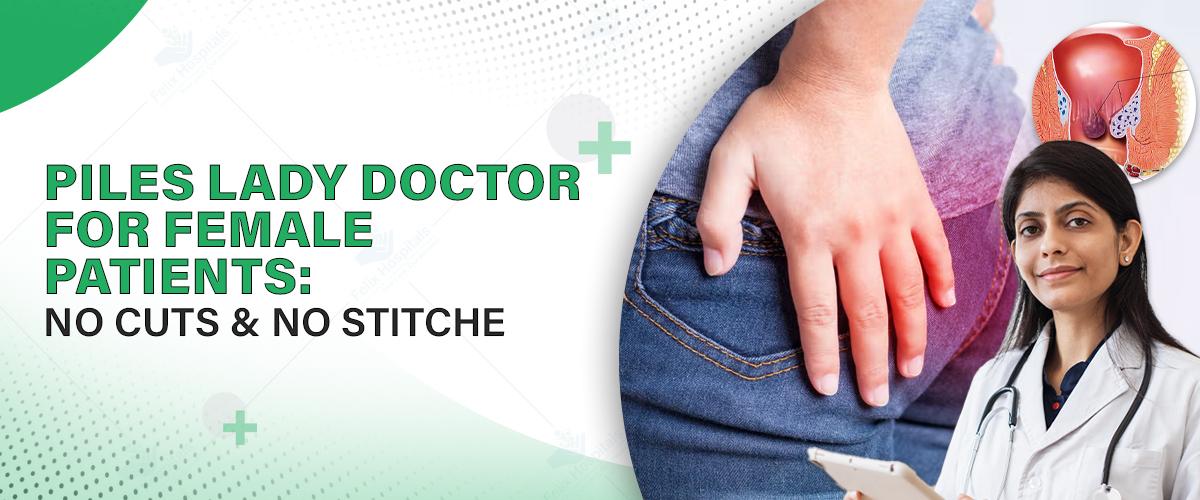
Our best female piles doctor in Noida provides minimally invasive, advanced laser treatment that offers no pain and quick recovery.
Piles, commonly known as hemorrhoids, are enlarged blood vessels located in the rectal or anal region. They can be internal or external and cause symptoms such as bleeding, itching, pain during bowel movements, or when sitting for long periods. Piles are common in women during pregnancy and after childbirth. However, many women are hesitant to seek treatment out of embarrassment or fear.
If you are suffering from pain and discomfort, commonly associated with piles, then you should consult our best female piles doctor in Noida. Timely medical attention not only helps manage piles symptoms, but it also prevents complications such as thrombosis (the development of blood clots within a hemorrhoid), and infections.
At Felix Hospitals, our piles lady doctor in Noida, offers the latest piles treatment and dedicated care, so you can speak freely and get the right treatment without feeling awkward or judged.
Early piles treatment can prevent complications! Seek treatment from someone who understands both your health concerns and your comfort needs.
At Felix Hospital, our piles female doctor (Noida) provides comprehensive care for piles and associated problems under one roof. We provide the following services:
Clinical Evaluation and Diagnosis: Our female piles doctor does a thorough examination with an emphasis on privacy and comfort.
Medical management: We offer non-surgical treatment options such as creams, dietary recommendations, and lifestyle changes, depending on the situation.
Minimally Invasive Procedures: We provide minimally invasive procedures such as Laser Hemorrhoidoplasty, Rubber Band Ligation, Sclerotherapy, and Infrared Coagulation. When compared to normal surgery, these techniques provide advantages such as reduced discomfort, faster recovery, and less blood.
Advanced Surgical Treatments: We also offer stapled Hemorrhoidopexy, Laser Hemorrhoid Surgery, and Conventional Hemorrhoidectomy for severe cases.
Post-treatment follow-up to ensure healing and avoid recurrence.
Nutrition and Lifestyle counseling to treat constipation, which is a major cause of piles.
At Felix Hospital, Noida, we understand that if you are a woman, discussing anorectal issues can make you feel embarrassed. That’s why we offer consultations exclusively with a piles lady doctor in Noida — a trained and experienced doctor who has helped hundreds of women recover without judgment or discomfort.
Here’s what makes us the right choice:
Comfortable Communication: Our female doctor makes sure that you can communicate freely without feeling uncomfortable.
Special Focus on Women's Needs: We have special treatment programs designed specifically for women during their pregnancy and postpartum periods.
Gentle Examination Approach: Our doctors prioritize patient comfort at all times, with special care during physical exams.
Experience and skills: Our doctors have years of hands-on practice in treating piles in female patients.
Respect for Privacy: We have strictly female staff support during all procedures and consultations.
Specialized Female-led Clinic: Our care plans are designed for women by women that are clean, sanitized, and fully equipped.
Same-Day Procedure Options: We have walk-in and walk-out options with less than an hour of treatment for many cases.
Advanced Laser Technology: We offer painless, stitchless, bloodless piles surgery with faster recovery.
Short Waiting Times: We offer quick treatments without long delays.
Dedicated Aftercare Support: Our team stays in touch with you post-treatment to help you recover fully.
Ritika S. – Homemaker, 34
I had been suffering from piles for the last couple of months, but I was too uncomfortable to visit a male doctor. That’s when a friend suggested that I visit Felix Hospital, Noida. The Piles Female Doctor (Noida) is not only compassionate but also extremely professional. On my first visit, she explained to me the procedure and guided me through it. Now I am completely pile-free. I would recommend Felix Hospital to women who are looking for a female piles doctor.
Meenal T. – First-time Mom, 28
After my delivery, I started experiencing painful piles, and visited Dr. Shruti Sharma She understood exactly what I was going through and reassured me that this is common among new mothers. Her treatment worked within days, and now I feel completely normal. If you are looking for the best female Piles doctor in Noida, visit Felix Hospital.
Kavita M. – School Teacher, 42
I was struggling with piles due to my long working hours. When I met Dr. Shruti Sharma, she explained the laser treatment option, and it felt like a huge relief. The procedure was painless, and I was back to work in two days.
Asha R. – Office Executive, 31
I was anxious about the check-up process for piles, but the moment I met with Dr. Shruti Sharma, I felt at ease. The support staff was all-female and very respectful. Dr. Shruti Sharma made me feel safe and informed. I am grateful for the care I received.
Aarti T. – Freelance Designer, 39
After my piles laser procedure, Dr. Shruti Sharma gave me practical tips on diet and lifestyle to make sure the piles don’t come back. It wasn’t just treatment—it was complete support. I’m truly thankful and would recommend Felix Hospital, Noida to any woman looking for long-term care.
Q1. I have had piles for the last couple of months. Can I be treated without surgery?
Ans: Yes, many cases of piles, particularly in the early stages, can be treated with medications, dietary modifications, and minor procedures like banding or infrared treatment. For accurate diagnosis and treatment, consult female piles specialist in Noida.
Q2. Will the laser surgery for piles treatment be painful?
Ans: No, our laser and minimally invasive solutions are almost painless and require little downtime. Although you may experience a little discomfort, the treatment itself is not painful.
Q3. After undergoing minimally invasive piles surgery, how long does recuperation take?
Ans: Most patients can return to work within 1-3 days of laser therapy. Depending on the surgery, it may take a week or two to heal completely. If you are a woman, consult female piles specialist in Noida for privacy and effective treatment.
Q4. Is the piles consultation private?
Ans: Yes, our appointments are one-on-one, and we maintain total confidentiality with female doctors for our women patients throughout.
Q5. Do I need a family member present throughout the procedure?
Ans: While you can come alone for a consultation, it is best to have someone accompany you if you are having a treatment, particularly a surgical one.
Don’t suffer in silence. Get the right piles treatment from someone who truly understands. Book your consultation with our female piles doctor today!
Internal hemorrhoids are swollen veins located inside the rectum, often caused by straining during bowel movements, chronic constipation, or pregnancy. Though usually painless, they may lead to symptoms like rectal bleeding, itching, and discomfort.

Piles can deeply affect women’s mental well-being, causing stress, embarrassment, and low self-esteem. A lady doctor shares insights on addressing both the physical and emotional impact with care and support.
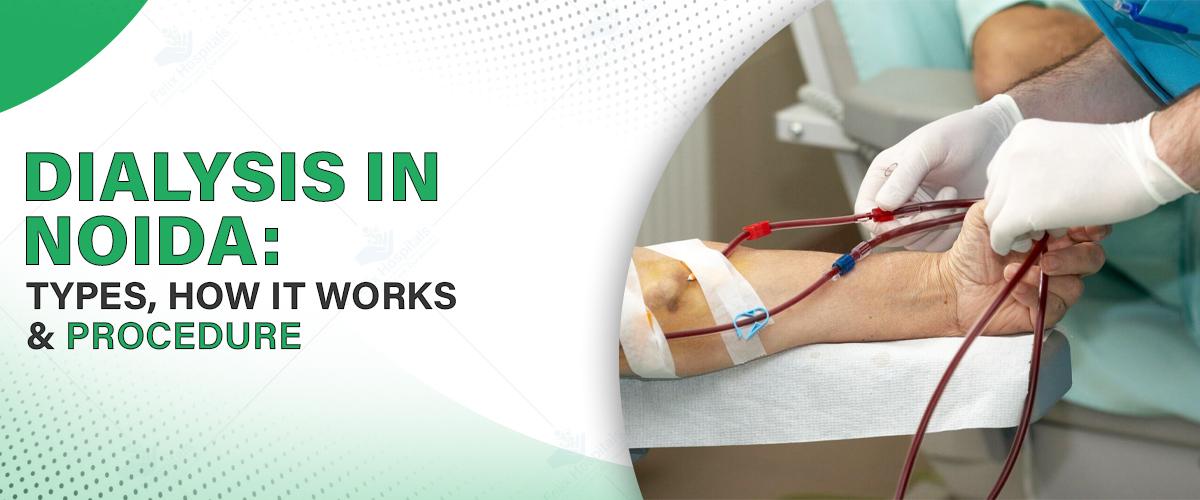
Every year, thousands of people in India get kidney failure, which is a very serious disease. The kidneys can't filter out waste, extra fluids, and toxins from the blood when they don't work right. Dialysis is a life-saving treatment for people whose kidneys can no longer do this important job. A rapidly expanding city with a state-of-the-art healthcare system, dialysis is easily accessible at the best hospital for dialysis treatment in Noida. It has greatly improved the quality of life for many patients.
This in-depth blog talks about what dialysis is, the different kinds, how it works, the steps involved, and what patients can expect during the treatment process.
To make an appointment for a kidney health check-up today, call +91 9667064100.
Dialysis is a medical procedure that replicates the vital functions of healthy kidneys. When kidneys fail due to chronic kidney disease (CKD), diabetes, high blood pressure, or other causes, harmful waste products accumulate in the bloodstream. Dialysis aids in the removal of these wastes, the maintenance of proper chemical balance, and the regulation of fluid levels in the body.
When the kidneys stop working at less than 15% of their normal level, dialysis is needed. Depending on how severe their kidney disease is and how quickly it is getting worse, patients may require dialysis in Noida for a short period of time or for the rest of their lives.
There are a number of things that can hurt the kidneys and make dialysis necessary. Common causes include:
Chronic Kidney Disease (CKD)
Diabetes mellitus, both types 1 and 2
Hypertension, or high blood pressure.
Glomerulonephritis
Lupus and other diseases that attack the body's own cells.
Infections or trauma can cause acute kidney injury.
Some patients may only need dialysis in Noida for a short time while their kidneys heal, while others may need it for the rest of their lives or until a kidney transplant becomes available.
There are two main kinds of dialysis:
The most common type of dialysis is hemodialysis. It uses a machine called a dialyzer, which acts like an artificial kidney. A needle or catheter is used to take blood out of the body during the procedure.
It goes through the dialyzer, which removes extra fluids and waste products.
The blood that has been cleaned is then put back into the body.
Most of the time, hemodialysis is done three times a week for about four hours each time. It can be done at home with medical supervision or in a healthcare facility.
The lining of the abdominal cavity (peritoneum) is used as a natural filter in peritoneal dialysis. A catheter puts dialysate, a sterile cleaning fluid, into the abdomen. Before being drained, the dialysate takes in waste and extra fluids.
There are two kinds of peritoneal dialysis:
Ambulatory All the Time People do Continuous Ambulatory Peritoneal Dialysis (CAPD) by hand several times a day, without machines.
Automated Peritoneal Dialysis (APD): A machine does it at night while the patient sleeps.
Peritoneal dialysis provides more flexibility and independence than hemodialysis.
Dialysis takes the place of kidney function by getting rid of waste products like urea and creatinine.
Keeping potassium and sodium levels in balance.
To lower swelling and high blood pressure, the body gets rid of extra fluid.
The dialyzer in hemodialysis uses a semi-permeable membrane to keep blood and waste apart.
The peritoneum does this job in peritoneal dialysis.
A vascular access or catheter is put in before dialysis starts.
An arteriovenous (AV) fistula or graft is surgically made, usually in the arm, for hemodialysis.
To do peritoneal dialysis, a soft tube is put into the abdomen to move fluids around.
The machine slowly takes blood out, cleans it, and puts it back in. Vital signs are monitored.
Peritoneal Dialysis: The patient fills their stomach with dialysate, waits a few hours, and then empties it. APD is automatic and doesn't take much work while you sleep.
After treatment, patients may feel tired or dizzy. It is very important to eat a diet that is good for your kidneys, drink less water, and take your medications as directed.
Gets rid of extra fluid and harmful toxins.
Makes you hungrier, gives you more energy, and clears your mind.
Checks blood pressure and levels of electrolytes.
Dialysis generally enhances the quality of life when the kidneys aren't functioning properly.
Dialysis can save your life, but it can also be dangerous in some ways:
Infections (especially with peritoneal dialysis)
Blood pressure is low during sessions.
Muscle cramps or tiredness.
Problems with vascular access, like clotting or narrowing
Pain in the stomach or a hernia while doing peritoneal dialysis
Patients should see their doctors regularly and tell them about any strange symptoms.
Dialysis does not fix kidney disease. It is a treatment that helps people live longer and feel better. The only long-term treatment for kidney failure that can't be fixed is a kidney transplant.
Dialysis requires changes to one's way of life, but many patients still lead active lives. Emotional support, a diet that is good for your kidneys, regular exercise, and seeing the best nephrologist in Noida on time can all help you get healthier.
If you or someone you care about is showing signs of kidney failure, now is the time to take action. Dialysis in Noida may be avoided or postponed with early diagnosis and treatment.
Start on the path to a healthier future. Please get in touch with us today to talk to our care team.
People with kidney failure need dialysis as a necessary treatment. Patients and their families can make the process easier by knowing how it works, what the different types are, and what to expect. Access to modern dialysis facilities in Noida makes sure that people who need it get treatment quickly and effectively. If you receive the right help, modify your lifestyle, and monitor your health, you can lead a full life even with kidney failure.
Felix Hospital stands as the best kidney hospital in Noida, offering advanced nephrology care with expert doctors and state-of-the-art facilities for a comprehensive kidney specialist in Noida.
Q1. Can I go on vacation while I'm getting dialysis?
Ans: Yes, dialysis patients can travel if they plan ahead. Before you leave, make sure to talk to your dialysis center about scheduling treatments at your destination.
Q2. Can you switch from peritoneal dialysis to hemodialysis, and vice versa?
Ans: Yes, some patients switch types depending on their health, way of life, or the results of their treatment. Always talk to your doctor before making any changes.
Q3. Can people who are on dialysis go to school or work?
Ans: Of course. A lot of people who go to dialysis still go to work or school on a regular basis. This is made easier by flexible dialysis schedules and options for doing it at home.
Q4. What effects does dialysis have on sexual health and fertility?
Ans: Yes, it could change hormones and sex drive. Both men and women may notice changes, but with help and medical advice, these issues can be handled.
Q5. What foods should I eat while on dialysis?
Ans: It is recommended that you follow a renal diet that is low in sodium, potassium, and phosphorus. A dietitian can make a meal plan just for you.
Kidney dialysis is a life-saving treatment for patients suffering from chronic kidney disease or kidney failure. Understanding the dialysis cost in Noida helps patients and families plan treatment effectively. This article explains the factors affecting d
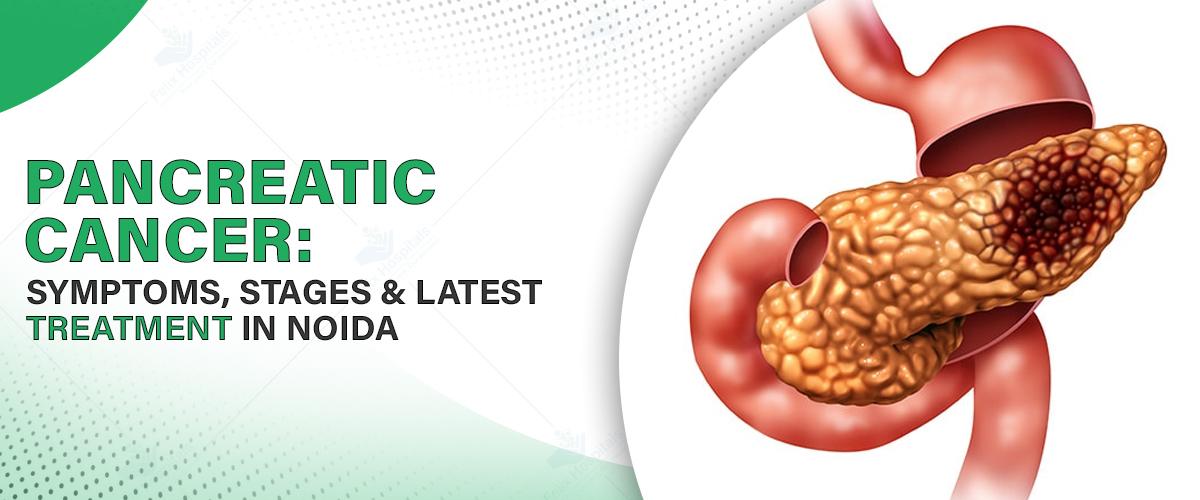
Pancreatic cancer is a hard and often aggressive disease that attacks the pancreas, which is an important organ that helps with digestion and keeps blood sugar levels stable. Pancreatic cancer is one of the hardest cancers to find early on because its symptoms are so subtle and easy to miss. Finding diseases early, having access to better diagnostic tools, and looking into the newest treatment options are all important for improving patient outcomes.
This thorough blog talks about the signs and stages of pancreatic cancer, the things that make it more likely to happen, and the newest treatment options at the best oncology hospital in Noida.
To make an appointment and talk to a specialist, call +91 9667064100.
Cells in the pancreas change and grow uncontrollably, which leads to pancreatic cancer. The pancreas is a small organ that makes insulin and digestive enzymes. It is deep in the abdomen, between the spine and the stomach. Adenocarcinoma is the most common type of pancreatic cancer. It starts in the pancreatic ducts (exocrine tumors).
Pancreatic neuroendocrine tumors (NETs), which grow in hormone-producing cells, are less common. These cancers act differently, which may mean that different treatment plans are needed.
Because the pancreas is deep inside the abdomen, small tumors may not show any signs at first. As the tumor gets bigger, you may start to notice the following symptoms:
Yellowing of the skin and eyes (jaundice)
Dark-colored urine
Stool that is pale or greasy
Pain in the stomach or middle of the back
Feeling sick or throwing up.
Weight loss that happens for no reason or all at once
Not wanting to eat
Tiredness
Skin that itches.
Diabetes that has just started
These signs could also be a sign of something else, but you should see an oncologist in Noida if they last for a long herself.
Knowing what stage the cancer is at is very important for planning the best treatment. Stages are:
Stage I: The tumor is only in the pancreas and can be surgically removed.
Stage II: The cancer has spread to nearby tissues and maybe lymph nodes, but surgery is still an option.
Stage III: The tumor has spread to big blood vessels or lymph nodes, which makes it hard to remove with surgery.
Stage IV: The cancer has moved to other parts of the body, like the lungs or liver.
Using diagnostic tools like CT scans, MRIs, and staging laparoscopy, we can figure out what stage of cancer someone has.
There are a number of things that can make you more likely to get pancreatic cancer:
Chronic use of tobacco or smoking.
Type 2 diabetes that lasts a long time.
Being overweight and not moving around enough
Pancreatitis that lasts a long time.
A family history of pancreatic cancer or other cancers that are related to it.
Genetic changes such as BRCA1 and BRCA2
Being around dangerous chemicals like pesticides and petrochemicals
People who know about these risk factors are better able to get regular screenings and take steps to avoid them.
It is still hard to find pancreatic cancer early, but new diagnostic tools have made it easier to find. Some common tests are:
CT scans and MRIs give very clear pictures of the pancreas and the areas around it.
Endoscopic ultrasound (EUS) is a method that uses both endoscopy and ultrasound to get close-up pictures.
PET Scan: Finds cancer cells by looking at how they metabolize.
Tumor Marker Tests: These tests check the levels of CA 19-9 in the blood, which may be high in people with pancreatic cancer.
A biopsy is a test that uses a piece of tissue to confirm that cancer is present.
Genetic testing finds mutations that are passed down from one generation to the next and helps doctors make treatment plans that are right for each patient.
There are now many different ways to treat pancreatic cancer in Noida, depending on the stage and type of cancer.
The Whipple Procedure: It takes out the head of the pancreas, the duodenum, the bile duct, and part of the stomach.
Distal Pancreatectomy: The body and tail of the pancreas are taken out, along with the spleen in most cases.
A total Pancreatectomy: That means taking out the whole pancreas, gallbladder, part of the stomach, and part of the intestine.
Given before (neoadjuvant) or after (adjuvant) surgery to make the tumor smaller or kill any cancer cells that are still there.
Used as the main treatment for cancer that has spread or is advanced.
Often used with chemotherapy to make it work better.
The size of tumors goes down, and pain goes away.
It concentrates on specific genetic alterations, such as the BRCA genes.
Olaparib and erlotinib are two drugs that stop pathways that help cancer grow.
It helps the immune system find and kill cancer cells.
It might be possible to get it through clinical trials or depending on the type of tumor.
Pain management and end-of-life care are crucial for enhancing the quality of life, particularly during the advanced stages.
This includes drugs, nerve blocks, and help with nutrition.
Just treating pancreatic cancer isn't enough. Care must include emotional support, dietary advice, and changes to the way you live. Patients and caregivers should get help from support groups and keep up with what's new.
Don't ignore symptoms that don't go away, like abdominal pain, weight loss for no reason, or jaundice. Finding and treating problems early can make a big difference in the results.
Call +91 9667064100 to set up your consultation today and take the first step toward getting expert care.
Pancreatic cancer is a complicated and often aggressive disease, but new advances in personalized treatment and early detection give us hope. Patients can make better health decisions if they know the early warning signs, the stages of the disease, and the best treatment options. Intervention early on could save lives.
Q1. How can I tell if I need to go to the hospital for stomach pain that might be caused by pancreatic cancer?
Ans: If you have persistent stomach or back pain that gets worse after you eat or is accompanied by symptoms like jaundice or fatigue, you should go to the hospital right away.
Q2. What is the usual price of pancreatic cancer screenings in India?
Ans: Depending on the hospital and the test, initial screenings can cost anywhere from ₹2,000 to ₹10,000.
Q3. Can a regular doctor tell if I have pancreatic cancer, or do I need to see an oncologist?
Ans: A general doctor can raise suspicions, but a specialist oncologist is needed to confirm the diagnosis and plan treatment.
Q4. Do hospitals in Noida have up-to-date tools for diagnosing pancreatic cancer?
Ans: Yes, a lot of hospitals in Noida do CT scans, EUS, and CA 19-9 tumor marker tests.
Q5. Do you always need surgery to treat pancreatic cancer, or can you do it without it?
Ans: Chemotherapy and radiation are two types of alternative treatments that are used when surgery isn't an option.

Felix Hospital offers advanced oncology treatment at an affordable cost, ensuring high-quality care for cancer patients with compassion and expertise.
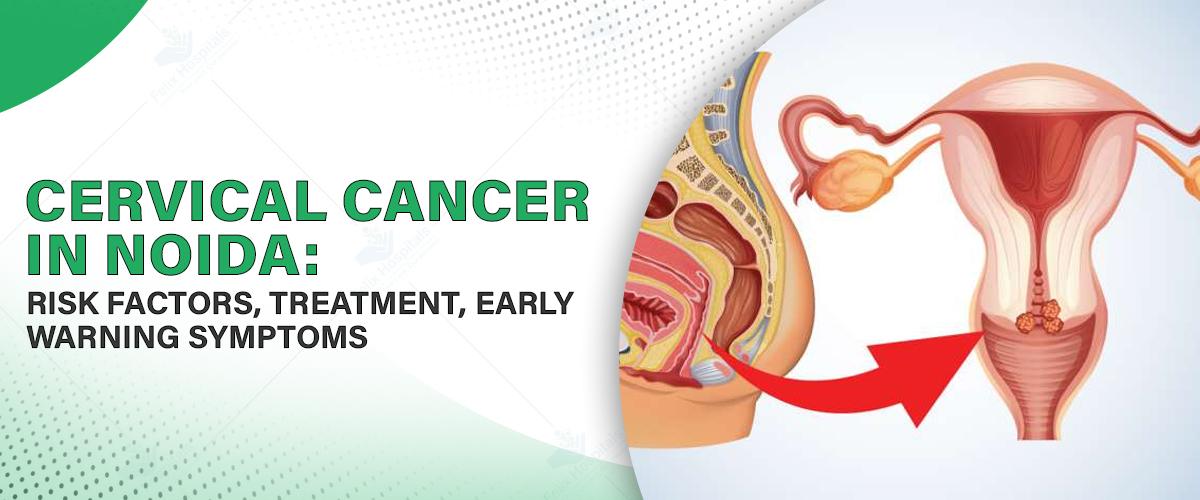
Cervical cancer is a serious health issue that affects thousands of women in Noida every year. Thanks to advances in medical science, early detection, and effective treatments, this disease is now very easy to prevent and treat, especially if it is caught early. To fight cervical cancer and save lives in Noida, people need to be aware of it, have easy access to screenings, and get medical help quickly.
This blog covers cervical cancer risk factors, symptoms, diagnosis, treatment options, and FAQs. If you or someone you care about is showing strange symptoms or is worried about preventing cervical cancer, the best oncology hospital in Noida for treating it can help you stay informed and take action.
To make an appointment with an expert, call us at +91 9667064100 today. Taking action early can save lives.
The cervix is the lower part of the uterus that connects to the vagina. Cervical cancer starts there. Persistent infection with high-risk types of the human papillomavirus (HPV), a virus that spreads through sexual contact, is the most common cause. The disease gets worse slowly over time, but if it isn't found and treated early, it can become life-threatening.
The good news is Cervical cancer is one of the cancers that women can avoid the most easily with regular Pap smears and HPV shots.
There are two main types of cervical cancer:
Squamous Cell Carcinoma is the most common type, making up 80% to 90% of all cases. It starts in the flat, thin cells that line the outside of the cervix.
Adenocarcinoma is less common, but it could be more aggressive. It starts in the glandular cells that line the cervical canal.
Some women may have cancers that are a mix of both types of cells.
One problem with cervical cancer is that it doesn't always show signs in its early stages. That's why it's so important to get regular checkups. But as the disease gets worse, you may start to notice the following symptoms:
Bleeding from the vagina that isn't normal (after sex, between periods, or after menopause)
Vaginal discharge that smells bad or is watery
Pain during sex
Pain in the pelvis or lower back
Urination that hurts or is hard to do
Blood in your urine or stool
Legs that are swollen
If any of these signs last for more than a few days, you should see a qualified oncologist right away.
There are several things that can raise the risk of getting cervical cancer:
Recurrent infection with high-risk strains of HPV is the main cause of cervical cancer.
Starting to have sex at a young age raises the risk of getting HPV.
This increases the likelihood of contracting high-risk HPV infections.
Women whose immune systems are weak, like those with HIV, are more likely to get infections and cancer.
Using tobacco is strongly linked to changes in the cervix that could lead to cancer.
If you don't get regular Pap tests, you might not notice changes that could lead to cancer.
Oral contraceptives work to prevent pregnancy, but using them for more than five years may slightly raise the risk.
Routine screenings usually find cervical cancer. You can use the following diagnostic tools:
Pap Smear: Finds cells in the cervix that are not normal.
HPV Testing: Finds HPV strains that can cause cancer.
Colposcopy: Using a special magnifying tool to look more closely at the cervix.
Biopsy: Confirms that cancer cells are present.
CT, MRI, or X-rays may be used to find out how far the cancer has spread.
Staging helps figure out how far along the cancer is and what kind of treatment to give:
Stage I: The cancer is only in the cervix.
Stage II: The cancer has spread beyond the cervix but not to the wall of the pelvis.
Stage III: Cancer has spread to the pelvic wall or the lower part of the vagina.
Stage IV: Cancer has spread to organs that are far away, like the lungs, bladder, or liver.
The best treatment plan will depend on the type and stage of cervical cancer. Here are some of the most common ways to treat it:
Early stages employ surgery to eliminate the tumor or even the cervix and uterus (hysterectomy).
Radiation therapy employs high-energy rays to destroy cancer cells. It is typically used in conjunction with chemotherapy.
Uses drugs to kill cancer cells, and it's especially good for cases that are advanced or come back.
Targets certain cancer cell markers, which makes healthy cells less affected.
Strengthens the immune system to help the body fight cancer better.
A team of specialists, including a gynecologic oncologist in Noida, makes a unique treatment plan for each patient.
Yes. Some things you can do to avoid problems are:
Regular HPV screenings and Pap tests
Vaccination against HPV for people who are old enough
Safe ways to have sex
Stopping smoking
Regular gynecological checkups
Screening helps find cervical cancer early, which greatly lowers the risk of getting it.
If you require a Pap smear, are experiencing unusual bleeding, or simply wish to feel more at ease, please consider scheduling an appointment today.
Cervical cancer is one of the most preventable and treatable cancers when detected early. Regular screenings, HPV vaccinations, and awareness of early symptoms can make a significant difference in reducing the risk and improving treatment outcomes. Whether you're experiencing abnormal symptoms or simply due for a Pap smear, taking proactive steps now can protect your future health.
If you or a loved one has concerns about cervical cancer, don’t wait. Early intervention offers the best chance for recovery and peace of mind. Reach out to the best hospital in Noida for expert consultation, compassionate care, and personalized treatment.
Q1. Is it costly to get treatment for cervical cancer at a private hospital?
Ans: The cost of treatment can change based on the type of treatment and the stage of the disease. To help with the cost, many hospitals offer packages and help with insurance.
Q2. How can I tell if the hospital is able to treat cervical cancer?
Ans: Find a hospital that has a separate oncology department, modern diagnostic tools, and a team that includes experienced oncologists.
Q3. Can cervical cancer treatment make it harder to get pregnant?
Ans: Yes, some treatments, like hysterectomy or radiation, can affect fertility. Talk to your oncologist about ways to keep your fertility before you start treatment.
Q4. How often should women get checked for cervical cancer?
Ans: At age 21, women should start getting Pap smears and then get them again every three years or as their doctor says.
Q5. Will insurance pay for all of the costs of cervical cancer treatment?
Ans: Most insurance companies pay for most parts of cancer treatment. For exact coverage information, contact your insurance company and the hospital's billing department.

Recognize the early warning signs of cervical cancer. Learn about its symptoms, causes, and when to consult a gynecologist for timely diagnosis and treatment.
Recognize the early warning signs of cervical cancer. Learn about its symptoms, causes, and when to consult a gynecologist for timely diagnosis and treatment.
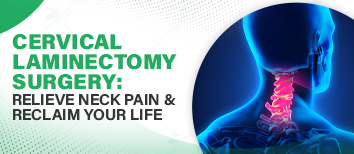
Cervical laminectomy relieves neck pain by reducing spinal pressure, helping restore mobility and quality of life.
गर्भावस्था के दौरान बवासीर आम समस्या है। गर्भ के बढ़ते आकार, हार्मोनल बदलाव और कब्ज जैसी वजहों से मलद्वार की नसों पर दबाव बढ़ता है, जिससे बवासीर बढ़ता है। बाह्य बवासीर (external piles) मलद्वार के बाहरी हिस्से में त्वचा के नीचे सूजन या गांठ के रूप में होती है। इसमें दर्द, जलन, खुजली और कभी-कभी खून का थक्का (थ्रोम्बोसिस) बनने पर दर्द होता है। गर्भावस्था में बाह्य बवासीर आम है,लेकिन समय पर सावधानी से इसे नियंत्रित कर सकते हैं।
अगर आप इस बीमारी की जांच या इलाज के लिए भरोसेमंद चिकित्सा सुविधा की तलाश कर रहे हैं, तो नोएडा में सर्वश्रेष्ठ लेप्रोस्कोपिक हॉस्पिटल का चयन करना बेहद जरूरी है, जहां अनुभवी जनरल सर्जन और अत्याधुनिक तकनीक के माध्यम से मरीज को बेहतर देखभाल मिल सके।
अभी अपॉइंटमेंट शेड्यूल करें – कॉल करें: +91 9667064100.
गर्भावस्था में बवासीर की समस्या Piles problem during pregnancy
गर्भावस्था में बाह्य बवासीर के कारण (Causes of external hemorrhoids in pregnancy)
गर्भावस्था में बाह्य बवासीर के मुख्य लक्षण (Main symptoms of external hemorrhoids in pregnancy)
घरेलू और जीवनशैली से जुड़ी सावधानियां (Household and lifestyle precautions)
मेडिकल देखभाल कब जरूरी है ? (When is medical care necessary)
लेप्रोस्कोपिक से इलाज की गाइडलाइन (Laparoscopic treatment guideline)
गर्भावस्था के दौरान बवासीर बेहद आम है। अनुमान है कि करीब 25 से 35 प्रतिशत गर्भवती महिलाएं बवासीर से प्रभावित होती हैं। खासकर तीसरे ट्राइमेस्टर में पीरियड के दौरान। इसकी वजह बढ़ता हुआ गर्भाशय, हार्मोनल बदलाव और कब्ज है,जिससे मलद्वार के आसपास की नसों पर अतिरिक्त दबाव पड़ता है बाह्य बवासीर मलद्वार के ठीक बाहर की त्वचा के नीचे उभरी हुई गांठें होती हैं। इनमें सूजन आने पर तेज दर्द, जलन और खुजली होती है,चलने, बैठने या मल त्याग के समय इन पर सीधा दबाव पड़ता है, जिससे असुविधा बढ़ती है। इनमें खून का थक्का बन जाए, तो दर्द अचानक पीड़ा होती है। लंबे समय तक अनुपचारित रहने पर बाह्य बवासीर में थ्रोम्बोसिस होता है। लगातार खून निकलने से खून की कमी बढ़ती है। यह मां और बच्चे के लिए जोखिम भरा है,प्रसव के दौरान भी ये बवासीर बिगड़ती हैं,जिससे प्रसव के बाद रिकवरी मुश्किल होती है।
जैसे-जैसे गर्भ में शिशु बढ़ता है। पेट के अंदरूनी अंगों और मलद्वार की नसों पर दबाव बढ़ता है। यह दबाव नसों को फैलाता है,जिससे बाह्य बवासीर की गांठें बनती हैं। यह पहले से मौजूद समस्या बढ़ती है।
गर्भावस्था में प्रोजेस्टेरोन हार्मोन का स्तर बढ़ता है। यह शरीर की मांसपेशियों को ढीला करता है, इससे आंतों की गति धीमी होने से कब्ज की समस्या होती है, नसों की दीवारें भी कमजोर होती हैं। जिससे बवासीर की संभावना बढ़ती है।
गर्भवती महिलाओं में कब्ज (Constipation) आम है। जो मल त्याग के समय ज्यादा जोर लगवाता है। जोर लगाने से मलद्वार की बाहरी नसों में खिंचाव होता है,जिससे बाह्य बवासीर दर्दनाक होती है।
गर्भावस्था में शरीर का कुल रक्त प्रवाह बढ़ता है। गर्भाशय के बढ़ने से पेल्विक क्षेत्र की नसों और निचले शरीर की नसों पर दबाव पड़ता है, जिससे वहां की नसें फैलकर बवासीर में बदलती हैं।
मलद्वार के आसपास अंगूर के आकार की नरम या कठोर गांठें महसूस होती हैं। जिससे बैठने या चलने पर दर्द होता हैं।
मल त्याग के समय या लंबे समय तक बैठने पर दर्द और जलन महसूस होती है। यह कभी-कभी असहनीय होती है।
गांठों और सूजन की वजह से लगातार खुजली और भारीपन की शिकायत होती है जिस कारण रोजमर्रा के कामों में परेशानी होती है।
कभी-कभी बवासीर में खून का थक्का बनने या गांठ फटने पर हल्का या तेज रक्तस्राव होता है।
रोजाना खाने में हरी पत्तेदार सब्जियां, ताजे फल, सलाद और साबुत अनाज का सेवन करें। फाइबर से कब्ज की समस्या कम होती है,मल नरम रहता है, जिससे बाह्य बवासीर पर दबाव नहीं पड़ता है।
दिनभर में कम से कम 8–10 गिलास पानी पिएं। पानी फाइबर के साथ मिलकर मल को सॉफ्ट रखता है, मल त्याग आसान बनाता है।
लंबे समय तक कुर्सी या टॉयलेट सीट पर बैठने से बचें। हर 30–40 मिनट में थोड़ा टहलें व करवट बदलें,जिससे नसों पर दबाव कम हो।
गर्भावस्था के दौरान हल्की सैर या सुरक्षित योगासन करें। इससे रक्त संचार सुधरता है, बवासीर की परेशानी कम होती है।
मल त्याग के दौरान ज्यादा जोर लगाने से नसों में खिंचाव बढ़ता है, जिससे बवासीर बिगड़ती है। आराम से और बिना हड़बड़ी के मल त्याग करें। अगर बार-बार कब्ज हो तो डॉक्टर से सलाह लें।
अगर बवासीर में लगातार तेज दर्द है। बार-बार खून आ रहा है, तो इसे हल्के में न लें। तुरंत डॉक्टर से संपर्क करें,जिससे जांच के बाद सही इलाज तय हो सके। खून की कमी (एनीमिया) जैसी जटिलताएं नहीं हों।
अगर गांठ अचानक बड़ी हो जाए। उसमें अचानक बहुत दर्द होने लगे तो तुरंत विशेषज्ञ की सलाह लें। जल्दी इलाज से संक्रमण और दूसरी जटिलता को रोक सकते हैं।
अगर दर्द या सूजन इतनी बढ़ जाए कि बैठना, चलना या सोना भी मुश्किल होने लगे, तो स्थिति गंभीर होती है। ऐसे में डॉक्टर से समय पर इलाज कराना जरूरी है,जिससे मां और बच्चे दोनों सुरक्षित रहें।
लेप्रोस्कोपिक सिर्फ बहुत गंभीर और जटिल मामलों में होती है। थ्रोम्बोस्ड बाह्य बवासीर, बहुत बड़ा या फैलता हुआ बवासीर होता, बार-बार तेज ब्लीडिंग के मामले में होती है। सामान्य या हल्के मामलों में आमतौर पर दवा दी जाती है। जीवनशैली सुधार और मिनिमली इनवेसिव पद्धतियों जैसे बैंडिंग, स्क्लेरोथेरपी से इलाज होता है। जरूरत पड़ने पर दूसरे ट्राइमेस्टर 13–28 हफ्ते को सबसे सुरक्षित समय माना जाता है। इस दौरान भ्रूण के अंग विकसित हो चुके होते हैं। प्री-टर्म लेबर का जोखिम भी कम होता है। पहले या तीसरे ट्राइमेस्टर में सर्जरी, अगर बहुत ज़रूरी हो तभी की जाती है, विशेषज्ञ की पूरी टीम की निगरानी में।
थ्रोम्बोस्ड पाइल्स यानी खून के थक्के वाली, अत्यधिक दर्द देने वाली बवासीर होने पर की जाती है। बार-बार या बहुत अधिक ब्लीडिंग, जिससे खून की कमी या संक्रमण का खतरा बढ़ने पर की जाती है। बहुत बड़ा या तेजी से बढ़ रहा बाह्य बवासीर, जिससे चलना-फिरना और प्रसव भी कठिन होता है तो सर्जरी पर विचार करना चाहिए।
इस पद्धति में बड़े कट की बजाय छोटे-छोटे चीरे लगाए जाते हैं। जिनसे सर्जिकल उपकरण अंदर पहुंचते हैं। इससे घाव छोटा रहता है,दर्द कम होता है। पारंपरिक सर्जरी की तुलना में ब्लीडिंग कम होती है। घाव छोटा होने से इन्फेक्शन का घटता है। मरीज जल्दी सामान्य दिनचर्या में लौटता है। कोलोरेक्टल सर्जन, स्त्री रोग विशेषज्ञ, एनेस्थेटिस्ट की देखरेख में की जाती है। आमतौर पर सेकंड ट्राइमेस्टर पर और सही इंडिकेशन पर की जाए तो मां और गर्भस्थ शिशु दोनों के लिए यह अपेक्षाकृत सुरक्षित है।
सर्जरी के बाद घाव को साफ व सूखा रखना जरूरी है। डॉक्टर के बताए गए एंटीबायोटिक, एंटीसेप्टिक का इस्तेमाल समय पर करें। जिससे संक्रमण का खतरा कम हो सके।
डॉक्टर आमतौर पर हल्के स्टूल सॉफ्टनर या फाइबर सप्लीमेंट देते हैं। जिससे मल त्याग के समय ज्यादा जोर न लगे। फाइबर युक्त आहार और पर्याप्त पानी पीना जारी रखें।
गुनगुने पानी में दिन में 2–3 बार कुछ मिनट बैठने से दर्द व सूजन कम होती है। घाव जल्दी भरता है। आराम मिलता है। यह तरीका आसान, सुरक्षित व असरदार है।
बवासीर को नजरअंदाज करना भविष्य में और गंभीर जटिलताएं पैदा करता है। समय रहते इसकी पहचान और सही इलाज बेहद जरूरी है। इस रोग की पहचान और इलाज में जनरल सर्जन या कोलोरेक्टल सर्जन की अहम भूमिका होती है। वह जांच, एंडोस्कोपी, अल्ट्रासाउंड या अन्य टेस्ट के ज़रिए रोग की स्थिति को समझते हैं और उसके हिसाब से दवा, लाइफस्टाइल सुधार या सर्जरी जैसी उपयुक्त चिकित्सा का निर्णय लेते हैं।
नोएडा में अच्छा सर्जन या कोलोरेक्टल स्पेशलिस्ट (best piles surgeon in noida) चुनना इस प्रक्रिया का पहला और सबसे जरूरी कदम है, ताकि सही समय पर इलाज शुरू हो सके और रोग की प्रगति को रोका जा सके।
अभी अपॉइंटमेंट शेड्यूल करें – कॉल करें: +91 9667064100.
गर्भावस्था में बाह्य बवासीर नियंत्रित की जाने वाली समस्या है। थोड़ी सी सावधानी, सही खानपान और लाइफस्टाइल बदलाव से इसे काबू में रखा जाता है। समय रहते डॉक्टर से सलाह। नियमित देखभाल और जरूरत पड़ने पर सही इलाज से दर्द कम होता है, इलाज जटिलता से भी बचाता है। गर्भावस्था में हर महिला की स्थिति अलग होती है। इसलिए डॉक्टर की सलाह को मानें। किसी भी तरह के स्वयं इलाज से बचें।
नोएडा में बवासीर के इलाज (piles treatment) की कीमत रोग की अवस्था, जरूरी जांच (जैसे प्रोकोटोसकोपी, अल्ट्रासाउंड, या अन्य लैब टेस्ट) और चुनी गई उपचार पद्धति पर निर्भर करती है। आमतौर पर शुरुआती जांच और दवाओं की लागत कुछ हदार रुपये से शुरू होती है, जबकि लेजर, स्टेपल्ड या लेप्रोस्कोपिक सर्जरी जैसी आधुनिक तकनीकों के साथ यह लागत अधिक हो सकती है। सटीक जानकारी के लिए किसी अनुभवी जनरल सर्जन, कोलोरेक्टल स्पेशलिस्ट या नोएडा के विश्वसनीय अस्पताल से संपर्क करें, ताकि आपकी स्थिति के अनुसार सबसे उपयुक्त और प्रभावी इलाज का अनुमान लिया जा सके।
प्रश्नः 1 क्या गर्भावस्था में बवासीर होना सामान्य है?
उत्तर: हर चार में से लगभग 1–2 गर्भवती महिलाओं को बवासीर की समस्या होती है। खासकर आखिरी महीनों में। इसका मुख्य कारण हैं बढ़ा हुआ पेट का दबाव, हार्मोनल बदलाव और कब्ज होता है।
प्रश्नः 2 क्या बाह्य बवासीर गर्भवती महिला और बच्चे के लिए खतरनाक है?
उत्तर: यह जानलेवा नहीं होती। लेकिन बार–बार या ज्यादा ब्लीडिंग से खून की कमी होती है. दर्द और सूजन बढ़ने से प्रसव में दिक्कत होती है। इसलिए इसे हल्के में नहीं लें।
प्रश्नः 3 क्या गर्भावस्था में बवासीर का लेप्रोस्कोपिक इलाज हो सकता है?
उत्तर: सिर्फ बहुत गंभीर और जटिल मामलों में यानी थ्रोम्बोस्ड पाइल्स, बार–बार ज्यादा ब्लीडिंग या बहुत बड़ा बवासीर होने पर सर्जरी होती है।
प्रश्नः 4 सर्जरी के बाद क्या विशेष सावधानियां रखनी चाहिए?
उत्तर: संक्रमण से बचाव के लिए घाव को साफ रखना चाहिए। डॉक्टर द्वारा बताई गई दवाओं और निर्देशों का पालन करना चाहिए।
प्रश्नः 5 क्या सिर्फ घरेलू नुस्खों से ठीक हो सकता है?
उत्तर: हल्के मामलों में लाइफस्टाइल सुधार और डॉक्टर की बताई कुछ दवाओं से काफी राहत मिलती है। तेज दर्द, ब्लीडिंग या तेजी से बढ़ती गांठ पर डॉक्टर से तुरंत सलाह लें।
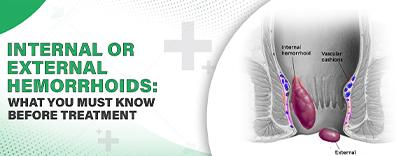
Internal and external hemorrhoids differ in location and symptoms. Internal ones are usually painless but may bleed, while external hemorrhoids can cause pain, itching, or swelling. Early diagnosis and proper treatment are key to relief.
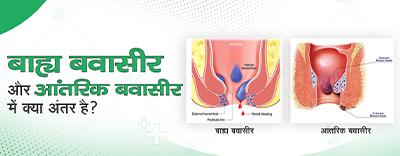
बवासीर दो प्रकार की होती है: बाह्य और आंतरिक। बाह्य बवासीर गुदा के बाहर होती है और इनमें सूजन, जलन और दर्द अधिक होता है। वहीं, आंतरिक बवासीर गुदा के अंदर होती है और अक्सर बिना दर्द के खून आ सकता है। सही पहचान और समय पर इलाज से राहत पाई जा सकती है।
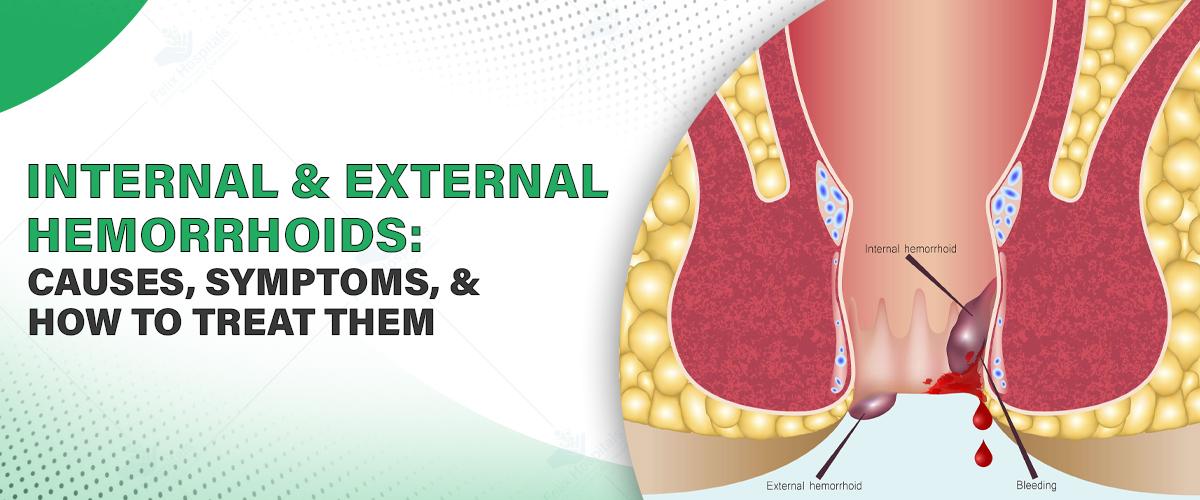
Piles, or hemorrhoids, are swollen veins in the anus and rectum. They are rated as "internal hemorrhoids" (within the rectum) or "external hemorrhoids" (under the skin near the anus). If not treated, both can cause pain, discomfort, bleeding, and other problems.
In this detailed guide, we'll talk about the causes, symptoms, diagnosis, and treatment options for both internal and external hemorrhoids. We'll talk about when to see a hemorrhoids specialist doctor in Greater Noida, how much it will cost, and why it's crucial to choose the right care.
Are you sick of facing discomfort? To get long-lasting hemorrhoid relief, schedule an appointment with a specialist at +91 9667064100 right now.
Most of the time, hemorrhoids are caused by too much pressure on the veins in the rectum or anus. These kinds of pressure can come from a number of prevalent risk factors, such as:
1. Constipation that lasts a long time or straining
One of the most common causes of hemorrhoids is straining to evacuate stools, which is typically a sign of constipation.
2. Sitting for a long time
Sitting for long periods of time, especially on the toilet, puts extra strain on the anal area and raises the risk of hemorrhoids.
3. Diet with little fiber
When you don't eat enough fiber, your stools become hard, making them difficult to pass and causing pain, which may lead to swollen veins.
4. Obesity
Being overweight puts extra pressure on the veins in the rectum and anus, which makes hemorrhoids more likely.
5. Being pregnant
Hormonal changes and increased pressure in the pelvis during pregnancy can cause hemorrhoids.
6. Getting older
As we get older, the tissues that support the rectum get weaker, which makes veins swell and protrude more easily.
7. Lifting Heavy
Lifting heavy things again and over might put more pressure on your abdomen, which can develop hemorrhoids or worsen them.
8. Long-term diarrhea
Chronic diarrhea can make the anal area inflamed and swollen, which can be painful.
Internal hemorrhoids usually don't hurt because they are above the dentate line, where there are less pain receptors. They might cause:
Red blood coming out during or after a bowel movement
Mucus coming out
Itching or irritation from mucus leaking
The feeling of not fully emptying
Prolapse, when the hemorrhoid sticks out of the anus (you may have to push it back in by hand)
External hemorrhoids are located around the anus and are more likely to hurt. Some signs of external hemorrhoids are:
Pain or discomfort when sitting or having a bowel movement
Itching and burning around the anus
Lumps or swelling that can be seen near the anus
Blood on the toilet paper or in the stool
Thrombosis, which is when a clot forms inside the hemorrhoid, making it seem purple and highly painful.
It is very crucial to get the right diagnosis, especially since rectal bleeding can also be a sign of more serious problems, including anal fissures or colon cancer.
Some ways to diagnose are:
Physical Examination: A distant ocular assessment and a digital rectal examination to look for edema.
Anoscopy: A short tube with a light at the end is put into the rectum to look at it.
Sigmoidoscopy/Colonoscopy: This test is needed if there is continuous bleeding or to rule out other gastrointestinal problems.
Some over-the-counter treatments might help with hemorrhoids:
Topical Creams and Ointments: Creams and ointments with hydrocortisone or witch hazel can help calm inflammation and itching.
Stool Softeners: These make your bowel motions softer so you don't have to push as hard.
Pain Relievers: Over-the-counter drugs like ibuprofen and acetaminophen help with pain and discomfort.
If home cures don't work, here are some more advanced options for treating hemorrhoids:
1. Ligation with a rubber band
A rubber band is put at the bottom of an internal hemorrhoid to stop the blood flow, which makes it shrink and fall off.
2. Sclerotherapy
A chemical solution is put into the hemorrhoid to make it smaller.
3. Infrared Coagulation (IRC)
The hemorrhoid is burned out using infrared light, which makes it smaller over time.
These are outpatient therapies that are usually safe and don't take long to recover from.
Surgery may be needed in circumstances that happen again or are very bad:
1. Hemorrhoidectomy
A procedure to remove big or swollen hemorrhoids. This is one of the treatments that works best for long-term relief.
2. Stapled Hemorrhoidopexy
This method moves and staples the hemorrhoidal tissue back into place for prolapsing hemorrhoids.
3. Doppler-Guided Hemorrhoidal Artery Ligation (HAL)
Using Doppler ultrasonography, this method shuts off the arteries that bring blood to the hemorrhoid.
It's crucial to pick a well-equipped place if you're thinking about surgery. Felix Hospital, a top laparoscopic hospital in Greater Noida , offers modern surgical treatments for hemorrhoids with little downtime and great recovery assistance for people in Delhi-NCR.
The hemorrhoid treatment cost in Noida varies depending on the type of therapy, how bad the hemorrhoids are, and how good the facility is. Average:
Non-surgical methods might cost anything from ₹2,000 to ₹10,000.
The least invasive surgeries cost between ₹15,000 and ₹40,000.
The cost of surgery can range from ₹40,000 to ₹80,000 or more, depending on how complicated it is and what type of room it is in.
Always see a hemorrhoids specialist doctor in Noida to get a detailed estimate based on your condition.
If you have any of the following, you should see a doctor:
Rectal bleeding that doesn't stop or is really heavy
Severe swelling or pain
Hemorrhoids that have fallen out and won't go back in
No change after using home remedies
Hemorrhoids that keep coming back or have blood clots
Not getting treatment right away could cause problems including anemia, infections, or abscesses.
It's always preferable to avoid being sick than to get sick. Here are some easy ways to keep hemorrhoids from coming back:
Eat a lot of fiber
Drink plenty of water
Work out often
Don't put off going to the bathroom
Don't stay on the toilet for too long.
Keep your weight in check
These modifications to your lifestyle not only lower your likelihood of getting hemorrhoids, but they also make your digestive health better overall.
Uncertain if it's hemorrhoids? For a comprehensive assessment and skilled treatment, call +91 9667064100.
Internal and external hemorrhoids are common problems that can make you quite uncomfortable and lower your quality of life. The good news is that most cases may be properly managed with early diagnosis and the right therapy, which may include changing your lifestyle, taking medication, or having surgery.
If you live in the Delhi-NCR area and need expert help, see a hemorrhoids doctor specialist near me to get tailored advice and learn about the best treatment options for you. If you prefer non-surgical therapies or a reputable laparoscopic hospital in Noida for specialist care, act quickly to get long-term relief.
Choose the right hemorrhoid treatment today so that you can go back to living your life without any problems.
Dr. Vishal Sharma is an experienced Consultant in General and Laparoscopic Surgery with 11+ years of expertise in minimally invasive, gastrointestinal, trauma, and emergency surgeries. Known for precision and compassionate care, he is recognized among the Best General Surgeons in Greater Noida, ensuring safe procedures and faster recovery with excellent outcomes.
Anal fissures, perianal abscesses, and anal fistulas are common anorectal disorders that can significantly impact an individual's quality of life.
Internal and external hemorrhoids differ in location and symptoms. Internal ones are usually painless but may bleed, while external hemorrhoids can cause pain, itching, or swelling. Early diagnosis and proper treatment are key to relief.


Subscribe to our
© Copyright 2026. All Rights Reserved by Felix Healthcare Private Limited
Design and development by :


 +(91)9667064100
 Emergency : +(91)9667064100