 WhatsApp
 Emergency:
  WhatsApp





Subscribe to our
Back pain that won't quit. Burning when you urinate. A dull ache just below your ribs that comes, goes, and comes back again. Most people ignore it. Pop a painkiller (which only masks the problem) and tell themselves it'll pass. Sometimes it does. Sometimes it's a kidney stone sitting quietly in your ureter, getting larger every week you wait. The frustrating part? The two feel almost identical until one of them doesn't.
A KUB Ultrasound tells you which one it is. At Felix Diagnostic, Gamma-1, Greater Noida, our Kidney Health Ultrasound, USG KUB with doctor consultation, starts at ₹699. Same-day report. A specialist explains it to you before you leave.
Book your KUB scan today: +91 9667064100
KUB stands for Kidneys, Ureters, and Bladder.
Simple, really. It's a non-invasive scan that uses sound waves to examine your entire urinary tract in real time, no radiation, no injections, no prep beyond a full bladder and a few hours without food.
Our radiologists use KUB ultrasound to check:
Kidneys, size, position, internal structure, cysts, stones, hydronephrosis (that's swelling caused by urine that can't drain properly, more common than people realise)
Ureters, dilatation that suggests something is blocking the flow, visible stones
Bladder, wall thickness, stones, residual urine after voiding, masses
Surrounding tissue, fluid collections, lymph nodes, anything unusual near the urinary tract
One thing our technicians see often: patients who drank way too much water beforehand, spending a miserable 40 minutes in the waiting room. You don't need to flood yourself. Two to three glasses an hour before the scan is genuinely all it takes for a clear bladder view.
The radiologist generates your report on-site. The consulting doctor reviews it with you the same day. That last step is what most diagnostic centres in Greater Noida quietly skip, you get a report, you go home, you spend a week trying to find someone to explain what it means. We built our packages so that doesn't happen.
Most labs in NCR charge ₹400–₹700 for the scan. Then another ₹300–₹600 separately for a doctor to look at it. By the time you're done, you've spent ₹1,000–₹1,300 minimum , and you're still standing at the counter holding a printout you can't read.
Our Kidney Health Ultrasound Package is ₹699. Total. Full USG KUB scan plus a doctor consultation, in-person or online.
No separate billing. No add-ons that appear after the scan. ₹699 is the number you pay and the number you budget for.
We see patients at our Gamma-1 centre who've been sitting on symptoms for months , sometimes years , assuming the pain is muscular or digestive. It isn't always.
Flank pain or lower back pain. Particularly one-sided pain below the ribs that sometimes radiates toward the groin. This is the classic kidney stone presentation. It can be sharp and sudden (the kind that sends people straight to an emergency room) or a persistent dull ache that never quite settles. Both are worth scanning.
Burning or pain during urination, along with increased frequency, urgency, or that maddening feeling that your bladder never fully empties even after you've just gone.
Blood in urine. Even once. Even faint pink. Don't wait on this one.
Recurrent UTIs, if you've had three or more infections in a year, there's often an underlying structural reason. The bacteria keep finding conditions to thrive in. A KUB scan shows whether the anatomy is contributing.
Swelling in the legs or face combined with reduced urine output. This can signal kidney function compromise , not something to dismiss as fatigue or dehydration.
Elevated creatinine on blood reports. If your doctor circled a number on your report and said "we need to check your kidneys" , this is the scan they mean.
Prostate symptoms in men, difficulty starting urination, a weak stream, incomplete emptying. The bladder component of a KUB gives the urologist important context here.
Routine kidney health check. Especially if you have diabetes, hypertension, or a family history of kidney disease. These conditions damage kidneys silently over years (no pain, no obvious symptoms) and a KUB ultrasound is one of the few ways to catch structural changes early.
Patients from across Greater Noida, Knowledge Park, Omicron, Alpha, Beta, Noida Extension, Dadri, Surajpur, the Expressway belt, were spending more time navigating separate scan centres, pathology labs, and doctor clinics than they were spending on actual care.
Every package below fixes that. One visit. Right specialist. Everything included.
1. Basic Health Ultrasound , ₹699 USG Abdomen + Specialist Consultation
Full abdominal scan, liver, gallbladder, pancreas, spleen, kidneys, bladder, with a specialist consultation included. The right starting point for abdominal discomfort, bloating, right upper quadrant pain, or a routine check that's been overdue.
2. Kidney Health Ultrasound , ₹699 USG KUB + Doctor Consultation (Online + Offline)
The focused kidney and urinary tract package. Back pain, burning urination, blood in urine, recurrent UTIs, kidney stone suspicion, this is the scan. Consultation available both in-person at Gamma-1 and online, so patients from Dadri, Surajpur, or Noida Extension who can't make a second trip can get their report explained remotely, same day.
3. Women's Wellness Package (PCOS/PCOD) , ₹1,499 USG Pelvis + Thyroid Profile + Vitamin B12 + Vitamin D + Gynaecology Consultation
For women with irregular periods, unexplained weight changes, persistent fatigue, or a suspected PCOS diagnosis. A pelvic ultrasound alone doesn't tell the full story, thyroid dysfunction and vitamin deficiencies almost always run alongside PCOS, and missing them means missing the actual answer. This package looks at everything together. One gynaecologist consultation. One clear picture.
4. Pregnancy Starter Package , ₹999 USG TVS / First Obstetric Ultrasound + Gynaecology Consult + Diet Advice
Your first scan. It confirms intrauterine location, the gestational sac, the foetal heartbeat, and accurate dating. Getting the dates right in the first trimester matters, wrong dates create confusion at every scan that follows and sometimes at delivery itself. The gynaecology consultation and diet advice are part of this. Not extras. Not billed separately.
5. Pregnancy Care Plan (Up to 9 Months) , ₹2,499 3 Ultrasounds (USG Obs for GA & FWB) + 2 Doctor Consults + Diet Advice
Three obstetric scans across your pregnancy, gestational age confirmation, foetal growth monitoring, foetal wellbeing assessment, with two doctor consultations and diet guidance throughout. Three separate USG scans at typical Greater Noida rates would cost more than this package before a single consultation is counted.
6. Senior Citizen Ultrasound Package , ₹1,299 USG Abdomen + ECG + Doctor Consult + Vitamin D + Vitamin B12 + 20% Discount on Follow-Up Consultation + Privilege Card
Built for patients above 60. Abdominal organ screening, a cardiac baseline ECG, and the two deficiencies most consistently missed in older patients (Vitamin D and B12, both affect energy, balance, and cognition in ways that are often misread as "just ageing"). The privilege card gives 20% off all follow-up consultations, because senior patients rarely need just one visit.
7. Delivery Plan , ₹7,499 3 Ultrasounds + 3 Doctor Consults + Diet Advice + 20% Discount on Delivery
Three growth and wellbeing scans. Three doctor consultations. Ongoing diet support. And a 20% discount on delivery charges at Felix Hospital. For families planning to deliver with us, this covers the complete path.
Sometimes ultrasound isn't enough. CT gives a cross-sectional, structural picture that changes clinical decisions, especially for complex pain, suspected masses, chest conditions, or when a stone needs precise sizing before treatment.
1. Neuro Quick Check , ₹1,799 CT Brain + Neurologist Consult + Same-Day Report
Sudden severe headache. Numbness with no obvious cause. A fall. Neurological symptoms that appeared without warning. CT Brain rules out bleeding, stroke, and structural abnormalities fast, and the same-day report means the neurologist reviews findings with you before you leave. Not the next morning. Same day.
2. Chest Infection Package , ₹2,499 CT Chest + Physician Consult + Basic Blood Panel
A cough that won't clear. A fever that keeps returning. A chest X-ray that left more questions than answers. CT Chest detects early pneumonia, fluid around the lungs, and subtle lung changes that standard X-rays consistently miss.
3. Abdominal Pain Package , ₹2,999 CT Abdomen + USG Abdomen + Physician Consult
When the pain is real and the cause isn't. This combination covers it from two angles , ultrasound for real-time soft tissue detail, CT for the structural and cross-sectional view. Both read by our radiologists, both covered in a single physician consultation the same day.
4. Kidney Stone Detect Package , ₹2,499 CT KUB + Urine Routine Microscopy + Urologist Consult
CT KUB is the gold standard for kidney stone detection, significantly more accurate than ultrasound for stones in the ureters (the tubes between kidneys and bladder), which are the most symptomatic stones and the hardest to see on ultrasound due to overlying bowel. Urine analysis is included for infection and crystal assessment. The urologist consultation means you leave knowing the stone's exact size, location, and treatment plan, not just that a stone exists somewhere.
This is the upgrade from the USG KUB when the clinical picture needs precision before laser or surgical treatment.
5. Cardio Risk Scan , ₹2,799 ECHO + ECG + Troponin-T + Cardiologist Consult
Chest discomfort. Breathlessness on stairs. A father who had a heart attack at 55. Palpitations that come back when you least expect them. This package measures, it doesn't guess. Echocardiography for heart structure and function, ECG for the electrical rhythm, Troponin-T as a blood marker for cardiac muscle stress. A cardiologist reviews all three with you in the same visit.
Most patients start here. Fair question.
USG KUB at ₹699 works well for the majority of urinary tract concerns. It detects stones above 3–4mm, assesses kidney size and structure, identifies hydronephrosis, and gives a clear bladder view. No radiation, far lower cost, and the right first scan for most people walking in with kidney or urinary symptoms.
CT KUB at ₹2,499 is the step up when USG is inconclusive, when a ureteric stone is suspected but not visible on ultrasound, or when your urologist needs precise stone dimensions before deciding on laser treatment or surgery. Some stones , especially in the mid-ureter , are genuinely difficult to see on ultrasound even with good technique. CT removes that uncertainty entirely.
Not sure which applies to you? Call us before you come in (+91 9667064100). Our team will go through your symptoms and any existing reports and tell you which scan makes more sense. No charge for that conversation.
Fasting: 4 to 6 hours, no food. Water is fine throughout , in fact, keep drinking it.
Full bladder: Two to three glasses of water about an hour before your scan, and hold it until after. (We know. It's uncomfortable. But it's genuinely necessary for a clear bladder wall view and to measure post-void residue accurately.) Don't overdo it, half a litre is enough. We see patients arrive having drunk nearly a litre and a half, and the wait becomes genuinely miserable.
Clothing: Loose, comfortable. A two-piece outfit, top and trousers or salwar, works best since you'll need to expose your abdomen and lower back.
Documents: Any previous ultrasound reports, blood tests, urine cultures, or prescriptions. A scan read in context is almost always more useful than a scan read in isolation.
We're at Gamma-1, Greater Noida, within 20–30 minutes of Alpha, Beta, Omicron, Pi sectors, Knowledge Park, Noida Extension, Gaur City, Dadri, and Surajpur.
What we consistently hear from patients who visited other centres first: "They gave me the report and sent me home." Some of them came back to us months later, with a fresh referral, for a repeat scan, having spent that entire gap none the wiser.
Every package at Felix includes the right specialist on the same visit. Your actual report in front of them. A real clinical conversation, not a printed number handed over a counter.
That's not a pitch. It's the reason patients from across the Greater Noida–Ghaziabad belt drive past closer centres to get here.
Call or walk in: +91 9667064100 | Felix Diagnostic, Gamma-1, Greater Noida | Open Daily
Back pain. Burning urination. Blood in urine. None of these are symptoms to explain away.
A KUB ultrasound at ₹699, doctor included, takes under an hour at Felix Diagnostic. You leave with your report read, explained, and a clear next step in hand. Not a folder of numbers for some future appointment.
And for patients who need more precision, the Kidney Stone Detect Package at ₹2,499 gives CT-level accuracy with a urologist in the room. Either way, you leave knowing. That matters more than anything else.
Dr. Ruchi is a skilled Radiologist with over 6 years of experience in MRI, CT, ultrasound, and interventional procedures. She has strong expertise in body imaging, neuro imaging, and breast imaging, delivering accurate and patient-focused diagnostic care with evidence-based reporting.
You missed your period. You bought a kit from the local chemist in Alpha 2 or Beta 1, and the home test showed those two life-changing lines. Suddenly, your world shifts. While there is excitement, there is also an immediate, heavy wave of anxiety.
Is the pregnancy growing in the right place? Is there actually a heartbeat? Am I six weeks pregnant or eight?
These are not questions that can wait for a month. They are also not questions that Google or a home pregnancy kit can answer. In the early stages of pregnancy, certainty is the only thing that calms the mind. Your first pregnancy ultrasound, performed by an expert radiologist and interpreted by a gynaecologist who explains the findings in plain language,is the foundation of your journey.
At Felix Diagnostic, Gamma-1, Greater Noida, we understand that early pregnancy is a vulnerable time. Our Pregnancy Starter Package at ₹999 was created specifically to remove the "fragmented care" problem. One visit, one price, and a complete clinical picture of your pregnancy’s health.
Many women in the Noida Extension or Knowledge Park area assume that the "big" scans come later at 20 weeks. While those are important, the First Trimester Scan (6–10 weeks) does things that no later ultrasound can redo.
Did you know that dates calculated based on your Last Menstrual Period (LMP) are often wrong? Many women have irregular cycles or ovulate later than the standard Day 14. This first scan measures the "Crown-Rump Length" (CRL). This measurement is the most accurate way to establish your due date. If you get the dates wrong now, every subsequent growth milestone for the next nine months will be confusing.
This is the most vital safety check. An ectopic pregnancy, where the embryo implants in the fallopian tube instead of the uterus ,is a medical emergency. It still produces a positive result on home tests and can feel like a normal pregnancy initially. Only an ultrasound confirms the pregnancy is where it belongs.
Seeing that tiny flicker on the screen for the first time is more than just an emotional moment. A confirmed heartbeat at 7 or 8 weeks drastically reduces the clinical risk of miscarriage. It is the first sign that the pregnancy is "viable."
In Greater Noida, healthcare can often feel like a series of separate bills. You pay for the scan, then you pay for a doctor’s appointment, then you realize you need a diet chart. At Felix Diagnostic, we’ve bundled these into a single, transparent package.
Service | What Happens During Your Visit |
First Pregnancy USG (TVS/Obs) | Our radiologist checks the gestational sac, yolk sac, and fetal heartbeat. |
Expert Gynaecologist Consultation | Dr. Swati Thakur reviews your scan and answers your specific questions about symptoms or history. |
Personalized Diet Strategy | We map out your first-trimester nutrition, focusing on local North Indian dietary habits. |
The Cost Comparison: Separately across Greater Noida, you would likely spend between ₹1,800 and ₹3,000. We offer this at ₹999 to ensure high-quality early screening is accessible to every family from Pari Chowk to Gaur City.
This is a common point of confusion for first-time mothers. Depending on how many weeks you are, the radiologist will choose one of two methods:
TVS (Transvaginal Sonography): In very early pregnancy (before 8 weeks), the embryo is smaller than a grain of rice. An abdominal scan might not see it clearly. A TVS uses a slim, internal probe to get closer to the uterus, providing high-definition images of the heartbeat and gestational sac. It is painless, though you may feel slight pressure.
Transabdominal Ultrasound: Once you pass 9 or 10 weeks, the uterus rises out of the pelvis. At this stage, the standard "jelly on the stomach" probe provides excellent images.
At Felix Diagnostic, we use the method that gives the most accurate clinical result. You are not charged extra for a TVS.
When you look at the monitor, you might just see black-and-white shapes. Here is what our radiologist is documenting:
The Gestational Sac: The first sign of pregnancy, appearing around 5 weeks.
The Yolk Sac: This provides nourishment to the embryo before the placenta takes over.
The Foetal Pole: The earliest form of the baby, where we measure the length to determine the exact age.
The Heartbeat: Usually visible by 6.5 weeks. We measure the beats per minute (BPM) to ensure the heart is developing correctly.
Ovarian Check: We check your ovaries for any "Corpus Luteum" cysts (which are normal and support the pregnancy) or other cysts that might need monitoring.
While some women wait until 12 weeks for their first checkup, we recommend coming in earlier if you experience:
Positive Home Test: Confirmation is the first step of prenatal care.
Early Spotting or Bleeding: Light bleeding is common but must be checked to rule out a "threatened miscarriage."
One-Sided Abdominal Pain: This can sometimes be a sign of an ectopic pregnancy.
Severe Nausea (Hyperemesis): If you cannot keep water down, you need a consultation to prevent dehydration.
Previous History of Loss: If you have experienced a miscarriage before, early monitoring can help manage hormonal support (like progesterone) if needed.
Most clinics hand you a printed sheet of "Dos and Don'ts." We do things differently. The first trimester is often a battle against nausea and food aversions. Our diet session covers:
Local Nutrients: Focus on Indian staples like moong dal, curd, and seasonal fruits available in the Greater Noida markets.
Folic Acid & Iron: Why these are non-negotiable for your baby's spinal development.
Managing "Morning Sickness": Practical tips for the "Knowledge Park professional" or "Gaur City homemaker" to manage nausea during long commutes or daily chores.
The "Noida Deficiency": Vitamin D deficiency is incredibly high in the NCR region due to indoor lifestyles. We address how to correct this safely during pregnancy.
We believe in radical honesty. Sometimes, a first scan doesn't give a "yes" or "no" answer.
"Dates are behind": You might think you are 7 weeks, but the scan shows 5 weeks. This often happens due to irregular ovulation. Our gynaecologist will explain this and schedule a follow-up scan in 10 days.
"No Heartbeat Seen": If you are very early (under 6 weeks), it is normal not to see a heartbeat yet. We provide a clear timeline for when to re-scan.
Urgent Findings: If our radiologist spots an ectopic pregnancy, you aren't sent home with a report. You are immediately referred to our surgical and gynaecology team at Felix Hospital for management.
Located in Gamma-1, we are a hub for residents of Alpha, Beta, Omicron, and Delta sectors.
Proximity: We are 5 minutes from the Pari Chowk Metro Station.
Speed: We know you are anxious. We provide same-day reports and immediate gynaecologist consultations.
Human Touch: We aren't a high-volume "report factory." Our sonographers talk you through the scan, and our doctors listen to your fears.
Call +91 9667064100 to book your Pregnancy Starter Package.
If you are visiting for your first scan, you may also want to explore our other health initiatives:
PCOS/PCOD Wellness (₹1,499): For those struggling with hormonal imbalances before or between pregnancies.
Pregnancy Care Plan (Up to 9 Months) (₹2,499): A bundled package of 3 essential growth scans and 2 doctor consultations.
Senior Citizen Wellness (₹1,299): For the grandparents-to-be, focusing on cardiac and abdominal health.
Finding out you are pregnant is the start of a long, beautiful, and sometimes overwhelming journey. Don't spend the first few weeks in a state of "Google-induced" panic.
Get the clinical certainty you need. For ₹999, you get the scan, the expert's advice, and the nutritional roadmap to a healthy first trimester.
Visit Felix Hospitals, Gamma-1, Greater Noida. Open Daily.
Book Today: +91 9667064100
Dr. Charu Yadav is an obstetrician and gynecologist with 12+ years of experience, specializing in high-risk and twin pregnancies, ectopic pregnancy, and menstrual disorders. Trained in laparoscopic surgery, she provides care for pregnancy, infertility, menopause, and gynae procedures. She is also recognized among the Best Gynecologists in Noida for her patient-focused treatment.
You searched for "abdomen ultrasound in Greater Noida." Maybe your doctor handed you a slip. Maybe there's been a dull ache on your right side for weeks that you keep telling yourself is nothing. Or maybe you just want to know , really know , what's going on inside.
Whatever brought you here, you deserve a straight answer. On the price. On what you actually get. And on where to go.
At Felix Diagnostic, Gamma-1, Greater Noida, a full USG Abdomen with specialist consultation starts at ₹699. No hidden registration fees. No separate consultation bill added at the end. Same-day reports. One visit. Done.
Book your scan today: +91 9667064100
Let's be direct.
Most diagnostic labs in NCR charge ₹500–₹800 for the scan. Then another ₹300–₹500 for a doctor to read the report. By the time you're done, you've paid ₹1,000–₹1,300 minimum , and you're still standing there with a folder of numbers, no idea what they mean, and a long afternoon ahead of you finding a physician.
Our Basic Health Ultrasound Package at ₹699 bundles the scan and the specialist consultation together. One payment. One visit. A doctor sits with you, reviews your report, and tells you what to do next , on the same day.
That's not a discount tactic. That's just how we think it should work.
A USG Abdomen, also called a stomach ultrasound or abdominal sonography, uses high-frequency sound waves to create real-time images of everything inside your abdomen. No radiation. No needles. No drama.
In a single 15–20 minute scan, our MD Radiologists examine:
Liver , size, texture, fatty changes (extremely common in Greater Noida), cysts, masses
Gallbladder , gallstones, wall thickening, polyps
Pancreas , inflammation (pancreatitis), structural changes
Spleen , enlargement, lesions
Kidneys , stones, cysts, hydronephrosis, size
Urinary Bladder, stones, wall changes, post-void residue
Aorta and major vessels , aneurysm screening in relevant cases
Free fluid , any abnormal fluid collection in the abdomen
All organs. One scan. One price.
We kept hearing the same thing from patients. They'd come in for one scan, get their report, and spend the next week searching for a doctor to explain it. Or they'd need three or four tests and pay for each separately, ending up with a bill far higher than necessary.
So we built these packages. Every one includes the scan and the right specialist. That's not an accident, it's the whole point.
1. Basic Health Ultrasound , ₹699 USG Abdomen + Specialist Consultation
The right starting point for anyone with abdominal discomfort, bloating, right upper quadrant pain, or a routine check that's been overdue. Full abdominal organ scan, plus a physician who reviews your report with you on the same visit. This is the USG abdomen cost in Greater Noida done right, no surprises at the billing counter.
2. Kidney Health Ultrasound , ₹699 USG KUB + Doctor Consultation (Online + Offline)
KUB stands for Kidneys, Ureters, and Bladder. If you've had repeated UTIs, burning while urinating, back pain that won't quit, or a doctor mentioned kidney stones , this is your scan. The consultation is available both in-person and online. Get your report explained without a second trip.
3. Women's Wellness Package (PCOS/PCOD) , ₹1,499 USG Pelvis + Thyroid Profile + Vitamin B12 + Vitamin D + Gynaecology Consultation
This one is for the women who've been told "your reports look mostly normal" , while their periods are irregular, their energy is consistently low, and weight keeps shifting without explanation.
PCOS and PCOD don't show up on one test. They show up across a pattern. This package looks at the full picture: pelvic ultrasound for ovarian morphology, thyroid function (because thyroid and PCOS overlap far more than people realise), and the vitamin levels that directly affect energy, mood, and hormonal balance. The gynaecology consultation is included. Not a follow-up. Not an add-on. Included.
4. Pregnancy Starter Package , ₹999 USG TVS / First Obstetric Ultrasound + Gynaecology Consult + Diet Advice
That first scan matters more than most people realise. A transvaginal sonography (TVS) in early pregnancy confirms the location of the pregnancy, the gestational sac, the foetal heartbeat, and the dating. Getting the dates right early prevents confusion at every scan that follows. Diet advice and the gynaecology consultation are part of this package , not extras.
5. Pregnancy Care Plan (Up to 9 Months) , ₹2,499 3 Ultrasounds (USG Obs for GA & FWB) + 2 Doctor Consults + Diet Advice
Three obstetric ultrasounds across your pregnancy , covering gestational age confirmation, foetal growth, and foetal wellbeing assessment , plus two doctor consultations and ongoing diet guidance. All at ₹2,499. For context: three separate USG scans at typical Greater Noida market rates would cost more than this package alone, before any consultation is counted.
6. Senior Citizen Ultrasound Package , ₹1,299 USG Abdomen + ECG + Doctor Consult + Vitamin D + Vitamin B12 + 20% Discount on Follow-Up Consultation + Privilege Card
Designed specifically for patients above 60. Abdominal organ screening, a cardiac baseline with ECG, the two vitamin deficiencies most commonly missed in older patients , and a privilege card that gives 20% off all follow-up consultations. Because senior patients often need more than one visit, and cost should never be the reason to skip it.
7. Delivery Plan , ₹7,499 3 Ultrasounds + 3 Doctor Consults + Diet Advice + 20% Discount on Delivery
Everything from late pregnancy through delivery planning. Three ultrasounds monitoring growth and foetal wellbeing. Three doctor consultations. Ongoing diet support. And a 20% discount on delivery charges at Felix Hospital. For families planning to deliver at Felix , this is the complete package.
Sometimes an ultrasound isn't enough. CT gives a more detailed, cross-sectional picture , particularly for complex pain, suspected masses, chest conditions, or when USG findings need confirmation.
1. Neuro Quick Check , ₹1,799 CT Brain + Neurologist Consult + Same-Day Report
A sudden severe headache. Numbness that appeared out of nowhere. A fall. A neurological symptom you can't explain. The CT Brain rules out bleeding, stroke, and structural issues , fast. Same-day report means the neurologist consults you before you leave. Not tomorrow. Today.
2. Chest Infection Package , ₹2,499 CT Chest + Physician Consult + Basic Blood Panel
For a persistent cough that won't clear. A fever that keeps coming back. Or a chest X-ray that raised more questions than it answered. CT Chest picks up early pneumonia, pleural effusion, and lung changes that a standard X-ray simply misses.
3. Abdominal Pain Package , ₹2,999 CT Abdomen + USG Abdomen + Physician Consult
When the pain is real but the cause is unclear , this combination covers it from two angles. Ultrasound for real-time soft tissue detail. CT for the structural, cross-sectional view. Both read by our radiologists. Both covered in a single physician consultation.
4. Kidney Stone Detect Package , ₹2,499 CT KUB + Urine Routine Microscopy + Urologist Consult
CT KUB is the gold standard for kidney stone detection , significantly more accurate than ultrasound alone for stones that have moved into the ureters. Add urine analysis and a urologist consultation, and you leave knowing exactly what you're dealing with and what to do next.
5. Cardio Risk Scan , ₹2,799 ECHO + ECG + Troponin-T + Cardiologist Consult
Chest discomfort. Breathlessness when you climb stairs. A family history of heart disease. Palpitations that come and go and come back again. This package doesn't guess , it checks. Echocardiography assesses heart function and structure. ECG checks the electrical rhythm. Troponin-T is a blood marker that rises when the heart muscle is under stress. A cardiologist reviews all three with you in the same visit.
We're at Gamma-1, Greater Noida, a quick 15–20 minute drive from Alpha, Beta, Knowledge Park, Omicron, the Noida Expressway sectors, Noida Extension, Dadri, and Surajpur.
The most common thing we hear from patients who visited other centres first: "They handed me a folder and told me to find a doctor."
We don't do that. Our radiologists generate reports on-site. Our specialist consultations happen the same day. You leave understanding your health , not just holding a printout of it.
Fasting: For USG Abdomen and USG KUB , fast for 4 to 6 hours before the scan. Water is permitted. This keeps the gallbladder full of bile and clearly visible. Gas from recent food can obscure organ detail.
Full bladder: For pelvic ultrasound and KUB scans , come with a comfortably full bladder. Drink 2–3 glasses of water about an hour before your appointment and hold it until after the scan.
For TVS (transvaginal scan): An empty bladder is preferred. Our team will guide you on exact preparation when you book.
Clothing: Wear loose, comfortable clothing. A two-piece outfit (top and trousers or salwar) works best , you'll need to expose your abdomen during the scan.
Documents: Bring any previous scan reports, prescriptions, or test results. They help our radiologists and consulting doctors give you the most accurate interpretation possible.
Getting an abdomen ultrasound in Greater Noida should not cost you an entire morning, three separate bills, and a report you can't understand.
At Felix Diagnostic, it costs ₹699*. It takes under an hour. You leave with a report and a doctor's explanation , in the same visit.
Whether you need a basic abdominal scan, a PCOS workup, a kidney stone check, a pregnancy scan, or cardiac screening , the package exists, the price is honest, and the right specialist is in the room with you.
Dr. Ruchi is a skilled Radiologist with over 6 years of experience in MRI, CT, ultrasound, and interventional procedures. She has strong expertise in body imaging, neuro imaging, and breast imaging, delivering accurate and patient-focused diagnostic care with evidence-based reporting.
Living in Greater Noida and noticing your periods are irregular or your weight won't budge?
Even if your diet hasn’t changed, you might find yourself exhausted by noon ,the kind of tired that sleep doesn't fix. Maybe your skin is breaking out like you’re seventeen again. If you’ve Googled these symptoms, you likely already suspect PCOS.
We fixed that. At Felix Diagnostic, Gamma-1, Greater Noida, our Women Wellness Package for PCOS/PCOD costs ₹1,499. That includes a pelvic ultrasound, thyroid profile, Vitamin B12, Vitamin D, and a gynaecologists consultation.
The ₹1,499 PCOS Package - What's Actually Inside
One visit to our center near Pari Chowk, Gamma-1. Everything was done the same morning
What's Included | Why It Matters |
USG Pelvis | Checks ovarian size, follicle count, uterine lining |
Thyroid Profile (TSH, T3, T4) | Thyroid and PCOS symptoms are almost identical , you need to know which is driving yours |
Vitamin D | Low Vitamin D directly affects ovulation and insulin sensitivity |
Vitamin B12 | Fatigue and mood changes in PCOS are frequently B12-related |
Gynaecologists Consultation | The doctor sees all your reports together and gives you a real answer |
Getting these separately across Greater Noida? You're looking at ₹2,400–₹3,800 minimum. And still no one is sitting with you to explain what it all means.
Don't let generic health blogs confuse you. There is a difference.
PCOD is a functional issue where ovaries release immature eggs that turn into cysts. It’s often managed well with targeted lifestyle changes.
PCOS, however, is a deeper metabolic and endocrine disorder. It involves insulin resistance, androgen (male hormone) excess, and chronic inflammation. Interestingly, the dust, heavy traffic, and sedentary desk-job culture in the Knowledge Park and Surajpur industrial belt can actually worsen the insulin resistance and inflammation that drives PCOS.
The tests for both are the same, but the treatment path is totally different. That’s why the consultation in our package is the most important step.
Unpredictable Periods: Cycles shorter than 21 days or longer than 35.
Abdominal Weight Gain: Weight that refuses to move despite exercise.
Hormonal Acne: Breakouts specifically along the jawline and chin.
Hair Changes: Thinning on the scalp but new, coarse hair on the face or chest.
Trying to conceive with no success after 6–12 months of trying. Three or more of these? Don't wait for it to get worse. The earlier PCOS is caught, the more treatment options are open to you , including straightforward ones.
Most labs hand you a report and leave you to worry. Here’s how our gynaecology team views your results
If the USG shows cysts: This doesn’t automatically mean you have the "syndrome." We look at your blood work and symptoms before labeling it PCOS.
If your Thyroid is off: Sometimes treating the thyroid is all it takes to fix your periods and energy levels.
If Vitamin D is low: This is very common due to indoor office culture. Correcting this can significantly improve how your body handles insulin.
If B12 is deficient: If you’re already on Metformin for PCOS, your B12 levels might be crashing. Fixing this often cures the persistent fatigue.
PCOS is a leading cause of infertility, but it’s also one of the most treatable. It usually comes down to "anovulation", your body isn't releasing eggs regularly. Whether through lifestyle shifts, insulin sensitisers, or ovulation induction, there are clear paths forward. But you can't choose the right path until you have the full hormonal picture.
Women who get diagnosed early have significantly better fertility outcomes than women who discover PCOS only when they're actively trying to conceive. That's not a sales line. That's gynaecology.
Fast for 8–10 hours before your appointment. Blood tests require it. Water and essential medications are fine.
Come with a full bladder for the USG Pelvis. Drink 2–3 glasses of water an hour before. Don't urinate immediately before the scan.
Best cycle timing: Thyroid and vitamins can be tested any day. If your gynaecologists later requests LH, FSH, or oestrogen panels, those are typically done on Day 2–3 of your cycle , but those aren't in this package unless added specifically.
Bring previous reports if you have them. Previous ultrasounds, blood tests, or prescriptions give our team context that makes your consultation more specific, not generic.
Located in Gamma-1, we are 5 minutes from the Pari Chowk Metro. We regularly see women from the Knowledge Park hostels, Gaur City, and the Kasna- Surajpur working corridor. We understand the local lifestyle,the long commutes, the stress, and the diet patterns, and how they collide with hormonal health.
We aren't a "report factory." You won't be handed a folder and shown the door. You’ll sit with a gynaecologist who actually explains what your ovaries and hormones are doing..
Call to book your slot: +91 9667064100
Basic Health Ultrasound- ₹699 USG Abdomen + Specialist Consultation. For abdominal pain, bloating, or routine organ screening.
Kidney Health Ultrasound- ₹699 USG KUB + Doctor Consultation (Online + Offline). For back pain, burning urination, kidney stone suspicion, recurrent UTIs.
Women Wellness Package (PCOS/PCOD) -₹1,499 USG Pelvis + Thyroid Profile + Vitamin B12 + Vitamin D + Gynaecology Consultation. Complete hormonal imbalance testing near Pari Chowk , everything in one visit.
Pregnancy Starter Package- ₹999 USG TVS / First Obstetric Ultrasound + Gynaecology Consult + Diet Advice. First pregnancy scan with accurate dating and a gynaecologist who explains what's happening.
Pregnancy Care Plan (Up to 9 Months) -₹2,499 3 Ultrasounds + 2 Doctor Consults + Diet Advice. Three scans across pregnancy , growth, wellbeing, gestational age , with ongoing diet guidance.
Senior Citizen Ultrasound Package-₹1,299 USG Abdomen + ECG + Doctor Consult + Vitamin D + Vitamin B12 + 20% Discount on Follow-Up + Privilege Card. Built for patients above 60 who need more than a single scan and a rushed handoff.
Delivery Plan - ₹7,499 3 Ultrasounds + 3 Doctor Consults + Diet Advice + 20% Discount on Delivery. For families delivering at Felix Hospital , complete from late pregnancy through the delivery room.
Neuro Quick Check-₹1,799 CT Brain + Neurologist Consult + Same-Day Report. For sudden severe headache, numbness, or neurological symptoms that appeared without warning.
Chest Infection Package - ₹2,499 CT Chest + Physician Consult + Basic Blood Panel. For persistent cough, unresolved fever, or a chest X-ray that raised more questions than it answered.
Abdominal Pain Package - ₹2,999 CT Abdomen + USG Abdomen + Physician Consult. Two imaging angles, one physician, one visit.
Kidney Stone Detect Package - ₹2,499 CT KUB + Urine Routine Microscopy + Urologist Consult. Gold standard stone detection , size, location, treatment plan , in one appointment.
Cardio Risk Scan - ₹2,799 ECHO + ECG + Troponin-T + Cardiologist Consult. Heart structure, rhythm, and stress markers reviewed by a cardiologist the same day.
In the end.
Irregular periods, unexplained weight changes, fatigue that sleep does not fix, acne that will not clear , these are not things to dismiss or manage alone with home remedies and hope.
PCOS is diagnosable. It is manageable. And the earlier you know, the better your outcomes , for your hormonal health, your metabolic health, and your fertility.
Our Women Wellness Package at ₹1,499 gives you the complete picture , pelvic ultrasound, thyroid profile, vitamin B12, vitamin D, and a gynecologists who sits with you and explains what it all means.
Dr. Charu Yadav is an obstetrician and gynecologist with 12+ years of experience, specializing in high-risk and twin pregnancies, ectopic pregnancy, and menstrual disorders. Trained in laparoscopic surgery, she provides care for pregnancy, infertility, menopause, and gynae procedures. She is also recognized among the Best Gynecologists in Noida for her patient-focused treatment.
PCOS/PCOD के कारण महिलाओं में वजन बढ़ना एक आम समस्या है। जानिए इसके कारण, सही डाइट प्लान और प्रभावी इलाज
पीसीओडी (PCOD) महिलाओं में होने वाली एक सामान्य हार्मोनल समस्या है जो पीरियड्स, वजन और फर्टिलिटी को प्रभावित कर सकती है।
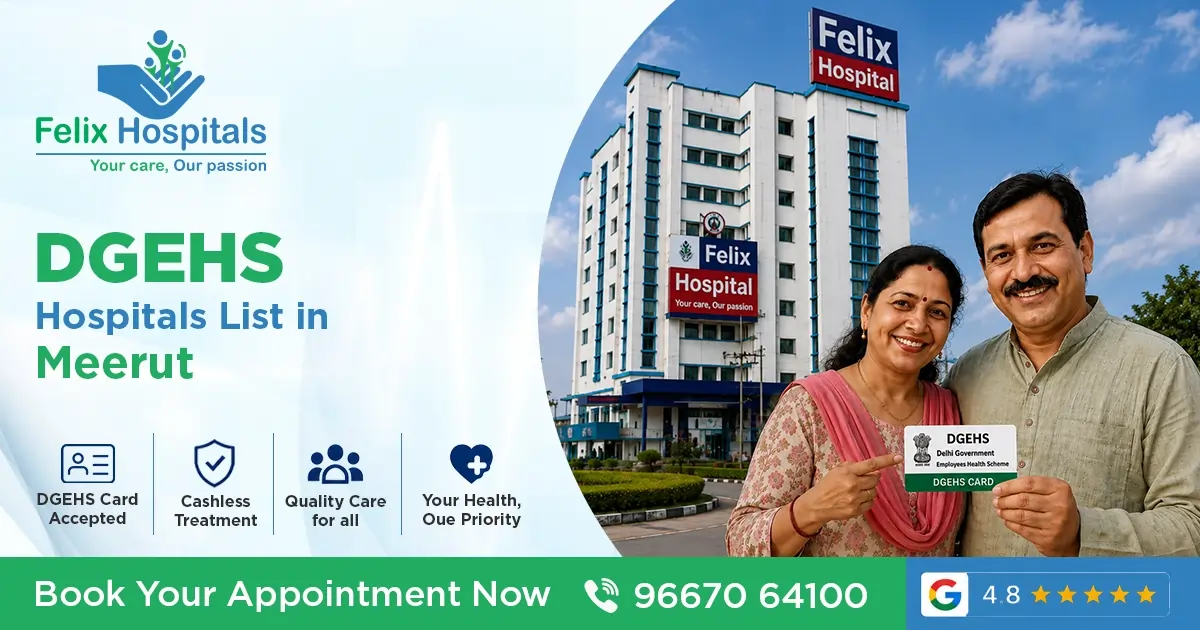
If you're a Delhi Government employee or pensioner living in Meerut, your DGEHS card entitles you to cashless medical care at empanelled hospitals across the NCR region. The challenge most beneficiaries run into isn't the scheme itself — it's assuming that a city as large as Meerut must have a DGEHS empanelled hospital locally. Most don't. And for the ones that do, the specialist depth for tertiary procedures simply isn't there.
The official DGEHS list for the NCR includes government dispensaries and a handful of private setups. Meerut has reasonable local healthcare for routine conditions — but for cardiac surgery, joint replacement, complex oncology, or a delivery requiring a Level III NICU, the options thin out quickly. Felix Hospital in Greater Noida is the closest fully equipped DGEHS empanelled private facility for Meerut residents. The Delhi-Meerut Expressway changed the distance equation significantly. From the Partapur or Modipuram end of the city, most patients reach Felix Hospital in 60 to 75 minutes — and from the Meerut Cantonment side via the expressway interchange, the run to Dasna and then south to Greater Noida is often cleaner than navigating Meerut's own inner roads at peak hours.
DGEHS Helpdesk at Felix Hospital: +91 9667064100
All procedures within DGEHS approved rates are cashless for entitled beneficiaries and their dependants.
Specialty | Key Procedures Covered |
Cardiology and Cardiac Surgery | Angiography, angioplasty, bypass surgery, valve replacement, pacemaker, heart failure management |
Orthopaedics and Joint Replacement | Knee replacement, hip replacement, spine surgery, fracture fixation, bone infection, revision joint surgery |
Neurology and Neurosurgery | Stroke management, brain surgery, spinal conditions, epilepsy treatment |
Oncology | Cancer diagnosis, chemotherapy, radiation therapy, surgical oncology |
Gynaecology and Obstetrics | Normal delivery, C-section, hysterectomy, fibroid surgery, Level III NICU available |
Urology | Laser kidney stone treatment, prostate surgery, urinary tract procedures, dialysis |
General and Laparoscopic Surgery | Gallbladder removal, hernia repair, appendectomy, bariatric surgery |
Paediatrics | Paediatric surgical and medical conditions |
ENT and Ophthalmology | Cataract, ear surgery, tonsillectomy, septoplasty |
Pulmonology | Respiratory conditions, COPD, bronchoscopy, sleep apnoea |
Nephrology and Dialysis | Chronic kidney disease, haemodialysis, 24/7 dialysis unit |
Gastroenterology | Endoscopy, colonoscopy, liver conditions |
Physical Medicine and Rehabilitation | Physiotherapy, occupational therapy, post-surgical rehabilitation |
The Delhi Government Employees Health Scheme is a health protection programme run by the Government of National Capital Territory of Delhi. It covers cashless medical treatment for serving and retired Delhi Government employees and their dependent family members at empanelled hospitals across Delhi and the NCR.
Meerut has one of the largest concentrations of retired Delhi Government employees in western UP. Many spent decades commuting on the old Meerut-Delhi highway and settled here after retirement. The entitlement they built up over those years doesn't expire — but knowing how to use it, and where, is something a lot of families only figure out when a medical crisis is already underway. Felix Hospital in Greater Noida is empanelled under DGEHS, equipped for tertiary care, and reachable from Meerut in well under 90 minutes via the expressway. Full cashless coverage, without the Delhi commute.
Serving Delhi Government employees across all departments and grades are covered. Retired employees drawing pension from the Delhi Government treasury are entitled. So are dependent family members — spouse, unmarried children up to 25 who aren't independently employed, and dependent parents whose income falls below the prescribed threshold.
A dependent child with a certified disability stays covered under the DGEHS card regardless of age, as long as the disability is documented and the child remains financially dependent on the cardholder. Bring the disability certificate issued by a competent authority to the Felix Hospital DGEHS helpdesk at the time of admission.
The DGEHS card is what identifies you as an entitled beneficiary and triggers cashless treatment. At Felix Hospital, you present it at the dedicated helpdesk first. The team verifies your card against the DGEHS system, confirms entitlement, and starts the admission process.
For planned procedures, pre-authorisation is submitted by Felix Hospital on your behalf. For emergencies, treatment begins immediately and authorisation is handled retrospectively. You don't need to visit any DGEHS office or follow up with any government department separately — the hospital's desk manages it.
Cosmetic or aesthetic procedures that aren't medically necessary aren't covered. Experimental treatments or procedures not yet approved in standard clinical practice are excluded. Dental work beyond basic extractions generally falls outside the scheme unless it results from an accident. Spectacles, hearing aids, and assistive devices are covered only within specified limits. Procedures at non-empanelled hospitals don't qualify for cashless treatment — reimbursement claims in these cases are frequently partial or rejected outright.
If you're unsure about a specific procedure, call the Felix Hospital DGEHS helpdesk before you travel.
Room entitlement is determined by the pay level or grade of the serving employee, or the pension equivalent drawn by the retired employee.
Beneficiary Category | Room Entitlement |
Grade A Officers, senior scale and above | Private Room |
Grade B Officers | Semi-Private Room |
Grade C and below | General Ward |
Pensioners | As per last pay drawn equivalent |
Dependants | As per the cardholder's entitlement |
If you choose a higher room category than your entitlement, you pay only the difference in room rent (though most of our Meerut patients find the semi-private rooms more than comfortable for a planned admission). All clinical charges, surgery, medicines during admission, investigations remain at DGEHS approved rates regardless of which room you're in. Confirm your entitlement at the Felix Hospital helpdesk on arrival, or call +91 9667064100 in advance.
Technically, you have two options under DGEHS — cashless at an empanelled hospital, or paying upfront and applying for reimbursement later. In practice, the difference is enormous.
Factor | Reimbursement Route | Cashless at Felix Hospital |
Upfront payment | Required, often substantial | Zero |
Paperwork burden | Bills, forms, submissions, follow-ups | Handled entirely by Felix DGEHS desk |
Waiting period | Weeks to months | Settled directly with DGEHS |
Rate risk | Excess above DGEHS rate not reimbursed | DGEHS rate charged directly |
Stress during hospitalisation | High | Eliminated |
When a family member is unwell, chasing a reimbursement claim is the last thing anyone should be dealing with. Choosing cashless at Felix Hospital removes that entirely.
The cashless claim process at Felix Hospital is handled entirely by the hospital's DGEHS administrative desk. Three things cause most rejections — and all three are avoidable.
First: missing or incomplete documents. An expired DGEHS card, a missing dependent registration, or an Aadhaar mismatch will stall a claim instantly. Carrying the full checklist eliminates this.
Second: treatment at a non-empanelled hospital followed by a reimbursement application — these claims are routinely rejected or only partially settled. Third: procedures falling outside DGEHS approved packages being started without prior clarity on coverage.
At Felix Hospital, the DGEHS helpdesk checks all of this before admission proceeds, not after discharge.
For planned treatment: Planned treatment at a referral hospital like Felix Hospital requires a referral from the Medical Officer at your designated DGEHS dispensary or the Chief Medical Officer of your department. The referral specifies the department and nature of care required.
Bring the referral letter, your DGEHS card, and your Aadhaar to the Felix Hospital DGEHS helpdesk. From there, the hospital manages registration, pre-authorisation, and admission. You don't follow up with any DGEHS office separately.
For emergencies: No referral needed. Walk straight into the Felix Hospital emergency department. DGEHS rules permit direct emergency admission at any empanelled hospital. The clinical team treats first. Documentation and retrospective authorisation are handled after stabilisation.
Mandatory — verification cannot proceed without these:
Valid DGEHS card (physical or digital copy)
Aadhaar card of the patient, original plus one photocopy
Referral letter from DGEHS dispensary or departmental CMO (for planned treatment)
Proof of dependency registration on the DGEHS card (for dependent family members)
Strongly recommended:
Previous medical records, prescriptions, or discharge summaries for ongoing conditions
Disability certificate for dependants covered under the disability provision
Department identity card of the serving or retired employee as secondary identification
For emergencies, come first. Documents can follow once the patient is stable.
Heart attack. Stroke. Major trauma. Respiratory failure.
Don't wait. Just get here.
DGEHS rules explicitly permit direct emergency admission at any empanelled hospital without a prior referral. The Felix Hospital emergency team starts treatment immediately. The DGEHS desk handles documentation and claim submission after the patient is stabilised. When you arrive, tell the emergency team you're a DGEHS beneficiary. That's all you need to do.
Ambulance: +91 9667064100 — 24 hours
For Meerut, the ambulance dispatches via the Delhi-Meerut Expressway corridor. For critical cardiac or neurological cases, calling early allows the team to coordinate a handover en route if needed — don't wait to see if the situation stabilises on its own.
Meerut is a large city with multiple hospitals. It's natural to assume that something close to home will work. The reality is that DGEHS empanelment in Meerut itself is limited, and the hospitals that are on the list often lack the infrastructure for complex procedures — a 24/7 cath lab for cardiac emergencies, robotic-assisted joint replacement, a Level III NICU, or a full oncology unit with radiation therapy.
Felix Hospital in Greater Noida has all of that. And the Delhi-Meerut Expressway — fully operational now — makes the journey far less punishing than it used to be on the old NH-58. From Partapur on the southern end of Meerut, you're at Felix Hospital in around 60 minutes on a normal day. From Modipuram or the Mawana Road end, add 10 to 15 minutes. Even from Sardhana in the north of the district, the expressway route keeps the journey under 90 minutes — comfortably shorter than crossing through Delhi traffic to reach a city-based DGEHS hospital.
Felix Hospital is a tertiary care centre with a 24/7 digital cath lab for cardiac emergencies, robotic and computer-assisted surgery for joint replacement, a Level III NICU for high-risk deliveries, zero-cut laser technology for kidney stone treatment, and laminar airflow operation theatres. NABH accreditation means standards are externally audited, not self-declared.
DGEHS beneficiaries at Felix Hospital get the same doctors, the same operation theatres, and the same post-operative care as every other patient. No separate ward. No lower-priority queue. The billing arrangement doesn't change the treatment.
Area | Route | Approx. Time from Felix |
Meerut city centre / Begum Bridge | Delhi-Meerut Expressway via Dasna | 65 to 75 mins |
Partapur / Modipuram | Southern Meerut via Expressway | 60 to 70 mins |
Meerut Cantonment | Expressway interchange, south via Dasna | 65 to 75 mins |
Mawana | Via Meerut city, Expressway | 75 to 85 mins |
Sardhana | Via Meerut bypass, Expressway | 80 to 90 mins |
Modinagar (Ghaziabad) | NH-9 toward Greater Noida | 45 to 55 mins |
Greater Noida Central, Alpha, Beta | Nearest to Felix | 10 to 15 mins |
For emergencies from Meerut, call the Felix Hospital ambulance immediately. It operates 24 hours and dispatches via the Delhi-Meerut Expressway toward your location.
Delhi Government employees and pensioners living in Meerut have earned their DGEHS entitlement. Felix Hospital makes sure it's honoured — specialist doctors, advanced surgical technology, a dedicated DGEHS administrative desk, and guaranteed cashless treatment for covered procedures, reachable in under 75 minutes via the Delhi-Meerut Expressway.
Felix Hospital, Greater Noida. DGEHS Empanelled, serving Meerut, Modipuram, Mawana, Sardhana, Modinagar, and the broader western UP belt.
Dr. Ravi Sharma is a senior physician with 42+ years of experience, known for compassionate and comprehensive patient care in Noida.
Stay updated with trusted hospitals, specialist care, and ESIC-approved medical facilities across Noida.
Discover the updated list of Ayushman Bharat (PMJAY) hospitals in Dadri for 2026.
Looking for an Ayushman Bharat hospital in Delhi NCR? Discover how Felix Hospital provides quality healthcare services under the Ayushman Bharat Yojana in 2026.
Searching for Ayushman Card hospitals in Ghaziabad? Felix Hospital offers advanced medical care and cashless treatment facilities under the Ayushman Bharat Yojana in 2026.
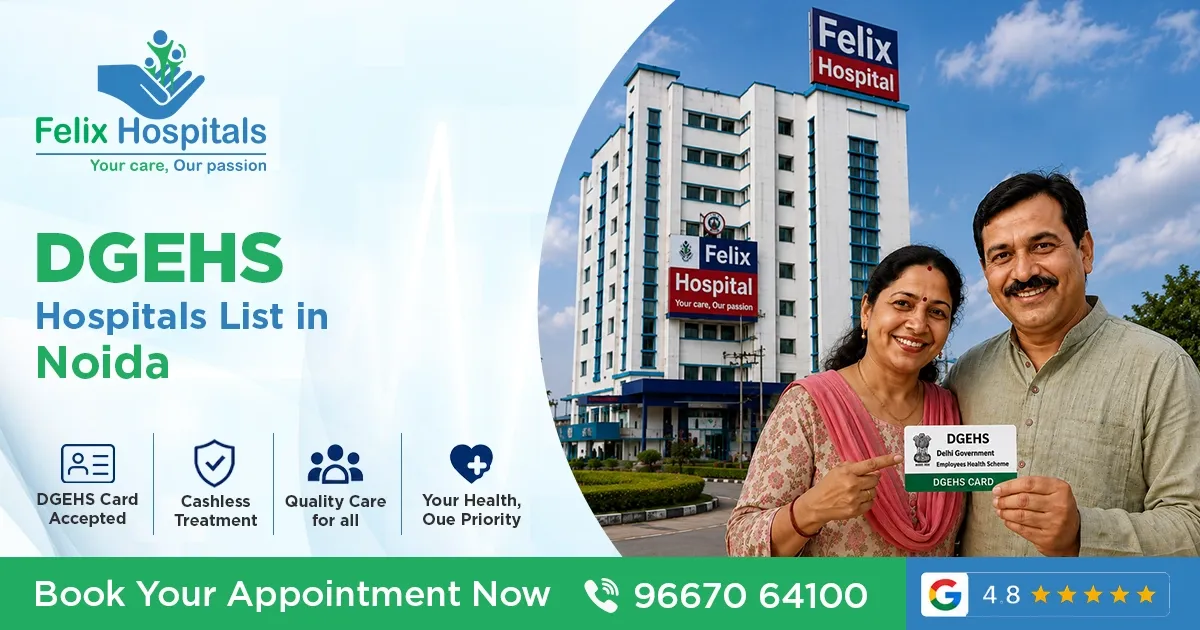
If you're a Delhi Government employee or pensioner living in Noida, your DGEHS card entitles you to cashless medical care at empanelled hospitals across the NCR region. The challenge most Noida beneficiaries run into is different from what families in Meerut or Bulandshahr face. It's not distance. It's assumption — the assumption that DGEHS means going back to Delhi, so nobody looks for what's right next door.
Felix Hospital is in Greater Noida. Noida and Greater Noida share a border. If you're in Sector 137, Sector 150, or anywhere along the Noida-Greater Noida Expressway, you're closer to Felix Hospital than you are to most of Noida's own commercial hubs. Even from Sector 18 or the Sector 62 belt, you're looking at 25 to 35 minutes on the expressway on a reasonable day — a fraction of what it would take to fight your way into a Delhi-based DGEHS hospital. Felix Hospital is fully empanelled under DGEHS, equipped for tertiary care across all major specialties, and has a dedicated helpdesk that handles the entire cashless process so you don't have to.
DGEHS Helpdesk at Felix Hospital: +91 9667064100
All procedures within DGEHS approved rates are cashless for entitled beneficiaries and their dependants.
Specialty | Key Procedures Covered |
Cardiology and Cardiac Surgery | Angiography, angioplasty, bypass surgery, valve replacement, pacemaker, heart failure management |
Orthopaedics and Joint Replacement | Knee replacement, hip replacement, spine surgery, fracture fixation, bone infection, revision joint surgery |
Neurology and Neurosurgery | Stroke management, brain surgery, spinal conditions, epilepsy treatment |
Oncology | Cancer diagnosis, chemotherapy, radiation therapy, surgical oncology |
Gynaecology and Obstetrics | Normal delivery, C-section, hysterectomy, fibroid surgery, Level III NICU available |
Urology | Laser kidney stone treatment, prostate surgery, urinary tract procedures, dialysis |
General and Laparoscopic Surgery | Gallbladder removal, hernia repair, appendectomy, bariatric surgery |
Paediatrics | Paediatric surgical and medical conditions |
ENT and Ophthalmology | Cataract, ear surgery, tonsillectomy, septoplasty |
Pulmonology | Respiratory conditions, COPD, bronchoscopy, sleep apnoea |
Nephrology and Dialysis | Chronic kidney disease, haemodialysis, 24/7 dialysis unit |
Gastroenterology | Endoscopy, colonoscopy, liver conditions |
Physical Medicine and Rehabilitation | Physiotherapy, occupational therapy, post-surgical rehabilitation |
The Delhi Government Employees Health Scheme is a health protection programme run by the Government of National Capital Territory of Delhi. It covers cashless medical treatment for serving and retired Delhi Government employees and their dependent family members at empanelled hospitals across Delhi and the NCR.
Noida has a large and growing population of Delhi Government employees and pensioners. Many are serving — commuting daily into Delhi from Sector 62, Sector 44, Noida Extension, or further south — and many are retired, settled in Noida's newer residential sectors along the expressway. The common thread is the same: when a medical need arises, the default instinct is still to go back to Delhi for DGEHS treatment. That instinct costs time, money, and unnecessary stress. Felix Hospital in Greater Noida is empanelled, equipped, and ten minutes down the expressway from large parts of the city.
Serving Delhi Government employees across all departments and grades are covered. Retired employees drawing pension from the Delhi Government treasury are entitled. So are dependent family members — spouse, unmarried children up to 25 who aren't independently employed, and dependent parents whose income falls below the prescribed threshold.
A dependent child with a certified disability stays covered under the DGEHS card regardless of age, as long as the disability is documented and the child remains financially dependent on the cardholder. Bring the disability certificate issued by a competent authority to the Felix Hospital DGEHS helpdesk at the time of admission.
The DGEHS card is what identifies you as an entitled beneficiary and triggers cashless treatment. At Felix Hospital, you present it at the dedicated helpdesk first. The team verifies your card against the DGEHS system, confirms entitlement, and starts the admission process.
For planned procedures, pre-authorisation is submitted by Felix Hospital on your behalf. For emergencies, treatment begins immediately and authorisation is handled retrospectively. You don't need to visit any DGEHS office or follow up with any government department separately — the hospital's desk manages it.
Cosmetic or aesthetic procedures that aren't medically necessary aren't covered. Experimental treatments or procedures not yet approved in standard clinical practice are excluded. Dental work beyond basic extractions generally falls outside the scheme unless it results from an accident. Spectacles, hearing aids, and assistive devices are covered only within specified limits. Procedures at non-empanelled hospitals don't qualify for cashless treatment — reimbursement claims in these cases are frequently partial or rejected outright.
If you're unsure about a specific procedure, call the Felix Hospital DGEHS helpdesk before you travel.
Room entitlement is determined by the pay level or grade of the serving employee, or the pension equivalent drawn by the retired employee.
Beneficiary Category | Room Entitlement |
Grade A Officers, senior scale and above | Private Room |
Grade B Officers | Semi-Private Room |
Grade C and below | General Ward |
Pensioners | As per last pay drawn equivalent |
Dependants | As per the cardholder's entitlement |
If you choose a higher room category than your entitlement, you pay only the difference in room rent (though most of our Noida patients find the semi-private rooms more than comfortable for a planned stay). All clinical charges — surgery, medicines during admission, investigations — remain at DGEHS approved rates regardless of which room you're in.
Technically, you have two options under DGEHS — cashless at an empanelled hospital, or paying upfront and applying for reimbursement later. In practice, the difference is enormous.
Factor | Reimbursement Route | Cashless at Felix Hospital |
Upfront payment | Required, often substantial | Zero |
Paperwork burden | Bills, forms, submissions, follow-ups | Handled entirely by Felix DGEHS desk |
Waiting period | Weeks to months | Settled directly with DGEHS |
Rate risk | Excess above DGEHS rate not reimbursed | DGEHS rate charged directly |
Stress during hospitalisation | High | Eliminated |
When a family member is unwell, chasing a reimbursement claim is the last thing anyone should be dealing with. Choosing cashless at Felix Hospital removes that entirely.
The cashless claim process at Felix Hospital is handled entirely by the hospital's DGEHS administrative desk. Three things cause most rejections — and all three are avoidable.
First: missing or incomplete documents. An expired DGEHS card, a missing dependent registration, or an Aadhaar mismatch will stall a claim instantly. Carrying the full checklist eliminates this. Second: treatment at a non-empanelled hospital followed by a reimbursement application — these claims are routinely rejected or only partially settled. Third: procedures falling outside DGEHS approved packages being started without prior clarity on coverage.
At Felix Hospital, the DGEHS helpdesk checks all of this before admission proceeds, not after discharge.
For planned treatment: Planned treatment at a referral hospital like Felix Hospital requires a referral from the Medical Officer at your designated DGEHS dispensary or the Chief Medical Officer of your department. The referral specifies the department and nature of care required.
Bring the referral letter, your DGEHS card, and your Aadhaar to the Felix Hospital DGEHS helpdesk. From there, the hospital manages registration, pre-authorisation, and admission. You don't follow up with any DGEHS office separately.
For emergencies: No referral needed. Walk straight into the Felix Hospital emergency department. DGEHS rules permit direct emergency admission at any empanelled hospital. The clinical team treats first. Documentation and retrospective authorisation are handled after stabilisation.
Mandatory — verification cannot proceed without these:
Valid DGEHS card (physical or digital copy)
Aadhaar card of the patient, original plus one photocopy
Referral letter from DGEHS dispensary or departmental CMO (for planned treatment)
Proof of dependency registration on the DGEHS card (for dependent family members)
Strongly recommended:
Previous medical records, prescriptions, or discharge summaries for ongoing conditions
Disability certificate for dependants covered under the disability provision
Department identity card of the serving or retired employee as secondary identification
For emergencies, come first. Documents can follow once the patient is stable.
Heart attack. Stroke. Major trauma. Respiratory failure.
Don't wait. Just get here.
DGEHS rules explicitly permit direct emergency admission at any empanelled hospital without a prior referral. The Felix Hospital emergency team starts treatment immediately. The DGEHS desk handles documentation and claim submission after the patient is stabilised. When you arrive, tell the emergency team you're a DGEHS beneficiary. That's all you need to do.
Ambulance: +91 9667064100 — 24 hours
For Noida, the ambulance dispatches via the Noida-Greater Noida Expressway. From most parts of the city, response times are significantly faster than what any Delhi-based ambulance could manage through city traffic.
For Noida residents, the honest answer to "why Felix?" is simpler than it is for any other location we serve. You don't need a compelling reason to travel far. You need a reason to stop defaulting to Delhi when there's a fully equipped, DGEHS empanelled tertiary care hospital less than half an hour away.
Noida and Greater Noida are the same district — Gautam Buddha Nagar. Felix Hospital sits in the Greater Noida part of that district. Sectors 137, 143, and 150 along the expressway are closer to Felix Hospital than they are to Sector 18. Noida Extension and Gaur City residents are practically at the doorstep — 15 to 20 minutes on a normal day. Even the Sector 62 and Sector 44 belt, further north, runs 30 to 35 minutes via the expressway. That's the same journey in distance as getting from one end of Delhi to another — except without the signal-to-signal crawl.
Felix Hospital is a tertiary care centre with a 24/7 digital cath lab for cardiac emergencies, robotic and computer-assisted surgery for joint replacement, a Level III NICU for high-risk deliveries, zero-cut laser technology for kidney stone treatment, and laminar airflow operation theatres. NABH accreditation means standards are externally audited, not self-declared.
DGEHS beneficiaries at Felix Hospital get the same doctors, the same operation theatres, and the same post-operative care as every other patient. No separate ward. No lower-priority queue. The billing arrangement doesn't change the treatment.
Area | Route | Approx. Time from Felix |
Sector 137, 143, 150 | Noida-Greater Noida Expressway | 10 to 15 mins |
Noida Extension / Gaur City | Via Gaur City stretch | 15 to 20 mins |
Sector 18 / Sector 27 | Expressway southbound | 25 to 30 mins |
Sector 44 / Sector 62 | Expressway via Sector 37 | 30 to 35 mins |
Sector 63 / Sector 65 | Via NH-9, expressway connector | 30 to 40 mins |
Noida Phase 2 / Sector 93 | Direct expressway | 20 to 25 mins |
Greater Noida Central, Alpha, Beta | Nearest to Felix | 10 to 15 mins |
For emergencies from any part of Noida, call the Felix Hospital ambulance immediately. It operates 24 hours and reaches most Noida sectors faster than any Delhi-based response.
Delhi Government employees and pensioners living in Noida don't need to travel back to Delhi for quality specialist care. Felix Hospital is 15 to 35 minutes away depending on your sector, fully empanelled under DGEHS, equipped across all major specialties, and committed to cashless treatment without the administrative runaround.
The hospital is this close. Use it.
+91 9667064100 — DGEHS Helpdesk, Pre-Authorisation Queries, and 24-hour Emergency
Felix Hospital, Greater Noida. DGEHS Empanelled, serving all Noida sectors, Noida Extension, Gaur City, and the broader Gautam Buddha Nagar district.
Dr. Ravi Sharma is a senior physician with 42+ years of experience, known for compassionate and comprehensive patient care in Noida.
Stay updated with trusted hospitals, specialist care, and ESIC-approved medical facilities across Noida.
Discover the updated list of Ayushman Bharat (PMJAY) hospitals in Dadri for 2026.
Looking for an Ayushman Bharat hospital in Delhi NCR? Discover how Felix Hospital provides quality healthcare services under the Ayushman Bharat Yojana in 2026.
Searching for Ayushman Card hospitals in Ghaziabad? Felix Hospital offers advanced medical care and cashless treatment facilities under the Ayushman Bharat Yojana in 2026.

If you're a Delhi Government employee or pensioner living in Hapur, your DGEHS card entitles you to cashless medical care at empanelled hospitals across the NCR region. The challenge most beneficiaries run into isn't the scheme itself — it's not knowing which hospital is close enough to actually use, and whether the card works this far from Delhi.
It does. Hapur became a separate district in 2011, but DGEHS empanelment doesn't follow district boundaries — it covers hospitals across Delhi and the entire NCR region. The official DGEHS list includes government dispensaries and a few private setups, but for Hapur residents who need tertiary care — a cardiac procedure, a joint replacement, a high-risk delivery — most of those options mean going back into Delhi. Felix Hospital in Greater Noida is the practical alternative. Take the Hapur-Dasna road and stay on NH-9 toward Ghaziabad, then cut south toward Greater Noida — most Hapur city patients reach Felix Hospital in 50 to 65 minutes on a clear run. That's a meaningfully shorter journey than going into central Delhi, and without the Ghaziabad city traffic problem if you time it right.
DGEHS Helpdesk at Felix Hospital: +91 9667064100
All procedures within DGEHS approved rates are cashless for entitled beneficiaries and their dependants.
Specialty | Key Procedures Covered |
Cardiology and Cardiac Surgery | Angiography, angioplasty, bypass surgery, valve replacement, pacemaker, heart failure management |
Orthopaedics and Joint Replacement | Knee replacement, hip replacement, spine surgery, fracture fixation, bone infection, revision joint surgery |
Neurology and Neurosurgery | Stroke management, brain surgery, spinal conditions, epilepsy treatment |
Oncology | Cancer diagnosis, chemotherapy, radiation therapy, surgical oncology |
Gynaecology and Obstetrics | Normal delivery, C-section, hysterectomy, fibroid surgery, Level III NICU available |
Urology | Laser kidney stone treatment, prostate surgery, urinary tract procedures, dialysis |
General and Laparoscopic Surgery | Gallbladder removal, hernia repair, appendectomy, bariatric surgery |
Paediatrics | Paediatric surgical and medical conditions |
ENT and Ophthalmology | Cataract, ear surgery, tonsillectomy, septoplasty |
Pulmonology | Respiratory conditions, COPD, bronchoscopy, sleep apnoea |
Nephrology and Dialysis | Chronic kidney disease, haemodialysis, 24/7 dialysis unit |
Gastroenterology | Endoscopy, colonoscopy, liver conditions |
Physical Medicine and Rehabilitation | Physiotherapy, occupational therapy, post-surgical rehabilitation |
The Delhi Government Employees Health Scheme is a health protection programme run by the Government of National Capital Territory of Delhi. It covers cashless medical treatment for serving and retired Delhi Government employees and their dependent family members at empanelled hospitals across Delhi and the NCR.
Hapur has a significant population of retired Delhi Government employees — people who spent their working years commuting into the capital and came back home after retirement. They've earned this entitlement. The problem is that Hapur's local medical infrastructure handles routine care well enough, but it doesn't have the tertiary care depth for complex cardiac conditions, robotic joint surgery, or high-dependency deliveries. Felix Hospital in Greater Noida fills that gap — fully empanelled under DGEHS, with zero upfront payment for covered procedures.
Serving Delhi Government employees across all departments and grades are covered. Retired employees drawing pension from the Delhi Government treasury are entitled. So are dependent family members — spouse, unmarried children up to 25 who aren't independently employed, and dependent parents whose income falls below the prescribed threshold.
A dependent child with a certified disability stays covered under the DGEHS card regardless of age, as long as the disability is documented and the child remains financially dependent on the cardholder. Bring the disability certificate issued by a competent authority to the Felix Hospital DGEHS helpdesk at the time of admission.
The DGEHS card is what identifies you as an entitled beneficiary and triggers cashless treatment. At Felix Hospital, you present it at the dedicated helpdesk first. The team verifies your card against the DGEHS system, confirms entitlement, and starts the admission process.
For planned procedures, pre-authorisation is submitted by Felix Hospital on your behalf. For emergencies, treatment begins immediately and authorisation is handled retrospectively. You don't need to visit any DGEHS office or follow up with any government department separately — the hospital's desk manages it.
Cosmetic or aesthetic procedures that aren't medically necessary aren't covered. Experimental treatments or procedures not yet approved in standard clinical practice are excluded. Dental work beyond basic extractions generally falls outside the scheme unless it results from an accident. Spectacles, hearing aids, and assistive devices are covered only within specified limits. Procedures at non-empanelled hospitals don't qualify for cashless treatment — reimbursement claims in these cases are frequently partial or rejected outright.
If you're unsure about a specific procedure, call the Felix Hospital DGEHS helpdesk before you travel.
Room entitlement is determined by the pay level or grade of the serving employee, or the pension equivalent drawn by the retired employee.
Beneficiary Category | Room Entitlement |
Grade A Officers, senior scale and above | Private Room |
Grade B Officers | Semi-Private Room |
Grade C and below | General Ward |
Pensioners | As per last pay drawn equivalent |
Dependants | As per the cardholder's entitlement |
If you choose a higher room category than your entitlement, you pay only the difference in room rent (though most of our DGEHS patients from Hapur find the semi-private rooms more than adequate for a planned stay). All clinical charges — surgery, medicines during admission, investigations — remain at DGEHS approved rates regardless of which room you're in. Confirm your entitlement at the Felix Hospital helpdesk on arrival, or call +91 9667064100 in advance.
Technically, you have two options under DGEHS — cashless at an empanelled hospital, or paying upfront and applying for reimbursement later. In practice, the difference is enormous.
Factor | Reimbursement Route | Cashless at Felix Hospital |
Upfront payment | Required, often substantial | Zero |
Paperwork burden | Bills, forms, submissions, follow-ups | Handled entirely by Felix DGEHS desk |
Waiting period | Weeks to months | Settled directly with DGEHS |
Rate risk | Excess above DGEHS rate not reimbursed | DGEHS rate charged directly |
Stress during hospitalisation | High | Eliminated |
When a family member is unwell, chasing a reimbursement claim is the last thing anyone should be dealing with. Choosing cashless at Felix Hospital removes that entirely.
The cashless claim process at Felix Hospital is handled entirely by the hospital's DGEHS administrative desk. Three things cause most rejections — and all three are avoidable.
First: missing or incomplete documents. An expired DGEHS card, a missing dependent registration, or an Aadhaar mismatch will stall a claim instantly. Carrying the full checklist eliminates this.
Second: treatment at a non-empanelled hospital followed by a reimbursement application — these claims are routinely rejected or only partially settled.
Third: procedures falling outside DGEHS approved packages being started without prior clarity on coverage.
At Felix Hospital, the DGEHS helpdesk checks all of this before admission proceeds, not after discharge.
For planned treatment: Planned treatment at a referral hospital like Felix Hospital requires a referral from the Medical Officer at your designated DGEHS dispensary or the Chief Medical Officer of your department. The referral specifies the department and nature of care required.
Bring the referral letter, your DGEHS card, and your Aadhaar to the Felix Hospital DGEHS helpdesk. From there, the hospital manages registration, pre-authorisation, and admission. You don't follow up with any DGEHS office separately.
For emergencies: No referral needed. Walk straight into the Felix Hospital emergency department. DGEHS rules permit direct emergency admission at any empanelled hospital. The clinical team treats first. Documentation and retrospective authorisation are handled after stabilisation.
Mandatory — verification cannot proceed without these:
Valid DGEHS card (physical or digital copy)
Aadhaar card of the patient, original plus one photocopy
Referral letter from DGEHS dispensary or departmental CMO (for planned treatment)
Proof of dependency registration on the DGEHS card (for dependent family members)
Previous medical records, prescriptions, or discharge summaries for ongoing conditions
Disability certificate for dependants covered under the disability provision
Department identity card of the serving or retired employee as secondary identification
For emergencies, come first. Documents can follow once the patient is stable.
Heart attack, Stroke, Major trauma, Respiratory failure.
Don't wait. Just get here.
DGEHS rules explicitly permit direct emergency admission at any empanelled hospital without a prior referral. The Felix Hospital emergency team starts treatment immediately. The DGEHS desk handles documentation and claim submission after the patient is stabilised. When you arrive, tell the emergency team you're a DGEHS beneficiary. That's all you need to do.
Ambulance: +91 9667064100 — 24 hours
The ambulance dispatches toward you via the NH-9 and Dasna corridor. For Hapur, calling as early as possible allows the team to coordinate the fastest route or arrange a handover en route for critical cases.
Hapur's medical facilities cover day-to-day needs. But when a family member needs a cardiac bypass, a knee replacement, a cancer diagnosis with radiation therapy, or a delivery where the NICU needs to be ready — local options aren't enough. The default has always been Delhi. Felix Hospital in Greater Noida is a closer answer.
Via the Hapur-Dasna road and NH-9, Hapur city residents typically reach Felix Hospital in 50 to 65 minutes. Pilkhuwa, being closer to the Ghaziabad-Greater Noida belt, usually runs 40 to 50 minutes. Garh Mukteshwar, on the northern edge of the district near the Ganga, takes 70 to 80 minutes via Hapur town — but that's still a faster and less draining journey than fighting your way through Delhi. Simbhaoli comes in around 55 to 65 minutes via the Hapur bypass.
Felix Hospital is a tertiary care centre with a 24/7 digital cath lab for cardiac emergencies, robotic and computer-assisted surgery for joint replacement, a Level III NICU for high-risk deliveries, zero-cut laser technology for kidney stone treatment, and laminar airflow operation theatres. NABH accreditation means standards are externally audited, not self-declared.
DGEHS beneficiaries at Felix Hospital get the same doctors, the same operation theatres, and the same post-operative care as every other patient. No separate ward. No lower-priority queue. The billing arrangement doesn't change the treatment.
Area | Route | Approx. Time from Felix |
Hapur city | NH-9 via Dasna toward Greater Noida | 50 to 65 mins |
Pilkhuwa | Via Ghaziabad-Greater Noida belt | 40 to 50 mins |
Simbhaoli | Via Hapur bypass | 55 to 65 mins |
Garh Mukteshwar | Via Hapur town, NH-9 | 70 to 80 mins |
Dadri | Direct via Greater Noida road | 20 to 25 mins |
Greater Noida Central, Alpha, Beta | Nearest to Felix | 10 to 15 mins |
For emergencies from Hapur, call the Felix Hospital ambulance immediately. It operates 24 hours and dispatches via the NH-9 and Dasna corridor toward your location.
Delhi Government employees and pensioners living in Hapur have earned their DGEHS entitlement. Felix Hospital makes sure it's honoured — specialist doctors, advanced surgical technology, a dedicated DGEHS administrative desk, and guaranteed cashless treatment for covered procedures, reachable in under 65 minutes via NH-9 and the Dasna corridor.
Felix Hospital, Greater Noida. DGEHS Empanelled, serving Hapur, Pilkhuwa, Simbhaoli, Garh Mukteshwar, and the broader Hapur district.
Dr. Ashima Ranjan is an experienced Psychiatry Consultant with 12+ years of expertise in treating depression, anxiety, bipolar disorder, schizophrenia, and other mental health conditions. Known for her compassionate and personalized approach, she is recognized among the Best Psychologists In Noida, providing trusted and patient-focused mental healthcare.
Stay updated with trusted hospitals, specialist care, and ESIC-approved medical facilities across Noida.
Discover the updated list of Ayushman Bharat (PMJAY) hospitals in Dadri for 2026.
Looking for an Ayushman Bharat hospital in Delhi NCR? Discover how Felix Hospital provides quality healthcare services under the Ayushman Bharat Yojana in 2026.
Searching for Ayushman Card hospitals in Ghaziabad? Felix Hospital offers advanced medical care and cashless treatment facilities under the Ayushman Bharat Yojana in 2026.

If you're a Delhi Government employee or pensioner living in Bulandshahr, your DGEHS card entitles you to cashless medical care at empanelled hospitals across the NCR region. The challenge most beneficiaries run into isn't the scheme itself — it's finding a hospital with the specialist depth to handle what your family actually needs, without the runaround at the billing counter.
The official DGEHS list for the NCR includes government dispensaries and a handful of private setups. But Bulandshahr is a separate district, and many beneficiaries aren't sure whether their card even works here. It does. DGEHS covers hospitals across Delhi and the entire NCR region — district boundaries don't change that. For Bulandshahr residents who need tertiary care — heart surgery, robotic joint replacement, complex cancer treatment, a high-risk delivery — Felix Hospital in Greater Noida is the closest fully equipped DGEHS empanelled private facility with the specialist depth to handle it. For those starting from Kala Aam Chauraha, it's a straight shot down NH-91. Most Bulandshahr patients find the drive to Greater Noida is actually smoother than battling internal city traffic toward the District Hospital during peak hours.
DGEHS Helpdesk at Felix Hospital: +91 9667064100
All procedures within DGEHS approved rates are cashless for entitled beneficiaries and their dependants.
Specialty | Key Procedures Covered |
Cardiology and Cardiac Surgery | Angiography, angioplasty, bypass surgery, valve replacement, pacemaker, heart failure management |
Orthopaedics and Joint Replacement | Knee replacement, hip replacement, spine surgery, fracture fixation, bone infection, revision joint surgery |
Neurology and Neurosurgery | Stroke management, brain surgery, spinal conditions, epilepsy treatment |
Oncology | Cancer diagnosis, chemotherapy, radiation therapy, surgical oncology |
Gynaecology and Obstetrics | Normal delivery, C-section, hysterectomy, fibroid surgery, Level III NICU available |
Urology | Laser kidney stone treatment, prostate surgery, urinary tract procedures, dialysis |
General and Laparoscopic Surgery | Gallbladder removal, hernia repair, appendectomy, bariatric surgery |
Paediatrics | Paediatric surgical and medical conditions |
ENT and Ophthalmology | Cataract, ear surgery, tonsillectomy, septoplasty |
Pulmonology | Respiratory conditions, COPD, bronchoscopy, sleep apnoea |
Nephrology and Dialysis | Chronic kidney disease, haemodialysis, 24/7 dialysis unit |
Gastroenterology | Endoscopy, colonoscopy, liver conditions |
Physical Medicine and Rehabilitation | Physiotherapy, occupational therapy, post-surgical rehabilitation |
The Delhi Government Employees Health Scheme is a health protection programme run by the Government of National Capital Territory of Delhi. It covers cashless medical treatment for serving and retired Delhi Government employees and their dependent family members at empanelled hospitals across Delhi and the NCR.
A large portion of Bulandshahr's DGEHS beneficiaries are retired — people who spent their working years in Delhi Government service and came back to their hometown. They've earned this entitlement. The problem is that Bulandshahr's local hospitals don't carry the tertiary care depth for complex conditions, and going back to Delhi feels like the only option. It isn't. Felix Hospital in Greater Noida is empanelled under DGEHS and reachable in under 75 minutes from most parts of the district. Full cashless coverage, without the Delhi commute.
Serving Delhi Government employees across all departments and grades are covered. Retired employees drawing pension from the Delhi Government treasury are entitled. So are dependent family members — spouse, unmarried children up to 25 who aren't independently employed, and dependent parents whose income falls below the prescribed threshold.
A dependent child with a certified disability stays covered under the DGEHS card regardless of age, as long as the disability is documented and the child remains financially dependent on the cardholder. Bring the disability certificate issued by a competent authority to the Felix Hospital DGEHS helpdesk at the time of admission.
The DGEHS card is what identifies you as an entitled beneficiary and triggers cashless treatment. At Felix Hospital, you present it at the dedicated helpdesk first. The team verifies your card against the DGEHS system, confirms entitlement, and starts the admission process.
For planned procedures, pre-authorisation is submitted by Felix Hospital on your behalf. For emergencies, treatment begins immediately and authorisation is handled retrospectively. You don't need to visit any DGEHS office or follow up with any government department separately — the hospital's desk manages it.
Cosmetic or aesthetic procedures that aren't medically necessary aren't covered. Experimental treatments or procedures not yet approved in standard clinical practice are excluded. Dental work beyond basic extractions generally falls outside the scheme unless it results from an accident. Spectacles, hearing aids, and assistive devices are covered only within specified limits. Procedures at non-empanelled hospitals don't qualify for cashless treatment — reimbursement claims in these cases are frequently partial or rejected outright.
If you're unsure about a specific procedure, call the Felix Hospital DGEHS helpdesk before you travel.
Room entitlement is determined by the pay level or grade of the serving employee, or the equivalent pension drawn by the retired employee.
Beneficiary Category | Room Entitlement |
Grade A Officers, senior scale and above | Private Room |
Grade B Officers | Semi-Private Room |
Grade C and below | General Ward |
Pensioners | As per last pay drawn equivalent |
Dependants | As per the cardholder's entitlement |
If you choose a higher room category than your entitlement, you pay only the difference in room rent (though most of our DGEHS patients find the semi-private rooms more than comfortable). All clinical charges — surgery, medicines during admission, investigations — remain at DGEHS approved rates regardless of which room you're in. Confirm your entitlement at the Felix Hospital helpdesk on arrival, or call +91 9667064100 in advance.
Technically, you have two options under DGEHS — cashless at an empanelled hospital, or paying upfront and applying for reimbursement later. In practice, the difference is enormous.
Factor | Reimbursement Route | Cashless at Felix Hospital |
Upfront payment | Required, often substantial | Zero |
Paperwork burden | Bills, forms, submissions, follow-ups | Handled entirely by Felix DGEHS desk |
Waiting period | Weeks to months | Settled directly with DGEHS |
Rate risk | Excess above DGEHS rate not reimbursed | DGEHS rate charged directly |
Stress during hospitalisation | High | Eliminated |
When a family member is unwell, chasing a reimbursement claim is the last thing anyone should be dealing with. Choosing cashless at Felix Hospital removes that entirely.
The cashless claim process at Felix Hospital is handled entirely by the hospital's DGEHS administrative desk. Three things cause most rejections — and all three are avoidable.
First: missing or incomplete documents. An expired DGEHS card, a missing dependent registration, or an Aadhaar mismatch will stall a claim instantly. Carrying the full checklist eliminates this. Second: treatment at a non-empanelled hospital followed by a reimbursement application — these claims are routinely rejected or only partially settled. Third: procedures falling outside DGEHS approved packages being started without prior clarity on coverage.
At Felix Hospital, the DGEHS helpdesk checks all of this before admission proceeds, not after discharge.
For planned treatment: Planned treatment at a referral hospital like Felix Hospital requires a referral from the Medical Officer at your designated DGEHS dispensary or the Chief Medical Officer of your department. The referral specifies the department and nature of care required.
Bring the referral letter, your DGEHS card, and your Aadhaar to the Felix Hospital DGEHS helpdesk. From there, the hospital manages registration, pre-authorisation, and admission. You don't follow up with any DGEHS office separately.
For emergencies: No referral needed. Walk straight into the Felix Hospital emergency department. DGEHS rules permit direct emergency admission at any empanelled hospital. The clinical team treats first. Documentation and retrospective authorisation are handled after stabilisation.
Mandatory — verification cannot proceed without these:
Valid DGEHS card (physical or digital copy)
Aadhaar card of the patient, original plus one photocopy
Referral letter from DGEHS dispensary or departmental CMO (for planned treatment)
Proof of dependency registration on the DGEHS card (for dependent family members)
Strongly recommended:
Previous medical records, prescriptions, or discharge summaries for ongoing conditions
Disability certificate for dependants covered under the disability provision
Department identity card of the serving or retired employee as secondary identification
For emergencies, come first. Documents can follow once the patient is stable.
Heart attack. Stroke. Major trauma. Respiratory failure.
Don't wait. Just get here.
DGEHS rules explicitly permit direct emergency admission at any empanelled hospital without a prior referral. The Felix Hospital emergency team starts treatment immediately. The DGEHS desk handles documentation and claim submission after the patient is stabilised. When you arrive, tell the emergency team you're a DGEHS beneficiary. That's all you need to do.
The ambulance dispatches toward you or coordinates a handover en route if the condition is critical. For Bulandshahr, the NH-91 corridor is the fastest path in both directions.
Bulandshahr has local hospitals. What it doesn't have is tertiary care depth — the infrastructure for cardiac surgery, robotic joint replacement, Level III NICU deliveries, or complex cancer treatment. For conditions like these, the choice has always felt binary: local facilities that aren't equipped, or Delhi hospitals that require a punishing commute through city traffic.
Felix Hospital changes that. Via NH-91 toward Greater Noida, Bulandshahr city is approximately 60 to 75 minutes from Felix Hospital — significantly shorter than travelling into central Delhi, and without the Delhi traffic problem. Sikandrabad, being closer to the Greater Noida border, typically runs 50 to 60 minutes. Khurja, on the eastern edge of the district, can reach Felix via the Dadri corridor in 70 to 85 minutes.
Felix Hospital is a tertiary care centre with a 24/7 digital cath lab for cardiac emergencies, robotic and computer-assisted surgery for joint replacement, a Level III NICU for high-risk deliveries, zero-cut laser technology for kidney stone treatment, and laminar airflow operation theatres. NABH accreditation means standards are externally audited, not self-declared.
DGEHS beneficiaries at Felix Hospital get the same doctors, the same operation theatres, and the same post-operative care as every other patient. No separate ward. No lower-priority queue. The billing arrangement doesn't change the treatment.
Area | Route | Approx. Time from Felix |
Bulandshahr city | NH-91 toward Greater Noida | 60 to 75 mins |
Sikandrabad | NH-91 connector | 50 to 60 mins |
Gulaothi | Via Sikandrabad, NH-91 | 55 to 65 mins |
Khurja | Via Dadri corridor | 70 to 85 mins |
Dadri | Direct via Greater Noida road | 20 to 25 mins |
Greater Noida Central, Alpha, Beta | Nearest to Felix | 10 to 15 mins |
For emergencies from Bulandshahr, call the Felix Hospital ambulance immediately. It operates 24 hours and dispatches via the NH-91 corridor toward your location.
Delhi Government employees and pensioners living in Bulandshahr have earned their DGEHS entitlement. Felix Hospital makes sure it's honoured — specialist doctors, advanced surgical technology, a dedicated DGEHS administrative desk, and guaranteed cashless treatment for covered procedures, reachable in under 75 minutes via NH-91.
Felix Hospital, Greater Noida. DGEHS Empanelled, serving Bulandshahr, Sikandrabad, Khurja, Gulaothi, and the broader western UP belt.
Dr. Ravi Sharma is a senior physician with 42+ years of experience, known for compassionate and comprehensive patient care in Noida.
Stay updated with trusted hospitals, specialist care, and ESIC-approved medical facilities across Noida.
Discover the updated list of Ayushman Bharat (PMJAY) hospitals in Dadri for 2026.
Looking for an Ayushman Bharat hospital in Delhi NCR? Discover how Felix Hospital provides quality healthcare services under the Ayushman Bharat Yojana in 2026.
Searching for Ayushman Card hospitals in Ghaziabad? Felix Hospital offers advanced medical care and cashless treatment facilities under the Ayushman Bharat Yojana in 2026.

It starts like the flu.
You feel tired. Your muscles ache like you ran a marathon you never signed up for. The fever just will not break. Most people wait it out , rest, paracetamol, maybe a Crocin and a day off work. With Hantavirus, that decision can cost you your life.
This is not a disease that gives second chances. It moves fast, it disguises itself well, and by the time most patients reach our emergency department at Felix Hospital, the window for easy intervention is already narrowing. Our internal medicine team put this guide together for one reason , so that you know what to look for before it is too late.
Suspect an infection? Call our 24/7 Emergency Helpline: +91 9667064100
Hantavirus is a family of viruses carried by rodents , rats, mice, and voles. The animal never gets sick. It just carries the virus in its saliva, urine, and droppings, contaminating everything it touches, and moves on. Humans are accidental hosts. We get exposed. And when we do, we have very little natural defence.
HPS , Hantavirus Pulmonary Syndrome: More common in the Americas. Fluid floods the lungs. Mortality rate sits around 40%. Patients can go from mild breathlessness to ventilator-dependent respiratory failure within 24 hours.
HFRS , Hemorrhagic Fever with Renal Syndrome: This is the form more relevant to India and Asia. It targets the kidneys and triggers internal bleeding and shock. We see this risk particularly during and after monsoon season, when rodents in areas like Dadri, Surajpur, and the agricultural belts around Greater Noida are pushed closer to human habitation.
There is no specific antiviral cure for either form. Survival depends almost entirely on how fast you reach an equipped ICU. That is not something we say to frighten you , it is something you need to know before you decide to wait another day at home.
Most people assume you need to be bitten by a rat. You do not.
The most common route is inhalation: When infected rodent droppings, urine, or nesting material is disturbed , swept, moved, kicked up , microscopic viral particles become airborne. One breath is all it takes.
Think about this: you are cleaning out a long-closed storage room in one of the industrial warehouses .Dust rises. You breathe. The exposure happens without a single rodent in sight.
Opening and cleaning long-closed sheds, lofts, or storage rooms
Working in grain godowns or agricultural fields with rodent activity
Sweeping or vacuuming in spaces with visible rodent droppings , without protection
Camping or sleeping outdoors in rodent-dense areas
Monsoon and post-monsoon months , when rodents move into homes, warehouses, and kitchens to escape flooding
Direct contact , touching droppings and then touching your face , and rodent bites are also documented routes, but far less common than inhalation.
Person-to-person spread? In India, for the strains circulating here, the answer is no. You do not catch this from a sick person. You catch it from the environment, a rodent contaminated.
Hantavirus is a master of disguise. That is the clinical reality we deal with.
High fever, often hitting 39–40°C. Severe muscle aches concentrated in the thighs, hips, and lower back. Crushing fatigue. Headache. Chills. Some patients add nausea, vomiting, and abdominal pain to the picture.
At this stage, almost every patient , and many clinicians , assumes Dengue, a seasonal viral fever, or a bad flu. That assumption is where the danger lives.
This is where the two forms diverge, and where things can deteriorate very quickly.
In HPS, a sudden dry cough develops. Then breathlessness. Then the feeling of not being able to get enough air no matter how hard you try. Fluid is accumulating in the lungs. This phase can move from mild discomfort to full respiratory failure within 24 to 48 hours.
In HFRS, the kidneys begin to fail. Urine output drops , or stops entirely. Blood pressure crashes. Patients develop bruising, bleeding from the gums, nosebleeds, and intense back pain. Vision disturbances have been reported.
Our clinical advice, directly: If you have been in any situation involving potential rodent exposure in the last four weeks , cleaning, farming, warehousing, camping , and you develop fever with severe muscle aches, come in. Do not Google. Do not wait. Tell our team about the rodent exposure the moment you arrive. That single piece of information completely changes how we investigate and treat you.
There is no rapid bedside test for Hantavirus available in most settings. Our approach at Felix Hospital combines:
Clinical history first , exposure history is the most important diagnostic tool we have in the early phase. This is why telling your doctor about rodent contact matters so much.
Blood investigations , low platelet count, rising haematocrit, and elevated creatinine are red flags that push us toward Hantavirus in the right clinical context.
ELISA and PCR testing , ELISA detects Hantavirus antibodies; PCR detects viral RNA in the early phase. These confirm the diagnosis.
Chest X-ray and CT , reveals fluid accumulation in the lungs in HPS cases, often before the patient reports significant breathlessness.
We do not wait for confirmed lab results before initiating support. If clinical signs suggest impending respiratory or kidney failure, we act.
Since no specific antiviral cures Hantavirus disease, everything depends on how well and how fast we support the body while the immune system does the heavy lifting.
Our ICU at Felix Hospital is equipped with advanced ventilators and 24/7 dialysis capability. We do not move patients around or refer out for critical support , it is all in-house, around the clock.
For HPS patients: Oxygen therapy begins immediately. If oxygen saturation drops and does not respond, we move to mechanical ventilation without delay. Fluid management is carefully controlled , too much fluid worsens lung accumulation; too little worsens shock. It is a balance our critical care team manages continuously.
For HFRS patients: Kidney function is monitored aggressively. When dialysis is needed, our nephrology team initiates it without waiting for the situation to worsen. Bleeding complications are managed with blood product support.
Every hour matters. Our internal medicine and critical care teams work together from admission , because in Hantavirus, there is no time for a slow handoff.
Medical emergency? Do not call a cab. Call us first: +91 9667064100
No approved vaccine exists for Hantavirus in India. Prevention is entirely behavioral , and it works. Seal your space. Any gap or hole larger than 6mm is an entry point for a mouse. Seal with steel wool packed into the gap, then cover with cement. Check around pipes, utility lines, and skirting boards , these are the routes rodents use most.
The wet cleaning rule , follow it every time. Never dry sweep or vacuum rodent droppings. This is the single most dangerous thing you can do in a contaminated space. Instead: put on gloves and an N95 mask, spray the droppings and surrounding area with a 1:10 bleach-to-water solution, wait five full minutes, then wipe up with damp disposable paper towels. Seal everything in a plastic bag. Wash your hands after removing gloves.
Store food properly: Grains, pulses, and pet food stored in cloth bags or open containers are an open invitation. Switch to thick plastic or metal containers with tight-fitting lids. This single change dramatically reduces rodent activity in kitchen and storage areas.
Before entering a closed space , an old shed, a storeroom that has been shut for months, a farm building after monsoon , open it and let it air for at least 30 minutes before entering. Wear a mask. Do not clean it dry.
Monsoon-specific advice: As flooding and waterlogging push rodents out of fields and drains in areas around Dadri, Surajpur, Noida Extension, and the Greater Noida industrial corridors , check for rodent entry points in your home and workplace every year before monsoon season begins.
Hantavirus does not give you a warning shot. It disguises itself as flu, buys itself a week, and then moves fast.
If you have had any rodent exposure in the last month , cleaning, farming, warehousing, camping , and you develop fever with severe muscle aches and fatigue, do not wait it out at home. Come to our emergency department at Felix Hospital in Greater Noida immediately. Tell our team about the exposure. That is the most important thing you can do.
Dr. Anshumala Sinha is an experienced Internal Medicine and Diabetology specialist with 20+ years of practice. She specializes in diabetes management, infectious diseases, fever treatment, hypertension, cholesterol control, weight management, and trauma care. Recognized among the Best General Physicians in Noida, she provides comprehensive and patient-focused medical care.
Consult the best general physician for dengue fever at Felix Hospital. Their expertise in diagnosing and managing dengue virus infections can lead to timely and effective treatment.
Take special care of the health of your kids, especially young children, amidst the changing seasons.
Nipah virus infection causes severe fever and brain inflammation. It spreads through infected animals or close contact and requires strict preventive measures.

If you're a Delhi Government employee or pensioner living in Jewar, your DGEHS card entitles you to cashless medical care at empanelled hospitals across the NCR region. The challenge most beneficiaries run into isn't the scheme itself , it's finding a hospital close enough to actually use, with the specialist depth to handle what your family needs.
The official DGEHS list for the NCR includes government dispensaries and a handful of private setups. But for Jewar residents who need tertiary care ,heart surgery, robotic joint replacement, a high-risk delivery , most of those options mean driving all the way to Delhi. That's a real problem when you're at the southern tip of Gautam Buddha Nagar, one of the furthest points in the district from the capital. Felix Hospital in Greater Noida changes that calculation. Empanelled under DGEHS and about 35 to 45 minutes away via the Yamuna Expressway, it's the closest fully equipped private facility with the specialist depth Jewar residents actually need.
DGEHS Helpdesk at Felix Hospital: +91 9667064100
All procedures within DGEHS approved rates are cashless for entitled beneficiaries and their dependants.
Specialty | Key Procedures Covered |
Cardiology and Cardiac Surgery | Angiography, angioplasty, bypass surgery, valve replacement, pacemaker, heart failure management |
Orthopaedics and Joint Replacement | Knee replacement, hip replacement, spine surgery, fracture fixation, bone infection, revision joint surgery |
Neurology and Neurosurgery | Stroke management, brain surgery, spinal conditions, epilepsy treatment |
Oncology | Cancer diagnosis, chemotherapy, radiation therapy, surgical oncology |
Gynaecology and Obstetrics | Normal delivery, C-section, hysterectomy, fibroid surgery, Level III NICU available |
Urology | Laser kidney stone treatment, prostate surgery, urinary tract procedures, dialysis |
General and Laparoscopic Surgery | Gallbladder removal, hernia repair, appendectomy, bariatric surgery |
Paediatrics | Paediatric surgical and medical conditions |
ENT and Ophthalmology | Cataract, ear surgery, tonsillectomy, septoplasty |
Pulmonology | Respiratory conditions, COPD, bronchoscopy, sleep apnoea |
Nephrology and Dialysis | Chronic kidney disease, haemodialysis, 24/7 dialysis unit |
Gastroenterology | Endoscopy, colonoscopy, liver conditions |
Physical Medicine and Rehabilitation | Physiotherapy, occupational therapy, post-surgical rehabilitation |
Before you travel, call +91 9667064100 to confirm your specific procedure is covered under DGEHS rates.
The Delhi Government Employees Health Scheme is a health protection programme run by the Government of National Capital Territory of Delhi. It covers cashless medical treatment for serving and retired Delhi Government employees and their dependent family members at empanelled hospitals across Delhi and the NCR.
Jewar has been attracting more Delhi Government families in recent years — many drawn by the Yamuna Expressway corridor and the development activity around the upcoming Noida International Airport. For those families, travelling back to Delhi for every specialist visit simply isn't realistic. DGEHS empanelled hospitals like Felix Hospital in Greater Noida exist for exactly this reason: full cashless coverage, without the commute.
Serving Delhi Government employees across all departments and grades are covered. Retired employees drawing pension from the Delhi Government treasury are entitled. So are dependent family members , spouse, unmarried children up to 25 who aren't independently employed, and dependent parents whose income falls below the prescribed threshold.
A dependent child with a certified disability stays covered under the DGEHS card regardless of age, as long as the disability is documented and the child remains financially dependent on the cardholder. Bring the disability certificate issued by a competent authority to the Felix Hospital DGEHS helpdesk at the time of admission.
The DGEHS card is what identifies you as an entitled beneficiary and triggers cashless treatment. At Felix Hospital, you present it at the dedicated helpdesk first. The team verifies your card against the DGEHS system, confirms entitlement, and starts the admission process.
For planned procedures, pre-authorisation is submitted by Felix Hospital on your behalf. For emergencies, treatment begins immediately and authorisation is handled retrospectively. You don't need to visit any DGEHS office or follow up with any government department separately — the hospital's desk manages it.
Cosmetic or aesthetic procedures that aren't medically necessary aren't covered. Experimental treatments or procedures not yet approved in standard clinical practice are excluded. Dental work beyond basic extractions generally falls outside the scheme unless it results from an accident. Spectacles, hearing aids, and assistive devices are covered only within specified limits. Procedures at non-empanelled hospitals don't qualify for cashless treatment — reimbursement claims in these cases are frequently partial or rejected.
If you're unsure about a specific procedure, call the Felix Hospital DGEHS helpdesk before you travel.
Room entitlement is determined by the pay level or grade of the serving employee, or the equivalent pension drawn by the retired employee.
Beneficiary Category | Room Entitlement |
Grade A Officers, senior scale and above | Private Room |
Grade B Officers | Semi-Private Room |
Grade C and below | General Ward |
Pensioners | As per last pay drawn equivalent |
Dependants | As per the cardholder's entitlement |
If you choose a higher room category than your entitlement, you pay only the difference in room rent. All clinical charges — surgery, medicines during admission, investigations — remain at DGEHS approved rates regardless of which room you're in. Confirm your entitlement at the Felix Hospital helpdesk on arrival, or call +91 9667064100 in advance.
Technically, you have two options under DGEHS — cashless at an empanelled hospital, or paying upfront and applying for reimbursement later. In practice, the difference is enormous
Factor | Reimbursement Route | Cashless at Felix Hospital |
Upfront payment | Required, often substantial | Zero |
Paperwork burden | Bills, forms, submissions, follow-ups | Handled entirely by Felix DGEHS desk |
Waiting period | Weeks to months | Settled directly with DGEHS |
Rate risk | Excess above DGEHS rate not reimbursed | DGEHS rate charged directly |
Stress during hospitalisation | High | Eliminated |
When a family member is unwell, chasing a reimbursement claim is the last thing anyone should be dealing with. Choosing cashless at Felix Hospital removes that entirely.
The cashless claim process at Felix Hospital is handled entirely by the hospital's DGEHS administrative desk. Three things cause most rejections — and all three are avoidable.
First: missing or incomplete documents. An expired DGEHS card, a missing dependent registration, or an Aadhaar mismatch will stall a claim instantly. Carrying the full checklist eliminates this. Second: treatment at a non-empanelled hospital followed by a reimbursement application — these claims are routinely rejected or only partially settled. Third: procedures falling outside DGEHS approved packages being started without prior clarity on coverage.
At Felix Hospital, the DGEHS helpdesk checks all of this before admission proceeds, not after discharge.
For planned treatment: Planned treatment at a referral hospital like Felix Hospital requires a referral from the Medical Officer at your designated DGEHS dispensary or the Chief Medical Officer of your department. The referral specifies the department and nature of care required.
Bring the referral letter, your DGEHS card, and your Aadhaar to the Felix Hospital DGEHS helpdesk. From there, the hospital manages registration, pre-authorisation, and admission. You don't follow up with any DGEHS office separately.
For emergencies: No referral needed. Walk straight into the Felix Hospital emergency department. DGEHS rules permit direct emergency admission at any empanelled hospital. The clinical team treats first. Documentation and retrospective authorisation are handled after stabilisation.
Mandatory — verification cannot proceed without these:
Valid DGEHS card (physical or digital copy)
Aadhaar card of the patient, original plus one photocopy
Referral letter from DGEHS dispensary or departmental CMO (for planned treatment)
Proof of dependency registration on the DGEHS card (for dependent family members)
Previous medical records, prescriptions, or discharge summaries for ongoing conditions
Disability certificate for dependants covered under the disability provision
Department identity card of the serving or retired employee as secondary identification
For emergencies, come first. Documents can follow once the patient is stable.
Heart attack. Stroke. Major trauma. Respiratory failure.
Don't wait. Don't look for paperwork. Just get here.
DGEHS rules explicitly permit direct emergency admission at any empanelled hospital without a prior referral. The Felix Hospital emergency team starts treatment immediately. The DGEHS desk handles documentation and claim submission after the patient is stabilised. When you arrive, tell the emergency team you're a DGEHS beneficiary. That's all you need to do.
For Delhi Government employees and pensioners in Jewar, the distance problem is real. Jewar sits at the southern end of Gautam Buddha Nagar district — further from Delhi than almost any other town in the NCR. Driving to a Delhi-based DGEHS hospital for a planned procedure means an hour-plus journey each way through city traffic. That's not sustainable for regular specialist care.
The Yamuna Expressway changes things. It's a straight, fast road. Most Jewar residents can reach Felix Hospital in 35 to 45 minutes on a normal day — less if you're coming from the northern end of the tehsil toward Rabupura. That's a meaningful difference. And for an emergency, the expressway means the ambulance reaches you faster too.
Felix Hospital is a tertiary care centre with a 24/7 digital cath lab for cardiac emergencies, robotic and computer-assisted surgery for joint replacement, a Level III NICU for high-risk deliveries, zero-cut laser technology for kidney stone treatment, and laminar airflow operation theatres. NABH accreditation means standards are externally audited, not self-declared.
DGEHS beneficiaries at Felix Hospital get the same doctors, the same operation theatres, and the same post-operative care as every other patient. No separate ward. No lower-priority queue. The billing arrangement doesn't change the treatment.
Area | Route | Approx. Time from Felix |
Jewar town | Yamuna Expressway northward | 35 to 45 mins |
Rabupura tehsil | Via Yamuna Expressway service road | 30 to 40 mins |
Dankaur | Via NH-91 connector | 25 to 35 mins |
Dadri | Direct via Greater Noida road | 20 to 25 mins |
Greater Noida Central, Alpha, Beta | Nearest to Felix | 10 to 15 mins |
Surajpur and Kasna | Direct route | 15 to 20 mins |
For emergencies from Jewar, call the Felix Hospital ambulance immediately. It operates 24 hours and dispatches via the Yamuna Expressway corridor to your location.
Delhi Government employees and pensioners living in Jewar don't need to travel back to Delhi for quality specialist care. Felix Hospital is 35 to 45 minutes away via the Yamuna Expressway, fully empanelled under DGEHS, equipped across all major specialties, and committed to cashless treatment without the administrative runaround.
Felix Hospital, Greater Noida. DGEHS Empanelled, serving Jewar, Rabupura, Dankaur, Dadri, and the broader Gautam Buddha Nagar district.
Dr. Anshumala Sinha is an experienced Internal Medicine and Diabetology specialist with 20+ years of practice. She specializes in diabetes management, infectious diseases, fever treatment, hypertension, cholesterol control, weight management, and trauma care. Recognized among the Best General Physicians in Noida, she provides comprehensive and patient-focused medical care.
Stay updated with trusted hospitals, specialist care, and ESIC-approved medical facilities across Noida.
Discover the updated list of Ayushman Bharat (PMJAY) hospitals in Dadri for 2026.
Looking for an Ayushman Bharat hospital in Delhi NCR? Discover how Felix Hospital provides quality healthcare services under the Ayushman Bharat Yojana in 2026.
Searching for Ayushman Card hospitals in Ghaziabad? Felix Hospital offers advanced medical care and cashless treatment facilities under the Ayushman Bharat Yojana in 2026.
Subscribe to our
© Copyright 2026. All Rights Reserved by Felix Healthcare Private Limited
Design and development by :


 +(91)9667064100
 Emergency : +(91)9667064100