 Emergency:
  WhatsApp


Subscribe to our
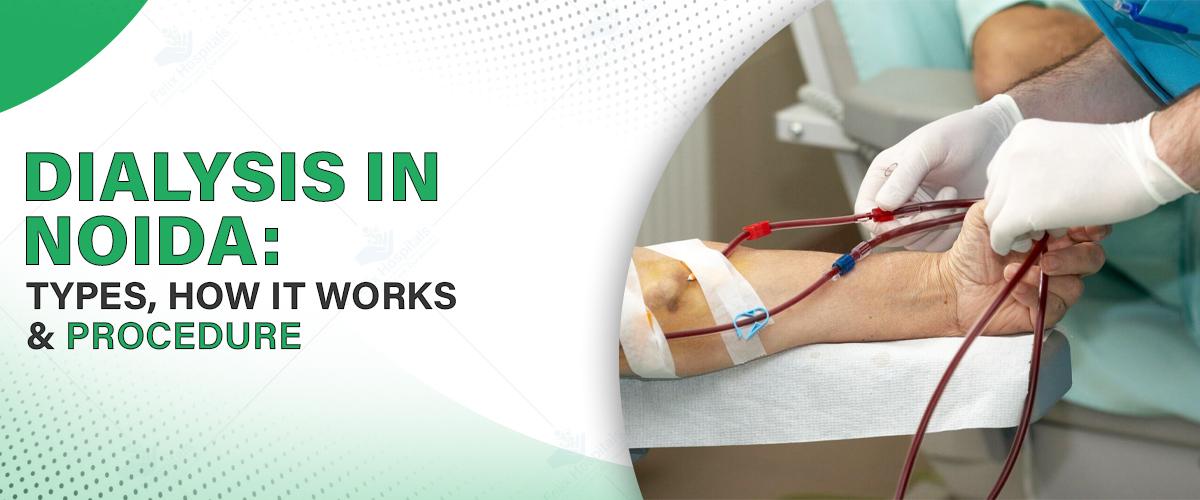
Every year, thousands of people in India get kidney failure, which is a very serious disease. The kidneys can't filter out waste, extra fluids, and toxins from the blood when they don't work right. Dialysis is a life-saving treatment for people whose kidneys can no longer do this important job. A rapidly expanding city with a state-of-the-art healthcare system, dialysis is easily accessible at the best hospital for dialysis treatment in Noida. It has greatly improved the quality of life for many patients.
This in-depth blog talks about what dialysis is, the different kinds, how it works, the steps involved, and what patients can expect during the treatment process.
To make an appointment for a kidney health check-up today, call +91 9667064100.
Dialysis is a medical procedure that replicates the vital functions of healthy kidneys. When kidneys fail due to chronic kidney disease (CKD), diabetes, high blood pressure, or other causes, harmful waste products accumulate in the bloodstream. Dialysis aids in the removal of these wastes, the maintenance of proper chemical balance, and the regulation of fluid levels in the body.
When the kidneys stop working at less than 15% of their normal level, dialysis is needed. Depending on how severe their kidney disease is and how quickly it is getting worse, patients may require dialysis in Noida for a short period of time or for the rest of their lives.
There are a number of things that can hurt the kidneys and make dialysis necessary. Common causes include:
Chronic Kidney Disease (CKD)
Diabetes mellitus, both types 1 and 2
Hypertension, or high blood pressure.
Glomerulonephritis
Lupus and other diseases that attack the body's own cells.
Infections or trauma can cause acute kidney injury.
Some patients may only need dialysis in Noida for a short time while their kidneys heal, while others may need it for the rest of their lives or until a kidney transplant becomes available.
There are two main kinds of dialysis:
The most common type of dialysis is hemodialysis. It uses a machine called a dialyzer, which acts like an artificial kidney. A needle or catheter is used to take blood out of the body during the procedure.
It goes through the dialyzer, which removes extra fluids and waste products.
The blood that has been cleaned is then put back into the body.
Most of the time, hemodialysis is done three times a week for about four hours each time. It can be done at home with medical supervision or in a healthcare facility.
The lining of the abdominal cavity (peritoneum) is used as a natural filter in peritoneal dialysis. A catheter puts dialysate, a sterile cleaning fluid, into the abdomen. Before being drained, the dialysate takes in waste and extra fluids.
There are two kinds of peritoneal dialysis:
Ambulatory All the Time People do Continuous Ambulatory Peritoneal Dialysis (CAPD) by hand several times a day, without machines.
Automated Peritoneal Dialysis (APD): A machine does it at night while the patient sleeps.
Peritoneal dialysis provides more flexibility and independence than hemodialysis.
Dialysis takes the place of kidney function by getting rid of waste products like urea and creatinine.
Keeping potassium and sodium levels in balance.
To lower swelling and high blood pressure, the body gets rid of extra fluid.
The dialyzer in hemodialysis uses a semi-permeable membrane to keep blood and waste apart.
The peritoneum does this job in peritoneal dialysis.
A vascular access or catheter is put in before dialysis starts.
An arteriovenous (AV) fistula or graft is surgically made, usually in the arm, for hemodialysis.
To do peritoneal dialysis, a soft tube is put into the abdomen to move fluids around.
The machine slowly takes blood out, cleans it, and puts it back in. Vital signs are monitored.
Peritoneal Dialysis: The patient fills their stomach with dialysate, waits a few hours, and then empties it. APD is automatic and doesn't take much work while you sleep.
After treatment, patients may feel tired or dizzy. It is very important to eat a diet that is good for your kidneys, drink less water, and take your medications as directed.
Gets rid of extra fluid and harmful toxins.
Makes you hungrier, gives you more energy, and clears your mind.
Checks blood pressure and levels of electrolytes.
Dialysis generally enhances the quality of life when the kidneys aren't functioning properly.
Dialysis can save your life, but it can also be dangerous in some ways:
Infections (especially with peritoneal dialysis)
Blood pressure is low during sessions.
Muscle cramps or tiredness.
Problems with vascular access, like clotting or narrowing
Pain in the stomach or a hernia while doing peritoneal dialysis
Patients should see their doctors regularly and tell them about any strange symptoms.
Dialysis does not fix kidney disease. It is a treatment that helps people live longer and feel better. The only long-term treatment for kidney failure that can't be fixed is a kidney transplant.
Dialysis requires changes to one's way of life, but many patients still lead active lives. Emotional support, a diet that is good for your kidneys, regular exercise, and seeing the best nephrologist in Noida on time can all help you get healthier.
If you or someone you care about is showing signs of kidney failure, now is the time to take action. Dialysis in Noida may be avoided or postponed with early diagnosis and treatment.
Start on the path to a healthier future. Please get in touch with us today to talk to our care team.
People with kidney failure need dialysis as a necessary treatment. Patients and their families can make the process easier by knowing how it works, what the different types are, and what to expect. Access to modern dialysis facilities in Noida makes sure that people who need it get treatment quickly and effectively. If you receive the right help, modify your lifestyle, and monitor your health, you can lead a full life even with kidney failure.
Felix Hospital stands as the best kidney hospital in Noida, offering advanced nephrology care with expert doctors and state-of-the-art facilities for a comprehensive kidney specialist in Noida.
Q1. Can I go on vacation while I'm getting dialysis?
Ans: Yes, dialysis patients can travel if they plan ahead. Before you leave, make sure to talk to your dialysis center about scheduling treatments at your destination.
Q2. Can you switch from peritoneal dialysis to hemodialysis, and vice versa?
Ans: Yes, some patients switch types depending on their health, way of life, or the results of their treatment. Always talk to your doctor before making any changes.
Q3. Can people who are on dialysis go to school or work?
Ans: Of course. A lot of people who go to dialysis still go to work or school on a regular basis. This is made easier by flexible dialysis schedules and options for doing it at home.
Q4. What effects does dialysis have on sexual health and fertility?
Ans: Yes, it could change hormones and sex drive. Both men and women may notice changes, but with help and medical advice, these issues can be handled.
Q5. What foods should I eat while on dialysis?
Ans: It is recommended that you follow a renal diet that is low in sodium, potassium, and phosphorus. A dietitian can make a meal plan just for you.
Kidney dialysis is a life-saving treatment for patients suffering from chronic kidney disease or kidney failure. Understanding the dialysis cost in Noida helps patients and families plan treatment effectively. This article explains the factors affecting d


Subscribe to our
© Copyright 2026. All Rights Reserved by Felix Healthcare Private Limited
Design and development by :


 +(91)9667064100
 Emergency : +(91)9667064100