 Emergency:
  WhatsApp


Subscribe to our
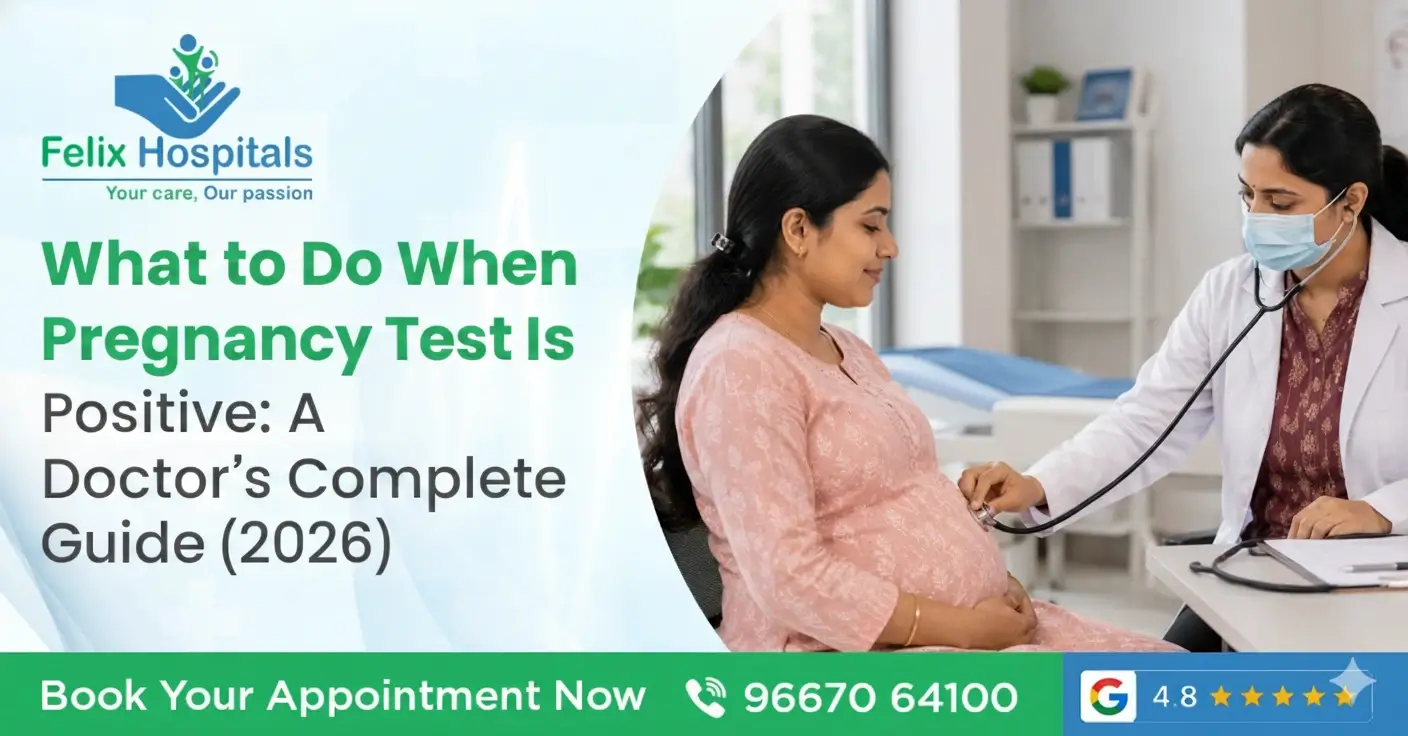
A positive pregnancy test changes everything in an instant — excitement, anxiety, and a hundred questions all at once. The first thing to know: you do not need to rush to a hospital today.
This guide, reviewed by Dr. Sangeeta Sharma and the obstetrics team at Felix Hospitals, Sector 137, Noida, gives you a precise roadmap — when to see a doctor, what your first visit involves, and which symptoms need urgent attention.
📞 Have questions right now? Call +91-9667064100 or book a prenatal consultation online with our Noida OBG team.
A home test detects hCG, the hormone produced after implantation. A positive result confirms hCG is present — but it does not confirm:
This is why a clinical visit within 6–8 weeks matters. At Felix Hospitals, Dr. Sangeeta Sharma, Dr. Charu Yadav, and Dr. Sonia Kuruvilla use transvaginal or abdominal ultrasound to give you the complete picture a home test can't.
Week | What Happens | Your Doctor Does |
Week 4 | Home test positive — hCG detected | Schedule first visit; start folic acid 400–800 mcg/day |
Week 6–8 | Embryo visible; heartbeat detectable | Confirm intrauterine pregnancy, detect heartbeat, date the pregnancy |
Week 10–12 | Nuchal translucency window | NT scan, first trimester blood panel, Down syndrome risk screen |
Week 16–18 | Fetal anatomy developing | Structural anomaly scan; placenta position check |
Week 24–28 | Gestational diabetes risk window | GTT screen; growth scan; Rh antibody check |
Week 32–36 | Baby positioning; GBS screen | Biophysical profile, fetal presentation, Group B Strep screen |
Week 37–40 | Full term — delivery planning | Birth plan, cervical assessment, admission prep |
High-risk pregnancies — previous miscarriage, PCOS, thyroid disorder, diabetes, age 35+ — should book the first visit at 5–6 weeks, not 6–8. See the high-risk section below.
Step 1 — Medical History: LMP date, previous pregnancies/miscarriages/C-sections, current medications, family history of diabetes or thyroid conditions.
Step 2 — Ultrasound: Confirms the pregnancy is intrauterine, detects the heartbeat (from week 6), establishes accurate gestational age, checks for twins/multiples.
Step 3 — First Trimester Blood Panel: CBC (anaemia), blood group + Rh factor, TSH (thyroid), fasting glucose, HIV/Hepatitis B/VDRL, Rubella IgG.
Step 4 — BP, BMI & Care Plan: Baseline vitals recorded; Dr. Sharma builds your personalised supplement, diet, and visit schedule.
Bring with you: LMP date · current medications/supplements · previous pregnancy or ultrasound records · family medical history · your written questions.
Ready to book your first scan? Schedule with our Noida OBG team →
Most early pregnancies don't need an emergency visit. But call +91-9667064100 immediately or visit our 24/7 maternity emergency if you have:
✓ Usually Normal | ✗ Call Your Doctor |
Mild nausea or morning sickness | Severe vomiting — can't keep water down 24 hrs |
Light spotting (implantation bleeding) | Heavy bleeding with clots |
Fatigue, sleepiness | Fainting, confusion |
Breast tenderness | One-sided sharp pelvic pain |
Mild uterine cramping | Fever above 38.5°C with chills |
Food aversions | Burning/pain when urinating |
Frequent urination | Shoulder tip pain |
Mood swings | Severe headache with blurred vision |
Mild bloating | Sudden facial/hand/foot swelling |
No morning sickness at all — normal for up to 25% of healthy pregnancies | No symptoms at all after a previous positive test |
Start immediately: Folic acid 400–800 mcg/day · Iron (if CBC shows anaemia) · Vitamin D3 (common deficiency in India) · DHA/Omega-3 · Calcium-rich foods (dairy, ragi, sesame).
Avoid completely: Raw/undercooked meat, fish, eggs · unpasteurised dairy · high-mercury fish (shark, swordfish, king mackerel)· alcohol · caffeine above 200mg/day · unapproved herbal supplements.
Book your first visit at 5–6 weeks with our high-risk pregnancy team if you have:
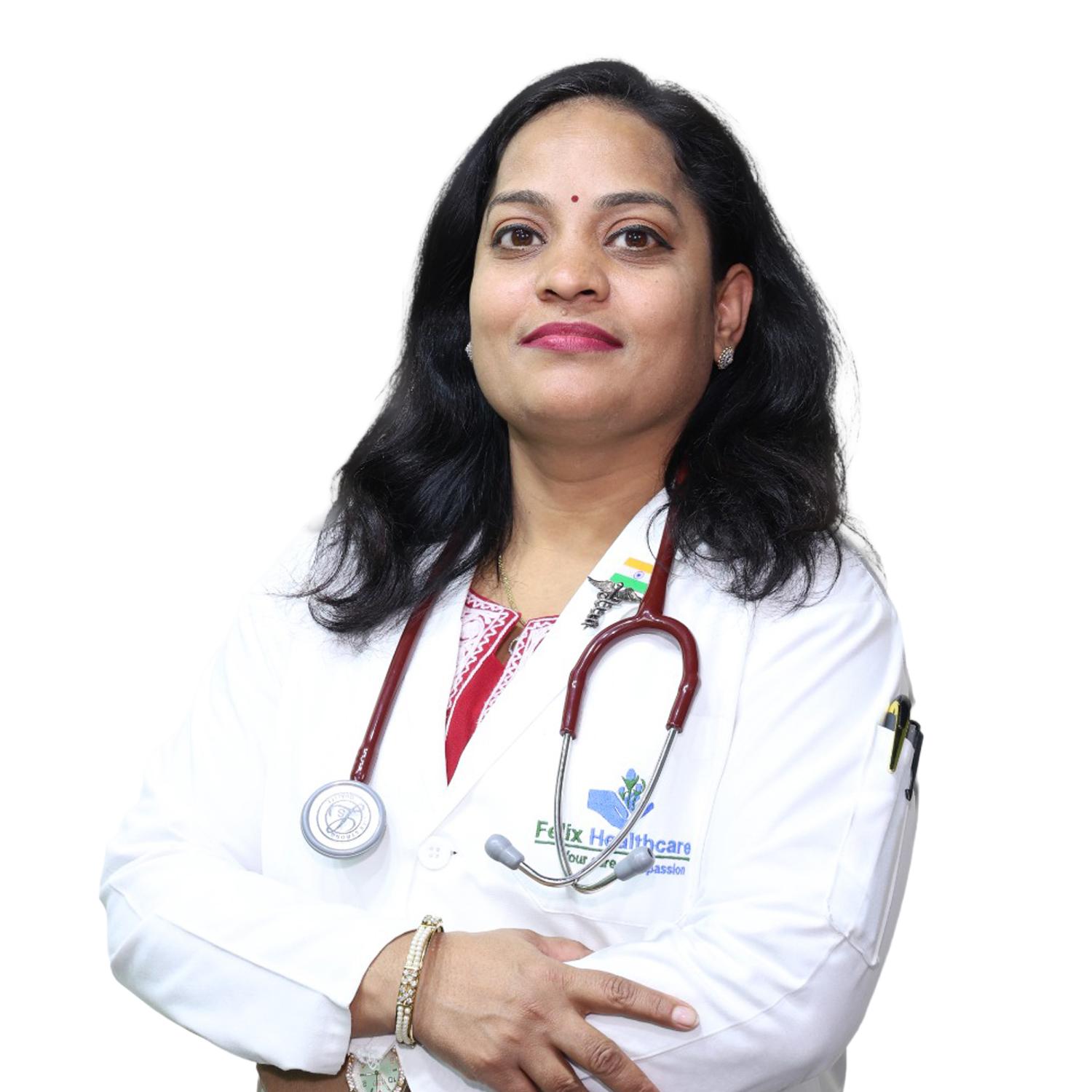
Dr. Sangeeta Sharma has 18+ years in high-risk obstetrics, PCOS, infertility, recurrent pregnancy loss, and laparoscopic gynaecology.
Feature | What It Means for You |
Expert OBG Team | Dr. Sangeeta Sharma (DNB, 18+ yrs, AIIMS), Dr. Charu Yadav (MS OBG), Dr. Sonia Kuruvilla (MS OBG), Dr. Nivedita Sinha (MS) |
27,189 Google Reviews — 4.8★ | Noida's most-reviewed private hospital |
NABH Accreditation | National quality & patient safety standard |
CGHS + Ayushman Empanelled | Cashless maternity care |
24/7 Emergency Maternity | No "come back in the morning" |
In-House NABL Lab | Prenatal blood work on-site, no delays |
Laparoscopic Expertise | Fibroids, endometriosis, ectopic — same team |
Paras Tierea, Sector 137, Noida | Central, accessible from Noida, Greater Noida |
Start folic acid (400–800 mcg/day), note your LMP date, and book your prenatal appointment for 6–8 weeks out. Avoid alcohol, raw fish, unpasteurised dairy, and don't self-medicate.
Between 6 and 8 weeks from your LMP, ultrasound can detect a heartbeat. Come in earlier (5–6 weeks) if you have pain, bleeding, or are high-risk.
Yes — a gynaecologist/obstetrician confirms pregnancy via ultrasound and blood hCG, starts your prenatal plan, and screens for complications a GP cannot manage.
False positives are rare (under 1%) — possible after recent miscarriage, fertility medication, certain ovarian tumours, or an expired test window. A blood hCG test at Felix Hospitals gives a definitive answer.
PCOS raises certain risks (gestational diabetes, preterm labour) but many women with PCOS have entirely normal pregnancies with proper monitoring. Dr. Sharma specialises in PCOS and will tailor your protocol.
Book at 5 weeks for a viability scan and serial beta-hCG monitoring. Felix Hospitals runs a dedicated recurrent pregnancy loss protocol.
Yes — Ayushman Bharat (PMJAY), CGHS, ECHS, ESI, and cashless panels of major insurers. Bring your card to your first visit.
Dr. Sangeeta Sharma is an experienced Obstetrician & Gynecologist with 18+ years of expertise in high-risk pregnancy, infertility, PCOS, laparoscopic surgery, and women's healthcare at Felix Hospital, Sector 137 Noida.
PCOS/PCOD के कारण महिलाओं में वजन बढ़ना एक आम समस्या है। जानिए इसके कारण, सही डाइट प्लान और प्रभावी इलाज
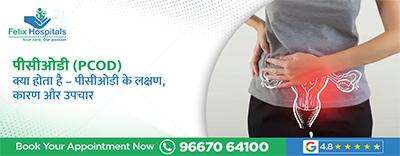
पीसीओडी (PCOD) महिलाओं में होने वाली एक सामान्य हार्मोनल समस्या है जो पीरियड्स, वजन और फर्टिलिटी को प्रभावित कर सकती है।

Subscribe to our
© Copyright 2026. All Rights Reserved by Felix Healthcare Private Limited
Design and development by :


 +(91)9667064100
 Emergency : +(91)9667064100