 Emergency:
  WhatsApp


Subscribe to our
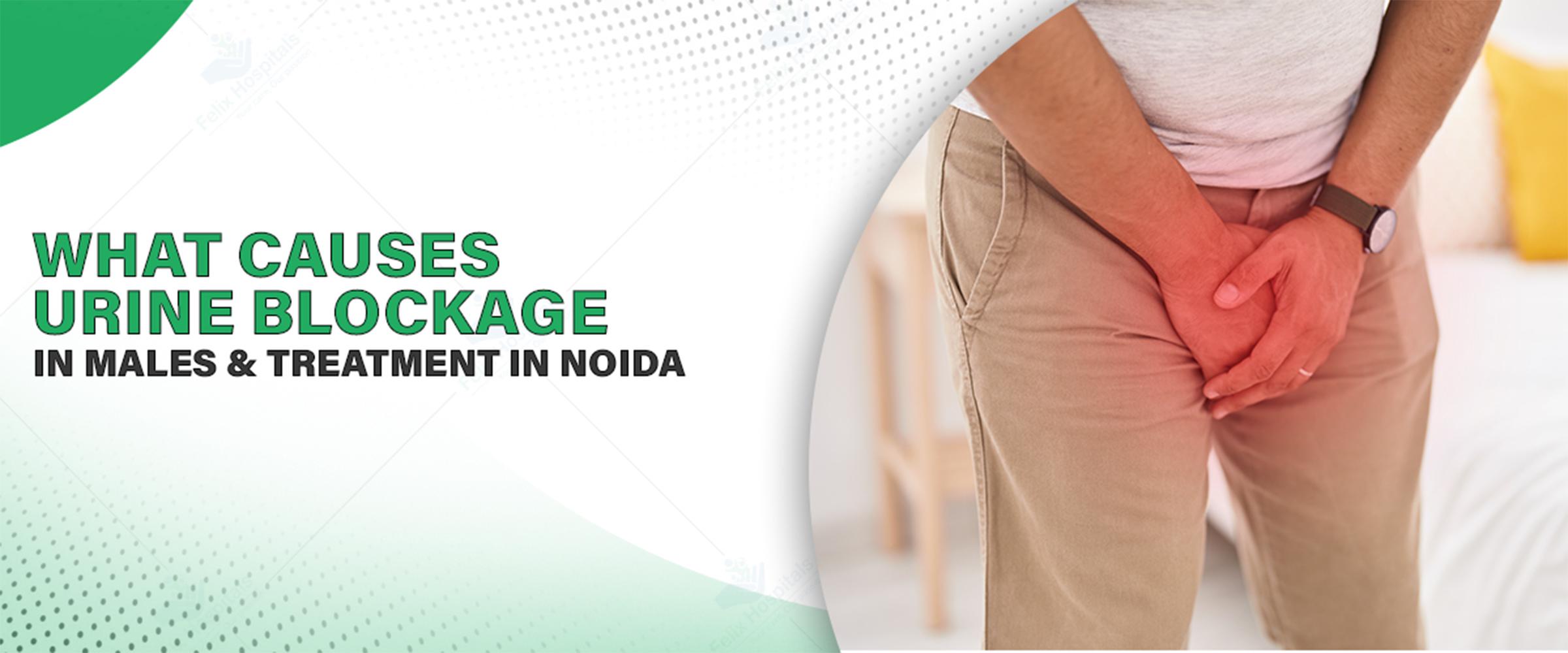
Knowing what causes urine blockage in males and how to treat it, is necessary for urological health for men above 40 who suffer from difficulty in urination. Ureteral obstructions are dangerous and you need to receive treatment immediately should they occur in either one or both of your ureters (the ducts through which you pass urine from your kidneys to your bladder). If left untreated, ureteral obstruction can lead to kidney damage and puts you on a path to infection or kidney failure, so the treatment for urine blockage in males Noida are very important for complete urological health.
Eager to address Your Urinary Problems Professionally? Call us at +91 9667064100 for a complete assessment and state of the art solutions in treatment.
Ureteral obstruction is a blockage along one or both of your ureters. A ureteral obstruction prevents pee from moving into your bladder and out of your body. Without treating and removing the blockage, pee can back up and damage your kidneys. This can cause pain and put you at risk of infection. In severe cases, a ureteral obstruction can lead to kidney failure, sepsis (life-threatening infection) or death. This is rare, though, because healthcare providers can treat ureteral blockages.
Ureteral obstructions are fairly common. They're more common in men over 60 because their prostates enlarge as they age - a key factor in urine blockage in males causes. A prostate is a gland that sits below your bladder in front of your rectum. An enlarged prostate can block the flow of pee and result in buildup of pee in your bladder. It can also push up against your ureter and cause a blockage. Any person at any age can have a blocked ureter, including children.
Signs of ureteral obstruction reveal themselves in different ways. People who have kidney stones obstructing a ureter may have severe pain. When the blockage is gradual and slow, it usually comes on slowly and builds over time. In some cases, symptoms may be mild at first, but can quickly get worse. Symptoms of a blocked ureter or urinary tract obstruction include:
Pain in your abdomen, lower back or sides below your ribs (flank pain)
Fever, nausea or vomiting
Difficulty urinating or emptying your bladder
Frequent urination
Recurring urinary tract infections (UTIs)
Pee that's cloudy or contains blood
Swollen leg
Understanding how to cure urine blockage in men naturally and medically requires comprehensive evaluation by qualified urologists. Reasons behind urine blockage (urinary retention) in men include a large prostate gland due to old age and neurological conditions as well as infections. An acute blockage is a life-threatening condition that demands urgent visit to hospital for urine blockage treatment in Noida. The treatment varies according to the underlying cause and may involve medication, catheterization, and surgical treatment.
Benign Prostatic Hyperplasia (BPH): It is the most prevalent cause of the enlarged prostate gland that is not cancerous and appears in older men. The swollen prostate squashes the urethra and blocks the movement of urine.
Prostate cancer: This is a tumor which is cancerous on the prostate which may also be penetrating the urethra resulting in a blockage. Prostate enlargement and urine blockage treatment requires specialized medical intervention to address both the underlying enlargement and resulting urinary symptoms.
Infections: Something such as prostatitis (inflammation of the prostate) or a serious urinary tract infection (UTI) may result in swelling that obstructs urine flow.
Nerve damage: Nerves controlling bladder functions may be destroyed due to such diseases as diabetes, stroke, multiple sclerosis, or spinal cord injuries. This might stop the emptying of the bladder.
Bladder or kidney stones: These are deposits of minerals that may be transferred to the urethra and obstruct urine passage.
Medications: There are medications like some antihistamines, antidepressants, cold and allergy medications that may interfere with the function of the bladder.

Early diagnosis is important, because most cases of obstruction can be corrected and because a delay in treatment can lead to irreversible kidney damage. Doctors may suspect obstruction because of a person's symptoms, such as renal colic, symptoms of bladder distention, or a decrease in the volume of urine.
Bladder catheterization (insertion of a hollow, soft tube through the urethra) is often the first diagnostic test done in people with symptoms that suggest the bladder is distended, such as pelvic pressure or distention. If the catheter drains a large amount of urine from the bladder, then either the bladder outlet or the urethra is obstructed. Many doctors do ultrasonography to determine whether the bladder is filled with a large amount of urine before doing bladder catheterization.
Imaging tests can be done to identify evidence of obstruction, such as hydronephrosis or a site of blockage, when the presence or site of obstruction is in doubt. For example, ultrasonography is a very useful test in most people (particularly children and pregnant women) because it is fairly accurate and does not expose the person to any radiation. However, ultrasonography is not always accurate in its ability to localize the site of obstruction.
Computed tomography (CT) is an alternative: It is rapid and highly accurate, particularly at identifying stones.
Magnetic resonance imaging (MRI): is not as accurate as ultrasonography or CT, particularly for detecting kidney stones, but MRI may be used if it is important to avoid exposing the person to radiation and if the site of obstruction cannot be seen with ultrasonography.
Endoscopy with a special rigid or flexible endoscope (a cystoscope) can be used to examine the urethra, prostate, and bladder. A longer rigid or flexible endoscope (ureteroscope) can be passed into the ureters or kidneys to identify sites of obstruction. Sometimes the cystoscope, ureteroscope, or both can also be used to remove objects causing obstruction.
To the individuals in Noida who have urinary blockage, one of the most important and essential measures is to consult a urologist. Depending on the diagnosis, treatment might involve:
A catheter will right away be used to empty the bladder in situations of acute urinary retention. This is a pain and pressure reliever to the kidneys.
Alpha-blockers: The medications, including tamsulosin and alfuzosin, relax the bladder neck and prostate muscles to enhance urine flow.
5-alpha reductase inhibitors: The drugs such as finasteride and dutasteride have the ability to reduce the size of a prostate gland as time progress and they work well in men with bigger prostate glands.
Antibiotics: Prostatitis or UTIs are treated with antibiotics to alleviate inflammation.
Transurethral Resection of the Prostate (TURP): It is a widespread and successful surgery of BPH, during which a special needle is put through the urethra to slice out any extra prostate tissue.
Urethroplasty: This is a reconstructive surgical procedure to cure scar tissue and eliminate the enlarged part of the urethra.
Natural remedies do not replace the professional medical treatment particularly in acute blockages. Nonetheless, there are lifestyle modifications that can be used to treat mild symptoms or promote the general well-being of urine. There is no need to try them before talking to a doctor about them.
Worried about recurring urinary symptoms, prostate wellbeing? Get in touch with our dedicated team for your care in Urology at 91 9667064100.
Understanding what causes urine blockage in males and how to treat it from benign prostatic hyperplasia (BPH) to kidney stones, causes of urine blockage pose an emergency condition and require urgent intervention to avoid long-lasting complications. Advances in treatment allowing use of medications with minimally invasive procedures and surgery indicate a positive recovery potential. If a resident requires specialized treatment, a good hospital for urine blockage treatment in Noida offers them a chance to be thoroughly examined and understand their condition better. Successful results can be achieved by Early detection and best treatment options in urinary obstruction in Male.
Q1: What are the early warning signs to look out for that tells me I need to go to the hospital for urine blockage?
Ans: Sudden complete inability to urinate, intense abdominal pain, fever and chills, and blood in the urine are situations that require emergency medical attention within hours to prevent kidney damage.
Q2: How long is the recovery after various urine blockage surgeries?
Ans: Recovery time for TURP is usually 2-4 weeks, but minimally invasive procedures such as UroLift have patients resuming normal activities anywhere from a few days to a week.
Q3: How well do drugs work for prostate-related urine blockage?
Ans: Alpha-blockers can alleviate symptoms for 70-80% of men within 2 to 4 weeks, and 5-alpha reductase inhibitors can shrink the prostate by 20 to 30% over 6 to 12 months.
Q4: What can I expect in my initial visit for urine blockade symptoms?
Ans: Full medical history, physical exam including digital rectal examination, urine tests and perhaps ultrasound or blood work to look for what is causing it.
Urine leakage while coughing, also known as stress incontinence, is a common condition affecting many, especially women.

Urinary tract infections (UTIs) in children are common but treatable. This guide for Greater Noida parents covers early signs, effective treatments, and easy preventive tips to protect your child’s health.


Subscribe to our
© Copyright 2026. All Rights Reserved by Felix Healthcare Private Limited
Design and development by :


 +(91)9667064100
 Emergency : +(91)9667064100