 Emergency:
  WhatsApp


Subscribe to our
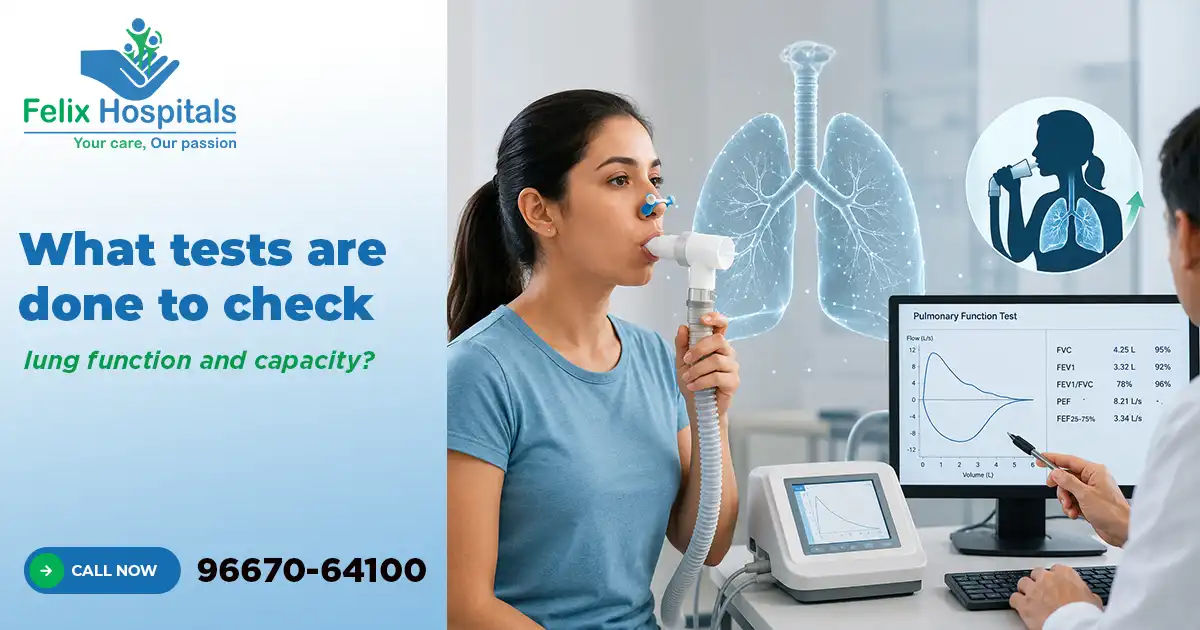
Healthy lungs are essential for delivering oxygen to the body and removing carbon dioxide. When your lungs are not working properly, you may experience symptoms such as breathlessness, persistent cough, chest tightness, wheezing, or reduced stamina.
To evaluate how well your lungs work, doctors recommend different lung test procedures that measure airflow, lung size, oxygen exchange, and breathing efficiency. These tests help diagnose and monitor respiratory conditions like asthma, COPD, pulmonary fibrosis, bronchitis, and other lung diseases.
A lung function test, also known as a Pulmonary Function Test (PFT), is a group of non-invasive tests that evaluate how effectively your lungs are working.
A lung function test measures:
The amount of air your lungs can hold
The speed at which you inhale and exhale air
The strength of your breathing muscles
How efficiently oxygen enters your blood
How well your lungs respond to medication
Doctors may recommend lung tests if you have:
Shortness of breath
Chronic cough
Wheezing
Chest discomfort
Smoking history
Frequent respiratory infections
Reduced physical activity tolerance
A lung capacity test measures the maximum amount of air your lungs can store and move during breathing.
It helps doctors understand whether your lungs have normal capacity or if there is a problem affecting airflow or lung expansion.
The important lung capacity measurements include:
Measurement | Full Form | What It Means |
TV | Tidal Volume | Amount of air inhaled and exhaled during normal breathing |
VC | Vital Capacity | Maximum amount of air exhaled after taking a deep breath |
FVC | Forced Vital Capacity | Total air forcefully exhaled after maximum inhalation |
FEV1 | Forced Expiratory Volume in 1 Second | Amount of air exhaled during the first second of forced breathing |
TLC | Total Lung Capacity | Maximum amount of air your lungs can hold |
These measurements help doctors identify whether lung problems are related to airway blockage or reduced lung expansion.
Doctors use different types of lung test procedures depending on symptoms, medical history, and suspected lung conditions.
Lung Function Test | What It Measures | Purpose of Test | Conditions Detected |
Spirometry Test | Airflow, FEV1, and FVC | Measures how much and how quickly you breathe air out | Asthma, COPD, Bronchitis |
Lung Volume Test (Plethysmography) | Total lung capacity and trapped air | Checks the amount of air present inside lungs | COPD, Restrictive Lung Diseases |
DLCO Test (Diffusion Capacity Test) | Oxygen transfer from lungs to blood | Evaluates gas exchange efficiency | Pulmonary Fibrosis, Emphysema |
Peak Flow Test | Maximum speed of exhalation | Monitors airway narrowing | Asthma |
Bronchodilator Response Test | Lung function improvement after inhaler use | Checks response to medication | Asthma, COPD |
Pulse Oximetry Test | Blood oxygen saturation (SpO₂) | Measures oxygen levels in blood | Pneumonia, COPD, Respiratory Disorders |
Arterial Blood Gas (ABG) Test | Oxygen and carbon dioxide levels | Evaluates lung efficiency in severe cases | Respiratory Failure |
Exercise Lung Function Test | Lung performance during activity | Detects breathing problems during exercise | Exercise-Induced Asthma |
Spirometry is the most commonly performed lung function test. It measures how much air you can inhale and how quickly you can force air out.
During the test:
You breathe into a spirometer device
The machine records airflow and lung volume
Results are compared with normal values based on age, height, and gender
Spirometry is commonly used to diagnose:
COPD
Chronic bronchitis
Airway obstruction problems
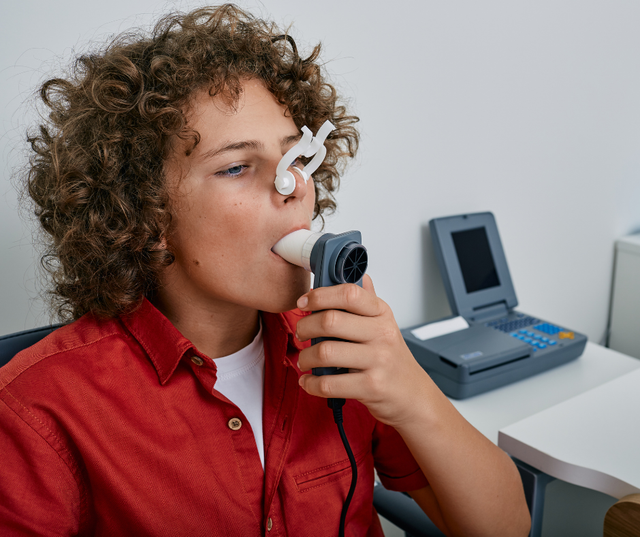
A lung volume test measures the total amount of air inside your lungs, including air that remains after you completely exhale.
This test helps detect:
Reduced lung capacity
Lung stiffness
Air trapping
It is especially useful for diagnosing restrictive lung diseases and advanced COPD.
/assets/images/provider/photos/2782478.jpeg)
The DLCO test evaluates how efficiently your lungs transfer oxygen from inhaled air into your bloodstream.
A reduced diffusion capacity may indicate problems with:
Lung tissue damage
Blood vessel abnormalities
Oxygen exchange problems
Doctors commonly use this test for:
Emphysema
Pulmonary hypertension
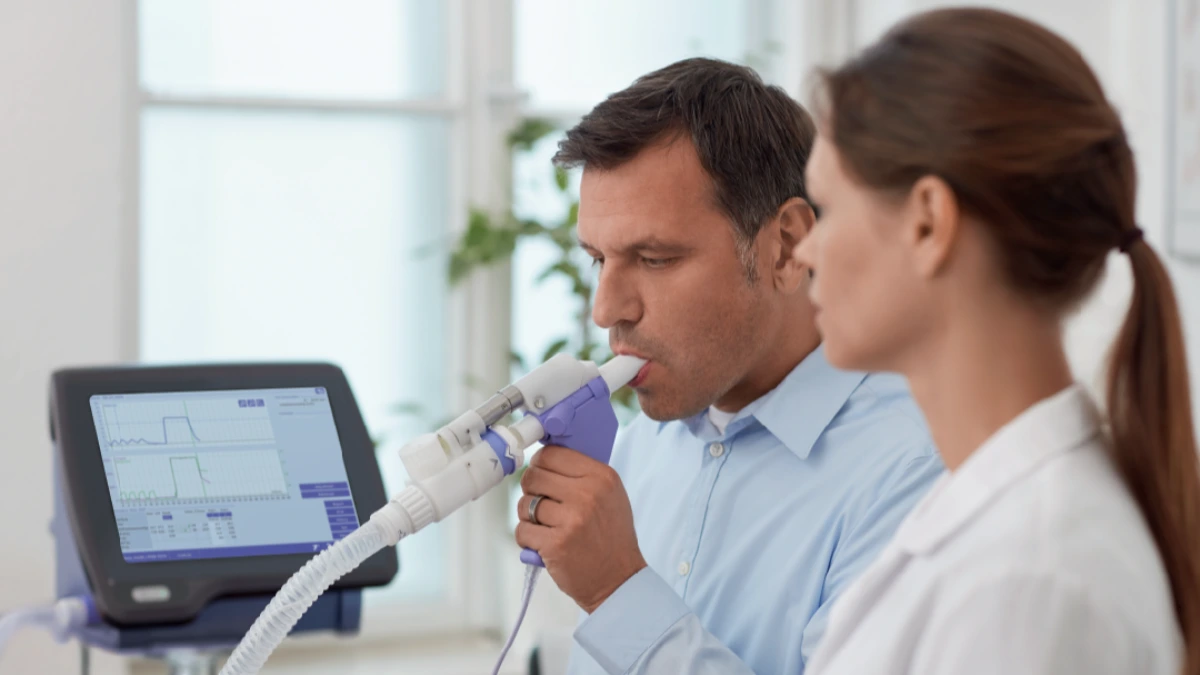
A peak flow test measures the maximum speed at which you can exhale air.
It is commonly used by asthma patients to:
Monitor symptoms
Detect early asthma attacks
Track treatment effectiveness
This test determines whether your lung function improves after taking a bronchodilator medication.
It helps doctors understand whether airway narrowing is reversible, which is common in asthma.
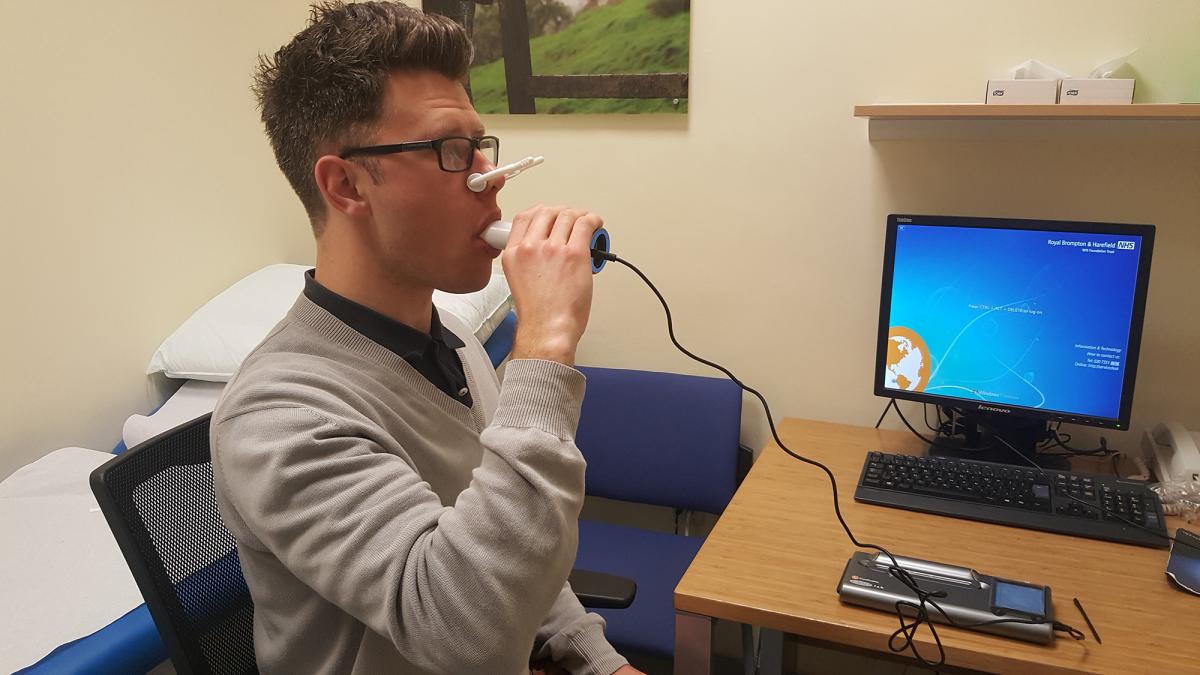
Pulse oximetry is a simple and painless test that measures oxygen saturation levels in your blood.
A small sensor is placed on your finger to check your oxygen level.
It is commonly used for patients with:
COPD
Lung infections
Breathing difficulties

An ABG test measures oxygen, carbon dioxide, and blood acidity levels.
It provides detailed information about how effectively your lungs are functioning.
Doctors may recommend ABG testing for patients with:
Severe breathing problems
Respiratory failure
Critical lung conditions
:max_bytes(150000):strip_icc()/taking-blood-sample-547999359-577ecc585f9b5831b5834a5a-5388120e1ddf40c6a8fd9ffa4c0fd23b.jpg)
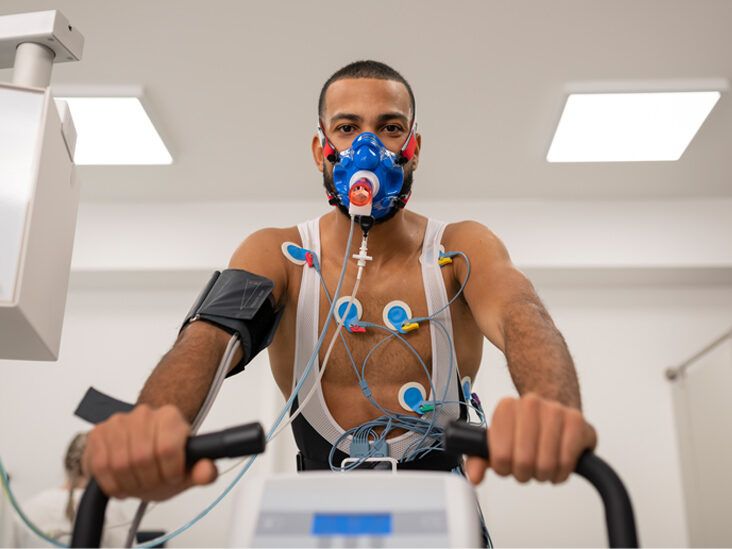
Some breathing problems occur only during physical activity. An exercise lung test evaluates how your lungs perform while your body is under stress.
It can help identify:
Exercise-induced asthma
Low oxygen levels during activity
Causes of unexplained breathlessness
Lung function tests help doctors:
Detect lung diseases early
Measure severity of respiratory conditions
Monitor treatment response
Evaluate lung capacity changes
Assess breathing problems before surgery
Improve long-term lung health management
Doctors may recommend a lungs test if you experience:
Persistent cough lasting several weeks
Difficulty breathing
Frequent wheezing
Chest tightness
Smoking-related breathing issues
Exposure to dust, chemicals, or pollution
Reduced exercise capacity
People with chronic respiratory diseases may need regular lung function monitoring.
Before your test:
Wear comfortable clothes
Avoid smoking before testing
Inform your doctor about medications
Follow instructions regarding inhalers
Avoid heavy meals before certain tests
Preparation requirements may differ depending on the type of lung test.
Lung function tests provide valuable information about how well your lungs work and help detect respiratory problems at an early stage. From spirometry and lung volume testing to DLCO and oxygen measurement tests, each lung test evaluates a specific aspect of respiratory health.
Understanding what is a lung capacity test can help you recognize the importance of early diagnosis and timely treatment. If you experience breathing difficulties, persistent cough, or reduced stamina, consult a respiratory specialist for appropriate lung evaluation.
Early testing can protect your lung health and improve your overall quality of life.
Spirometry is considered one of the most common and reliable tests for measuring airflow and diagnosing conditions like asthma and COPD.
Most lung function tests take between 15 to 45 minutes depending on the type of examination.
No, most lung function tests are painless and involve simple breathing exercises.
Yes, spirometry is commonly used to diagnose COPD by measuring airflow limitations.
Yes, lung capacity tests are generally safe, non-invasive, and performed routinely.
Low lung capacity may indicate lung disease, airway obstruction, or reduced lung expansion.
The frequency depends on symptoms, diagnosis, age, and your doctor’s advice.
Dr. Priyadarshi Jitendra Kumar is a General Physician and Pulmonologist with 20+ years of experience in diabetes, thyroid, hypertension, and respiratory care.

Additionally, many COPD patients experience unintended weight loss and muscle wasting, a condition known as Pulmonary cachexia.

A COPD friendly diet is important for several reasons as discussed before. It can assist in relieving symptoms, controlling life threats and managing overweight.

From breathing techniques and diet adjustments to exercise and stress management, learn how to improve your lung health and overall quality of life.

Air pollution increases COPD cases, affecting women more than men.


Subscribe to our
© Copyright 2026. All Rights Reserved by Felix Healthcare Private Limited
Design and development by :


 +(91)9667064100
 Emergency : +(91)9667064100