Most people have never thought about potassium until a blood test comes back with a flag on it. Then suddenly everyone around them is talking about bananas.
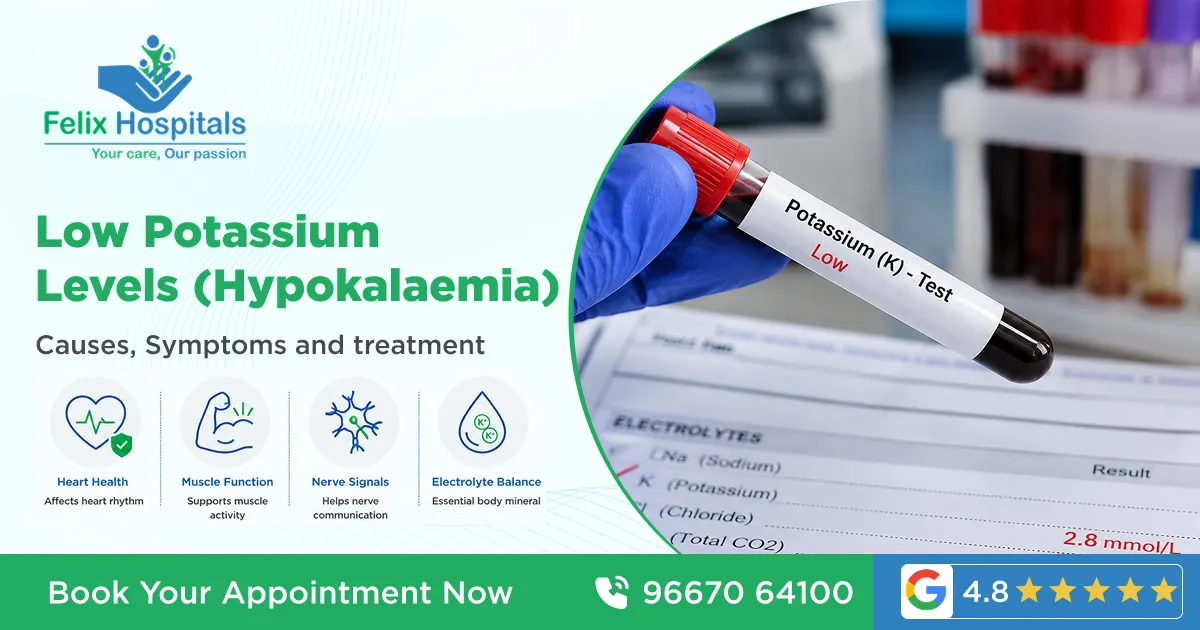
Hypokalaemia is the medical term for low potassium in the blood. The normal potassium range in a healthy adult is 3.5 to 5.0 mmol/L. When levels fall below 3.5 mmol/L, the condition is classified as hypokalaemia.
Severity | Potassium Level (mmol/L) |
Mild hypokalaemia | 3.0 to 3.5 |
Moderate hypokalaemia | 2.5 to 3.0 |
Severe hypokalaemia | Below 2.5 |
Mild cases often produce no noticeable symptoms. Moderate cases start affecting muscles and digestion. Severe hypokalaemia below 2.5 mmol/L can cause dangerous heart rhythm abnormalities and requires immediate medical attention.
Potassium is not produced by the body. It comes entirely from food and drink. What the body does not use is excreted through the kidneys and, to a lesser extent, sweat. Hypokalaemia occurs when this balance breaks down either because intake is too low, losses are too high, or potassium is shifting from the bloodstream into cells in a way that lowers blood levels without actually depleting total body stores.
Common Causes of Low Potassium
The most common cause is not a bad diet. It is lost through the kidneys or gut usually driven by something else happening in the body.
Medications the most frequent culprit
Diuretics (water tablets) are the leading cause of hypokalaemia in clinical practice. Loop diuretics like furosemide and thiazide diuretics like hydrochlorothiazide cause the kidneys to excrete potassium along with excess fluid. Anyone taking these for blood pressure, heart failure, or kidney conditions should have potassium levels monitored regularly.
Laxatives, when used frequently, cause potassium loss through the gut. Corticosteroids, amphotericin B (used for fungal infections), and some chemotherapy agents also deplete potassium over time.
Vomiting and diarrhoea
Gastric fluid contains hydrochloric acid. Vomiting causes the body to lose acid, which triggers a compensatory process that drives potassium into cells and increases urinary potassium excretion. This is why prolonged vomiting from gastroenteritis, food poisoning, or eating disorders commonly causes hypokalaemia even before significant potassium is actually lost through the vomit itself.
Severe or prolonged diarrhoea causes direct potassium loss through stool. Cholera, for instance, can cause life-threatening hypokalaemia within hours through this mechanism.
Excessive sweating
Sweat contains potassium. Heavy physical work in heat, intense athletic training, or fever with sweating can deplete potassium faster than a normal diet replaces it particularly if fluid losses are being replaced with water or sports drinks that do not contain potassium.
Kidney conditions
The kidneys regulate potassium excretion. Certain kidney disorders including renal tubular acidosis and Bartter syndrome cause excessive urinary potassium loss regardless of dietary intake. Primary hyperaldosteronism (overproduction of aldosterone, a hormone that tells the kidneys to retain sodium and excrete potassium) is a less common but important cause, particularly in patients with resistant hypertension.
Poor dietary intake
Genuine dietary deficiency is uncommon in isolation; a varied diet supplies adequate potassium for most people. But in the context of prolonged fasting, severe calorie restriction, eating disorders, or illness that prevents normal eating, dietary intake can contribute significantly to falling levels.
Insulin and alkalosis
High insulin levels whether from treatment of diabetic ketoacidosis or a large carbohydrate meal drive potassium from the blood into cells. Metabolic alkalosis (an abnormally high blood pH) does the same. In both cases, total body potassium may be normal but blood potassium falls because of redistribution rather than depletion.
Signs and Symptoms of Hypokalaemia
The symptoms of low potassium are not specific. Most of them could easily be attributed to tiredness, dehydration, or a hundred other things. This is why hypokalaemia is so frequently missed until a blood test catches it.
Muscle-related symptoms
Muscle weakness is the most common complaint. It typically starts in the legs and may feel like heaviness, fatigue after minimal exertion, or difficulty climbing stairs. In moderate to severe hypokalaemia, weakness can progress to the arms and trunk. Muscle cramps particularly at night are common. In severe cases, rhabdomyolysis (muscle fibre breakdown) can occur, which requires urgent treatment.
Digestive symptoms
Potassium is essential for smooth muscle function in the gut. Low levels cause slowing of the digestive tract. Constipation is common. In severe hypokalaemia, paralytic ileus a complete cessation of gut movement can occur, causing abdominal distension, nausea, and vomiting.
Heart-related symptoms
This is where hypokalaemia becomes genuinely dangerous. Potassium plays a critical role in the electrical system of the heart. Low levels alter the cardiac action potential, causing abnormalities in rhythm. Palpitations, a sensation of the heart fluttering or skipping are often the first cardiac symptom. In moderate to severe hypokalaemia, ECG changes appear: flattening or inversion of the T-wave, appearance of U-waves, and prolongation of the QU interval. Severe hypokalaemia can precipitate ventricular tachycardia or ventricular fibrillation both life-threatening emergencies.
Other symptoms
Fatigue that does not improve with rest, increased urination (polyuria), excessive thirst, and in some cases tingling or numbness in the extremities are reported by patients with ongoing hypokalaemia. Psychological symptoms of anxiety, depression, and cognitive fogginess have been reported in chronic cases, though the mechanisms are not fully understood.
Risk Factors for Potassium Deficiency
Some people are significantly more likely to develop hypokalaemia than others.
People taking diuretics for blood pressure or heart failure are at ongoing risk and should have potassium checked at every routine blood test. People with eating disorders particularly those involving purging are at high risk through combined mechanisms of vomiting, laxative use, and poor intake. Athletes training intensively in hot conditions lose significant potassium through sweat and may not be replacing it adequately.
Elderly patients are at higher risk for several converging reasons: reduced dietary intake, multiple medications, reduced kidney reserve, and increased likelihood of gastrointestinal illness. People with type 1 diabetes are at risk during episodes of ketoacidosis treatment. People with Crohn's disease or ulcerative colitis lose potassium through chronic diarrhoea.
Alcohol use disorder is a significant and underrecognised risk factor. Alcohol increases urinary potassium excretion, reduces dietary potassium intake, and causes vomiting, a triple mechanism that makes hypokalaemia common in this population.
How Hypokalaemia Is Diagnosed
A serum potassium test part of a standard electrolyte panel or basic metabolic panel is how hypokalaemia is confirmed. A single value below 3.5 mmol/L on a venous blood sample diagnoses the condition
However, diagnosing hypokalaemia is only the first step. The more important question is why it is happening. A clinician investigating hypokalaemia will typically also check:
Urinary potassium excretion to determine whether potassium is being lost through the kidneys or elsewhere. If urinary potassium is high despite low blood levels, the kidneys are the problem. If urinary potassium is appropriately low, losses are coming from the gut or intake is the issue.
Magnesium levels because magnesium deficiency impairs the kidney's ability to conserve potassium. Treating hypokalaemia without correcting hypomagnesaemia is often ineffective the potassium simply keeps leaking.
Acid-base status (blood gas or serum bicarbonate) because alkalosis drives potassium into cells and acidosis drives it out. The direction of the pH abnormality helps identify the underlying cause.
Aldosterone and renin levels if primary hyperaldosteronism is suspected particularly in patients with resistant hypertension and recurrent hypokalaemia.
ECG in any patient with potassium below 3.0 mmol/L or with cardiac symptoms, because the cardiac risk of severe hypokalaemia is the most immediately dangerous consequence.
Treatment Options for Low Potassium Levels
Treatment depends on the severity of the deficiency, the cause, and whether the patient has cardiac symptoms.
Oral potassium supplementation
For mild to moderate hypokalaemia in a patient who is haemodynamically stable and not vomiting, oral potassium replacement is the standard approach. Potassium chloride tablets or liquid preparations are used. The gut absorbs oral potassium more safely than IV administration because the absorption rate is self-limiting; it is much harder to overshoot with oral supplementation.
Dietary increase alone (bananas, oranges, potatoes, spinach) is sometimes sufficient for very mild, diet-related deficiency, but it is rarely enough for clinically significant hypokalaemia. The potassium content of food, while real, is simply too low to rapidly correct a true deficiency.
Intravenous potassium
IV potassium is used for severe hypokalaemia, for patients who cannot take oral medications, and for patients with cardiac arrhythmias caused by low potassium. It must be administered slowly rapid IV potassium infusion can itself cause fatal arrhythmias. Continuous cardiac monitoring is required during IV replacement. The standard rate is no more than 10 to 20 mmol per hour through a peripheral line.
Magnesium correction
If magnesium is also low, it must be corrected alongside potassium. Giving potassium supplementation without fixing magnesium is like trying to fill a bucket with a hole in the bottom. The kidneys continue excreting potassium regardless.
Treating the underlying cause
Stopping or reducing the offending diuretic, treating the underlying kidney condition, managing vomiting, or addressing the eating disorder is what prevents recurrence. Potassium supplementation without addressing the root cause is temporary management, not resolution.
Potassium-sparing diuretics
In patients who need ongoing diuretic therapy but keep developing hypokalaemia, potassium-sparing diuretics (spironolactone, amiloride) can be added to reduce urinary potassium losses without stopping the primary diuretic.
Dietary Tips to Maintain Healthy Potassium Levels
Food is the most sustainable way to maintain potassium, though it is not always sufficient for treating deficiency.
High-potassium foods include bananas (around 360 mg per 100g), but they are far from the richest source. Cooked spinach delivers approximately 540 mg per 100g. Cooked lentils provide around 370 mg per 100g. Sweet potatoes are among the best sources at 540 mg per 100g. Avocado provides approximately 485 mg per 100g. White beans and kidney beans are exceptionally rich in potassium. Coconut water is a useful fluid source, particularly for athletes.
In the Indian dietary context, dal (lentils) eaten daily is one of the most consistent dietary potassium sources available. Coconut-based preparations, drumstick (moringa), and leafy greens are all practically useful additions.
The cooking method matters. Boiling vegetables in large amounts of water and discarding the water significantly reduces potassium content. Steaming, roasting, or consuming the cooking liquid retains more.
Caffeine and alcohol both increase urinary potassium excretion. This does not mean they need to be eliminated, but in someone already prone to low potassium, high intake of either adds to the deficit.
People with kidney disease need to be careful in reduced kidney function, potassium can accumulate to dangerous levels rather than deplete. Dietary potassium restriction, not supplementation, is sometimes required. Always confirm with a doctor before significantly changing potassium intake if kidney function is compromised.
When to See a Doctor for Hypokalaemia
A mildly low result on a routine blood test potassium at 3.2 or 3.3 mmol/L in someone who feels well does not require an emergency visit. It does require a follow-up with your doctor to discuss the cause and whether supplementation or monitoring is appropriate.
See a doctor promptly if your potassium is below 3.0 mmol/L on a blood test, even without symptoms. The risk of cardiac complications rises significantly below this level.
Go to an emergency department immediately if you have palpitations, irregular heartbeat, or chest discomfort alongside a known or suspected low potassium. If you experience severe muscle weakness, difficulty lifting your arms, inability to stand from a chair with low potassium, this requires urgent assessment. Breathing difficulty in the context of hypokalaemia (diaphragm weakness in severe cases) is a medical emergency.
If you are on diuretics and have not had a potassium check in more than six months, that is worth raising with your GP at the next appointment. It is a simple blood test, and the consequences of missing a significant deficiency are not simple.
If you have received a low potassium result or are experiencing any of the symptoms described above, Felix Hospital's General Medicine OPD in Greater Noida offers same-day consultations for electrolyte evaluation and management. Book an appointment with our internal medicine specialists at +91 9667064100.
 Emergency:
  WhatsApp









 +(91)9667064100
 Emergency : +(91)9667064100