 Emergency:
  WhatsApp

Subscribe to our
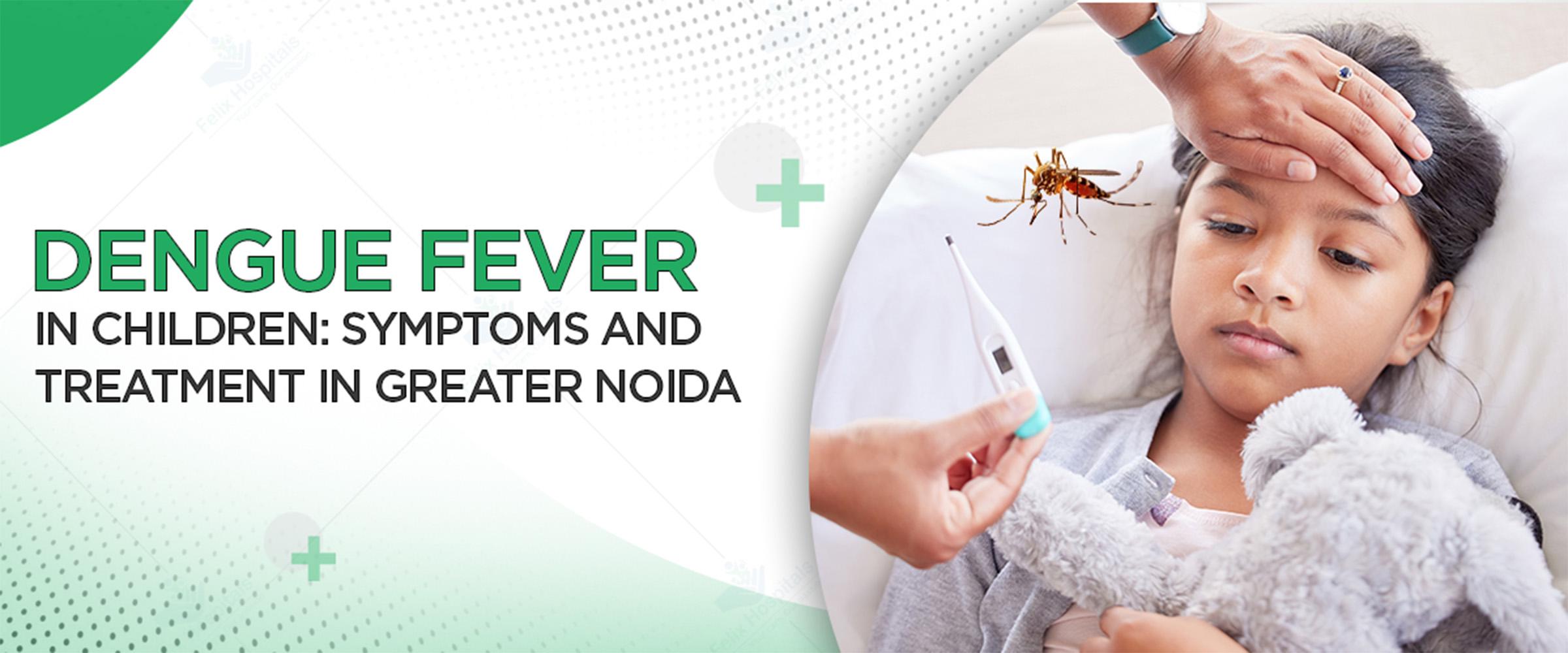
Parents should be highly keen when it comes to dengue fever which is a viral disease that is transmitted by mosquitoes and can be very dangerous to the health of children especially during the monsoon season in Greater Noida. Educating the symptoms, the warning signs, and prompt medical assistance are important in the protection of your child.
The Dengue treatment for children hospital in Greater Noida offers specialized pediatric services, with experienced doctors ready to manage both mild and severe dengue cases in young patients.
Need 24/7 emergency care for dengue-related complications? Reach our emergency department at +91 9667064100 for immediate medical assistance.
Dengue virus is the cause of the dengue fever transmitted by the bite of the infected Aedes mosquito breeding in stagnant water and most common in the morning and evening. This applies to children in particular since they spend more time in the outside world and may overlook signs of danger early. The disease passes through distinct stages: a febrile stage of 2-7 days which is followed by the critical stage that starts 24-48 hours after the fever subsides. Although most of the cases remain mild, there are some cases that lead to severe complications and such children have to be treated immediately.
The apparent Dengue fever symptoms in children must be identified early and immediate treatment should be taken, normally 4-10 days after being bitten.
Sudden high‑grade fever of 102–104°F (39–40°C)
Severe headache with a background behind the eyes.
Tremendous muscular and joint pain- break bone fever.
Nausea and continuous vomiting.
A few days after fever onset a few days later there appears skin rash.
Lack of energy and fatigue.
Loss of appetite and low intake of food.
Knowing signs of dengue in kids that indicate severe complications helps parents act quickly:
Abdominal pain, which is not improving.
Over three people have vomited in 24 hours.
Nose or Gums bleeding, or vomiting or stool bloody.
Shortness of breath or dyspnea.
Undue fatigue and restlessness.
Cold or clammy skin
Signs of dehydration include sunken eyes, bone-dry mouth, or rarely urinating.
Parents often wonder when to take a child with dengue to hospital. Immediate medical attention is required when:
- Warning signs as to serious dengue present themselves.
- The signs of dehydration remain with home care.
- Prolonged fever
- The child gets very lazy or not attentive.
- Any bleeding occurs
- Parents put qualms on the situation of the child.
The period after the reduction of the fever is the critical period, and it is during this period that complications are most likely to occur. In turn, the leakage of the plasma may result in shock and organ damage when not worked with.
Understanding how to treat dengue in children involves both home care for mild cases and recognizing when professional medical intervention is necessary.
Seek medical attention when there is suspicion of dengue
of a pediatrician.
Take acetaminophen (paracetamol) to treat fever - do not use aspirin or ibuprofen, which increase the risk of bleeding.
Keep the fluids up: take ORS, coconut water, fruit juices, or clear soups.
Encourage rest and sleep
Keep a careful eye on the symptoms, particularly when fever begins to go.
Make the child relaxed and de-stress.
Hospitalization may be necessary to:
Replace the intravenous fluids to attack dehydration and plasma drainage.
Take vital signs and blood tests constantly.
Test platelet count and hematocrit levels fairly frequently.
Transfusion of blood should be within severe bleeding situations of rarity.
Provide good care to avoid complications.
There is no known antiviral drug to dengue and therapy is centred on alleviating the symptoms and avoiding complications by supportive care. Greater Noida hospitals are also well equipped to deal with dengue with:
Traditionally-trained dengue pediatricians.
State of the art critical care monitoring machines.
Rapid diagnostics and continuous examinations in the laboratory.
24/7 emergency facilities during the high season of dengue.
Intensive care units with severe cases that are pediatric.
Effective treatment is based on early diagnosis. Blood tests needed include:
NS1 antigen test (can be found in the initial 7 days) Immunumass testing (>5 days -7) IgM/IgG.
C-reactive protein is used to monitor platelets and white cells.
Liver tests when the complication should be suspected.
The dengue fighting cock is best fought by prevention.
eliminate pools of stagnant water around houses.
empty water containers with regularity.
Kill off redundant water-collections.
Maintain drainways that are in good condition.
Have mosquito nettings and screens on windows.
Apply DEET‑based repellents
Have children put on long sleeves during the most active times of the day when the mosquitoes are active.
Air-condition with fans or fans to curb the activity of the mosquitoes.
Keep the house closed at night when the mosquitoes are most active (early in the morning and at night).
It can take weeks to heal up; even when the fevers have settled, children would still complain of being tired and weak. The use of follow-ups will contribute to full recovery and prevent any latent complications. Monitor for:
Gradual return of appetite
Rising energy levels
Normal platelet recovery
No bleeding signs
General wellness increases.
Worried about dengue symptoms in your child? Contact our pediatric specialists immediately at +91 9667064100 for expert evaluation and care.
The prevention of dengue in children needs a lot of attention and awareness, early recognition of the symptoms, and quick medical intervention when required. Parents can trust the best pediatric doctor in Greater Noida to provide expert guidance and compassionate treatment for their children. The dengue treatment for children hospital in Greater Noida offers comprehensive care from initial diagnosis to complete recovery, ensuring the best possible outcomes for young patients. Preventive methods, along with rapid medical intervention, help families overcome the dengue season, keeping children safe and healthy.
Q1: Is it possible for children to become a victim of dengue more than once?
Ans: Yes, children can get dengue up to four times from different virus strains, with subsequent infections potentially more severe.
Q2: Can dengue be transmitted among the kids?
Ans: No, it needs to be transmitted by mosquitoes.
Q3: Which foods should I feed my child during dengue?
Ans: Ingest simple-to-absorb foods, abundant liquids, fresh fruits and shun spicy and heavy meals.
Dengue is a mosquito-borne viral disease causing high fever, body pain, and rashes. It spreads through Aedes mosquitoes. Early treatment and mosquito control help prevent complications.
Dengue is a mosquito-borne viral disease causing high fever, body pain, and rashes. It spreads through Aedes mosquitoes. Early treatment and mosquito control help prevent complications.
Consult the best general physician for dengue fever at Felix Hospital. Their expertise in diagnosing and managing dengue virus infections can lead to timely and effective treatment.
Take special care of the health of your kids, especially young children, amidst the changing seasons.


Subscribe to our
© Copyright 2026. All Rights Reserved by Felix Healthcare Private Limited
Design and development by :


 +(91)9667064100
 Emergency : +(91)9667064100