 Emergency:
  WhatsApp



Subscribe to our
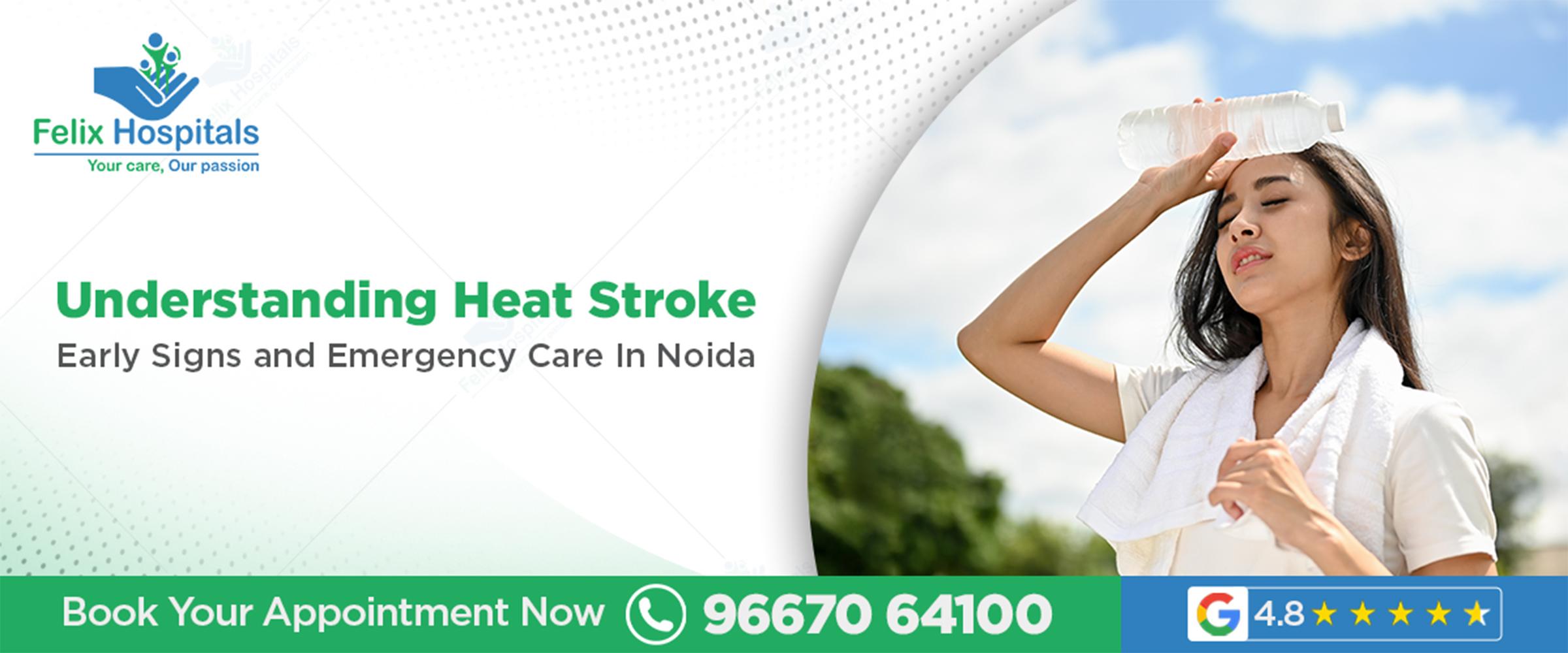
The weather is very threatening in Delhi NCR because in extreme temperatures, it may present serious health risks and mainly during the peak season (summer months) when the temperatures high in the area may skyrocket. Among the most threatening heat-related diseases, there is heat stroke, or the condition that takes place when the body fails to regulate its internal temperature. Understanding what heat stroke is essential for recognizing its severity and taking immediate action to prevent life-threatening complications.
As the urban heat, pollution, and the outdoor activity and exposure to heat increase, the risk of heat-related illnesses is growing at an alarming rate. The importance of such access to medical care like heat stroke treatment hospital in noida is important in avoiding complications and safe recovery of patients affected under severe weather conditions.
Feeling dizzy, overheated, or experiencing unusual symptoms in extreme heat? Don’t ignore warning signs—act fast to prevent complications. Call +91 9667064100 to consult an emergency doctor for heat stroke in Noida immediately.
The most dangerous type of heat-related illness is heat stroke which occurs when body temperature exceeds 40 deg C and the cooling process overloads the body. Understanding What Is Heat Stroke helps differentiate it from milder conditions like heat cramps or exhaustion and highlights the urgency of medical care.
It has been clinically found out that once the body temperature is above critical levels, proteins and enzymes start malfunctioning whereby cell damage is caused. This is the reason why the brain and heart are treatable organs that can soon be affected by heat stroke unless it is treated as quickly as possible.
Recognizing Early Symptoms of Heat Stroke is crucial for preventing progression to a life-threatening stage. The symptoms usually start between the lines but they can develop fast when neglected.
The early symptoms are common and they include:
High body temperature
Hot or flushed skin
Headache
Dizziness or fainting
Nausea or vomiting
Rapid pulse
Weakness or fatigue
These symptoms have to be addressed promptly particularly during extreme heat.
Understanding the difference between Heat Stroke vs Heat Exhaustion is essential for deciding the urgency of treatment and response.
Key differences include:
Heat exhaustion involves heavy sweating, while heat stroke may present with dry or hot skin
In exhaustion, body temperature is moderate but in the case of heat stroke, it is very high.
Rest may help to relieve heat exhaustion but heat stroke should get emergency treatment.
In heat stroke mental confusion is more evident.
Unconsciousness is a result of heat stroke.
Emergency care is delayed since mistakes in proper identification are avoided.
Heat stroke is as a result of excessive exposure to high temperatures or excessive bodily exercise in hot temperatures. Because these triggers provide understanding, they can be used in early prevention.
Common causes include:
Prolonged sun exposure
Low humidity lowering the sweat loss.
Except wearing tight or non-breathable clothing.
Great muscular exertion in hot weather.
Poor ventilation
These aspects have the potential to interfere with the natural cooling mechanism of the body.
Some populations are more susceptible to heat stroke as a result of a physiological or environmental cause.
High-risk groups include:
Young children and old people.
Outdoor workers
Athletes training in heat
Individuals having chronic diseases.
Citizens under medication.
People with dehydration
Risk population identification can assist in preventive actions.
Recognizing severe symptoms is critical in identifying Emergency Treatment for Heat Stroke situations where immediate medical care is required.
The warning signs will be:
High body temperature of a very high nature.
Agitation or mental alteration.
Seizures
Loss of consciousness
Rapid breathing
No sweating in other cases.
The symptoms show that it is a medical emergency and must be addressed with urgency.
Timely treatment of complications and preventing needless loss of life is answered by Knowing When to Visit a Hospital in Noida.
Go to the hospital in case:
The cooling attempts do not lower body temperature.
The individual is unconscious.
Symptoms worsen rapidly
The first aid is not there
Hospitalization leads to immediate help.
Doctors perform rapid evaluations to confirm heat stroke and assess organ function.
Test | Purpose |
Body Temperature Check | Confirms hyperthermia |
Blood Tests | Evaluates organ function |
Urine Tests | Checks kidney health |
Electrolyte Tests | Detects imbalances |
ECG | Monitors heart activity |
These tests guide emergency treatment and recovery planning.
Immediate action is critical in Emergency Treatment for Heat Stroke to reduce body temperature and prevent organ damage.
First aid steps include:
Transferring the individual to a cool or a shaded room.
Removing excess clothing
The use of cold water or ice packs.
Using fans for rapid cooling
Ambulance services.
Medical evidence shows that the large domain of rapid cooling during the first hour of illness will significantly decrease the risk of mortality, and the vitality of emergency intervention is extremely important.
A case of this can only be stabilized and monitored in a heat stroke treatment hospital in Noida to achieve severe cases.
Treatment in the hospital incorporates:
Intravenous fluids
High-tech cooling methods.
Oxygen support
Drugs to treat complications.
Intensive care monitoring
Special treatment guarantees harmless recovery and avoids non-occursion of damage.
Heat stroke may cause severe complications on various organs in the case of untreated heat stroke.
It may have complications such as:
Brain damage
Heart complications
Muscle breakdown
Multi-organ failure
These outcomes are highly likely to occur because of delayed treatment.
Prevention plans contribute significantly to lessening heat related diseases and preserving health in extreme weather conditions.
Preventive tips include:
Drinking plenty of fluids
Eliminating outdoor exposure during high times.
Light breathable clothes.
Using sun protection
Having a break in the shaded areas.
Keeping indoor spaces cool
These measures will help to sustain the body temperature and avoid heat stress.
Minor changes are made to lifestyle which would help reduce the occurrence of heat stroke during hot months.
Some of the adjustments that can help are:
Organizing outdoor events during cold hours.
Increasing water intake
Avoiding heavy meals in heat
Applying cooling mechanisms such as fans or AC.
Regular practices can be used as a defense against extreme temperatures.
The availability of an emergency physician to provide heat stroke in noida is necessary in addressing cases of emergencies.
Emergency services provide:
Rapid stabilization
Continuous monitoring
Immediate treatment
Advanced medical support
Faster recovery assistance
Market healthcare enhances results and minimises morbidity.
Experiencing symptoms of heat stroke or feeling unwell in extreme heat? Get immediate medical attention to avoid serious complications. Call +91 9667064100 to reach an emergency doctor for heat stroke in noida now.
Heat stroke is a fatal disease and it should be noticed and intervened accordingly. Understanding What Is Heat Stroke?, identifying Early Symptoms of Heat Stroke, and knowing When to Visit a Hospital in Noida can make a crucial difference in saving lives.
Awareness and preventive measures are needed in the city of Delhi NCR as the temperatures rise. By consulting a reliable heat stroke treatment hospital in noida as soon as possible, one will be taken care of enough and will be less prone to emergencies, allowing people to remain safe in hot conditions during summer
Heat stroke can develop within minutes, especially during intense heat exposure or physical activity without proper hydration.
Mild symptoms may improve with cooling, but severe cases require immediate hospital care.
Children, elderly individuals, outdoor workers, and people with chronic illnesses are at higher risk.
Move the person to a cool place, start cooling immediately, and seek medical help.
Yes, if untreated, it can lead to long-term organ damage or even death.
Dr. Anshumala Sinha is an experienced Internal Medicine and Diabetology specialist with 20+ years of practice. She specializes in diabetes management, infectious diseases, fever treatment, hypertension, cholesterol control, weight management, and trauma care. Recognized among the Best General Physicians in Noida, she provides comprehensive and patient-focused medical care.

Maintaining a healthy lifestyle is important, in today’s scenario. It is common to hear about some or the other problem related to health faced by individuals.

Heart disease is one of the leading global health concerns, responsible for millions of deaths worldwide each year.


Subscribe to our
© Copyright 2026. All Rights Reserved by Felix Healthcare Private Limited
Design and development by :


 +(91)9667064100
 Emergency : +(91)9667064100