 Emergency:
  WhatsApp
Dr. Sonakshi Saxena is dedicated to helping patients achieve better health through compassionate care and evidence-based medical treatment.

Subscribe to our
Are you living in Noida and concerned about infectious illnesses?
Communicable diseases pose a significant public health challenge in urban environments like Noida due to population density, environmental factors, and lifestyle. This comprehensive guide provides residents with critical information on the most common communicable diseases in the region, their causes, key symptoms, effective treatment strategies, and crucial prevention methods to safeguard your health and community.
Why is this important for Noida residents?
Understanding local disease prevalence—such as dengue, typhoid, tuberculosis, hepatitis A/E, and seasonal influenza—is the first step towards early detection and effective management. Timely action can prevent serious complications and limit community spread.
Communicable diseases, also known as infectious diseases or transmissible illnesses, are health conditions caused by specific disease-causing agents (pathogens). These pathogens, including bacteria, viruses, fungi, or parasites, can spread from an infected host to a healthy individual, either directly or indirectly. Unlike non-communicable diseases (like diabetes), their transmissible nature means they can rapidly spread through communities if unchecked, making public health awareness vital.
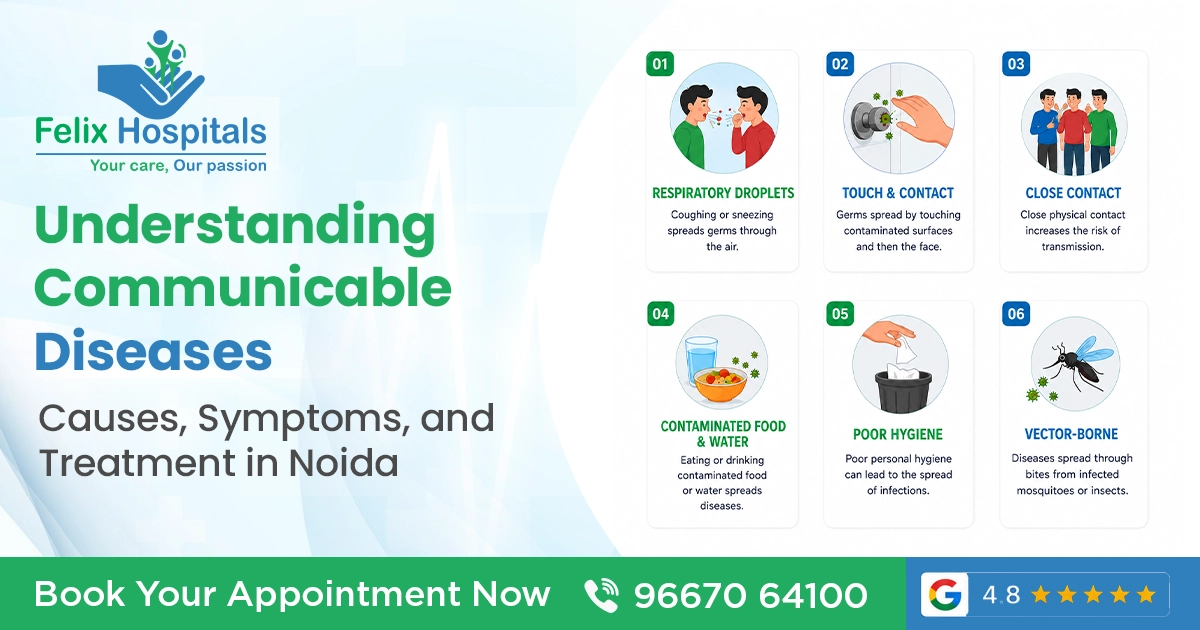
The spread of communicable diseases in an urban setting like Noida typically occurs through several distinct transmission routes. Recognizing these pathways is fundamental to effective prevention.
Common in Noida: Tuberculosis (TB), Influenza, Measles, COVID-19.
Common in Noida: Typhoid Fever, Hepatitis A & E, Cholera.
Common in Noida: Food Poisoning, Hepatitis A.
Common in Noida: Dengue Fever, Malaria, Chikungunya (mosquito-borne).
Noida's specific environmental conditions, particularly during the monsoon and post-monsoon periods, create a conducive environment for certain infections. Here's a breakdown of the most prevalent communicable diseases to be aware of:
| Disease | Caused By | Key Symptoms to Watch For |
| Dengue Fever | Dengue Virus (Mosquito-borne) | High fever, severe joint/muscle pain, headache, rash, nausea, vomiting, low platelet count |
| Typhoid Fever | Salmonella typhi bacteria | Prolonged high fever, abdominal pain, weakness, loss of appetite, constipation or diarrhea |
| Tuberculosis (TB) | Mycobacterium tuberculosis | Persistent cough (3+ weeks), chest pain, weight loss, fever, night sweats, fatigue |
| Hepatitis A & E | Hepatitis A/E Viruses | Jaundice (yellow skin/eyes), fatigue, nausea, dark urine, pale stools, abdominal discomfort |
| Seasonal Influenza (Flu) | Influenza Virus | Fever, body aches, sore throat, cough, fatigue, runny nose, chills |
| Ringworm | Dermatophyte fungi (Direct contact) | Red, circular, itchy, scaly patches on the skin, often with raised borders |
While pathogens are the direct cause, several local and environmental factors in urban areas like Noida contribute to the increased risk and spread of infectious diseases:
Recognizing the initial symptoms is crucial for prompt medical intervention and preventing further spread. While symptoms vary by specific disease, always seek medical attention if you experience:
The treatment strategy for a communicable disease is entirely dependent on the type of pathogen causing the infection. Accurate diagnosis is the first and most critical step.
Preventing communicable diseases is a collective responsibility. Implement these key strategies to protect yourself, your family, and the wider Noida community:
Do not delay seeking professional medical advice. Early evaluation by a qualified doctor is crucial for preventing complications, ensuring a faster recovery, and stopping the chain of transmission.
Consult a doctor immediately if you experience:
For expert care and advanced diagnosis of infectious diseases in Noida, consider consulting specialists at Felix Hospital. Timely treatment ensures better outcomes and reduces the risk of transmission within the community.
Communicable diseases are a constant presence in our environment, but with knowledge, vigilance, and proactive measures, their impact can be significantly mitigated. By understanding how these illnesses spread, recognizing their early symptoms, and adhering to recommended prevention and treatment guidelines, Noida residents can play a vital role in protecting themselves and contributing to a healthier community.
Remember: Early diagnosis and timely medical consultation are your strongest defenses against communicable diseases. Act quickly – your health and the health of those around you depend on it!
The most frequently diagnosed communicable diseases in Noida are dengue and chikungunya (vector-borne), typhoid and hepatitis A/E (waterborne), and tuberculosis and influenza (airborne) — with seasonal spikes during and after monsoon.
Not always, Some infections, like hepatitis or tuberculosis, can be transmissible even before visible symptoms appear, which is why routine screening and vaccination matter even when you feel healthy.
No, Vaccines exist for several major communicable diseases — including influenza, hepatitis A/B, typhoid, and measles — but not for others such as dengue (limited availability) or the common cold. Prevention for non-vaccinable diseases relies on hygiene and avoiding exposure.
Most bacterial, fungal, and parasitic communicable diseases are fully curable with timely and complete treatment. Many viral infections resolve on their own with supportive care, though some — like hepatitis B or HIV — require long-term management rather than a one-time cure.
Recovery time varies widely: a viral fever may resolve in 5–7 days, typhoid typically takes 1–2 weeks with antibiotics, and tuberculosis treatment can run 6 months or longer depending on severity.
Communicable diseases are illnesses caused by bacteria, viruses, fungi, or parasites that can spread from one person to another through air, water, food, physical contact, or insect bites.
They can spread through airborne droplets, direct contact, contaminated food and water, blood, insect bites, and touching infected surfaces.
Yes, Many communicable diseases can be treated effectively with medications such as antibiotics, antivirals, antifungal drugs, supportive care, and timely medical intervention.
You can prevent communicable diseases by washing your hands regularly, maintaining good hygiene, getting vaccinated, drinking clean water, eating hygienic food, and avoiding close contact with infected individuals
While all communicable diseases are infectious, not all infectious diseases are communicable. An infectious disease is caused by any pathogen entering the body. A communicable disease is a specific subset that can easily spread from one person or animal to another. For example, Tetanus is an infectious disease caused by bacteria entering a wound, but you cannot catch Tetanus from another person, making it non-communicable.
Yes, healthy lifestyle habits significantly strengthen your immune system, making it easier for your body to fight off pathogens. Getting 7 to 9 hours of sleep, eating a nutrient-dense diet, exercising regularly, and managing chronic stress all optimize your body’s natural biological defenses against infections.

Air pollution is a major health risk for all ages, causing respiratory and eye issues.
These viruses spread primarily through respiratory droplets released into the air when an infected person sneezes or coughs.
One of the best hospitals for urinary tract treatment in Noida offers comprehensive urology care, featuring expert urologists and advanced diagnostic and treatment facilities.
In severe cases, surgery may be required to drain the blocked sinus.

Subscribe to our
© Copyright 2026. All Rights Reserved by Felix Healthcare Private Limited
Design and development by :


 +(91)9667064100
 Emergency : +(91)9667064100