 Emergency:
  WhatsApp
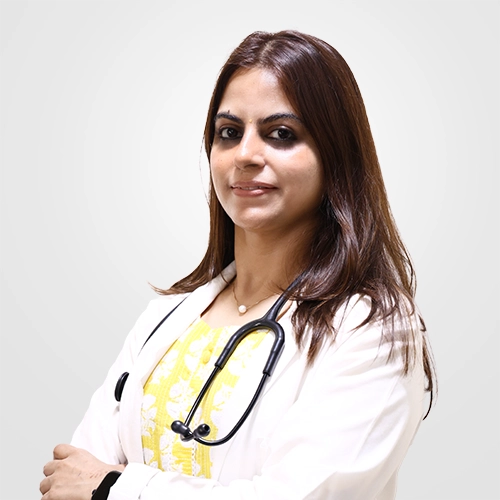
Dr. Sonakshi Saxena is dedicated to helping patients achieve better health through compassionate care and evidence-based medical treatment.


Subscribe to our
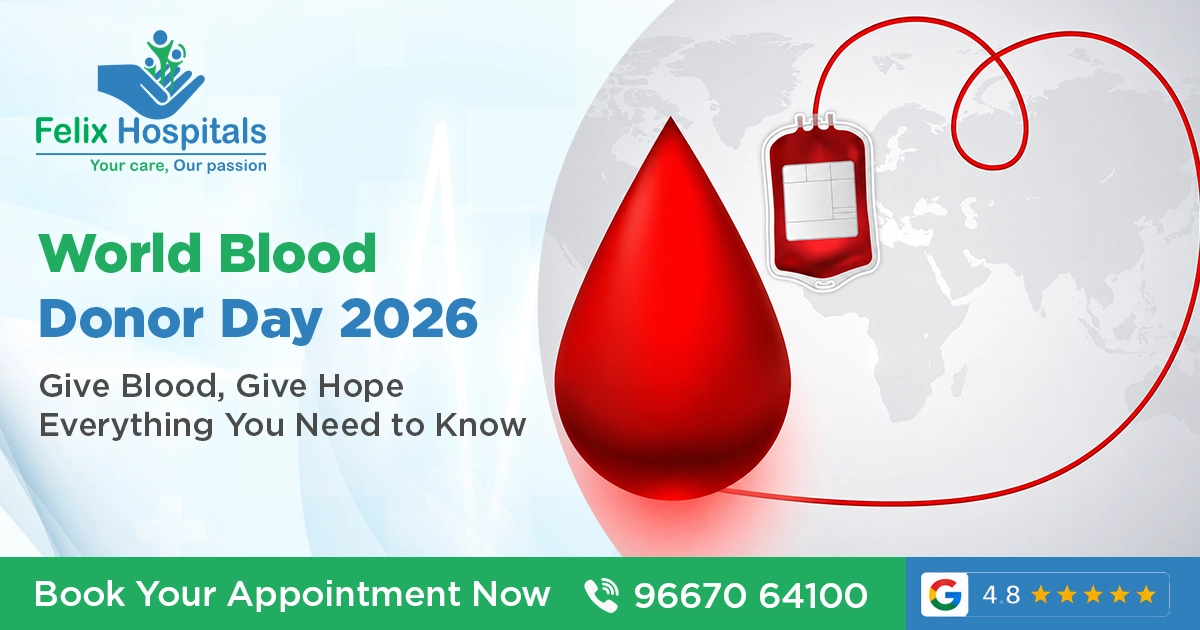
Every 14 June, the world pauses to acknowledge a group of people who ask for nothing in return and yet give something that no laboratory, no factory, and no technology on earth can replicate, Blood donors.
On 14 June, the world celebrates World Blood Donor Day, a day to express gratitude to voluntary, unpaid blood donors for their life-saving contributions. One unit of safe blood can save up to three lives.
At Felix Hospital, World Blood Donor Day is not simply a date on a calendar. It is a reminder of why our blood bank operates 24 hours a day, why our team of trained phlebotomists is always on standby, and why every voluntary donor who walks through our doors is treated with the same care and respect as any patient we serve.
This year, we want to do more than mark the occasion. We want to answer every question, correct every myth, and give every eligible person in Noida and Greater Noida a clear, honest reason to donate today, and regularly.
World Blood Donor Day 2026 is observed on June 14 with the theme "Give blood, give hope: together we save" This theme highlights the power of voluntary blood donation in saving lives and restoring hope to patients in need.
On this significant occasion, we extend our profound gratitude to voluntary, non-remunerated blood donors who have saved millions of lives, particularly those individuals who donate regularly and repeatedly, honoring their selfless acts of blood provision.
The date itself carries meaning. June 14 is the birthday of Nobel Prize-winning Austrian physician Karl Landsteiner, who discovered the ABO blood group system, a fundamental breakthrough that made safe blood transfusion possible. Without Landsteiner's discovery, the concept of matching blood types before transfusion would not exist and with it, the entire modern infrastructure of emergency surgery, cancer treatment, and childbirth would be unrecognizably different.
The first official celebration took place in 2004, launched by the World Health Organization, the International Federation of Red Cross and Red Crescent Societies, the International Society of Blood Transfusion, and the International Federation of Blood Donor Organizations. In 2005, the 58th World Health Assembly declared it an annual global event.
Twenty-one years on, the message remains the same and the need has never been more urgent.
India is one of the most populous countries in the world. It is also one of the most blood-deficient.
According to a survey in India, every two seconds there is a requirement for blood transfusion. The nation faces an acute shortage of donated blood: only 2.5 crore units of blood are available where the demand is a staggering 5 crore units every year. Due to various medical conditions including road traffic accidents, medical procedures like surgery, diseases like thalassaemia, labour and delivery, and other serious and life-threatening conditions, about 38,000 donations are required every day.
According to estimates by the World Health Organization, at least one percent of a country's population should donate blood each year to meet its basic needs. For India, this translates to over 13 million units annually. Voluntary donations remain the most reliable and safest source of blood. Yet, myths, fear of the process, and lack of awareness discourage many from donating.
In India, the demand for blood is high, but challenges persist. Only a small percentage of eligible donors contribute regularly. Urban areas tend to have greater awareness and access to donation centres, whereas rural regions often face blood shortages.
The patients waiting for that blood are not abstractions. They are the mother hemorrhaging during delivery in Noida's maternity ward. They are the children with thalassaemia coming in every three weeks for a transfusion without which they cannot survive. They are the road accident victims arriving at Felix Hospital's emergency department at 2 AM. They are cancerare the cancer patients whose chemotherapy has destroyed their bone marrow's ability to produce platelets.
None of them can wait for a campaign. They need blood that was donated weeks earlier, stored safely, and ready to use.
Not everyone is eligible to donate blood, as certain health and safety guidelines must be met to protect both the donor and the recipient. These criteria help ensure that the blood collected is safe and suitable for transfusion.
Here are the eligibility criteria for blood donation in India as set by the National Blood Transfusion Council:
Age: Donors should be between 18 and 65 years old.
Weight: You should not weigh less than 45 kilograms.
Haemoglobin: A minimum haemoglobin level of 12.5 g/dL is necessary.
General health: You must be in good health, free from any transmittable diseases, with normal pulse, blood pressure, and body temperature on the day of donation.
Donation frequency: For whole blood donation once in three months (90 days) for males and once in four months (120 days) for females.
Diabetes: Diabetic patients can donate even if on medicines, but only if they are not on insulin, have not changed their dose or medicines in the last 28 days, and no other organs are involved.
Anyone currently unwell or with an active infection
Patients on anticoagulants or certain prescription medications
Those who have had a tattoo or piercing in the last 6 to 12 months
Anyone who has travelled to a high malaria-risk area in the last 3 months
Pregnant women and those who have delivered in the last 6 months
Anyone who has had a recent surgery or received a blood transfusion in the past year
Consult with a healthcare provider if you are unsure about your eligibility. At Felix Hospital, a brief pre-donation health screening including haemoglobin check, blood pressure measurement, and a short health questionnaire is conducted before every donation. It takes less than 10 minutes and is completely confidential.
Many people who want to donate never do because they do not know what to expect and let that uncertainty become a reason not to go. Here is exactly what happens at Felix Hospital's blood bank, from the moment you walk in to the moment you leave:
Step 1 Registration (5 minutes) You provide basic identification: an Aadhaar card, voter ID, or any government photo ID. You fill a simple health questionnaire about your recent medical history, travel, and medication use.
Step 2 Pre-donation health screening (10 minutes) A healthcare professional checks your haemoglobin level with a small finger-prick test, measures your blood pressure, pulse, and temperature, and reviews your questionnaire. If everything is in order, you proceed to donate.
Step 3 The donation (8 to 10 minutes) You lie comfortably on a donation chair. A sterile, single-use needle is used once, and discarded. Approximately 350 to 450ml of blood is collected, less than 10% of the average adult's total blood volume. Most donors feel nothing beyond a brief initial prick.
Step 4 Rest and refreshment (15 minutes) You are offered juice, biscuits, and water. You rest for at least 15 minutes before leaving. The entire visit from entry to exit takes approximately 45 minutes.
Your body replaces the donated plasma within 24 hours. Red blood cells are fully replenished within 4 to 6 weeks. You will not feel weaker the next day. Most donors report feeling no different or even better after donating.
Blood donation is most often described in terms of what it gives others and rightly so. But it also carries genuine, evidence-supported benefits for the donor.
Free health screening at every visit Since every blood donated is screened, it acts as a major health screening and health checkup for the donor. Donors can know the status of their HIV, Hepatitis B, Hepatitis C, Malaria, and syphilis alongside the pre-donation tests. For many donors particularly those who do not attend regular medical check-ups this is the only regular health review they receive.
Reduced iron overload Regular donation helps reduce iron overload helping prevent haemochromatosis, a condition caused by excess iron in the body that damages the liver, heart, and joints over time.
Improved cardiovascular health Donating blood improves heart health by reducing excess iron in the body. Elevated iron levels increase oxidative stress on blood vessel walls. Regular blood donation modestly reduces this risk in susceptible individuals.
Stimulation of new blood cell production After each donation, the bone marrow is signalled to produce fresh red blood cells, a natural process of renewal and regeneration that keeps the blood supply healthy and active.
Psychological benefit Blood donation improves the emotional and physical health of the donor. The act of contribution knowing that your single donation may save up to three lives has a documented positive effect on mental wellbeing, sense of purpose, and community connection.
Most donors never see beyond the donation chair but understanding what happens next makes the act feel more tangible and more meaningful.
After collection at Felix Hospital's blood bank, each unit of donated blood undergoes:
Blood grouping: ABO and Rh typing confirming the blood group and Rh factor (positive or negative) of the donation.
Infectious disease screening: Every unit is mandatorily tested for HIV, Hepatitis B, Hepatitis C, syphilis, and malaria as required by India's Drugs and Cosmetics Act. Any unit that tests positive is discarded. Only clean, safe blood enters the blood bank.
Component separation: A single donation of whole blood is typically separated into three components: packed red blood cells, platelets, and fresh frozen plasma. A single blood donation can save up to three lives because each component goes to a different patient with a different need.
Storage:
Packed red blood cells: stored at 2 to 6°C, usable for 35 to 42 days
Platelets: stored at 20 to 24°C with continuous agitation, usable for only 5 days
Fresh frozen plasma: stored at -18°C or below, usable for up to 1 year
Since the shelf-life of collected blood is 35 to 42 days, regular year-round donation is needed for safe and resilient transfusion services. This is why a single donation drive once a year however large cannot sustain a blood bank. What is needed is a committed base of regular, voluntary donors giving throughout the year.
Every blood donor in Noida and Greater Noida is potentially donating for someone in the same community. Here is who uses that blood:
Road accident victims: India has one of the highest rates of road traffic fatalities in the world. Emergency trauma cases arrive at Felix Hospital needing blood transfusion within minutes of arrival. There is no time to organise a donor. The blood has to already be there.
Mothers during childbirth: Postpartum haemorrhage severe bleeding after delivery is one of the leading causes of maternal death in India. A unit of blood available in the right blood group at the right moment is the difference between survival and death.
Thalassaemia and sickle cell patients: Many people with blood disorders need regular transfusions. Children with thalassaemia major require blood transfusions every 2 to 4 weeks, for life. Each transfusion requires one to two units of matched red cells. These children have names, families, and schools. They are not statistics and they depend on donors who show up consistently.
Cancer patients: Chemotherapy destroys not just cancer cells but also blood-producing bone marrow cells. Patients undergoing chemotherapy often need platelet transfusions to prevent life-threatening bleeding.
Surgical patients: Every elective and emergency surgery carries a risk of blood loss. Cardiac surgery, liver transplants, orthopaedic procedures, and neurosurgery all require readily available blood reserves.
Patients with severe anaemia: Particularly among women and children in low-income communities severe anaemia from nutritional deficiency or parasitic infection can reach levels requiring emergency transfusion.
In many parts of India, myths and misunderstandings often discourage people from donating blood. These beliefs, though widely circulated, are not based on medical facts.
Myth: Donating blood makes you weak for days.
Fact: Your body replaces plasma within 24 hours. Most donors return to full normal activity the same evening. A healthy meal and adequate hydration before and after donation is all the preparation needed.
Myth: Blood donation is painful.
Fact: The initial needle insertion involves a brief, sharp sensation comparable to any routine blood test. Once the needle is placed, there is no ongoing discomfort. The donation itself is painless.
Myth: You can contract HIV or hepatitis by donating blood.
Fact: Sterile, single-use needles ensure safety. The needle used for your donation is opened from a sealed, sterile package in front of you and discarded immediately after. There is zero risk of infection from the donation process itself.
Myth: People with diabetes cannot donate blood.
Fact: Diabetics can donate if they are not on insulin, have not changed their dose or medicines in the last 28 days, and no other organs are involved. Many well-controlled Type 2 diabetics donate regularly without any issue.
Myth: Donating blood too often depletes the body.
Fact: The prescribed interval 90 days for men, 120 days for women is based on the body's established replenishment timeline. Donating within these intervals carries no health risk.
Myth: You cannot donate if you have had a cold recently.
Fact: Once you have fully recovered from a cold no fever, no symptoms for at least a week you are eligible to donate again.
Myth: Vegetarians cannot donate because their blood is weaker.
Fact: A well-nourished vegetarian with a normal haemoglobin level is a perfectly eligible donor. Haemoglobin level not diet is the criterion.
If you are ready to donate, here is how you can prepare: Eat a healthy meal and drink plenty of water before donating. Avoid alcohol or smoking on the day of donation. Carry a valid ID proof to the donation site.
The night before:
Eat a nutritious, iron-rich meal dal, green vegetables, eggs, or chicken
Get 7 to 8 hours of sleep
Avoid alcohol entirely
On the day of donation:
Eat a full meal do not donate on an empty stomach
Drink at least 500ml of water in addition to your usual intake
Wear comfortable clothing with sleeves that roll up easily
Bring a government photo ID
Avoid heavy exercise in the 4 hours before donating
After donation:
Rest for 15 minutes at the donation site before leaving
Drink extra fluids throughout the day water, juice, coconut water
Eat an iron-rich meal during the day spinach, rajma, eggs, jaggery
Avoid heavy lifting or strenuous exercise for 24 hours
If you feel dizzy or faint after leaving, sit or lie down immediately and drink fluids
Most people think of blood donation as a single thing but there are actually several types, each serving a different clinical purpose:
Whole blood donation: The most common type the complete blood donation of approximately 350 to 450ml. This is separated into components after collection.
Platelet donation (Apheresis): A machine separates platelets from the blood during donation and returns the rest to the donor. This takes approximately 1 to 2 hours but provides a much larger platelet yield than separating platelets from whole blood. Particularly valuable for cancer patients and patients with platelet disorders.
Plasma donation: Plasma the liquid component of blood containing clotting factors and antibodies is collected by apheresis for specific clinical uses including burn treatment, clotting factor replacement in haemophilia, and immunoglobulin production.
Double red cell donation: Using apheresis technology, two units of red blood cells are collected in a single donation session. The donor can donate double red cells every 6 months rather than every 3 months.
Felix Hospital's blood bank team will guide you on which type of donation is most clinically needed and most appropriate for your health profile.
There is a distinction in blood banking between replacement donors family or friends who donate to replace blood used for a specific patient and voluntary, non-remunerated donors who donate regularly without any specific patient in mind.
Voluntary and unpaid blood donation made regularly can help overcome blood shortages. Year-round voluntary blood donations are needed to provide sustainable and safe transfusion services to everyone who needs them.
Voluntary donors are statistically safer donors their blood is less likely to carry infectious diseases, they are honest on their health questionnaires, and they donate at regular intervals that allow their health to be consistently monitored. A blood bank built on voluntary donors is a fundamentally safer and more reliable blood bank than one dependent on replacement donations or paid donors.
As one regular Indian blood donor, Rayan Fernandes, said: "As soon as I turned 18, I donated blood for the first time in my life. After being a donor once, I have donated blood almost 19 times without any fail. Being young and in the prime of health, I make it a point to donate every three months."
This is what the system needs not a one-time gesture, but a commitment. One donation every three months from a healthy adult between 18 and 65 costs nothing, takes less than an hour, and generates four to six units of life-saving blood components per year.
If every eligible adult in Noida and Greater Noida donated once a year, the regional blood shortage would be eliminated.
Felix Hospital's in-house blood bank is equipped to receive whole blood donations and perform apheresis procedures. Our blood bank operates within full regulatory compliance all donations are screened for HIV, Hepatitis B, Hepatitis C, syphilis, and malaria before use.
Why donate at Felix Hospital:
Fully equipped, NABH-accredited hospital blood bank.
Immediate health screening at no cost to the donor.
Complimentary refreshments and rest area post-donation.
Your blood group card is provided useful knowledge for your own health records.
Your donation directly benefits patients admitted to Felix Hospital your community, your neighbours.
To donate blood or enquire about our blood bank, call +91 9667064100.
Walk-ins are welcome throughout the year not just on World Blood Donor Day.
On 14 June 2025, as the world comes together under the theme "Give Blood, Give Hope: Together We Save Lives," we at Felix Hospital want to say something plainly: the hope part is real.
Every 450ml donated is real hope for the accident victim whose bleeding has to be stopped. Real hope for the mother whose life is hemorrhaging away in the delivery room. Real hope for the child whose bone marrow is losing its battle with thalassemia. Real hope for the cancer patient whose platelet count has bottomed out.
The donation takes less than an hour of your day. The blood takes 4 to 6 weeks to fully replenish. And the life it saves that lasts a lifetime.
This World Blood Donor Day, do not just mark the occasion. Be the occasion.
Call Felix Hospital at +91 9667064100 to donate blood, register as a regular voluntary donor, or ask any question about the donation process. Our blood bank team is ready for you today and every day of the year.
Give blood. Give hope. Together, we save lives.
World Blood Donor Day is a global health observance established by the WHO and its partners in 2004 to thank voluntary blood donors and raise awareness about the need for safe blood. June 14 was chosen because it is the birthday of Karl Landsteiner the Nobel Prize-winning physician who discovered the ABO blood group system, making modern blood transfusion possible.
The official WHO theme for World Blood Donor Day 2025 is "Give Blood, Give Hope: Together We Save Lives." It celebrates the collective power of voluntary blood donation and highlights the life-changing impact donors have on patients across the world.
In India, you are eligible to donate blood if you are between 18 and 65 years old, weigh at least 45 to 50 kg, have a haemoglobin level of 12.5 g/dL or above, and are in good general health on the day of donation. A brief health screening at Felix Hospital confirms eligibility before every donation.
Men can donate whole blood once every 90 days. Women can donate once every 120 days. Platelet donation by apheresis can be done more frequently up to every 2 weeks for eligible donors.
No. Your body replaces plasma within 24 hours. Red blood cells are fully replenished within 4 to 6 weeks. Most donors return to normal activity the same evening. Eating well and staying hydrated before and after donation is all the preparation needed.
Completely safe. Every needle used is sterile, single-use, and discarded immediately after your donation. There is zero risk of contracting any infection through the donation process itself.
One unit of whole blood after being separated into red cells, platelets, and plasma can save up to three lives. This is why regular voluntary donation has such an outsized impact on a community's health.
Diabetics on oral medications (not insulin) with well-controlled sugar levels and no organ involvement can generally donate. Hypertensive patients with well-controlled blood pressure within normal range on the day of donation are also typically eligible. Felix Hospital's pre-donation screening will confirm your individual eligibility.
Eat a full, nutritious meal dal, vegetables, eggs, or meat. Drink at least 500ml of additional water. Avoid alcohol and smoking on the day of donation. Avoid fatty foods immediately before donation as they can affect blood component quality. Avoid heavy exercise in the 4 hours before donating.
Simply walk in to Felix Hospital, Sector 137, Noida, with a government photo ID Aadhaar, voter ID, or passport. Our blood bank team will conduct a brief health screening and complete your donation in under 45 minutes. For prior enquiry or to schedule a donation visit, call +91 9667064100. No appointment necessary walk-ins are welcome throughout the year.
For those experiencing such symptoms, seeking care from the best hospital for pulmonology treatment in Noida ensures you receive timely and expert diagnosis and treatment.
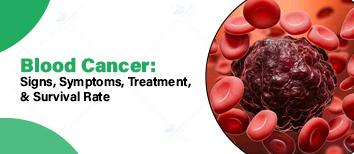
Blood cancer affects the production and function of blood cells. Early detection, accurate diagnosis, and advanced treatments significantly improve survival rates and patient outcomes in Noida and beyond.

Subscribe to our
© Copyright 2026. All Rights Reserved by Felix Healthcare Private Limited
Design and development by :


 +(91)9667064100
 Emergency : +(91)9667064100