 Emergency:
  WhatsApp



Subscribe to our
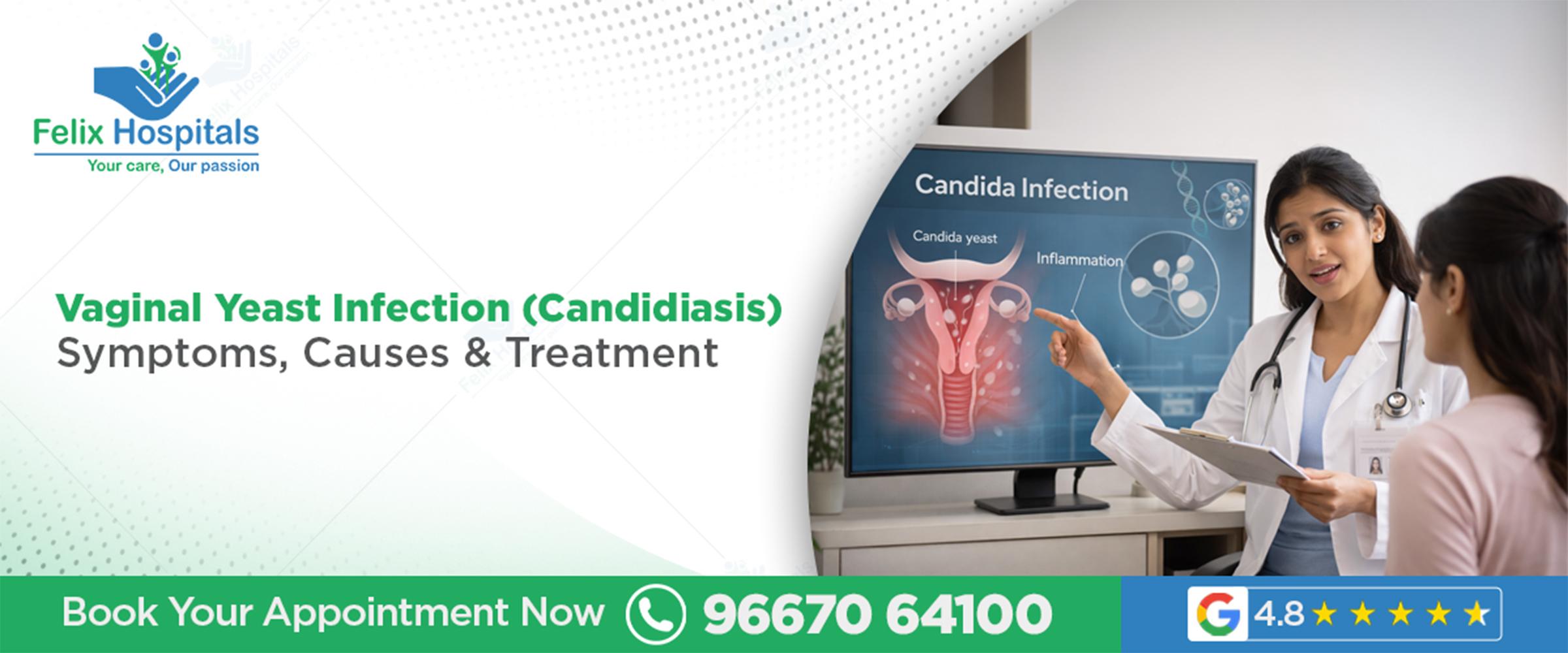
Many women have vaginal discomfort, but not many of them talk about it. A condition that affects three out of four women at least once in their lives is one of the most common causes. However, many women still misdiagnose, under-treat, or ignore it because they are embarrassed. A vaginal yeast infection, also known as candidiasis, is a fungal infection that is easy to treat if you know what it is. The problem is that it is often mistaken for other illnesses, which makes it take longer to get better and can even cause problems that aren't necessary. Visit the best Gynecology Hospital in Noida today to get the best treatment for Vaginal Yeast Infection.
Are you having persistent vaginal itching, strange discharge, or infections that keep coming back? If so, you need a proper diagnosis, not just another round of over-the-counter medicine. Call +91 9667064100 now
Vaginal candidiasis is an infection that happens when the fungus Candida grows too much in the vagina and vulva. Candida albicans is the most common type. Candida is a type of organism that lives in the vagina. When things are healthy, it lives in harmony with bacteria, especially Lactobacillus, which keeps the vagina acidic and stops fungi from growing. When this balance is off, Candida grows too much and causes an infection.
It is not a STI, but it can be passed between partners from time to time. Not keeping things clean is not the cause. It messes up the vaginal microbiome, and any woman, no matter her age or lifestyle, can get it.
The symptoms of vaginal candidiasis are usually easy to tell apart from those of other vaginal conditions, but they can sometimes be similar. This is why it's important to see a doctor.
Very itchy and irritated skin inside the vagina and around the vulva
A burning feeling, especially when you pee or have sex
The vulva is red and swollen.
Vaginal discharge that is thick, white, and like cottage cheese and has little or no smell
In some cases, the skin on the vulva may be sore or have a rash.
Watery discharge in less severe infections
The itching is usually the most noticeable and bothersome sign. It can be bad enough to keep you from sleeping and doing your daily activities. Vaginal yeast infections don't usually cause a bad-smelling discharge. If there is an odour, it is more likely to be bacterial vaginosis or a STI, and a doctor should check it out, which highlights What Are the Common Symptoms of a Vaginal Yeast Infection?
There isn't just one thing that causes vaginal candidiasis; it happens when something changes the normal balance of bacteria in the vagina.
One of the most common causes is taking antibiotics. Antibiotics kill bad bacteria, but they also kill the good Lactobacillus bacteria in the vagina, which lets Candida grow too much.
Hormonal changes—like those that happen during pregnancy, before your period, or when you take hormonal birth control—change the pH and glycogen levels in the vagina, which makes it easier for fungi to grow.
High blood sugar or diabetes that isn't under control makes the environment rich in glucose, which is great for Candida.
A weakened immune system — from being sick, stressed, HIV, or taking immunosuppressive drugs — makes it harder for the body to keep Candida in check.
Tight or synthetic clothing that keeps heat and moisture in the genital area can help fungi grow.
Soaps, douches, or vaginal deodorants with scents throw off the natural pH balance of the vagina.
Knowing what caused the infection is just as important as treating it. If the cause keeps happening, the infection is likely to come back, which explains What Causes Vaginal Candidiasis
Any woman can get a yeast infection, but some groups are much more likely to get one:
Women who have been on long-term or broad-spectrum antibiotics
Pregnant women Hormonal changes make the vaginal environment very sensitive during pregnancy.
Women with type 1 or type 2 diabetes that isn't well controlled
People who take corticosteroids or immunosuppressive drugs
Women who have HIV or other diseases that weaken the immune system
People who take hormonal birth control that has a lot of oestrogen in it
Women who regularly douche or use scented products for personal hygiene
People who wear tight synthetic pants or stay in wet clothes (like wet swimwear) for a long time
If you have one or more of these risk factors, it doesn't mean you'll definitely get a yeast infection. But knowing what they are can help you avoid getting one and understand why it keeps coming back, answering Who Is at Higher Risk of Developing a Yeast Infection?
A lot of treatment failures start here: when people try to figure out what's wrong with them based only on their symptoms. Diagnosing a vaginal yeast infection correctly necessitates more than merely identifying itching or discharge, as bacterial vaginosis, trichomoniasis, and certain STIs may exhibit analogous symptoms, which explains
A gynaecologist will usually:
Get a full history of the symptoms, including recent use of antibiotics, the method of birth control, and the timing of the menstrual cycle.
Check for redness, swelling, and discharge by doing a pelvic exam
Get a vaginal swab for culture or microscopy to find out what kind of Candida it is
Check the pH of the vagina. A yeast infection usually has a normal pH of 4–4.5, but bacterial vaginosis usually has a higher pH.
Culture is especially important for infections that come back because some types of fungi, like Candida glabrata, don't respond to the usual antifungal drugs used for C. albicans. Using the wrong medicine on the wrong organism will not get rid of the infection.
The treatment for vaginal candidiasis depends on how bad the infection is (mild to moderate, infrequent) or how complicated it is (severe, recurrent, or caused by a non-albicans species), which explains What Is the Best Treatment for Vaginal Yeast Infection?
For infections that aren't complicated:
Topical antifungals — creams or pessaries of clotrimazole, miconazole, or butoconazole that are put directly on the vagina and vulva; they come in 1-day, 3-day, or 7-day courses
Oral antifungal — a single dose of fluconazole (150 mg) taken by mouth is very effective and is often used to treat simple infections.
For infections that are hard to treat or keep coming back:
A longer course of topical antifungal (10–14 days) or two doses of oral fluconazole 72 hours apart.
Maintenance therapy: weekly oral fluconazole for six months to stop women from having three or more episodes per year from happening again.
Testing for sensitivity to find Candida species that are resistant before giving treatment
Women who have already had a yeast infection and are experiencing the same symptoms can treat themselves with antifungal medications that are available without a prescription. But a gynaecologist should look at infections that happen for the first time, during pregnancy, or that don't respond to normal treatment.
Mild vaginal yeast infections can sometimes go away on their own, especially if the cause, like a short course of antibiotics, has gone away and the vaginal microbiome has returned to normal. But this is not the case most of the time, answering Can Vaginal Yeast Infections Go Away on Their Own?
Without antifungal treatment, most infections will stay the same or get worse. If you don't treat a yeast infection, it can have real effects:
Long-lasting pain and irritation of the skin from scratching it too much
Higher chance that the infection will spread to nearby skin
Being more likely to get STIs because the vaginal barrier isn't working properly
If a woman is pregnant and doesn't get treatment for candidiasis, she is more likely to pass the infection on to her baby during delivery.
It's not a good idea to wait more than two or three days to see if symptoms go away on their own. If you have symptoms that are clear and present, the right thing to do is to get treatment, not wait and see.
Women who get recurrent vaginal candidiasis—four or more times in a year—need both medical care and specific changes to their lifestyle to avoid getting it again, which explains How Can You Prevent Recurrent Yeast Infections?
Wear cotton pants that let air flow through it and stay away from tight synthetic fabrics that hold moisture around the genitals.
Don't use douches or scented intimate products. The vagina cleans itself, and these products change the natural pH and microbiome.
Take off wet clothes right away after swimming or working out
If you have diabetes, keep your blood sugar under control because high glucose levels directly feed Candida growth.
Take probiotics while and after taking antibiotics—Lactobacillus-containing probiotics help restore vaginal flora, but they work best when used with antifungal treatment, not instead of it.
Wipe from front to back after using the bathroom to keep intestinal germs from getting to the vaginal area.
Talk to your gynecologists about birth control options if high-estrogen pills seem to be causing infections over and over again. A lower-estrogen or non-hormonal option might help.
Always look into recurrent infections in a clinical setting. Testing is necessary instead of repeated empirical treatment because of the possibility of undiagnosed diabetes, an unrecognized immune condition, or a resistant Candida species.
Are you having trouble with a yeast infection that keeps coming back even after treatment? If you keep getting infections, you need to see a doctor, not just get another prescription.
You can get a full evaluation and a plan that really addresses the cause by calling +91 9667064100 and talking to an experienced Gynaecologist in Noida.
A vaginal yeast infection is common, but that doesn’t mean you should ignore it or keep self-treating without proper guidance. If symptoms persist, consulting an experienced Gynaecologist in Noida is important for an accurate diagnosis and the right treatment plan. The treatment works best when it matches the specific type of infection, and the risk of recurrence can be effectively managed with expert care from a qualified Best Gynaecologist in Noida. Instead of making assumptions, timely medical evaluation and identifying the root cause are essential for long-term relief.
If your symptoms come back within two weeks of finishing treatment, it usually means one of three things: the infection wasn't completely cleared, the same trigger is still there, or the organism that is causing your symptoms isn't Candida albicans and may not respond to the standard treatment. Over-the-counter antifungals are meant for simple, first-time infections with common symptoms. A vaginal swab and culture to find out the exact species involved and a clinical assessment to look for underlying problems like blood sugar or immune health are needed because this has happened again so soon. Instead of getting the same treatment again, please see a gynaecologist.
Yes, but it's not very common. If a man has sex with a woman who has a yeast infection without protection, he can get penile candidiasis, which looks like redness, itching, or a rash on the head of the penis. If the man is not circumcised or has diabetes, this is more likely to happen. If both partners show symptoms, they should be checked out and treated at the same time to keep from reinfecting each other. Using condoms during a yeast infection greatly lowers the risk of spreading it.
Yes, yeast infections are very common during pregnancy because of higher levels of oestrogen and glycogen in the vagina. They should be treated instead of left alone, because a persistent infection during pregnancy can be painful and raise the theoretical risk of thrush in newborns during vaginal delivery. However, oral fluconazole is not advised during pregnancy due to apprehensions regarding foetal risk at elevated dosages. Clotrimazole creams or pessaries that you put on your skin are safe to use during pregnancy. Before starting any treatment, please check with your gynaecologist to make sure of the diagnosis. Self-diagnosis during pregnancy is riskier than at other times.
This is a known pattern called cyclic vulvovaginitis. It happens when yeast infections happen reliably during the luteal phase, which is the week before menstruation when progesterone levels rise and the vaginal environment changes. It means that your Candida overgrowth is caused by hormones rather than just one thing, like antibiotics. A cyclical antifungal regimen, like taking a single dose of fluconazole around day 21 of each cycle, usually works well for this pattern. A gynaecologist can prescribe this after confirming the diagnosis. It's not just a cleanliness issue, and changing your lifestyle won't fix it.
It is not a good idea. Having sex while you have an active yeast infection can make the irritation and inflammation worse, which could make it take longer to heal and spread the infection to your partner. Some antifungal creams and pessaries are also made with oil, which can break down latex condoms and make them less effective. The best thing to do is to finish the treatment and wait until all the symptoms have gone away before having sex again. If symptoms continue after treatment, a clinical evaluation is required prior to the resumption of sexual activity.
Dr. Charu Yadav is an obstetrician and gynecologist with 12+ years of experience, specializing in high-risk and twin pregnancies, ectopic pregnancy, and menstrual disorders. Trained in laparoscopic surgery, she provides care for pregnancy, infertility, menopause, and gynae procedures. She is also recognized among the Best Gynecologists in Noida for her patient-focused treatment.
Vaginal boils and herpes both cause painful bumps in the genital area, but their causes and treatments are very different. Knowing the difference helps women choose the right treatment and prevent complications.


Subscribe to our
© Copyright 2026. All Rights Reserved by Felix Healthcare Private Limited
Design and development by :


 +(91)9667064100
 Emergency : +(91)9667064100