 Emergency:
  WhatsApp


Subscribe to our
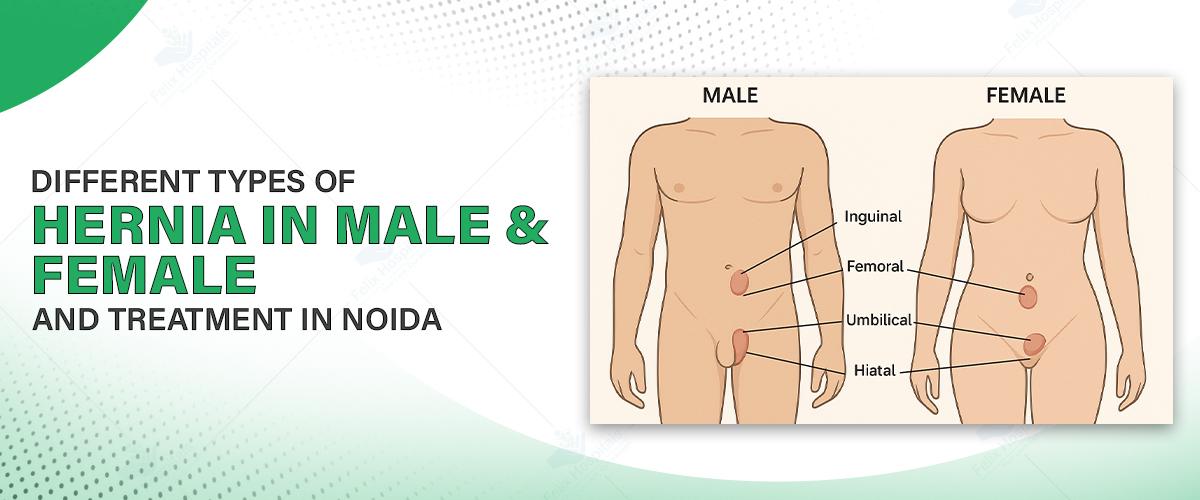
Hernia is a widespread health condition that has afflicted millions of Indians. It happens when an organ or tissue protrudes through a weakened area in the covering muscle or connective tissue. Recent research shows that about 2 million cases of hernias happen every year in India. It is more prevalent in men, especially for inguinal hernias, which represent 75% out of all hernia cases. Women are more prone to having umbilical and femoral hernias. For every patient looking for quality medical treatment, Felix Hospital is the most suitable choice in Noida for hernia treatment in males and females. Known as the best general surgery hospital in Noida, it offers the most modern facilities and state-of-the-art surgical procedures for safe and effective recovery.
Don’t let hernia pain disrupt your life — call +91 9667064100 for expert consultation.
A hernia is when a body organ, most often the intestines, bulges through a weak spot in the abdominal wall. This forms a bulge, which can be seen or felt. Symptoms of hernia, if not treated, may lead to some serious complications like strangulation and bowel obstruction, which may require emergency surgery.
Inguinal Hernia: Less common in men, located at the groin area.
Femoral Hernia: Also more common in women, in the upper thigh or groin.
Umbilical Hernia: Develops in babies and pregnant women, around the belly button.
Hiatal Hernia: When the stomach bulges into the chest through the diaphragm.
Incisional Hernia: It is found at the site of an old surgical incision.
Heavy lifting with poor technique.
Smoking or chronic respiratory condition-related chronic cough.
Obesity puts extra strain on the abdominal muscles.
The genetic background of hernia increases the risk of developing one.
Pregnancy is responsible for increased intra-abdominal pressure, which causes umbilical and femoral hernias.
Previous operations can weaken the abdominal wall and cause an incisional hernia.
Muscle weakening due to natural aging results in increased vulnerability of hernias.
Hernia refers to the protrusion of an organ or tissue inside the body through a weakened spot in the muscle wall that contains it. Symptoms vary with the extent and nature of the hernia, but among the usual symptoms are:
1. Firm mass or swelling in the abdomen or groin: One of the most evident signs is a swelling of the area of the affected part, which can be more pronounced when one is standing, coughing, or straining.
2. Pain or Discomfort, On Coughing, Bending, or Lifting
3. Heaviness or Pressure in the Affected Area: A persistent sensation of weakness or heaviness in the involved area is frequent, even in the absence of bulging.
4. Acid Reflux and Heartburn (In Hiatal Hernias): A hiatal hernia, in which the upper portion of the stomach bulges into the chest cavity via the diaphragm, could lead to acid reflux and heartburn.
5. Nausea and gastrointestinal issues, Implying Complications
These can be signs of a medical emergency that needs urgent attention.
Although both men and women can develop hernias, there are some hernias that are more prevalent in one gender than the other.
Men are also at greater risk for inguinal hernias, the intestine protrudes through the inguinal canal of the groin area.
It is caused by a natural weak zone in the groin area, where the testes descend in fetal life, and leaves an opening in the abdominal wall.
Heavy lifting, chronic cough, and straining while eliminating stools may aggravate it in men.
Women develop umbilical and femoral hernias more commonly, and this is most commonly the result of the physical demands of pregnancy and childbirth.
With increasing pregnancy, the muscles of the belly are stretched, and excess strain on the belly makes the tissues weaker and susceptible to hernias.
Hormonal changes also enter the picture, as they may affect the elasticity and strength of connective tissues.
Men usually have pain and sore bulging, hence diagnosis will be simpler.
Women may have smaller hernia protrusions that are not necessarily palpable.
They experience chronic pelvic pain or discomfort, commonly misinterpreted as gynecologic disease.
Complications like strangulation (when blood supply gets cut off by a hernia) can occur in both males and females and require prompt surgery.
Early diagnosis is crucial to prevent complications and determine the best treatment approach. Both physical examination and imaging tests are used by physicians to determine the presence of a hernia.
The doctor will check by sight and by palpation the affected area to check for any bulging. For inguinal hernias, the physician might examine both sides to determine any weakness or pre-existing bulge.
Ultrasound is typically employed in order to identify soft tissue hernias.
CT scan or MRI provides a clearer image, especially for internal hernias that are difficult to see on the outside.
An endoscopy is done if a hiatal hernia is suspected.
A thin, flexible tube containing a camera is inserted down the throat to examine the esophagus and stomach for herniation and acid reflux damage.
Treatment of hernia varies with its type, severity, and symptoms. Although small and symptomless hernias may not need surgery, most hernias do eventually.
Some changes in lifestyle are helpful in managing slight hernias and avoiding their exacerbation:
Weight Control: Weight loss decreases intra-abdominal pressure, thereby decreasing the likelihood of continued hernia formation.
Avoid Heavy Lifting: Practice good lifting techniques or avoidance of heavy objects.
Dietary changes: Patients with hiatal hernias should not consume fatty or acidic, spicy foods to prevent acid reflux and heartburn.
When a hernia is tender or grows, the only remedy that works is surgery.
One of the oldest techniques wherein a more extensive incision is used to force the hernia back inside.
The area is supported with stitches or mesh to prevent recurrence.
Used for bigger or complex hernias but has a longer recovery time.
There are tiny cuts made and a camera-guided tool is inserted to repair the hernia.
This method gives faster recovery, less scarring, and less pain compared to open surgery.
Recommended in most hernias, especially in young and active patients.
Don’t ignore persistent abdominal pain or bulges. Get checked now call +91 9667064100.
Early detection and immediate medical intervention are needed to obtain effective hernia treatment. Delayed surgery for an extended period can lead to severe complications like bowel obstruction and strangulation. If you are concerned about hernia surgery cost in Noida, Felix Hospital is providing affordable and state-of-the-art surgery for the best treatment. Take a consultation from a specialist at Felix Hospital, one of Gr. Noida’s best hospitals for hernia surgery, where some of the Best General Surgeons in Noida ensure faster, safer, and painless recovery.
Q1. Will a hernia heal by itself, or does it always have to be surgically operated on?
Ans: Hernia does not cure by itself and tends to get progressively worse. While small, asymptomatic hernias can be followed, the only sure remedy to prevent such issues as strangulation is surgery.
Q2. What is the risk of recurrence of hernia following an operation?
Ans: Recurrence is influenced by the type of hernia, the surgery performed, and post-operative management. Recurrence is lower in laparoscopic and robotic-assisted surgeries with mesh reinforcement than in open surgery.
Q3. Are there any dietary restrictions following hernia surgery?
Ans: Yes, hernia patients require a high fiber diet to prevent constipation, prevent heavy and spicy foods that cause bloating, and consume ample fluid to facilitate the healing process. Acidic foods must be prevented in the case of hiatal hernias.
Q4. How soon can you recover from laparoscopic hernia repair?
Ans: The majority of patients can be returned to light activities after a week and to full activities after 4-6 weeks. Heavy lifting and strenuous exercises need to be avoided for 6-8 weeks to prevent recurrence.
Q5. What happens if I delay hernia surgery?
Ans: Delaying surgery increases the chance that complications such as bowel obstruction, strangulation (cutting off of the blood supply to the hernia tissue) and pain (chronic) will occur. Emergency surgery in such cases is more difficult and longer in duration.
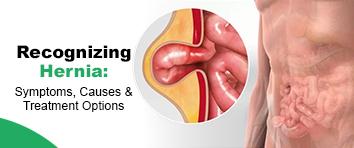
A hernia typically occurs due to a combination of muscle weakness and strain. This can happen from factors such as aging, injury, heavy lifting, chronic coughing, or conditions like pregnancy and obesity.


Subscribe to our
© Copyright 2026. All Rights Reserved by Felix Healthcare Private Limited
Design and development by :


 +(91)9667064100
 Emergency : +(91)9667064100