 Emergency:
  WhatsApp

Subscribe to our
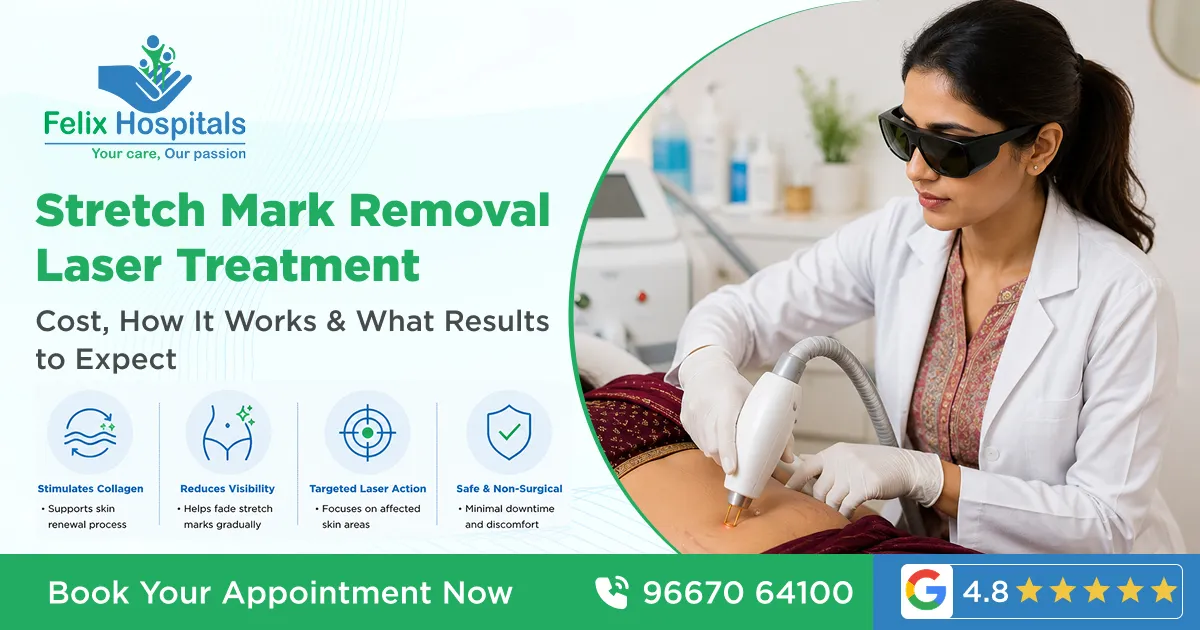
Stretch marks are one of those skin concerns that sit in an uncomfortable middle ground. They're not a medical problem. They're not dangerous. But for a lot of people, women post-pregnancy, anyone who's gone through rapid weight changes they're a genuine source of self-consciousness that doesn't respond to creams, oils, or anything else the pharmacy sells.
The internet is full of products claiming to remove stretch marks. Most of them don't. Laser treatment is different; it's the closest thing to an evidence-based solution for stretch mark reduction that currently exists. But it comes with its own set of questions that most clinic websites don't answer honestly.
How much does it actually cost? How many sessions do you need? What results are realistic? And what's the difference between the ₹3,000 package at a beauty studio and the ₹15,000 session at a dermatology clinic? This blog covers all of them.
Before getting into treatment, it helps to understand what you're treating because the biology of stretch marks directly determines which treatments work and which don't.
Stretch marks are mainly striate in clinical terminology form when skin is stretched faster than it can adapt. The dermis, the middle layer of skin responsible for structural integrity, tears internally. Collagen and elastin fibers rupture. The skin's surface remains intact but the underlying structure is damaged which is why stretch marks appear as indented, discolored streaks rather than surface-level marks.
This is also why creams don't work. A moisturizer or oil sits on the epidermis, the outermost layer. The damage is in the dermis, one layer below. No topical ingredient penetrates deeply enough to repair torn collagen fibers. Keeping skin moisturized can reduce the appearance of new stretch marks slightly and may help prevent new ones from forming, but it cannot reverse existing structural damage.
Laser treatment works because it reaches the dermis. That's the fundamental difference.
Stretch marks go through two distinct phases, and the treatment approach differs significantly between them.
Red or purple stretch marks: New stretch marks are red, pink, or purple. This coloration comes from the blood vessels visible through the damaged dermis the mark is still active, still inflamed, still changing. This phase lasts weeks to months depending on the individual.
This is the best time to treat: The tissue is still responding, collagen synthesis is active, and laser treatment at this stage produces significantly better results than the same treatment applied later. Vascular lasers that target the red colouration are particularly effective here.
White or silver stretch marks: Older stretch marks fade to white or silver as the blood vessels contract and the damaged area becomes essentially scar tissue. The skin here is atrophic thinner, with less cellular activity.
Treatment is still possible and produces real improvement, but requires more sessions and produces more modest results than treatment during the red phase.
Several laser technologies are used for stretch marks, and they work through different mechanisms. Understanding the difference helps you have a more informed conversation with your dermatologist and helps you understand why one laser isn't always better than another.
Fractional CO2 Laser The most commonly used laser for stretch mark treatment. Creates thousands of microscopic injury columns in the skin controlled damage that triggers the body's wound healing response. Collagen production increases, the dermis remodels, and the stretch marks texture and appearance improve progressively as new collagen fills in.
Fractional CO2 is particularly effective for older, white stretch marks where the tissue needs aggressive stimulation to respond. It requires downtime redness and mild swelling for three to seven days post-treatment. Results are significant but require patience. Full results are visible three to six months after a course of treatment.
Nd:YAG Laser Penetrates deeply into the dermis and stimulates collagen remodelling without the surface damage of CO2. Less downtime than fractional CO2 but also typically less dramatic results per session. Often used in combination with other lasers or for patients who can't take the downtime of CO2 treatment.
Pulsed Dye Laser (PDL) Specifically targets the vascular component of red, new stretch marks. The laser's wavelength is absorbed by haemoglobin in the blood vessels, reducing the redness significantly and triggering early collagen remodelling. Highly effective for fresh stretch marks. Less useful for mature white ones where the vascular component is gone.
Fractional Erbium Laser Similar mechanism to fractional CO2 but gentler. Less downtime, suitable for more sensitive skin types or areas. Produces good results but typically requires more sessions than CO2 to achieve equivalent improvement.
Which laser is right for you? Depends on the age of your stretch marks, their location, your skin type, and how much downtime you can manage. A dermatologist should assess all of these before recommending a laser, not a one-size approach applied to every patient.
Laser stretch mark treatment is priced per session, and the total cost depends on the area being treated, the laser type used, and the number of sessions required.
Laser Type | Price Per Session (India) |
Fractional CO2 Laser | ₹8,000 – ₹25,000 |
Nd:YAG Laser | ₹6,000 – ₹18,000 |
Pulsed Dye Laser (PDL) | ₹8,000 – ₹20,000 |
Fractional Erbium Laser | ₹7,000 – ₹20,000 |
Combination Laser Protocol | ₹12,000 – ₹35,000 |
Body Area | Approximate Cost Per Session |
Abdomen (small area) | ₹8,000 – ₹20,000 |
Abdomen (full / post-pregnancy) | ₹15,000 – ₹40,000 |
Thighs (one side) | ₹8,000 – ₹18,000 |
Thighs (both sides) | ₹14,000 – ₹32,000 |
Hips / buttocks | ₹10,000 – ₹25,000 |
Arms / underarms | ₹6,000 – ₹15,000 |
Breasts | ₹8,000 – ₹20,000 |
Lower back | ₹8,000 – ₹18,000 |
Most dermatologists recommend three to six sessions for meaningful results. Clinics offering packages price these at 15 to 25 percent less than individual session rates.
Sessions | Approximate Package Cost |
3 sessions (small area) | ₹18,000 – ₹45,000 |
3 sessions (large area) | ₹30,000 – ₹80,000 |
6 sessions (small area) | ₹30,000 – ₹80,000 |
6 sessions (large area) | ₹55,000 – ₹1,50,000 |
Area | Approximate Cost Per Session |
Noida / Greater Noida | ₹8,000 – ₹25,000 |
South Delhi (Saket, GK, Vasant Kunj) | ₹15,000 – ₹50,000 |
West / North Delhi | ₹7,000 – ₹22,000 |
Gurgaon | ₹12,000 – ₹40,000 |
Ghaziabad | ₹6,000 – ₹18,000 |
Faridabad | ₹6,000 – ₹20,000 |
South Delhi and Gurgaon premiums reflect location overhead and, at the better clinics, more experienced laser operators. The laser technology itself can be identical across price points the operator's skill and the clinical protocol determine the outcome more than postcode.
At Felix Hospital, Sector 137, Noida, laser stretch mark treatment is performed under dermatologist supervision with clinical-grade equipment at transparent pricing. Call +91 9667064100 for current session rates and package pricing.
Area size The single biggest variable. A small cluster of stretch marks on the upper arm costs a fraction of a full abdominal treatment post-pregnancy. Larger areas require more laser passes, more time, and more energy delivery all of which affect price.
The number of sessions needed Old white stretch marks require more sessions than fresh red ones. Deep, wide marks require more sessions than fine, superficial ones. A realistic session count is established at the consultation and any dermatologist who gives you a precise number before seeing the area in person is guessing.
Laser type and combination protocols A single Nd: YAG session costs less than a fractional CO2 session. A combination protocol using two laser types in the same session costs more than either alone but often produces better results in fewer total sessions. Total cost depends on which approach your skin and marks actually need.
Dermatologist expertise and clinic setting A hospital-based dermatology department with a qualified laser specialist charges differently from a beauty clinic with a laser machine and a technician. The gap in outcome can be significant. Laser treatment for stretch marks requires precise energy settings calibrated to your skin type; incorrect settings cause burns, hyperpigmentation, or insufficient results.
How many sessions you need actually depends on the marks
Fresh red stretch marks: Two to four sessions of pulsed dye laser or fractional treatment typically produces significant improvement 50 to 70 percent reduction in redness and texture improvement.
Old white stretch marks: Three to six sessions of fractional CO2 or combination protocol is the clinical standard for meaningful improvement. Expecting dramatic change from a single session is unrealistic and any clinic promising it is over-selling.
Large areas post-pregnancy: Six or more sessions may be needed for comprehensive treatment of extensive abdominal stretch marks. Results are real and often significant, but this is a course of treatment, not a single procedure.
Sessions are typically spaced four to six weeks apart to allow tissue healing and collagen remodelling between treatments.
Laser treatment for stretch marks produces real, documented improvement. In clinical studies, fractional CO2 laser consistently shows 50 to 75 percent improvement in stretch mark appearance after a course of treatment. Texture smooths out, depth reduces, colour normalises. Most patients are genuinely satisfied with the outcome.
What laser treatment does not do is erase stretch marks completely. The skin's structure has been fundamentally altered; the goal of treatment is significant reduction, not elimination. If a clinic is promising complete removal, they're telling you what you want to hear, not what the evidence supports.
After treatment, most patients describe the marks as significantly less noticeable, reduced in depth, smoother in texture, closer to surrounding skin tone. They're still there on very close inspection. From normal social distance, most are not visible.
Results continue improving for three to six months after the final session as collagen remodelling continues. The improvement is lasting unlike topical treatments that lose effect when you stop using them, laser-stimulated collagen remodelling is structural and durable.
Before treatment: Avoid sun exposure to the treatment area for two weeks prior. Stop retinoids or any prescription topical on the area one week before. Stay well hydrated. Inform your dermatologist of any medications, skin conditions, or recent procedures. Avoid waxing or chemical hair removal on the area in the week before.
After treatment: Expect redness and mild swelling for two to seven days depending on laser type and intensity. Keep the area moisturised with a gentle, fragrance-free product. Avoid sun exposure completely for two weeks and use SPF 50 on the area if it will be exposed to sun. Avoid hot showers, saunas, and intense exercise for 48 hours post-treatment. Do not pick or scratch the treated area.
The post-care period is where results are made or lost. Laser creates controlled injury and how the skin heals determines the final outcome.
This is a question that deserves a direct answer because South Asian skin has specific considerations with laser treatment.
Indian skin typically falls in Fitzpatrick types III to V. Darker skin has more melanin, which means lasers targeting the skin's deeper layers can also inadvertently heat melanin in the epidermis causing post-inflammatory hyperpigmentation (PIH) if parameters aren't adjusted correctly.
In the hands of an experienced laser dermatologist who regularly treats Indian skin, this risk is well managed. Lower fluence settings, appropriate cooling, test patches before full treatment, and correct wavelength selection for the skin type make laser treatment safe and effective for most Indian patients.
In the hands of someone without this specific experience, PIH is a real risk and it can be more cosmetically troubling than the original stretch marks.
This is one of the strongest arguments for choosing a hospital-based dermatology department with demonstrated experience treating South Asian skin over a generic laser clinic or beauty studio offering discounted sessions.
Treatment | Effectiveness | Downtime | Cost | Suitable for Old Marks |
Topical creams / oils | Minimal | None | Low | No |
Microneedling | Moderate | 2–3 days | ₹5,000 – ₹15,000/session | Yes |
Chemical peels | Mild to moderate | 3–5 days | ₹3,000 – ₹10,000/session | Partially |
Fractional CO2 Laser | High | 3–7 days | ₹8,000 – ₹25,000/session | Yes |
PRP (Platelet Rich Plasma) | Moderate | Minimal | ₹8,000 – ₹20,000/session | Yes |
Combination (laser + PRP) | Very high | 3–7 days | ₹15,000 – ₹40,000/session | Yes |
Surgery (tummy tuck) | High (removes skin) | Weeks | ₹80,000 – ₹3,00,000 | Yes |
Microneedling is worth noting as an alternative or complement to laser; it uses fine needles to create controlled micro-injuries that stimulate collagen, reaching the dermis without laser energy. It's gentler on darker skin types and costs less per session. Results are more modest than fractional CO2 but the risk profile is lower. Many dermatologists use microneedling and laser in alternating sessions for comprehensive treatment.
(PRP) platelet rich plasma involves drawing a small amount of the patient's blood, processing it to concentrate growth factors, and injecting or applying it to the treatment area. Combined with a laser, it accelerates healing and enhances collagen response. Increasingly used as part of combination protocols for difficult or extensive stretch marks.
Most adults with stretch marks are suitable candidates, with the best outcomes in:
Patients with fresh red stretch marks the earlier treatment starts, the better the result. Patients with localised stretch marks on a specific area rather than extensive body coverage. Patients with realistic expectations about significant reduction rather than complete removal. Patients who can commit to the full recommended course of sessions and the post-care protocol.
Treatment may need to be modified or postponed for patients who are pregnant or breastfeeding, have active skin infections or inflammatory conditions in the treatment area, have a history of keloid scarring, are on photosensitising medications, or have had recent significant sun exposure to the area.
Laser treatment is the most effective non-surgical option currently available for stretch mark reduction. The evidence is consistent, the results are real, and for patients who go through a proper course of treatment with appropriate post-care, the improvement is meaningful and lasting.
The price variation across Delhi NCR reflects genuine differences in laser technology, operator experience, clinical protocols, and the ability to safely manage Indian skin types. The ₹3,000 session and the ₹20,000 session are not the same treatment wearing the same name.
At Felix Hospital, Sector 137, Noida, laser stretch mark treatment is performed under dermatologist supervision using clinical-grade technology with protocols specifically calibrated for South Asian skin. Every patient starts with a consultation that assesses the marks, determines the right laser approach, and gives a realistic, honest picture of what results to expect and how many sessions to plan for.
Call +91 9667064100 to book a consultation
Per session costs range from ₹8,000 to ₹25,000 for standard areas in Noida, and ₹15,000 to ₹50,000 in South Delhi clinics. Total treatment cost depends on area size, laser type, and number of sessions typically three to six for meaningful results.
Fresh red stretch marks typically respond in two to four sessions. Old white stretch marks require three to six sessions minimum. Extensive post-pregnancy abdominal marks may need six or more. Sessions are spaced four to six weeks apart.
Laser produces lasting structural improvement collagen remodelling triggered by laser is durable. It significantly reduces stretch mark appearance but does not completely erase them. Results continue improving for three to six months after the final session.
Yes, when performed by a dermatologist experienced with South Asian skin types. Adjusted laser parameters are required for darker skin tones to avoid post-inflammatory hyperpigmentation. This is why operator experience and clinical setting matter significantly.
Fractional CO2 is the most effective single laser for old white stretch marks. Pulsed dye laser is most effective for fresh red ones. Combination protocols often produce the best overall results. The right choice depends on your specific marks, skin type, and downtime availability.
In Noida, per session prices range from ₹8,000 to ₹25,000 depending on area and laser type. Packages of three to six sessions are typically available at 15 to 25 percent lower cost per session than individual pricing.
Two to seven days of redness and mild swelling depending on laser intensity. Most patients return to normal activity within 48 to 72 hours. Full post-treatment healing and continued collagen remodelling occurs over three to six months.
Yes. Post-pregnancy stretch marks are among the most commonly treated. It's advisable to wait until breastfeeding is complete before starting laser treatment. Starting treatment while marks are still in the red phase before they turn white produces better results.
Fractional CO2 laser typically produces more dramatic results per session than microneedling alone. However microneedling carries lower risk of PIH for darker skin types and costs less per session. Many dermatologists use both in alternating sessions for comprehensive treatment.
Price differences reflect laser technology quality, operator expertise, clinical setting, and the ability to safely manage complications. For a procedure requiring precise energy calibration for your skin type, the operator's experience and the clinical infrastructure are of genuine value not just a premium for the postcode.
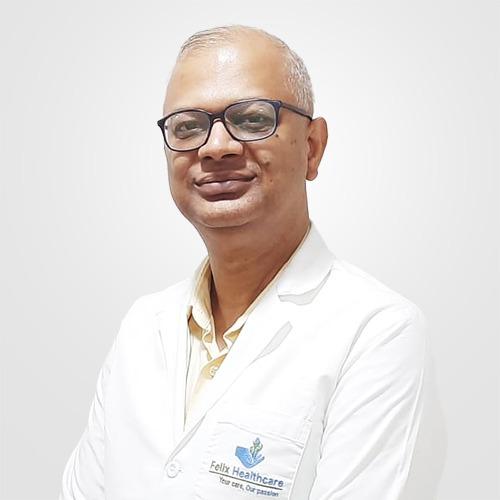
Dr. Tarun Gupta is an experienced Dermatologist with 17+ years of expertise in treating skin, hair, and nail conditions, along with advanced cosmetic dermatology procedures.
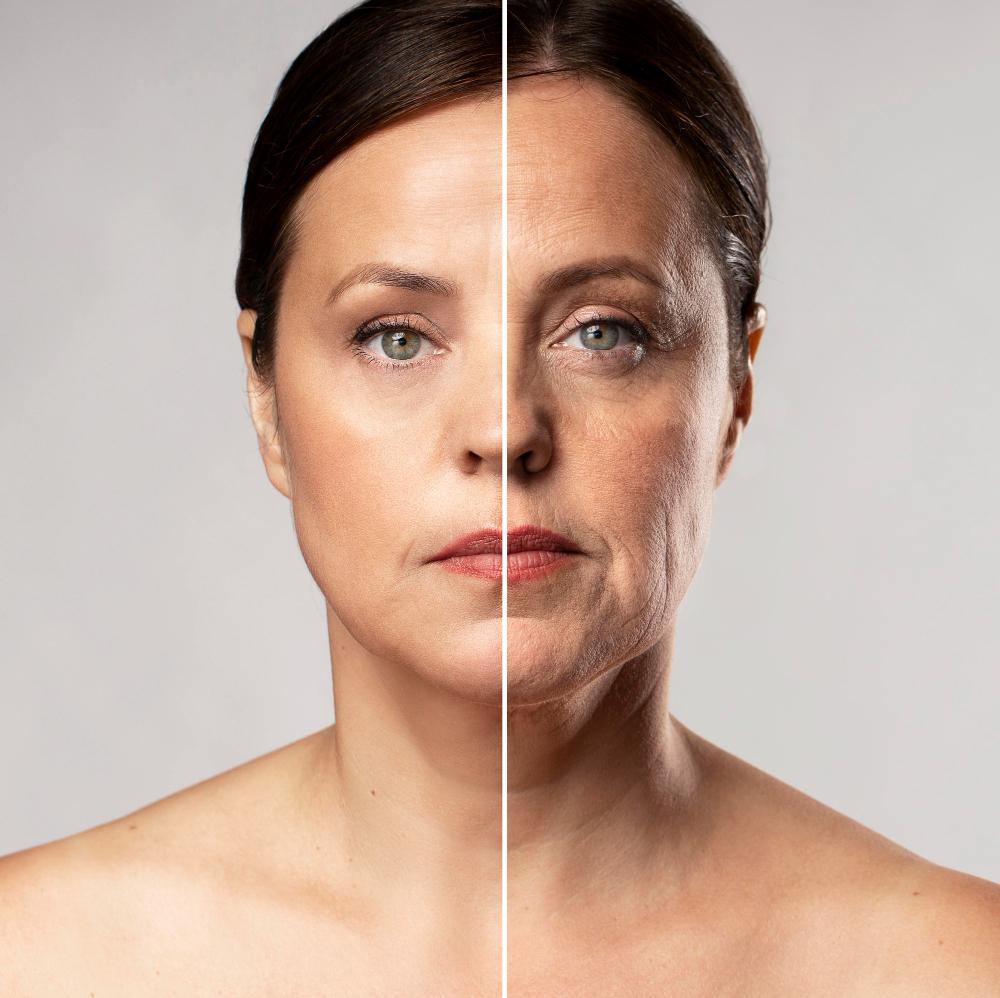
Certain skin disorders aren’t preventable, including genetic conditions and some skin problems due to other illnesses.

If your answer is yes, then, here are 6 easy steps to keep your skin look young and glowing.

Subscribe to our
© Copyright 2026. All Rights Reserved by Felix Healthcare Private Limited
Design and development by :


 +(91)9667064100
 Emergency : +(91)9667064100