 Emergency:
  WhatsApp

Subscribe to our
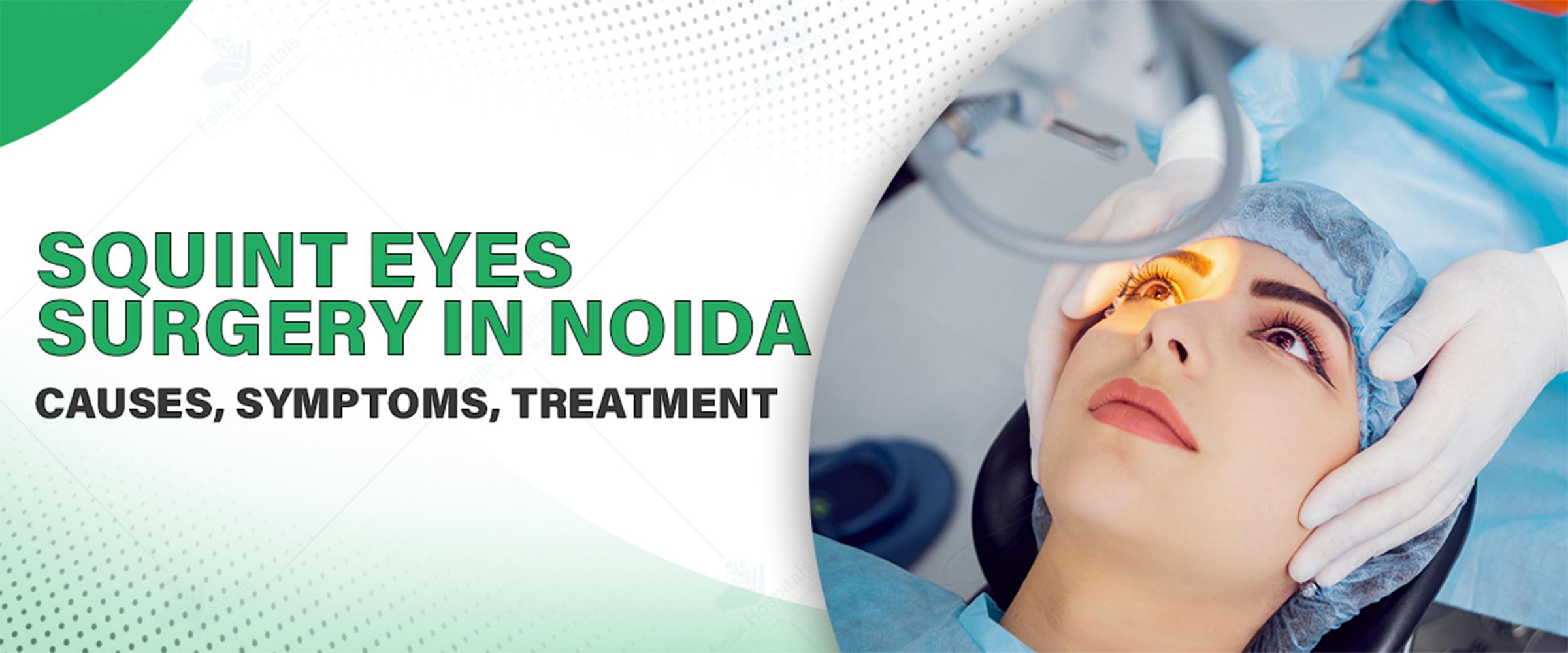
Squinting, or strabismus, can make it harder to see clearly, which is important for a good quality of life at any age. It can also affect your confidence and even your long-term eye health. Finding expert care is important for families and people who are dealing with this issue. Choosing the right center for squint eye surgery in Noida and seeing a well-known squint specialist in Noida will not only improve your health, but it will also give you peace of mind throughout the process. Squint happens when the eyes are not lined up correctly. If not treated, this can lead to vision problems, lazy eye, or even social problems. Fortunately, new developments in eye care and specialized surgery make it possible to fix squint with great accuracy and very high success rates in Noida.
book an appointment with Best Eye Doctor In Noida. Call now at +91-9667064100.
Squint, also known as strabismus, is a condition in which both the eyes are unable to focus in the same direction at the same time. In such instances, while one eye may be able to focus on an object being observed, the second eye may turn inwards, outwards, upwards, or downwards at the same time.
This misalignment may be permanent or may appear on occasion. Squint is most typically seen in children; however, it can also manifest in adults. Most strabismus are the results of an abnormality of the neuromuscular control of eye movement. However, if left untreated it can lead to amblyopia, wherein the brain starts ignoring signals from the afflicted eye. Adult squints are often caused by secondary factors such as trauma, brain lesions, looking at a computer screen for long periods of time, etc., and their treatment differs from that of children.
Here is a quick checklist of how squints are classified:
Esotropia: in this case, one eye deviates inwards, towards the nose.
Exotropia: in this condition, the eye tends to deviate outwards.
Hypertropia: this condition leads to the eye deviating upwards.
Hypotropia: in this case the eye deviates downwards.
Constant squint – The squint is always present
Intermittent squint – The squint occurs occasionally
Manifest squint – The squint occurs when the eyes are open.
Latent squint – The squint occurs when the eyes are closed.
Concomitant squint – The angle of the squint remains same when seen from any direction.
Non-comitant squint – The angle of the squint varies according to the direction in which the eyes are turned.
Most squints appear during the first three years of life. However, some of them may also appear in older children and adults. The squints in older children and adults are usually caused by secondary reasons such trauma, injury, brain lesions, tumors, and more.
Here is an easy guide of symptoms of squints eye that can help you identify whether you or somebody you know is suffering from squint eye:
Eyes move independently of each other.
Crossed eyes
Double vision
Peripheral vision impairment or loss of vision in one eye
Depth perception issues
All cases where there are Signs of eye strabismus need a visit to the doctor, since they might signal a deeper underlying problem, such as a tumor in rare cases. However, if the squint progresses to amblyopia or lazy eye, it is essential to visit a doctor immediately.
Problems in the eye muscles or nerve damage are the most common causes of squint eye. When the muscles around the eye are weaker than other muscles, they are unable to coordinate and work together efficiently. As a result, when one eye is looking at an object, the other eye seems to be looking elsewhere.
In this scenario, the brain receives two different signals from each eye. The brain ignores the message from the weak eye. A squint eye is present at birth but may develop later due to eye injuries and general health conditions.
The major risk factors for squint eye include:
People who have experienced stroke or are affected with Down syndrome or cerebral palsy are more prone to developing a squint eye
People with hyperopia or far-sightedness are at a higher risk of developing a squint because of the extra strain they tend to put on their eyes to see clearly
People who have a family history of squint eye are more susceptible to getting afflicted
Poor vision in one eye
Hydrocephalus (a congenital disease that results in a buildup of fluid in the brain)
Head injuries, which can damage the area of the brain responsible for control of eye movement, the nerves that control eye movement, and the eye muscles
Neurological (nervous system) problems
Graves’ disease (overproduction of thyroid hormone)
Squint eye does not get cured on its own with the passage of time and requires medical intervention.
The prescription of glasses is the initial stage in squint correction. The doctor evaluates the squint after the spectacles have been worn. Based on age, the doctor may recommend patching the healthy eye if the patient has an amblyopia lazy eye. In the case of children, this strategy may result in the improvement of vision in the weaker eye by forcing the brain to receive signals only from the weaker eye. This treatment has been found to be successful for children under the age of 8.
Surgery in one eye may be required in other cases, and in case of major abnormalities, surgery may be required on both eyes. Most squint procedures produce a perfect cosmetic result.
Although amblyopia treatment outcomes in adults are not as promising as in children, most patients gain considerably from prescription glasses. If the squint does not get cured even after a long period of time despite treatment, the doctor may suggest a surgery to correct the resultant double vision(diplopia) and deviation.
Squint treatments are done based on four strategies:
Glasses and myopia therapy for restoration and correction of vision
Correction of deviation for cosmetic purposes
Correction of deviation for preservation and restoration of binocular vision
Prevention of diplopia
Concerned about vision or appearance due to squint? Schedule a detailed evaluation at +91 9667064100 for expert advice.
Not only does effective squint treatment improve vision, it also boosts confidence and makes people feel more at ease in social situations. The first step toward getting your eyes in the best position and keeping them healthy is to find a qualified Squint specialist in Noida and get Squint eyes surgery hospital there. Patients of all ages in Noida can look forward to a better appearance, sharper vision, and a brighter, more focused future thanks to modern diagnostic tools and advanced surgical skills. Don't wait to get help—just call and get long-term solutions from experts.
Q.1. How soon should I consult a squint specialist in Noida for my child?
Ans. If you notice persistent eye misalignment or crossed eyes anytime, early consultation is recommended to prevent vision problems.
Q.2. Can squint eyes lead to vision loss if untreated?
Ans. Yes, untreated squint can cause amblyopia (lazy eye), leading to permanent vision loss in the affected eye.
Q.3. Is squint surgery painful and how long is the recovery?
Ans. Squint surgery is generally painless under anesthesia, with recovery usually taking a few weeks depending on individual cases.
Q.4.Can adults with squint still benefit from correction?
Ans. Yes, adults can improve eye alignment and reduce double vision, although vision improvement varies by individual.

Eye flu, also known as conjunctivitis, is a common eye infection causing redness, irritation, and watering. Learn its causes, symptoms, and effective treatments.
The right ophthalmologist is a crucial step in your eye surgery journey


Subscribe to our
© Copyright 2026. All Rights Reserved by Felix Healthcare Private Limited
Design and development by :


 +(91)9667064100
 Emergency : +(91)9667064100