 Emergency:
  WhatsApp


Subscribe to our
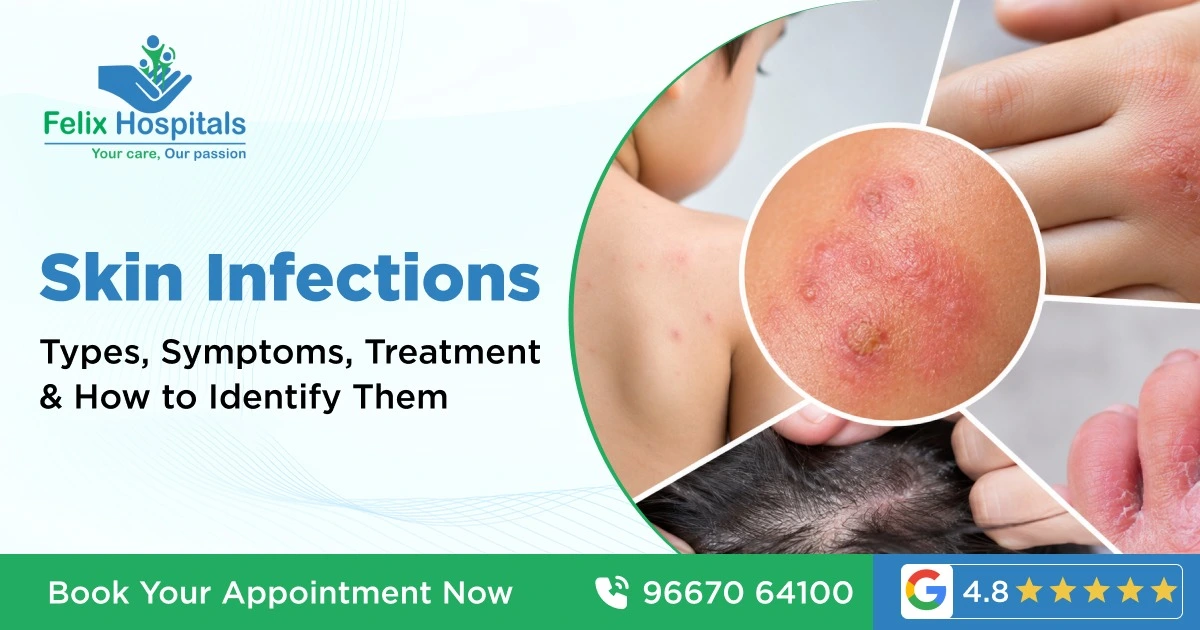
Every week, the dermatology OPD at Felix Hospital sees the same scene play out a patient arrives with a rash they have been treating at home for two weeks with a combination of antiseptic cream, a steroid ointment borrowed from a neighbour, and a turmeric paste. The rash is not better. In many cases, it is significantly worse.
The reason is almost always the same. The patient correctly identified they had a skin infection but incorrectly identified what kind. A bacterial infection treated with antifungal cream does nothing. A fungal infection treated with a steroid cream spreads aggressively. A viral infection treated with an antibiotic worsens. The category of skin infection determines the treatment and getting that wrong is costly in time, money, and skin health.
A skin infection occurs when harmful microorganisms such as bacteria, viruses, fungi, or parasites invade the skin and begin to multiply. These organisms can enter through cuts, scratches, insect bites, or sometimes even intact skin if the immune system is weakened. Skin infections are incredibly diverse they can be mild and temporary, like athlete's foot, or severe and potentially life-threatening, like necrotising fasciitis. Some infections are contagious, spreading easily through skin-to-skin contact, shared personal items, or contaminated surfaces. Others are more localised and cannot be transmitted from person to person.
This guide gives you the clinical framework to identify what type of skin infection you are dealing with and what to do about it.
The skin is the body's largest organ and its primary barrier against the external environment. In healthy individuals, intact skin keeps the vast majority of pathogens out. The infection begins when this barrier is breached or when the immune system cannot adequately police what has entered.
Bacterial, viral, fungal, or parasitic invasion of the skin leads to infection, inflammation, irritation, or destruction of the skin. While a few are mild and heal on their own, others spread, are painful, or result in severe complications when not treated.
Several factors make the skin vulnerable to infection:
Breaks in the skin barrier: Any cut, graze, insect bite, surgical wound, or even a cracked heel provides an entry point that pathogens exploit immediately.
Moisture and humidity: Prolonged wetness from sweating, wet clothing, or humid environments softens the skin's protective keratin layer and creates the ideal growth medium for fungi. This is precisely why fungal skin infections surge across Noida and Greater Noida during and after the monsoon.
Weakened immunity: People with conditions such as diabetes, HIV/AIDS, or cancer, or those taking immunosuppressive drugs, are more vulnerable to infections. Diabetics, in particular, are prone to severe skin infections impaired blood flow reduces the delivery of immune cells to infected tissue, and high blood glucose provides a growth medium for bacteria and fungi.
Skin-to-skin contact and shared items: Contact sports, communal showers, and close living arrangements raise the chances of skin-to-skin transmission. Sharing towels, razors, or footwear transmits fungal and bacterial infections with remarkable efficiency.
Bacterial, fungal, viral, and parasitic infections are the four different forms of skin infections. Everything else is a subcategory. Here is the clinical landscape of each:
Bacterial skin infections caused by bacteria, most commonly Staphylococcus aureus and Streptococcus pyogenes. Examples include impetigo, cellulitis, folliculitis, furuncles (boils), carbuncles, and erysipelas.
Viral skin infections caused by viruses that invade skin cells. Examples include herpes simplex (cold sores), herpes zoster (shingles), chickenpox, molluscum contagiosum, warts, and hand-foot-and-mouth disease.
Fungal skin infections caused by dermatophytes and yeasts, which thrive in warm, moist environments. Examples include ringworm (tinea corporis), athlete's foot (tinea pedis), jock itch (tinea cruris), nail fungus (onychomycosis), tinea versicolor, and candidiasis.
Parasitic skin infections caused by organisms that live on or in the skin. Examples include scabies (Sarcoptes scabiei mite), head lice (pediculosis capitis), body lice, pubic lice, and cutaneous larva migrans.
The reason distinguishing between these categories matters so profoundly: each category requires a completely different treatment class. Antifungal creams are ineffective against bacteria. Antibiotics are ineffective against viruses and fungi. Antiparasitic medications are required for parasites. And steroids while they reduce inflammation suppress immunity and will actively worsen fungal and bacterial infections if used without the appropriate antimicrobial cover.
Bacterial skin infection is usually due to Staphylococcus aureus or Streptococcus pyogenes. They enter the skin by way of cuts, bite wounds due to insects, or abrasions.
Bacterial skin infections share a characteristic cluster of features that help distinguish them from other infection types:
Warmth and swelling: Bacterial infections trigger an acute inflammatory response the affected area feels noticeably warmer than surrounding skin and swells progressively. This warmth-on-touch is one of the most reliable early indicators of a bacterial process.
Redness that spreads: The redness of bacterial cellulitis spreads outward from the centre sometimes with a visible advancing edge. Drawing a pen line around the margin and checking whether the redness has moved beyond it over 24 hours is a useful home monitoring technique.
Look for red, swollen areas that may feel warm to the touch. Some infections ooze fluid, form yellow crusts, or develop pus-filled bumps.
Pus formation: Pus yellow or white thick fluid is a hallmark of bacterial infection. It indicates that the immune system has sent large numbers of neutrophils to fight the bacteria, and the resulting cellular debris forms pus. A skin lesion producing pus is almost certainly bacterial.
Impetigo: Impetigo commonly appears as red sores that burst, ooze, and develop a yellowish-brown crust. It is highly contagious, predominantly affects children, and appears most commonly around the mouth, nose, and on exposed limbs. The honey-coloured crust is its signature appearance.
Cellulitis: Spreading redness, warmth, swelling, and tenderness most commonly on the lower legs, but can occur anywhere. The skin looks tight and shiny. Fever and chills indicate systemic spread and require urgent hospitalisation.
Folliculitis: Staphylococcus aureus bacterial infections may appear as small red pustules on your skin, or as larger, more tender nodules. Folliculitis presents as clusters of small, red, pus-tipped bumps centred around hair follicles most commonly on the thighs, buttocks, armpits, or beard area.
Furuncle (Boil) and Carbuncle: A furuncle is a deep, tender, pus-filled nodule essentially a folliculitis that has gone deeper into the dermis. A carbuncle is a cluster of connected furuncles that share a single large pus cavity. These are often caused by Staphylococcus aureus and are more common in diabetics and immunocompromised patients.
Erysipelas: A superficial bacterial infection most commonly streptococcal presenting as a sharply demarcated, bright red, raised, warm plaque with a clear border distinguishing it from normal skin. This clear edge distinguishes erysipelas from the more diffuse redness of cellulitis.
Viral infections of the skin have a range of presentations and a know ledge of specific clinical features is useful in guiding diagnosis. Viral rashes can be lesional, where active virus is present.
Unlike bacterial infections, viral skin infections do not typically produce pus or the intense warmth of acute bacterial inflammation. Their identifying features are more specific to each virus.
Herpes Simplex (Cold Sores and Genital Herpes): Clusters of small, fluid-filled blisters on a red base appearing at the same site with each recurrence. Cold sores appear around the lips and mouth. The blisters are preceded by a tingling or burning sensation (prodrome) for 24 to 48 hours. They rupture, crust over, and heal within 7 to 10 days.
Herpes Zoster (Shingles): The chickenpox virus may appear later in life as a painful band of blisters, known as shingles. The blisters follow a dermatomal distribution wrapping around one side of the trunk, face, or limb in a belt-like pattern. The defining feature is that it does not cross the body's midline. Pain precedes the rash by 1 to 5 days and can be severe.
Chickenpox (Varicella): Crops of intensely itchy blisters appearing in successive waves starting on the trunk and spreading to the face and limbs. The characteristic mixed appearance some lesions still papules, some already blisters, some already crusted at the same time on the same patient is clinically distinctive.
Warts (Verruca Vulgaris): Rough, raised, flesh-coloured growths with a cauliflower-like surface, typically appearing on the hands, fingers, and feet. On the soles of the feet, warts are pushed inward by body weight (plantar warts) and appear as painful, hardened areas of skin with tiny black dots (thrombosed capillaries) visible when the surface is pared down.
Molluscum Contagiosum: Small, dome-shaped, pearly papules with a central dimple (umbilication) typically 2 to 5mm in size. They appear in clusters on the trunk, face, and limbs in children, and in the groin and thighs in adults. The central dimple is the clinical hallmark.
Hand, Foot, and Mouth Disease: A viral illness predominantly affecting young children characterised by flat or slightly raised, greyish blisters on the palms, soles, and inside the mouth. Associated with mild fever and is spread through direct contact with infected secretions.
Tinea infections are caused by dermatophytes Microsporum, Trichophyton, Epidermophyton. These superficial fungal mycoses are limited to the outer, keratinised skin layers. Organisms reside on keratin in the skin, hair, and nails and very rarely cause deeper infection.
Fungal infections are the most common type of skin infection seen in the Felix Hospital dermatology clinic particularly during and after the monsoon, when humidity creates optimal growth conditions across the NCR.
The key distinguishing feature of fungal infections: They tend to be chronic rather than acute, mildly itchy rather than intensely painful, and they spread slowly outward from a central point rather than the rapid expansion of bacterial infections.
Ringworm (Tinea Corporis): Despite the name, there is no worm involved. This is a dermatophyte fungal infection. It presents as a circular, ring-shaped patch with a raised, scaly, reddish border and a relatively clear centre which is why it is called "ringworm." The ring expands outward over time. It is contagious through direct skin contact and shared clothing or towels.
Athlete's Foot (Tinea Pedis): Athlete's foot affects the skin on your feet, often between your toes. It can also appear on the soles of your feet. It presents as white, macerated, peeling skin between the toes with itching and burning. The fourth web space (between the fourth and fifth toes) is most commonly affected first. In chronic cases, the entire sole develops a dry, scaling, "moccasin" pattern.
Jock Itch (Tinea Cruris): A fungal infection of the inner thighs and groin presenting as a well-defined, ring-shaped, red-brown rash with a slightly raised, scaly border. It is more common in men, in overweight individuals, and in anyone whose groin area remains moist for prolonged periods. Notably, tinea cruris typically spares the scrotum candidal infections in the same area do not which is a useful distinguishing feature.
Nail Fungus (Onychomycosis): Fungal infections may appear as thickened and distorted nails. Nails become yellow, thickened, brittle, and crumbly with debris collecting under the nail. Toenails are far more commonly affected than fingernails.
Tinea Versicolor: A yeast infection (Malassezia) that causes multiple, well-defined, scaling patches that are either lighter (hypopigmented) or darker than surrounding skin most commonly on the trunk, shoulders, and upper arms. The patches do not tan normally. They may merge to form large areas of colour change. This condition is more visible in individuals with darker skin.
Candidiasis: Yeast infections may cause inflammation in your skin folds or under your nails. Candidal infections prefer warm, moist, occluded areas the groin, under the breasts, the axilla, under abdominal folds in obese patients, and the nappy area in infants. They appear as bright red, moist, shiny plaques with irregular borders often with small "satellite" lesions just beyond the main area.
Parasitic skin infections are caused by a parasite and can spread beyond the skin to the bloodstream and organs. While not life-threatening, they can be very uncomfortable.
Scabies (Sarcoptes scabiei): The Sarcoptes scabiei mite burrows into the skin and lays eggs producing the most intensely itchy skin condition in clinical dermatology. The itch is characteristically worse at night because the mite is more active in warmth and worsens after a hot bath. The earliest sign is tiny burrow tracks thin, greyish, wavy lines most visible between the fingers, on the wrists, around the nipples, genitalia, and umbilicus. The rash consists of small red papules, vesicles, and excoriations from scratching. The entire household must be treated simultaneously incomplete treatment leads to relapse.
Head Lice (Pediculosis Capitis): Lice are spread through head-to-head contact and shared combs, hats, and pillows making them common in school-age children. The primary symptom is intense scalp itching. Examination reveals tiny greyish-white nits (eggs) firmly cemented to the hair shaft unlike dandruff, which slides off easily. Live lice are harder to spot as they move quickly.
Body Lice and Pubic Lice: Body lice live in clothing seams and visit the skin to feed causing itching and small red bite marks, predominantly on the trunk. Pubic lice cause intense itching in the pubic area and are visible as small, crab-shaped insects clinging to pubic hair.
Cutaneous Larva Migrans: A tropical skin infestation caused by animal hookworm larvae that penetrate human skin typically through bare feet on contaminated soil or sand. The larvae cannot complete their life cycle in human skin and migrate aimlessly producing a raised, red, winding track that advances a few millimetres daily, causing intense itching along the track.
Symptoms of skin infections vary depending on the organism involved, but there are common warning signs: itching or burning (common in fungal or parasitic infections), pus or discharge (bacterial infections often produce pus-filled bumps), and blisters or sores (viral infections may cause fluid-filled blisters).
Here is a practical differential guide based on the symptom pattern:
Symptom | Most Likely Category | Additional Clue |
Pus-filled bumps or oozing | Bacterial | Warm, spreading redness |
Intense itch worse at night | Parasitic (scabies) | Web spaces, genitalia involved |
Ring-shaped spreading rash | Fungal (ringworm) | Scaly border, clear centre |
Cluster of blisters on one side | Viral (shingles) | Dermatomal, painful prodrome |
Itchy, peeling skin between toes | Fungal (athlete's foot) | Worse in wet weather |
Honey-coloured crust around mouth | Bacterial (impetigo) | Affects children, highly contagious |
Dome-shaped bumps with central dimple | Viral (molluscum) | Common in children |
Bright red, moist rash in skin folds | Fungal (candida) | Satellite lesions at edge |
Advancing red border with warmth | Bacterial (cellulitis) | Systemic fever may be present |
Intensely itchy scalp, nits on hair | Parasitic (lice) | School-age children |
The steroid trap is the most important practical warning: The single most common dermatological error in self-treatment across India is applying a combination steroid-antifungal cream (like Betamethasone-Clotrimazole) to any rash without a diagnosis. While this combination may temporarily reduce itching (due to the steroid), it will:
Spread a fungal infection by suppressing the local immune response
Worsen a bacterial infection by impeding the inflammatory defence
Mask the features that allow a dermatologist to make an accurate diagnosis later
Never use a steroid-containing cream on an undiagnosed rash without consulting a dermatologist at Felix Hospital.
It is hard to tell fungal, bacterial, and viral infections apart because many symptoms overlap. Self-diagnosis often leads to using the wrong treatment, which can make things worse. Seeing a dermatologist ensures accurate testing and the right care from the start. Dermatologists use tools like cultures, swabs, and skin scrapings to confirm the cause before creating a personalised treatment plan.
At Felix Hospital's dermatology department, the diagnostic process is structured and efficient:
Clinical Examination: The starting point examining the distribution, morphology, border characteristics, and associated features of the lesion. An experienced dermatologist can provisionally diagnose most skin infections from clinical appearance alone, with confirmatory tests used when doubt exists.
KOH (Potassium Hydroxide) Examination: The fastest test for fungal infections. Skin scrapings from the edge of a lesion are placed on a slide with KOH solution, which dissolves the skin cells but leaves fungal hyphae visible under a microscope. A positive KOH confirms fungal infection within minutes. A doctor can diagnose athlete's foot by observing your symptoms or performing a skin test such as the skin lesion KOH exam.
Bacterial Culture and Sensitivity: A swab from the infected area or aspirated pus is cultured in the microbiology laboratory. This identifies the specific bacterial species and, critically, determines which antibiotics it is sensitive to. This prevents the common clinical error of prescribing an antibiotic to which the causative organism is resistant.
Viral PCR and Tzanck Smear: For suspected herpes simplex or zoster, a swab from an active blister can be sent for PCR, the most sensitive and specific test. A Tzanck smear examining cells scraped from the base of a blister is a rapid bedside test that can confirm herpetic infection by identifying characteristic multinucleated giant cells.
Dermoscopy: A non-invasive technique using a handheld illuminated magnifier that allows the dermatologist to examine skin structures not visible to the naked eye. Particularly useful for distinguishing molluscum, warts, and early melanocytic lesions.
Wood's Lamp Examination: A UV light source that causes certain fungal infections and some bacterial infections to fluoresce specific colours coral-red for erythrasma (caused by Corynebacterium minutissimum), blue-green for Microsporum scalp ringworm, and yellow-green for Pseudomonas infections.
Skin Biopsy: For unclear or atypical presentations, a small punch biopsy of the skin provides a definitive histological diagnosis. This is particularly valuable when the clinical picture suggests an unusual organism or when standard treatment has failed.
Treatment is always matched to the category and to the severity within that category.
Topical antibiotics (mild, localised infections): Mupirocin 2% cream or ointment is the most widely prescribed topical antibiotic for impetigo and localised folliculitis in India. Apply twice or three times daily to the affected area after gentle cleansing.
Oral antibiotics (moderate to severe infections): Cellulitis, erysipelas, and extensive impetigo require oral antibiotics typically flucloxacillin, amoxicillin-clavulanate, or cephalexin for mild to moderate presentations. The choice depends on the suspected organism and local antibiotic resistance patterns. At Felix Hospital, culture results guide antibiotic selection wherever possible.
IV antibiotics and hospitalisation: Any bacterial skin infection with fever, spreading redness despite oral antibiotics, or signs of systemic illness requires intravenous antibiotics and hospital admission. Necrotising fasciitis the most severe bacterial skin infection is a surgical emergency requiring urgent debridement alongside IV antibiotics.
Best cream for fungal skin infection the evidence-based options:
Antifungal creams contain active ingredients like clotrimazole, miconazole, terbinafine, and ketoconazole, which disrupt fungal cell growth and relieve symptoms such as inflammation, redness, irritation, and itching.
The four main topical antifungal agents available in India and their uses:
Terbinafine 1% cream: Terbinafine tends to be the fastest-acting of these medications. It is fungicidal; it kills the fungus rather than merely inhibiting its growth which produces faster resolution and lower recurrence rates. It is the first-choice cream for fungal skin infection for ringworm, athlete's foot, and jock itch. Apply once or twice daily for 1 to 2 weeks.
Clotrimazole 1% cream: Clotrimazole 1% cream is good for mild or early-stage fungal infections. It is effective against dermatophytes and Candida, making it versatile for both ringworm-type infections and yeast (candidal) infections in skin folds. Apply twice daily for 2 to 4 weeks.
Miconazole 2% cream: Miconazole nitrate cream, in addition to treating the fungal infection, can also help prevent any extra bacterial infections that might occur. Its dual antifungal and antibacterial action makes it useful when mixed infection is suspected.
Ketoconazole 2% cream: Particularly useful for tinea versicolor and seborrhoeic dermatitis conditions involving Malassezia yeast. Also effective against dermatophytes and Candida.
Critical warning about combination creams in India: Many patients in Noida and Greater Noida self-purchase or are given combination creams containing a steroid (betamethasone or clobetasol) alongside an antifungal. These are appropriate only for short-term use under dermatologist supervision; the steroid component provides rapid symptom relief but suppresses local immunity, allowing fungal spread if the antifungal component is inadequate or the treatment duration is insufficient. Never use these without a dermatologist's guidance.
Oral antifungals for extensive or resistant infections: A doctor may prescribe oral antifungals if the fungal infection is recurrent, treatment-resistant, widespread, severe, or creates thick scales. Terbinafine 250mg orally daily for 2 to 4 weeks is the standard for extensive tinea. Itraconazole and fluconazole are alternatives depending on the species and site.
For nail fungus: Topical antifungals penetrate nails poorly, oral terbinafine for 6 to 12 weeks is the standard treatment for dermatophyte nail infections.
Antiviral medications: Herpes simplex and herpes zoster (shingles) are treated with oral antivirals acyclovir, valacyclovir, or famciclovir. For shingles, antivirals must be started within 72 hours of rash onset to reduce severity and the risk of postherpetic neuralgia.
Viral infections are often self-limiting in healthy patients, requiring only simple conservative management. In immunocompromised patients, however, they can progress to life-threatening systemic infections, so risk factors for severe infection must be recognised and patients treated quickly and appropriately.
For warts and molluscum: These do not respond to antiviral creams. They are managed with topical salicylic acid, cryotherapy (liquid nitrogen freezing), or electrocautery at Felix Hospital's dermatology clinic.
For chickenpox: Supportive management in healthy children calamine lotion for itch, paracetamol for fever, and trimmed nails to prevent bacterial superinfection from scratching. Oral acyclovir is used in adults, immunocompromised patients, and severe cases.
Scabies: Permethrin 5% cream applied to the entire body from neck to toes, left on for 8 to 12 hours, then washed off. The entire household must be treated on the same day. Bedding, clothing, and towels must be washed in hot water. The treatment is repeated after 7 days.
Head lice: Permethrin 1% lotion or malathion 0.5% lotion applied to dry hair, left for the prescribed duration, then washed off with a fine-toothed nit comb. Repeat treatment is required after 7 to 10 days.
Cutaneous larva migrans: Oral ivermectin (single dose) or oral albendazole for 3 days produces reliable cure.
Come to Felix Hospital's dermatology department or call +91 9667064100 without delay if you notice:
A rash that is spreading rapidly particularly with an advancing red border and warmth
Any skin lesion producing pus, significant swelling, or associated with fever
A blistering rash following the distribution of one side of the body this could be shingles, which requires antiviral treatment within 72 hours
A rash involving the eye, eyelid, or forehead ocular involvement in shingles is a medical emergency
Any skin infection in a diabetic patient these escalate rapidly and require urgent specialist management
A rash that has been treated with steroid creams and is now spreading or worsening
Nail changes thickening, yellowing, crumbling persisting beyond 2 months
Scabies where the entire household is affected requires coordinated treatment
Any skin lesion that bleeds, ulcerates, or does not heal within 3 weeks requires biopsy to rule out malignancy
Skin infections are among the most common conditions seen in any dermatology practice and among the most commonly mismanaged through self-treatment with the wrong medication. The four categories bacterial, viral, fungal, and parasitic each have distinct identifying features, distinct diagnostic tests, and critically distinct treatments.
At Felix Hospital, Sector 137, Noida, our dermatology team provides same-visit diagnosis using clinical examination, KOH testing, bacterial swabs, Wood's lamp examination, and dermoscopy giving you an accurate diagnosis and the right treatment on the same day, rather than weeks of failed self-treatment followed by a complicated infection that has become significantly harder to clear.
To book a dermatology consultation for any skin rash or infection, call +91 9667064100. The right diagnosis from the start saves your skin literally.
A skin rash is likely an infection if it is accompanied by warmth, swelling, pain, or tenderness at the site distinguishing it from allergic or inflammatory rashes, which are typically symmetrical, non-painful, and not warm to touch. Pus, blistering, crusting, or a progressively spreading margin all point toward infection. When in doubt particularly if the rash is worsening, spreading, or accompanied by fever see a dermatologist at Felix Hospital rather than self-treating.
In its earliest stages, a bacterial skin infection typically presents as a small area of redness that is warm and slightly tender to touch. Within 24 to 48 hours, swelling develops, the redness spreads, and the skin may feel tight. Pus-filled bumps or blisters develop in folliculitis and impetigo. Fever and chills indicate systemic spread and require immediate emergency evaluation.
No. Bacterial infections like cellulitis are not typically contagious. Impetigo and folliculitis can spread through direct contact. Fungal infections like ringworm and athlete's foot spread through skin-to-skin contact and shared items. Viral infections like herpes, chickenpox, and molluscum spread through direct contact or shared items. Parasitic infections like scabies and lice spread through direct contact or shared clothing and bedding.
Mild folliculitis and small boils may respond to warm compresses applied for 15 to 20 minutes, three to four times daily, which encourages spontaneous drainage. Mild athlete's foot responds to OTC terbinafine or clotrimazole cream applied consistently for the full recommended duration. However, any bacterial infection that is spreading, producing significant pus, or accompanied by fever requires medical treatment. Never apply steroid creams to an undiagnosed rash.
Fungal infections are typically itchy rather than painful, chronic rather than acute, with a ring-shaped or scaly border and they do not feel warm to the touch. They prefer moist, occluded areas. Bacterial infections are painful, warm, swollen, often produce pus, and spread more rapidly. Bacterial infections tend to follow a break in the skin; fungal infections can establish on intact skin in moist conditions.
Red streaking (lymphangitis) extends from the infected area toward the body's centre indicating spread through the lymphatic system. Rapidly expanding redness beyond a marked boundary. Increasing pain disproportionate to the visible extent of the rash. High fever, confusion, or rapid heart rate alongside a skin infection indicating systemic bacterial spread (sepsis). Any of these require emergency evaluation immediately.
Not directly stress does not cause bacteria or fungi to appear on the skin. However, chronic psychological stress suppresses immune function particularly the cell-mediated immunity that controls herpes viruses. This is why herpes simplex cold sores and herpes zoster shingles frequently reactivate during periods of intense stress. Stress also impairs wound healing and reduces the skin barrier's integrity, making infection more likely when pathogens are encountered.
Mild impetigo clears within 7 to 10 days with topical antibiotics. Cellulitis typically requires 10 to 14 days of oral antibiotics for resolution. Fungal infections of the skin (ringworm, athlete's foot) take 2 to 4 weeks of consistent antifungal cream application. Nail fungus requires 3 to 6 months of oral antifungal treatment. Shingles rash heals in 2 to 4 weeks, though nerve pain may persist for months.
Clean the wound immediately under running water for at least 5 minutes to flush out contaminants. Apply an antiseptic povidone-iodine or chlorhexidine and cover with a clean dressing. Change the dressing daily and keep the wound dry. For deeper cuts or bites particularly animal bites seek medical evaluation the same day at Felix Hospital, as prophylactic antibiotics may be required. Diabetics should treat even minor skin breaks with the same urgency as a serious wound.
Seek same-day care at Felix Hospital or call +91 9667064100 if your rash is spreading rapidly, involves the face or eye, is producing pus or significant swelling, is accompanied by fever, appears as blisters following one side of the body, shows red streaking extending from it, or if you are diabetic or immunocompromised. Never wait more than 48 to 72 hours for any skin infection that is not clearly improving early treatment prevents complications that are far more difficult to manage.

Facial Bone Fractures: Types, Diagnosis, and Treatment Options" provides a comprehensive overview of facial bone injuries, including common types such as nasal, jaw, and cheekbone fractures.

Know the HydraFacial treatment cost, inclusions, and benefits in this quick price guide.

Find the updated list of ECHS empanelled hospitals in Meerut for ex-servicemen and their dependents. Explore cashless treatment facilities, referral processes, and trusted healthcare providers in 2026.

DGEHS empanelled hospitals in Delhi 2026 provide cashless treatment for eligible government employees and pensioners under the Delhi Government health scheme.


Subscribe to our
© Copyright 2026. All Rights Reserved by Felix Healthcare Private Limited
Design and development by :


 +(91)9667064100
 Emergency : +(91)9667064100