 Emergency:
  WhatsApp


Subscribe to our
Most patients who come to Felix Hospital's dermatology or internal medicine OPD with shingles share the same story. It started with a strange burning or tingling on one side of the body they assumed it was a muscle pull, or a nerve problem, or just stress. A few days later, a painful rash appeared. By then, the window for the most effective antiviral treatment had already started to close.
Shingles is one of those conditions that catches people off guard precisely because its early symptoms are so easily mistaken for something else. And in India, where more than 90% of adults above 40 have the varicella-zoster virus dormant in their body and are therefore vulnerable to shingles, this is not a rare or distant concern. According to the Indian Council of Medical Research, the incidence of shingles in India is around 3.3 cases per 1000 people per year translating to approximately 4.5 million cases annually.
Understanding shingles what it is, how it presents, when to seek treatment, and how to prevent it can mean the difference between a brief, manageable illness and months of debilitating nerve pain.
Shingles is a painful rash caused by the reactivation of the varicella-zoster virus the same virus that causes chickenpox. Anyone who has had chickenpox can develop shingles, although it is more common in adults over 50 years of age. The main symptom is a rash that appears on one side of the body, often as a single stripe of blisters.
Following primary varicella-zoster virus infection typically chickenpox in childhood the virus enters the sensory nerves and travels along the nerve to the sensory dorsal root ganglia, where it establishes a permanent latency. Reactivation of the latent virus leads to the clinical manifestations of shingles and is associated with immune senescence or suppression of the immune system.
In simple terms: once you have had chickenpox, the virus never leaves your body. It retreats into your nerve tissue and waits sometimes for decades. When your immune system weakens due to age, illness, medication, or stress the virus seizes the opportunity to reactivate. The result is shingles.
Varicella-zoster is part of a group of viruses called herpes viruses the same group that includes the viruses that cause cold sores and genital herpes. However, the virus that causes chickenpox and shingles is not the same virus that causes cold sores or genital herpes, which is a sexually transmitted infection. This is a common source of confusion and unnecessary stigma shingles is not a sexually transmitted disease.
The cause of shingles is always the same virus varicella-zoster. But what triggers the reactivation after years of dormancy is a weakening of the immune system's ability to keep it suppressed.
The reason for shingles is unclear in many cases. It may be due to lowered immunity to infections as people get older. Shingles is more common in older adults and in people who have weakened immune systems. After the age of 50, the immune system's surveillance of dormant viruses naturally declines which is why the risk of shingles increases progressively with age, and why adults above 50 are the primary candidates for vaccination.
The risk of shingles and serious complications also increases if you have medical conditions that keep your immune system from working properly such as certain cancers like leukaemia and lymphoma, and HIV infection or if you take drugs that suppress immune function, like steroids and drugs given after an organ transplant.
Adults above 50 years of age and those suffering from chronic conditions such as diabetes, heart disease, and kidney disease are at an increased risk of developing shingles because of weakened immunity. In Felix Hospital's clinical practice, we see shingles disproportionately in patients with poorly controlled diabetes where chronic high blood sugar suppresses immune function at the cellular level.
Severe physical stress major surgery, serious illness, significant trauma can also temporarily suppress immune function enough to allow viral reactivation. Prolonged psychological stress has been associated with shingles episodes as well, though the mechanism is less direct.
Understanding the full symptom timeline of shingles is essential because the most effective treatment window is in the first 72 hours, and that window is often missed because early symptoms are not recognised as shingles.
This is the stage at which shingles is most commonly misdiagnosed or dismissed entirely. People with herpes zoster can have pain, itching, or tingling in the area where the rash will develop. A person can experience headache, photophobia (sensitivity to bright light), and malaise several days before the rash appears.
The pain at this stage is often described as a burning or shooting pain along one side of the chest, abdomen, back, or face; extreme sensitivity to touch where even clothing against the skin feels uncomfortable; a deep, aching discomfort that resembles a pulled muscle or pinched nerve; or itching and tingling in a localised band of skin.
At Felix Hospital, patients in this prodromal phase who come in are assessed for shingles based on the characteristic dermatomal distribution of symptoms even before the rash appears. Starting antiviral treatment at this stage produces the best outcomes.
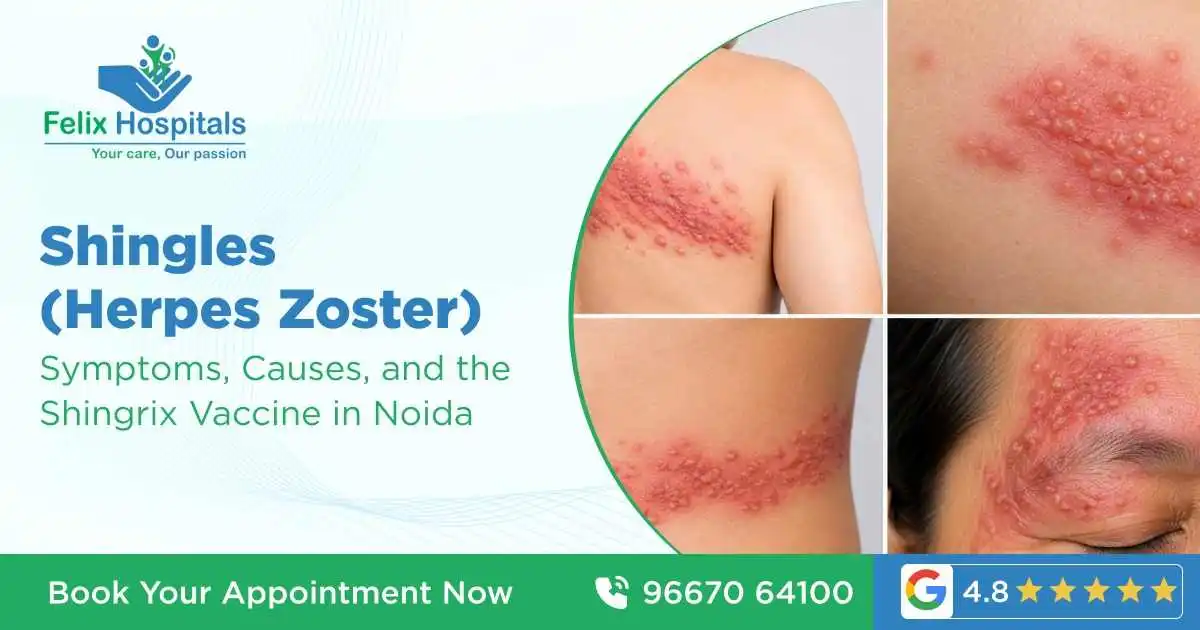
The rash most commonly appears on the trunk along a thoracic dermatome or on the face. It usually does not cross the body's midline. The rash develops into clusters of vesicles fluid-filled blisters. New vesicles continue to form over 3 to 5 days, and the rash progressively dries and scabs over.
The appearance is characteristic: a band or stripe of red, inflamed skin that follows the path of a nerve wrapping around one side of the chest, abdomen, or back like a half-belt. The blisters are filled with clear fluid, similar in appearance to chickenpox blisters, and are intensely painful. This unilateral, dermatomal distribution is the clinical hallmark that distinguishes shingles from other rash-producing conditions.
The rash typically clears up within 2 to 4 weeks. The blisters dry out, crust over, and heal leaving behind either clear skin or, in some patients, areas of permanent discolouration or scarring. The pain, however, does not always resolve with the rash. And this is where shingles becomes something far more serious than a skin condition.
You can spread the varicella-zoster virus to people who have never had chickenpox and have not been vaccinated. You are contagious until all the sores have crusted over. An important clarification: you cannot get shingles from someone who has shingles. However, you can get chickenpox from someone who has shingles if you have never had chickenpox or never received the chickenpox vaccine and you could then develop shingles later in life.
Both shingles and chickenpox are caused by the same virus varicella-zoster. But they are fundamentally different diseases representing two different stages of the same viral infection.
Chickenpox is the primary infection typically experienced in childhood where the virus first enters the body and causes a widespread, itchy rash across the whole body accompanied by fever and fatigue. Once chickenpox resolves, the virus does not leave. It retreats silently into the sensory nerve ganglia and remains dormant, sometimes for decades.
Shingles is a reactivation of that same dormant virus not a new infection. It does not spread across the whole body like chickenpox. Instead, it follows a single nerve pathway, producing a localised, one-sided stripe of blisters that is far more painful than chickenpox and carries the risk of long-term nerve damage. Chickenpox spreads easily from person to person through the air. Shingles, by contrast, is not "caught" from another person it emerges from within, triggered by a weakening of the immune system that allows the virus to reactivate after years of dormancy.
Shingles is not just a skin condition. In a significant proportion of patients particularly those who are older, immunocompromised, or who did not receive early antiviral treatment it causes complications that can be severe, disabling, and long-lasting.
The most common complication of shingles is nerve pain that does not go away when the rash does. PHN occurs in 5–25% of all shingles cases depending on the patient's age. The pain often described as burning, stabbing, or electric shock-like occurs in the area where the original shingles rash appeared, even though the skin has healed completely. The risk of developing postherpetic neuralgia is 30% higher and the pain is more debilitating in adults above 50. This pain can cause psychological disturbances, disrupt sleep, make clothing contact unbearable, and in severe cases make patients unable to work or carry out daily activities.
When shingles affects the trigeminal nerve the nerve that supplies the forehead, eye, and nose it can involve the eye directly, causing eye irritation, corneal ulcers, or retinal inflammation, resulting in blurred vision, light sensitivity, and in severe cases, blindness. Any patient with shingles involving the forehead or the tip of the nose should be evaluated by an ophthalmologist immediately, as corneal involvement can develop rapidly.
When the varicella-zoster virus reactivates in the facial nerve, it causes Ramsay Hunt Syndrome a triad of painful ear blisters, facial paralysis on the same side, and hearing loss. Early antiviral and corticosteroid treatment significantly improves outcomes, but some patients are left with permanent facial weakness or hearing impairment.
Additional complications include bacterial superinfection of the blisters if not kept clean, and in immunocompromised patients, neurological involvement causing encephalitis, meningitis, or myelitis rare but serious conditions requiring hospitalisation and intravenous antiviral therapy.
There is no cure for shingles the virus remains in the nervous system permanently. But treatment started early significantly reduces the severity, duration, and complication risk of the illness.
Note: Antiviral medications (like Valacyclovir) are most effective when started within 72 hours of the first blister.
Antivirals: To stop the virus from spreading
Antiviral drugs are the cornerstone of shingles treatment. The three antivirals used are acyclovir (requires five doses daily), valacyclovir (three times daily, better bioavailability), and famciclovir (three times daily). Starting treatment at 48 hours or earlier produces the best reduction in pain severity, rash duration, and most importantly the risk of postherpetic neuralgia. After 72 hours, the benefit diminishes significantly. If a patient presents to Felix Hospital with burning pain along a dermatomal distribution even before the rash has appeared antivirals can be started immediately for the best possible outcome.
Pain Management: Nerve-stabilising medications (Gabapentin/Pregabalin).
Shingles pain is often severe, and standard painkillers like paracetamol are frequently insufficient. For mild to moderate pain, paracetamol and NSAIDs provide baseline control. For moderate to severe pain, gabapentin or pregabalin nerve-stabilising medications that reduce the burning, shooting quality of neuropathic pain are particularly important both during the acute phase and for PHN. Tricyclic antidepressants, particularly amitriptyline at low doses, modulate pain signalling independently of their antidepressant effect. Topical agents including lidocaine patches, capsaicin cream, and calamine lotion provide additional localised relief.
Oral corticosteroids typically prednisolone are sometimes prescribed alongside antivirals in patients with moderate to severe shingles, particularly when facial nerve or eye involvement is present.
Wound Care: Keeping the area clean to prevent scarring.
During the blistering phase, keeping the rash clean and dry reduces the risk of bacterial superinfection. Loose cotton clothing over the affected area minimises friction and discomfort. Do not burst the blisters this increases infection risk and may worsen scarring. Cool compresses can provide temporary relief from itching and burning.
For postherpetic neuralgia that persists after the rash has healed, Felix Hospital offers targeted management including gabapentin or pregabalin, topical lidocaine patches, capsaicin 8% patch for refractory cases, and pain psychology support for patients with significant mood impact. PHN is a condition that many patients manage inadequately because they do not realise it is treatable beyond simple painkillers. If you or a family member is experiencing persistent burning pain months after a shingles episode, please seek specialist review at Felix Hospital.
Prevention of shingles and particularly its most feared complication, postherpetic neuralgia is now possible through vaccination. This is one of the most significant developments in adult preventive medicine in the past decade.
GlaxoSmithKline's Shingrix (Zoster Vaccine Recombinant, Adjuvanted) is approved in India for the prevention of shingles and postherpetic neuralgia in adults aged 50 years and above. Because Shingrix is a non-live vaccine, it can also be offered to those who are immunocompromised and/or immunosuppressed patients for whom the older live vaccine Zostavax is not appropriate.
In adults 50 to 69 years old with healthy immune systems, Shingrix was 97% effective in preventing shingles. In adults 70 years and older, it was 91% effective. In adults 50 years and older, Shingrix was 91% effective in preventing postherpetic neuralgia. Immunity remained high for at least 7 years after vaccination in adults 70 and older. By comparison, the older Zostavax vaccine is only about 51% effective making Shingrix the strongly preferred choice at Felix Hospital.
Adults 50 years and older should get two doses of Shingrix, separated by 2 to 6 months. Shingrix can provide at least a decade of protection against shingles after the initial vaccination. The vaccine can also be given to someone who has already had shingles to reduce the risk of a future episode, as shingles can recur, particularly in immunocompromised individuals.
The shingles vaccine typically costs between ₹3,500 and ₹5,000 per dose in India, with the complete two-dose course costing approximately ₹7,000 to ₹10,000. Some health insurance plans in India may cover part of the vaccination cost. Contact Felix Hospital at +91 9667064100 to confirm availability and current pricing.
Additional prevention measures include keeping diabetes, hypertension, and other chronic illnesses well-controlled to support immune function; managing prolonged stress; and ensuring children receive the chickenpox vaccine, which reduces the likelihood of shingles later in life.
Shingles is a time-sensitive condition. Come to Felix Hospital immediately call +91 9667064100 or present to our emergency or OPD without delay if you experience pain, burning, or tingling on one side of your body even without a rash; a blistering rash on one side of the face or body following a stripe-like pattern; any rash or pain involving the eye, eyelid, forehead, or tip of the nose; ear pain, blisters in or around the ear, or facial weakness; fever, confusion, or severe headache alongside a shingles rash; persistent burning or shooting pain months after a previous shingles episode; or any shingles symptoms if you are immunocompromised.
Do not adopt a "wait and see" approach. The earlier you act, the better the outcome.
Shingles is not simply a rash. It is a viral nerve condition that causes some of the most intense pain described in clinical medicine and in a significant proportion of patients, that pain outlasts the rash by months or years.
The good news is that we now have more tools than ever before to manage shingles effectively: early antiviral treatment that reduces severity and complication risk; targeted therapies for postherpetic neuralgia; and a highly effective vaccine that prevents the disease before it can start.
At Felix Hospital, Sector 137, Noida, our dermatology and internal medicine teams see and manage shingles at every stage from the burning prodrome to the acute blistering rash to the chronic nerve pain of PHN. We also offer the Shingrix vaccination for adults 50 and above, with a consultation to assess your individual risk and vaccination suitability.
If you or a family member is experiencing any symptom that might be shingles or if you are over 50 and have not discussed shingles vaccination with your doctor call +91 9667064100 today.
Shingles is a painful rash caused by the reactivation of the varicella-zoster virus the same virus responsible for chickenpox. You cannot get shingles directly from someone who has it. However, if you have never had chickenpox and have not been vaccinated, you can contract the chickenpox virus from someone with active shingles blisters and may develop shingles yourself later in life. Shingles patients are contagious until all blisters have fully crusted over.
No shingles is a reactivation of the varicella-zoster virus, which can only be in your body if you previously had chickenpox. However, if you never had chickenpox or the chickenpox vaccine, you are susceptible to chickenpox from a person with active shingles blisters.
The rash typically clears within 2 to 4 weeks. However, the nerve pain particularly in older adults can persist for months or years beyond the rash in the form of postherpetic neuralgia. Early antiviral treatment significantly reduces the likelihood and severity of this prolonged pain.
The prodromal phase before the rash is characterised by burning, tingling, itching, or shooting pain along one side of the body. It often feels like a muscle pull, a pinched nerve, or unexplained skin sensitivity. Headache, sensitivity to light, and general fatigue may also occur. This phase lasts 1 to 5 days before the blisters appear.
Yes. Felix Hospital offers the Shingrix shingles vaccine for adults aged 50 and above, including immunocompromised patients for whom the live Zostavax vaccine is not appropriate. The vaccine is administered in two doses, 2 to 6 months apart. Call +91 9667064100 to book a vaccination consultation and check current availability.
Yes and this is one of the most serious complications of shingles. When the virus reactivates along the trigeminal nerve, it can cause herpes zoster ophthalmicus affecting the eye, cornea, and retina. This can lead to severe vision impairment or blindness if not treated urgently. Any shingles rash involving the forehead or tip of the nose requires same-day ophthalmology review.
Postherpetic neuralgia is persistent nerve pain in the area where the shingles rash appeared lasting more than 3 months after the rash has healed. It occurs in 5–25% of shingles cases and is more common and more severe in older adults. It is treated with gabapentin, pregabalin, tricyclic antidepressants at analgesic doses, topical lidocaine patches, and capsaicin preparations. It is a treatable condition patients should not accept it as permanent.
Yes, though recurrence is less common than a first episode. Immunocompromised patients are at higher risk of recurrent shingles. Vaccination with Shingrix after recovery from a shingles episode is recommended to reduce the risk of future episodes.
Antiviral treatment is most effective when started within 72 hours of the rash appearing and even earlier, during the prodromal pain phase if shingles is clinically suspected. Waiting beyond 72 hours significantly reduces the benefit of antivirals. If you suspect shingles with or without a visible rash come to Felix Hospital the same day.
Adults above 50 are at highest risk due to age-related immune decline. Patients with diabetes, kidney disease, HIV, cancer, or those on immunosuppressive therapy carry an even higher risk. Given that more than 90% of Indians above 40 carry the varicella-zoster virus in their nervous system, virtually any adult is a potential candidate making vaccination from age 50 the most effective preventive step available. Call Felix Hospital at +91 9667064100 to discuss your individual risk.
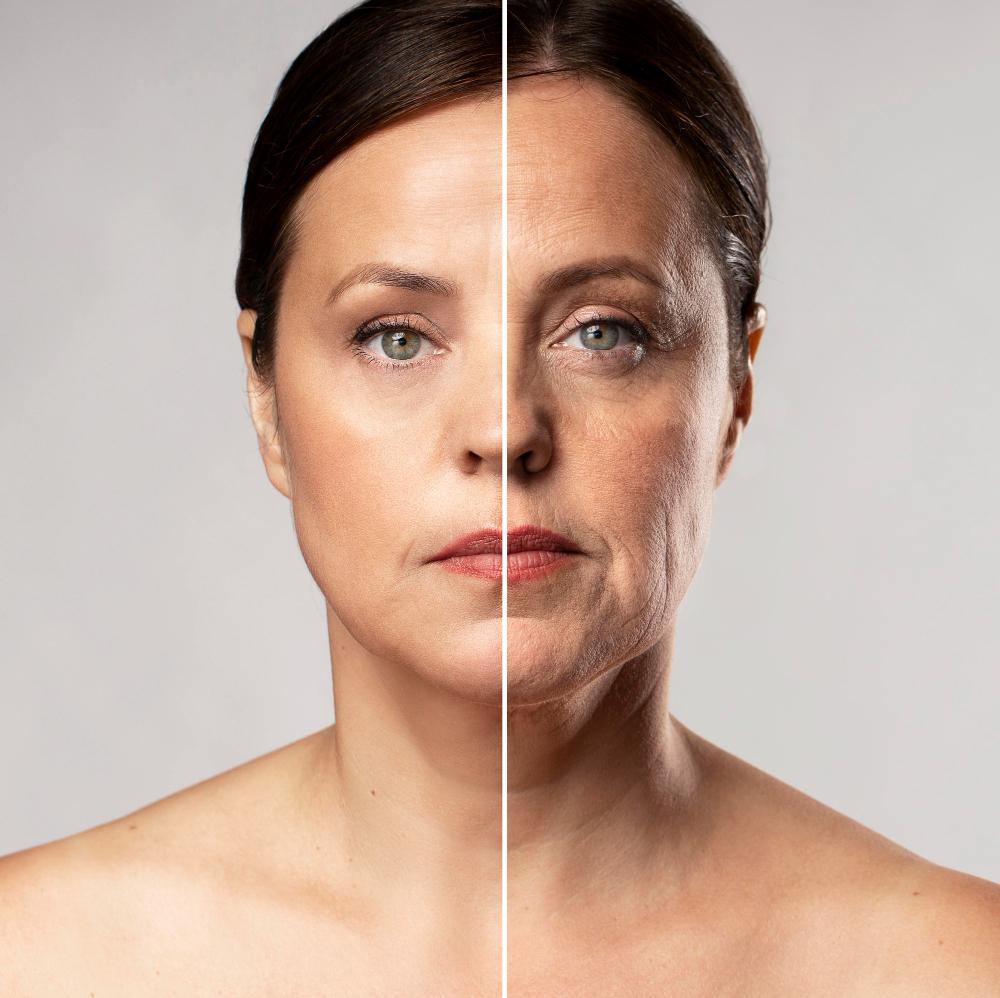
Certain skin disorders aren’t preventable, including genetic conditions and some skin problems due to other illnesses.

If your answer is yes, then, here are 6 easy steps to keep your skin look young and glowing.
It’s essential to note that the cost of skin pigmentation disorder treatment in Noida can differ based on the type of treatment required and the healthcare facility's resources.
In severe cases, surgery may be required to drain the blocked sinus.


Subscribe to our
© Copyright 2026. All Rights Reserved by Felix Healthcare Private Limited
Design and development by :


 +(91)9667064100
 Emergency : +(91)9667064100