 Emergency:
  WhatsApp



Subscribe to our
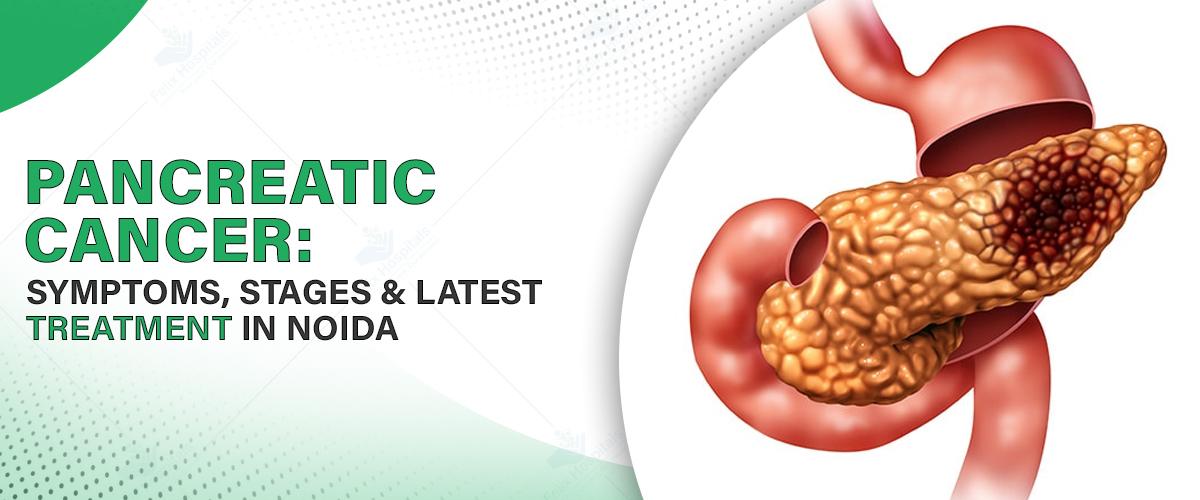
Pancreatic cancer is a hard and often aggressive disease that attacks the pancreas, which is an important organ that helps with digestion and keeps blood sugar levels stable. Pancreatic cancer is one of the hardest cancers to find early on because its symptoms are so subtle and easy to miss. Finding diseases early, having access to better diagnostic tools, and looking into the newest treatment options are all important for improving patient outcomes.
This thorough blog talks about the signs and stages of pancreatic cancer, the things that make it more likely to happen, and the newest treatment options at the best oncology hospital in Noida.
To make an appointment and talk to a specialist, call +91 9667064100.
Cells in the pancreas change and grow uncontrollably, which leads to pancreatic cancer. The pancreas is a small organ that makes insulin and digestive enzymes. It is deep in the abdomen, between the spine and the stomach. Adenocarcinoma is the most common type of pancreatic cancer. It starts in the pancreatic ducts (exocrine tumors).
Pancreatic neuroendocrine tumors (NETs), which grow in hormone-producing cells, are less common. These cancers act differently, which may mean that different treatment plans are needed.
Because the pancreas is deep inside the abdomen, small tumors may not show any signs at first. As the tumor gets bigger, you may start to notice the following symptoms:
Yellowing of the skin and eyes (jaundice)
Dark-colored urine
Stool that is pale or greasy
Pain in the stomach or middle of the back
Feeling sick or throwing up.
Weight loss that happens for no reason or all at once
Not wanting to eat
Tiredness
Skin that itches.
Diabetes that has just started
These signs could also be a sign of something else, but you should see an oncologist in Noida if they last for a long herself.
Knowing what stage the cancer is at is very important for planning the best treatment. Stages are:
Stage I: The tumor is only in the pancreas and can be surgically removed.
Stage II: The cancer has spread to nearby tissues and maybe lymph nodes, but surgery is still an option.
Stage III: The tumor has spread to big blood vessels or lymph nodes, which makes it hard to remove with surgery.
Stage IV: The cancer has moved to other parts of the body, like the lungs or liver.
Using diagnostic tools like CT scans, MRIs, and staging laparoscopy, we can figure out what stage of cancer someone has.
There are a number of things that can make you more likely to get pancreatic cancer:
Chronic use of tobacco or smoking.
Type 2 diabetes that lasts a long time.
Being overweight and not moving around enough
Pancreatitis that lasts a long time.
A family history of pancreatic cancer or other cancers that are related to it.
Genetic changes such as BRCA1 and BRCA2
Being around dangerous chemicals like pesticides and petrochemicals
People who know about these risk factors are better able to get regular screenings and take steps to avoid them.
It is still hard to find pancreatic cancer early, but new diagnostic tools have made it easier to find. Some common tests are:
CT scans and MRIs give very clear pictures of the pancreas and the areas around it.
Endoscopic ultrasound (EUS) is a method that uses both endoscopy and ultrasound to get close-up pictures.
PET Scan: Finds cancer cells by looking at how they metabolize.
Tumor Marker Tests: These tests check the levels of CA 19-9 in the blood, which may be high in people with pancreatic cancer.
A biopsy is a test that uses a piece of tissue to confirm that cancer is present.
Genetic testing finds mutations that are passed down from one generation to the next and helps doctors make treatment plans that are right for each patient.
There are now many different ways to treat pancreatic cancer in Noida, depending on the stage and type of cancer.
The Whipple Procedure: It takes out the head of the pancreas, the duodenum, the bile duct, and part of the stomach.
Distal Pancreatectomy: The body and tail of the pancreas are taken out, along with the spleen in most cases.
A total Pancreatectomy: That means taking out the whole pancreas, gallbladder, part of the stomach, and part of the intestine.
Given before (neoadjuvant) or after (adjuvant) surgery to make the tumor smaller or kill any cancer cells that are still there.
Used as the main treatment for cancer that has spread or is advanced.
Often used with chemotherapy to make it work better.
The size of tumors goes down, and pain goes away.
It concentrates on specific genetic alterations, such as the BRCA genes.
Olaparib and erlotinib are two drugs that stop pathways that help cancer grow.
It helps the immune system find and kill cancer cells.
It might be possible to get it through clinical trials or depending on the type of tumor.
Pain management and end-of-life care are crucial for enhancing the quality of life, particularly during the advanced stages.
This includes drugs, nerve blocks, and help with nutrition.
Just treating pancreatic cancer isn't enough. Care must include emotional support, dietary advice, and changes to the way you live. Patients and caregivers should get help from support groups and keep up with what's new.
Don't ignore symptoms that don't go away, like abdominal pain, weight loss for no reason, or jaundice. Finding and treating problems early can make a big difference in the results.
Call +91 9667064100 to set up your consultation today and take the first step toward getting expert care.
Pancreatic cancer is a complicated and often aggressive disease, but new advances in personalized treatment and early detection give us hope. Patients can make better health decisions if they know the early warning signs, the stages of the disease, and the best treatment options. Intervention early on could save lives.
Q1. How can I tell if I need to go to the hospital for stomach pain that might be caused by pancreatic cancer?
Ans: If you have persistent stomach or back pain that gets worse after you eat or is accompanied by symptoms like jaundice or fatigue, you should go to the hospital right away.
Q2. What is the usual price of pancreatic cancer screenings in India?
Ans: Depending on the hospital and the test, initial screenings can cost anywhere from ₹2,000 to ₹10,000.
Q3. Can a regular doctor tell if I have pancreatic cancer, or do I need to see an oncologist?
Ans: A general doctor can raise suspicions, but a specialist oncologist is needed to confirm the diagnosis and plan treatment.
Q4. Do hospitals in Noida have up-to-date tools for diagnosing pancreatic cancer?
Ans: Yes, a lot of hospitals in Noida do CT scans, EUS, and CA 19-9 tumor marker tests.
Q5. Do you always need surgery to treat pancreatic cancer, or can you do it without it?
Ans: Chemotherapy and radiation are two types of alternative treatments that are used when surgery isn't an option.

Felix Hospital offers advanced oncology treatment at an affordable cost, ensuring high-quality care for cancer patients with compassion and expertise.


Subscribe to our
© Copyright 2026. All Rights Reserved by Felix Healthcare Private Limited
Design and development by :


 +(91)9667064100
 Emergency : +(91)9667064100