 Emergency:
  WhatsApp




Subscribe to our
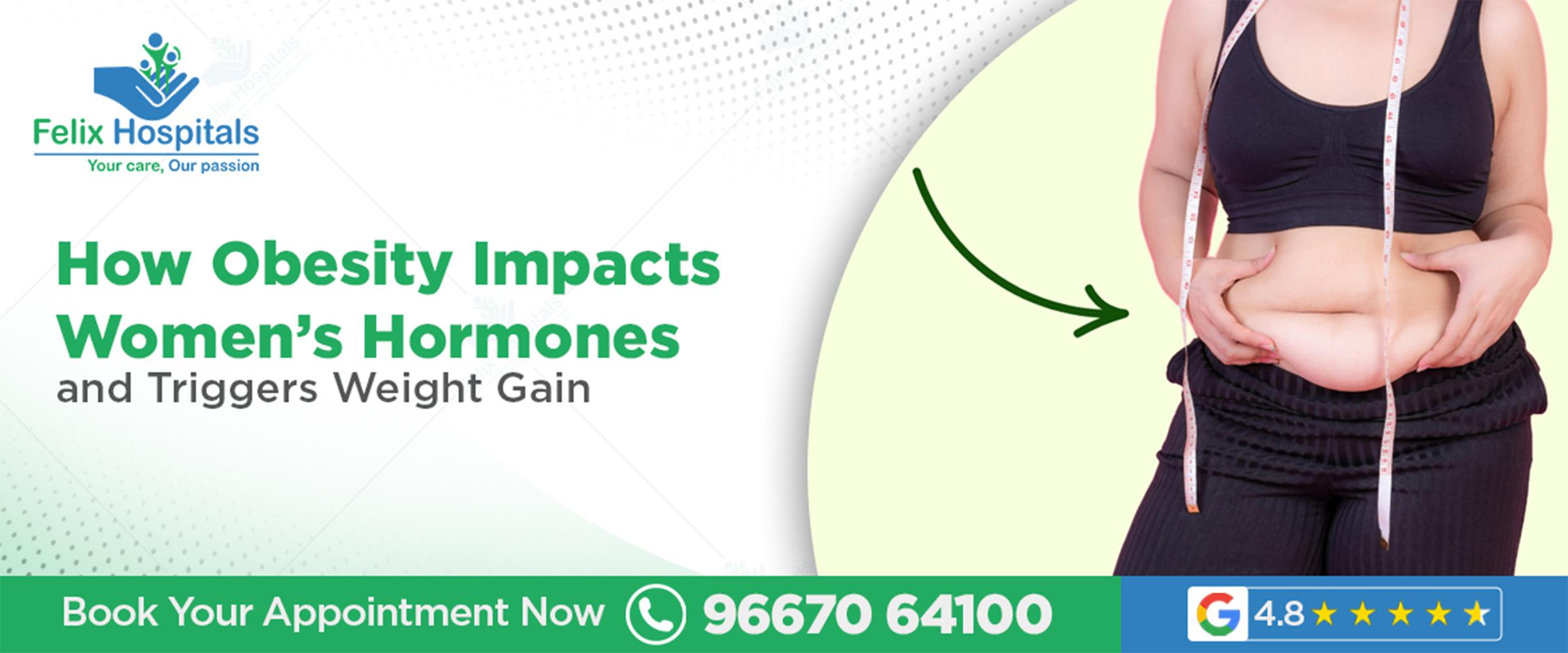
Obesity is more than just excess weight — it is a complex disease that alters how a woman’s body works. What a lot of women don’t appreciate is that being overweight — particularly around the belly — does more than just make you look bad or make it harder to move. It subtly disrupts the fine hormonal tuning that controls everything from metabolism and mood, to fertility and energy levels. The effect of hormones on women and obesity is a vicious circle - adipose/fat tissue produces hormones which further dysregulate the body, so women find it harder to lose weight and gain it easily.
For women, this disruption in hormones is especially concerning because female hormones are naturally fluctuating, even in menstruating women, through pregnancy and menopause. Add obesity to the mix, and these changes are compounded — not just in weight, but in health. Best Obstetrics & Gynecology Hospital in Noida offers complete range of investigations that can evaluate the underlying hormonal causes of obesity and its complications and help women escape this vicious cycle.
Experiencing unexplained weight gain or hormonal symptoms? Call +91 9667064100 to consult the Best Gynecologists in Noida for expert evaluation and treatment.
Women's bodies are designed to be hormonally sensitive. Oestrogen, progesterone, insulin, cortisol, and thyroid hormones all work together in a carefully balanced system. When one hormone is disrupted, it can lead to a domino effect. The link between hormone imbalance in women and weight gain is incontrovertible.
Body fat actively secretes estrogen and inflammatory molecules
Too much fat in your body changes the way your body makes and gets rid of hormones.
Hormones stay for longer periods of time in the blood vessels, resulting in excess
It contributes to insulin resistance, thyroid dysfunction and high cortisol
It causes weight loss to be almost impossible to achieve without medical help.
Studies show that women with a BMI over 30 are 3 times more likely to develop insulin resistance compared to women with normal weight.
Insulin is the hormone that shuttles sugar from the blood into cells to be used for energy. A woman's body cells become resistant to the signals of insulin when she is overweight, particularly in her abdomen. That sets up a trap where obesity-related weight gain is self-reinforcing.
The insulin resistance cycle:
Pancreas makes more insulin to compensate
If you have high insulin, your body is being told to store fat, not burn it.
Triggers intense sugar and carbohydrate cravings
Cells are starving for energy even though blood sugar is high
Women feel hungry all the time, exhausted, and powerless to stop eating
Chronic stress is a silent contributor to weight gain. Cortisol, the body's primary stress hormone, is released in response to physical or emotional stress. The link between stress and hormonal imbalance is particularly pronounced in women struggling with obesity. How chronic stress affects weight:
Elevated CSF cortisol is associated with significantly increased food intake of calorie dense “comfort food”.
Tells the body to store fat in the belly
Disrupts sleep quality
Bad sleep interferes with the hunger hormones leptin and ghrelin
Creates a vicious cycle: stress → poor sleep → weight gain → more stress
Oestrogen is essential for reproductive health, but too much creates serious problems. Fat tissue produces oestrogen, so the more body fat a woman carries, the higher her oestrogen levels become. This impacts women's health and obesity beyond just weight.
Potential consequences of oestrogen dominance:
Menstruation that is irregular or excessive
Fibroids, endometriosis
Polycystic ovarian syndrome (PCOS)
Infertility and ovulation issues
Greater likelihood of breast and uterine cancer
Painful, erratic menstrual cycles and menopause!
Research indicates that losing just 5-10% of body weight can restore ovulation in up to 70% of women with PCOS.
In order to understand weight gain causes in women, it is important to acknowledge that women's bodies are biologically different when it comes to the storage of fat and the regulation of hormones.Key differences in women:
Naturally carry higher percentage of body fat
Hormonal shifts during the menstrual cycle affects fat storage
Hormonal changes in menopause also cause fat to move from hips/thighs to a more dangerous place – the abdomen
Lower metabolism due to less muscle mass.
They burn fewer calories at rest than men do
Social factors: prioritise family meals, less time for exercise, more emotional eating
Thyroid disorders occur way more often in women than men, and obesity worsens them. The thyroid controls metabolism – the speed at which the body burns calories. The hormonal consequences of obesity include impairment in the production of thyroid hormones.
Signs of thyroid dysfunction in the obese patient:
Gaining weight while eating less and exercising more
Extreme fatigue and low energy
Hypothermia and xeroderma
Hair loss and brittle nails
Depression and mood swings
Symptoms often dismissed as normal consequences of being overweight
The entire endocrine system — the network of glands that produce and regulate hormones — suffers under the weight of obesity. The relationship between obesity and endocrine health affects multiple hormones simultaneously.
Obesity-disrupted hormones:
Leptin: leptin resistance (stops signaling fullness) → eating until hungry again
Ghrelin: Hunger hormone spikes at the wrong times → cravings for food even after eating
Growth hormone: Production slows down → slower metabolism
Insulin: Resistance forms → fat storage increases
Cortisol: High chronic level of cortisol → accumulation of belly fat
This creates a biological environment where the body actively resists weight loss and promotes weight gain.
Hormone | Normal Function | How Obesity Disrupts It | Impact on Women's Health |
Insulin | Moves sugar into cells for energy | Resistance develops, excess production | Excess production, resistance develops Weight gain, risk of diabetes, PCOS |
Oestrogen | Regulates menstrual cycle, bone health | Overproduction from fat tissue | Excess production from adipose tissue Irregular periods, fibroids, fertility problems, cancer risk |
Cortisol | Manages stress response | Chronically elevated | Belly fat storage, sugar cravings, sleep problems and many more symptoms attributed to these hormones |
Thyroid (T3/T4) | Controls metabolism | Production and conversion disrupted | Slow metabolism, tiredness, weight gains with difficulty to lose weight |
Leptin | Signals fullness and satiety | Resistance develops | Constant hunger, inability to feel full |
Ghrelin | Triggers hunger when needed | Spikes inappropriately | Constant hunger, feeling of not being able to eat yourself full |
Progesterone | Balances oestrogen, supports pregnancy | Levels drop relative to oestrogen | Mood swings, anxiety, irregular cycles |
Managing weight and hormones is possible with the right approach. Weight loss, even modest amounts of 5 to 10 percent of body weight, can significantly improve hormonal balance.
What women may need to achieve lasting results:
Full hormone panel (insulin, thyroid, cortisol, reproductive hormones)
Dietary advice to promote blood sugar stability
Anti-inflammatory foods to prevent chronic inflammation
Stress management: yoga, meditation, sleep)
Medications when indicated (thyroid replacement, insulin sensitizers)
Exercise (Strength Training) To Build Metabolizing Muscle
Moderate cardio, but don’t overdo it
Continuous follow-up sees and adjustments in treatment
It's a tricky task to master the relation of obesity and hormones. Women with weight gain, irregular periods, infertility or metabolic challenges gain so much from seeing specialists who are expert in women’s metabolic health and hormonal balance. What specialty care offers:
An evidence-based assessment rather than the standard weight management
Identification of causes, not just treatment of symptoms
Treatment customized to the individual's hormone levels
Medications plus lifestyle advice
Emotional support and realistic goal-setting
Continued follow-up to discourage relapse
The Best Gynecologists in Noida offer comprehensive care that combines medical treatment, nutrition guidance, and ongoing support to help women restore hormonal balance and achieve sustainable weight loss.
Obesity and hormones are two closely-related factors in women’s health. Overweight people have disrupted insulin, leptin, estrogen, thyroid, cortisol and the hormones that regulate appetite, leading to a biological environment where gaining weight becomes automatic and losing weight seems impossible. The keystone of this relationship is empowerment — it tells you that you’re not failing at life, you have a diagnosed medical condition that needs proper care.
With appropriate medical guidance, testing for hormonal imbalances, individualized nutrition, stress reduction, and focused therapy, women can once again achieve hormonal balance, attain long-term weight loss, and regain their health. If you've been fighting unexplained weight gain, or irregular periods, or just downright fatigue, or if you feel like no matter what you do you can’t lose weight, it’s time to get help.
Don’t let hormonal imbalance control your health. Visit Noida’s hospital near me for expert care at the Best Obstetrics & Gynecology Hospital in Noida. Get a comprehensive evaluation and personalized treatment from experienced specialists.
Yes. Certain hormones - including insulin, cortisol, estrogen and thyroid hormones are affected by excess body fat. These adaptations decrease metabolism, increase hunger cues, and drive fat storage, contributing to making weight loss more difficult even in the face of reduction in calories and physical activity.
Hormonal weight gain is often accompanied by symptoms such as irregular periods, constant tiredness, thinning hair, acne, mood swings, or difficulty losing weight despite making lifestyle changes. A physician's hormone assessment can determine the cause.
Yes. And even a small weight loss of 5 to 10 percent can help improve insulin sensitivity, regulate menstrual cycles,reduce inflammation, and enhance overall hormonal balance in many women.
Yes. Obesity can also be a factor in increasing risk for conditions such as PCOS, abnormal ovulation, infertility, and pregnancy complications. The “fat hormone” leptin disrupts the reproductive system through hormonal changes induced by excessive body fat, that are felt by the sex hormones too.
The following are some tests doctors may order to help pinpoint the underlying hormonal imbalance that may be causing your weight gain: thyroid function tests insulin levels blood sugar tests cortisol levels reproductive hormone panels
Dr. Charu Yadav is an obstetrician and gynecologist with 12+ years of experience, specializing in high-risk and twin pregnancies, ectopic pregnancy, and menstrual disorders. Trained in laparoscopic surgery, she provides care for pregnancy, infertility, menopause, and gynae procedures. She is also recognized among the Best Gynecologists in Noida for her patient-focused treatment.
Hormones are the chemicals that regulate various bodily functions in both men and women.

As a child care specialist, I have noticed a huge difference in overall growing of a child in the last 14 years.


Subscribe to our
© Copyright 2026. All Rights Reserved by Felix Healthcare Private Limited
Design and development by :


 +(91)9667064100
 Emergency : +(91)9667064100