 Emergency:
  WhatsApp

Subscribe to our
Posture is very important for the health of your muscles and bones. Swayback, which is also called lordosis, is one of the most common posture problems that people don't know about. A lot of people think it's just a cosmetic issue, but the truth is that if you don't fix your spinal curvature, it can cause chronic pain, limited mobility, and long-term problems with your spine. If you go to the Best Orthopaedic Hospital in Noida for an early checkup, they can find posture problems before they get worse and make sure that trained professionals take care of your spine the right way.
Book a posture evaluation and start your recovery journey with expert orthopedic care and guided physiotherapy.
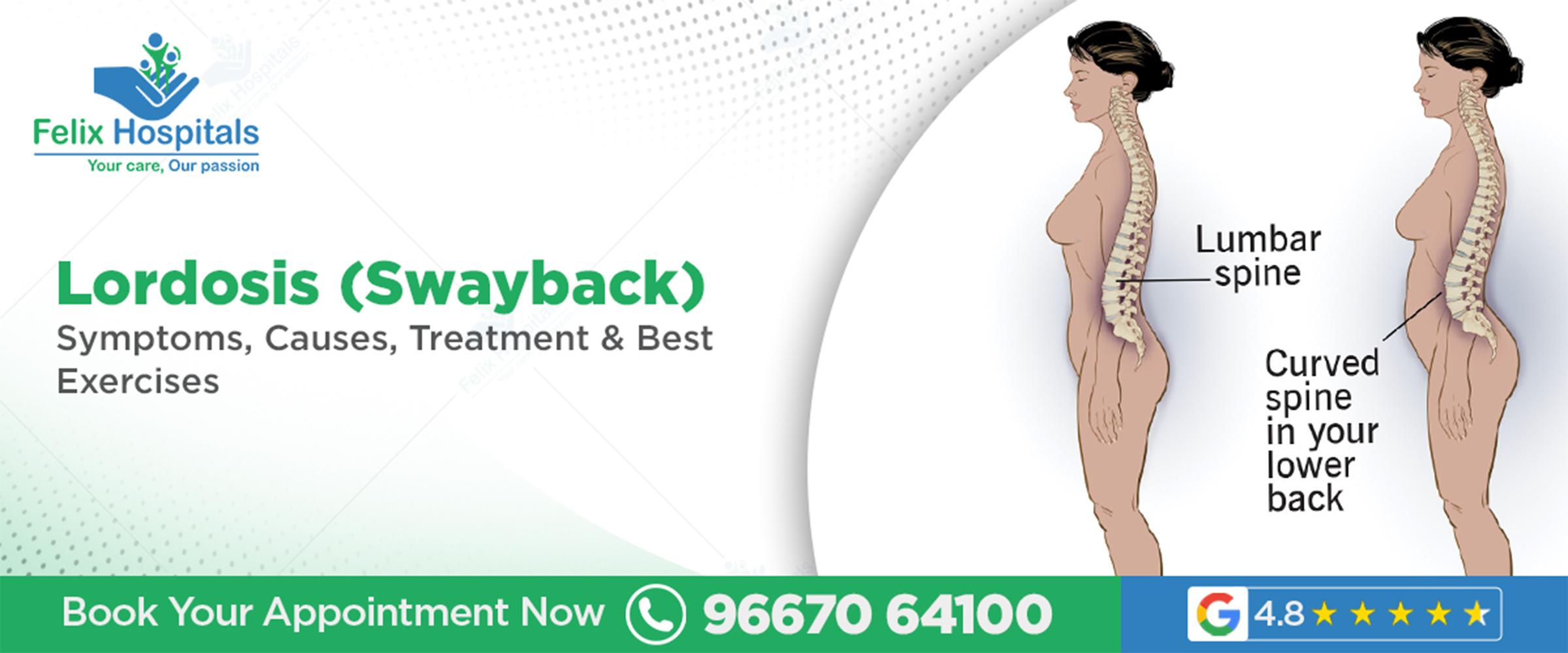
The spine of a person has natural curves that help absorb shock, support body weight, and let the body move freely. Problems can happen when these curves get too big. A lot of people look up "what is lordosis?" when they see a clear inward curve in their lower back. Lordosis is when the lumbar spine bends too much inward, pushing the stomach forward and the buttocks outward. This makes the back look swaybacked. It is normal for the spine to curve a little, but too much curvature can cause pain, stiffness, and bad posture over time.
Good posture keeps the head, shoulders, and hips in line with the spine. Muscles and ligaments have to work harder to keep balance when alignment changes. Over time, this stress can cause tiredness, pain, and possibly damage to the structure.
To treat someone properly, you need to know what causes swayback?. What makes swayback happen is something that a lot of people want to know. because the condition often gets worse over time. Lordosis can affect kids, teens, pregnant women, athletes, and adults who don't move around much. It usually happens because of muscle imbalance, bad posture, or an underlying medical condition.
Common causes include:
Weak core muscles
Tight hip flexors
Poor sitting posture
Obesity or rapid weight gain
Pregnancy and hormonal changes
Congenital spine conditions
Osteoporosis or spinal injuries
When the pelvis tilts forward excessively, the lower spine compensates by curving inward more than normal. This compensation leads to long-term strain and discomfort.
There are a lot of people who do not realize they have poor posture until they have symptoms. It’s attached to almost every action we take. Is lordosis dangerous? because the symptoms can initially be mild and then progressively get worse.
Possible long-lasting results are:
Chronic low backache
Decreased flexibility, mobility
Fatigued and stiff muscles
Nerve pinch
An inability to stand for prolonged intervals
Greater risk in spinal injuries
In untreated cases, the severity of the lordotic curve might influence the way a person walks and could lead to the person experiencing spinal wear and tear for a long time.
Postural disorders are becoming increasingly common worldwide. According to global musculoskeletal health data, back pain affects nearly 80% of adults at some point in life, and posture imbalance is a major contributing factor. Studies published in spine health journals show that early posture correction reduces long-term spinal complications by up to 40%.
Recognizing symptoms early makes treatment easier and more effective. The signs and symptoms of lordosis may vary depending on severity and age.
These are the most common symptoms:
Visible curve in lower back is bent inward
Anterior bowing of the abdomen and buttocks
Stiff back following walking or standing
Tight muscles in hips and thighs
Loss of mobility
In severe cases there is numbness or tingling
Pain tends to get worse when sitting or standing for long periods of time. The complications can be prevented by early diagnosis.
Certain lifestyle and health conditions make the development of swayback posture more likely. Sedentary working habits, extended use of screens and a lack of physical activity are the culprits behind rising cases globally.
Key risk factors include:
Sedentary lifestyle
Inadequate ergonomics at work
Weak abdominal muscles
Lack of stretching
Excessive high-heel use
Sports injuries
These elements slowly interfere with posture equilibrium and cause the displacement of the spine.
A medical evaluation can help figure out how bad the curvature is and what caused it. How do you treat lordosis? is a question that comes up a lot. But the first step in treatment is making the right diagnosis.
Your doctor might suggest:
Checkup of the body
Checking how you stand
X-rays, MRIs, or CT scans
Checking the strength of the muscles
Testing for Range of Motion
These studies help the doctor figure out how bad the disease is: mild, moderate, or severe.
Without surgery, most cases can be handled. The goal of treatment is to fix posture, make muscles stronger, and ease pain. A lot of people want to know how to fix their swayback posture because conservative treatment works so well.
Common treatments that don't involve surgery:
Learning about posture and physiotherapy
Making the core stronger
Medicines to ease pain
Help with keeping your weight under control
Changes to lifestyle and ergonomics
Most patients will get better in a few months if they are given the right care. It also shows that targeted physiotherapy can greatly improve spinal alignment and reduce long-lasting pain. These results show how important it is to get help early and follow a supervised exercise plan.
Physiotherapy is another very good way to treat lordosis. A strict schedule brings the spine back into balance and strengthens the muscles that support it.
The benefits of physiotherapy are:
More awareness of your posture
Stronger core and back muscles
Pain and stiffness relief
More range of motion
Stay away from spine problems in the future
The key to getting long-term results is to stay consistent.
Exercise is the most important part of getting better. A lot of patients look for the best exercises for correcting lordosis to safely improve their posture. Targeted exercises help balance muscles and make curves less extreme.
Exercises that are suggested:
Poses for pelvic tilt
Poses for cats and cows
Different kinds of plank
Stretching the hamstrings
Bridges for the glutes
Stretch for the hip flexor
Regular practice can help straighten out the spine and ease pain.
Your core muscles naturally support your spine. Weak core muscles and tight hip flexors make anterior pelvic tilt worse.
Core-strengthening exercises are helpful for:
Help the spine
Improve control of your posture
Ease stress in the lower back
Building up your core strength is important for fixing your posture in the long run.
Simple lifestyle modifications can make a big difference in posture and prevent progression of the curvature.
Posture daily tips:
Sit with your back supported
Keep your feet flat on floor
Do not sit for too long
Stand with a neutral spine
Modify the ergonomics of your workstation
Recovery is supported by routine daily consistency.
Surgery is rare and only done in very bad cases of nerve compression or spinal instability. If any of the following happen, surgery may be needed:
There is a big curve in the spine
Pain that won't go away
Signs of nerve damage start to show
Movement is limited
Most patients get better without surgery.
Early care stops problems from happening later on. The Best Orthopaedic Hospital in Noida can help you with proper diagnosis, planning physiotherapy, and managing your lifestyle.
Some benefits of early intervention are:
Faster healing time
Less hurt
Stopping spinal injuries
Better quality of life
People know that ignoring posture problems can lead to long-term problems.
Getting expert care is very important for recovery. Seeing the best orthopaedic doctor in Noida makes sure that you get personalised care and exercise plans.
A professional can:
Check the alignment of the spine and posture
Make plans for physiotherapy treatment
Keep an eye on the healing process
Give advice on how to stop something from happening in the long term
The treatment works much better when professionals are in charge.
Recurrence is as important to prevent as it is to treat. Active living, ergonomic modifications, and good habits promote spinal health.
Preventative measures include:
Keep a healthy weight
Exercise consistently
Be informed about your posture
Get up and move around if you're sitting too long
Do core exercises
Lifestyle choices that contribute to a healthy spine.
Regular spine checks can help find problems with posture early on. Going to the best ortho doctor in Noida makes sure that you get regular checkups and preventive care.
Regular checkups help:
Find changes in posture early
Stop pain from coming back
Make treatment more effective
Keep your spine healthy
It's always better to stop something from happening than to treat it.
Don't ignore the early signs if you notice changes in your posture, lower back pain, or stiffness. To avoid problems in the long run, see a spine specialist and start guided physiotherapy. To make an appointment for your posture assessment, call +91 9667064100.
Lordosis is more than just a posture problem. If you don't pay attention to it, it can slowly affect your mobility, comfort, and long-term spinal health. The good news is that most cases get better quickly with early diagnosis, physiotherapy, correcting bad posture, and targeted strengthening exercises. Getting stronger in your core, staying active, and fixing your daily posture can all help a lot with pain and stop it from getting worse. People with lordosis can get their spines back in balance, become more flexible, and live a pain-free, active life again with the right help and care.Getting timely advice and help from the best orthopaedic doctor in Noida can help find posture problems early and stop them from getting worse.
Yes, most mild to moderate cases improve significantly with physiotherapy, posture correction, and exercise.
Yes, children can develop lordosis due to posture habits, muscle imbalance, or congenital conditions.
Recovery may take a few months depending on severity and consistency of exercise.
Yes, prolonged sitting weakens core muscles and contributes to poor posture.
If back pain, stiffness, or posture changes persist for weeks, medical evaluation is recommended.
Dr. Keshav Goel is an experienced Orthopedic Surgeon with 10+ years of expertise in joint replacement, sports injury treatment, arthroscopy, and comprehensive bone and joint care.
Orthopedics is a specialized branch that takes care of your musculoskeletal problems related to joints, bones, muscles, spine, ligaments, and tissues.
Looking for the best orthopedic hospital in Noida for hip replacement surgery? Get expert care, advanced technology, and faster recovery from top orthopedic specialists—all under one roof.
Explore common orthopedic problems in senior citizens, their diagnosis, and advanced treatment options available in Noida for better mobility and healthy aging.


Subscribe to our
© Copyright 2026. All Rights Reserved by Felix Healthcare Private Limited
Design and development by :


 +(91)9667064100
 Emergency : +(91)9667064100