 Emergency:
  WhatsApp




Subscribe to our
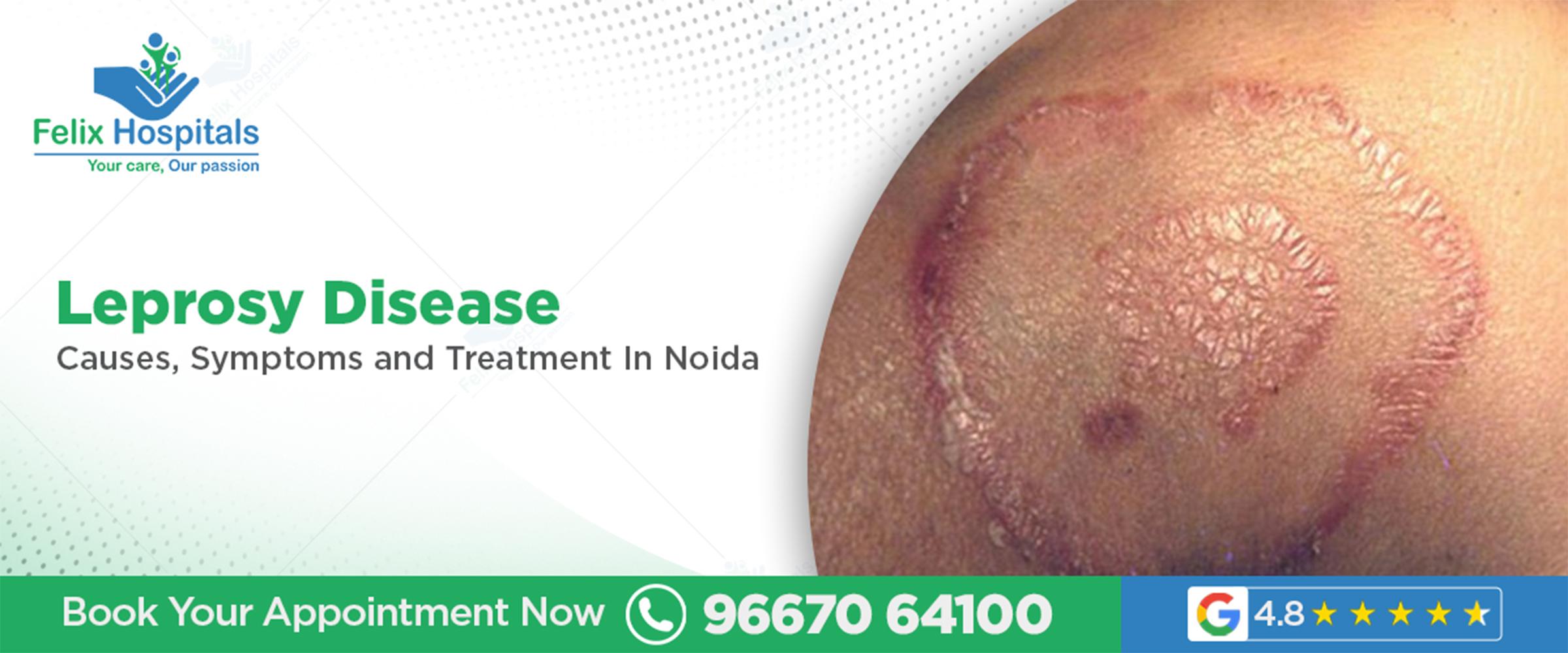
Leprosy is a long-term infectious disease which can result in damage to the skin and nerves. Many people ask what leprosy disease is, and raising awareness about it is important because early medical treatment makes a significant difference. Leprosy is a disease with a slow onset that causes hypopigmented macules on the skin with associated anesthesia and peripheral neuropathy when undiagnosed and untreated in the early phase.
The disease is now treatable, though late diagnosis may result in complications, including muscle weakness and numbness. Those who suspect unusual skin patches, numbness or dysfunctional skin should consult a dermatologist in Noida at the earliest for accurate diagnosis and appropriate leprosy treatment in Noida.
Noticed unusual skin patches, numbness, or nerve discomfort? Early diagnosis can help prevent permanent nerve damage. Call +91 9667064100 to consult a dermatologist in Noida.
In order to understand what leprosy disease is, you need to be aware that the disease is caused by a bacterium called Mycobacterium leprae. This bacterium multiplies very slowly and primarily affects the skin, peripheral nerves, eyes and upper respiratory tract mucous membranes.
The disease occurs slowly and may be asymptomatic for several years. An incubation period of three to five years is generally considered standard for leprosy based on scientific research. Since infection is slow to develop, early recognition of symptoms is important for the prevention of nerve damage and progressive disease.
Leprosy is caused by infection with the bacterium Mycobacterium leprae, and is thought to be transmitted mainly by airborne droplets from the nose and mouth during close and frequent contact with untreated patients. Unlike many other infectious diseases, leprosy is not very contagious and the majority of people are naturally immune to the bacteria.
Typical causes and risk factors are:
Long-term contact with an untreated infected person
Poor immune response to the bacteria
Residing in endemic areas
Low availability of prompt treatment
Late recognition of symptoms affecting skin or nerves
Healthcare providers can use these risk factors to offer early treatment and prevent progression of disease.
Leprosy causes one of its main health impacts through damage to peripheral nerves. It injures the nerves that control feeling and muscle movement. This leads to the slow loss of feeling in the infected parts of the body, including the sensation of pain, heat or touch.
Sensation loss also plays a part in the formation of wounds, burns, and infections as one may not know about small injuries. Untreated damage used to nerves can also lead to muscle weakness and deformity. Early diagnosis and a full course of leprosy treatment in the best leprosy hospital in Noida can go a long way in preventing these sequelae.
Identifying initial symptoms of leprosy infection is crucial to avoid future complications. The early signs can be mild and can be confused with other skin diseases.
Some frequent early symptoms are:
Pale or red skin patches
No feeling in affected areas of skin
Numbness or pins and needles in hands or feet
Skin wounds that do not heal readily
Mild muscle weakness near involved nerves
If you experience these symptoms for several days, you should see a doctor to make sure you have the right diagnosis.
The symptoms in the beginning of leprosy may depend on the classification of the disease and the degree of nerve damage. Usual manifestations may include:
Anesthetic or hypoesthetic skin patches
Scaly or dry skin plaques
Slow hair loss in the affected area
Tingling or burning in the limbs
Hand, foot or facial muscle weakness
Impaired temperature perception
Because symptoms progress slowly, early medical consultation is important for preventing permanent nerve damage.
Knowing when to go to the doctor is the priority for managing this disease. Treating it earlier makes a big difference in how well you can recover and how many complications you get. Consult your doctor if you observe the following:
Skin patches with numbness that don't go away
Hands, feet, or other parts of the body feeling numb
Tingling or burning pain associated with nerves
Skin wounds that don't heal for many weeks
Weakness in the muscles of hands or feet
Changing skin color or texture
Consulting a dermatologist in Noida allows early evaluation and prompt treatment.
The bacteria and the immune response govern the type of leprosy experienced. The two major types are:
Tuberculoid leprosy: A milder form in which a few skin patches contain very few bacteria
Lepromatous leprosy: A very serious form of the disease where there are numerous lesions all over the skin and it involves the nerves as well
Borderline leprosy: A form between the mild and severe types
Identifying the type of leprosy helps doctors determine the most appropriate treatment plan.
Doctors diagnose leprosy through clinical evaluation and laboratory tests that confirm the presence of infection.
Test | Purpose |
Skin Examination | Identifies characteristic lesions and sensory loss |
Skin Biopsy | Confirms presence of leprosy bacteria |
Skin Smear Test | Detects bacteria under microscopic examination |
Nerve Function Test | Evaluates damage to peripheral nerves |
Assesses immune response and overall health |
These tests help doctors provide accurate leprosy treatment in Noida and monitor patient recovery.
Optimal treatment of leprosy disease is based on combination antibiotic therapy known as multidrug therapy (MDT) which is recommended by the World Health Organization. MDT kills the bacteria and prevents the development of the disease.
Treatment may also include:
Rifampicin, dapsone, and clofazimine as the main antibiotics
Anti-inflammatory drugs to treat nerve inflammation
Nerve-related pain management
Muscle strengthening physiotherapy
Regular assessment of nerve function
Early treatment prevents disability and leads to better outcomes.
Depending on the type of infection, treatment duration varies. Six months may be sufficient for milder infections, whereas 12 months or longer may be necessary for treating more extensive or severe disease.
It is very important for the patient to complete treatment so that infection is fully eradicated and the disease does not relapse.
Leprosy, if left untreated, can result in severe complications from advancing nerve damage. Complications may include:
Permanent damage to nerves leading to numbness
Muscle weakness leading to difficulty moving extremities
Eye involvement that can cause vision problems
Deformities of hands, feet, or facial muscles
Chronic ulcers and recurring infections
Early treatment significantly reduces the risk of these complications.
Control of leprosy is largely through detection of cases and their treatment. Because the disease spreads slowly, raising public awareness is key to prevention.
Important prevention measures include:
Prompt detection and treatment of cases
Do not prolonged exposure to untreated patients
Maintaining good personal hygiene
Regular health checks in high risk groups
Community education on early recognition of the symptoms
The prevalence of leprosy has been drastically reduced across the globe with the use of public health initiatives and access to medical care.
If you have any strange patches on your skin, or if you experience numbness or any symptoms related to nerves, don’t ignore them. Consult an experienced dermatologist in Noida for expert diagnosis and effective leprosy treatment in Noida. Call +91 9667064100 to schedule your consultation today.
Leprosy is a long-term infectious bacterial disease affecting the skin and nerves. Early knowledge of what leprosy disease is and its symptoms can help prevent the disease from spreading. Consulting a skin specialist in Noida at an early stage can ensure timely diagnosis and proper care.
Leprosy is now completely curable if diagnosed timely owing to modern medical facilities, including multidrug therapy. Leprosy treatment in Noida with a dermatologist will also help the patient recover safely and without any long-term health complications.
Because of effective antibiotic treatments, leprosy is much rarer now, but there are still regions where cases occur. Early diagnosis with treatment controls its spread.
Yes. Early diagnosis and multidrug therapy can cure leprosy completely.
Treatment duration is determined by the type of infection. Mild infections may require six months while severe infections require a longer course.
Leprosy is not easily transmitted and usually occurs only after prolonged contact with an untreated case. Most people are naturally immune to the bacteria.
Nerve damage can be reversed if treated early. Severe untreated nerve damage can become permanent, so it is important to diagnose the condition early.
Dr. Sheetal Yadav is a board-certified dermatologist with 4+ years of experience in medical and cosmetic dermatology. She specializes in treatments like laser procedures, chemical peels, micro-needling, PRP, mesotherapy, and Botox/fillers. Recognized among the Best Dermatologists in Noida, she provides safe and personalized skincare solutions.

Subscribe to our
© Copyright 2026. All Rights Reserved by Felix Healthcare Private Limited
Design and development by :


 +(91)9667064100
 Emergency : +(91)9667064100