 Emergency:
  WhatsApp



Subscribe to our
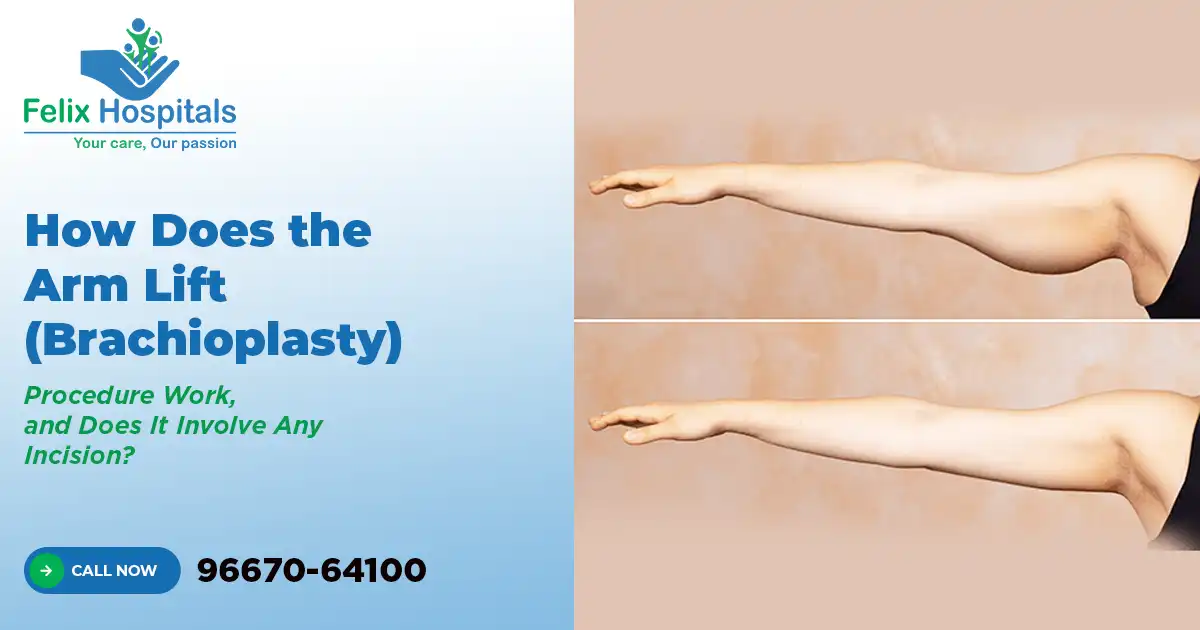
Quick Answer: How Does Arm Lift (Brachioplasty) Work, and Does It Involve an Incision?
Yes, brachioplasty always involves an incision. The surgeon removes excess skin and fat from the upper arm and tightens the underlying tissue, then closes the area with sutures. Incision length and placement depend on how much skin needs removing, ranging from a small underarm scar to a longer cut down the inner arm.
Have a question right now? Please call Felix Hospitals: +91-9667064100, Plastic and Reconstructive Surgery.
An arm lift, medically known as brachioplasty, is a body-contouring surgery that reshapes the upper arm by removing excess, sagging skin and fat between the underarm and the elbow. It is designed for the loose, hanging skin sometimes called bat wings, which does not respond to diet, exercise, or non-surgical skin-tightening treatments.
Brachioplasty is most commonly performed after significant weight loss, including after bariatric surgery, or as skin loses elasticity with age. Diet and exercise can reduce fat in the arm, but they cannot correct loose skin that has already lost its ability to spring back into shape, which is why surgery becomes the main option once skin laxity is significant.
It is worth noting that brachioplasty is different from simple arm toning exercises or fat-reduction treatments. Building arm muscle through strength training can improve tone underneath the skin, but it does nothing to shorten or tighten skin that has already stretched out. This is precisely the gap that surgical brachioplasty is designed to close, by physically removing the excess skin rather than trying to work around it.
Not every patient with concerns about their arms needs the same procedure. A good candidate for arm lift brachioplasty typically has the following characteristics, based on a proper in-person assessment:
Noticeable loose or sagging skin on the upper arm, often after major weight loss
Skin that has lost elasticity and will not tighten with exercise alone
Stable body weight, since further weight changes after surgery can affect results
Good general health, with no uncontrolled medical conditions that would make surgery risky
Realistic expectations about visible scarring in exchange for a smoother arm contour
Non-smoking status, or willingness to stop smoking well before and after surgery, since smoking slows healing
Patients with good skin elasticity and only a small amount of excess fat, rather than loose skin, are often better suited to liposuction alone rather than a full arm lift brachioplasty. Your plastic surgeon will assess your specific arm anatomy before recommending the right approach.
The cost of brachioplasty varies from patient to patient, since the procedure is tailored to individual anatomy rather than performed as a fixed package. Common factors that influence cost include:
The extent of skin excess and whether a mini, traditional, or extended brachioplasty is needed
Whether liposuction is combined with the skin excision
The type of anaesthesia used and length of the operating time required
Hospital stay duration, if any, and post-operative garment or dressing requirements
Surgeon experience and the facility where the procedure is performed
Since brachioplasty is usually classified as a cosmetic procedure, it is typically not covered by insurance unless the excess skin is causing a documented medical problem such as recurrent skin infections or rashes. A detailed consultation is the most reliable way to get an accurate cost estimate for your specific case.
Arm lift brachioplasty is performed under general anaesthesia or, less commonly, intravenous sedation with local anaesthesia, depending on how extensive the surgery is. The procedure generally follows these steps:
The surgeon marks the arm beforehand to plan the incision and the amount of skin to be removed
An incision is made on the inside or back of the upper arm, typically running from the underarm toward the elbow
Excess fat is removed, either by direct excision or with liposuction, sometimes using both together
The underlying supportive tissue is tightened and secured with internal sutures to create a smoother contour
The remaining skin is redraped over the newly contoured arm, excess skin is trimmed away, and the incision is closed with sutures
A small drainage tube may be placed temporarily to prevent fluid build-up under the skin
The full brachioplasty procedure typically takes around two to three hours, depending on how much correction is needed and whether liposuction is combined with the skin removal.
Yes, every form of brachioplasty involves at least one surgical incision. There is no incision-free way to remove excess skin, since skin removal and internal tissue tightening both require direct surgical access. What varies between patients is the length and placement of that incision, not whether one is needed at all.
This is an important distinction from non-surgical skin-tightening treatments, such as radiofrequency or ultrasound-based devices, which involve no incision but also cannot remove excess skin, only mildly firm it. For patients with true excess, sagging skin, these non-surgical options are not a substitute for surgical brachioplasty.
It is worth being upfront about this trade-off during your consultation. Some patients hope to find a version of arm lift brachioplasty that avoids any visible mark at all, but that simply is not how the surgery works. What your surgeon can control is the length of the incision, its exact placement, and the suturing technique used to close it, all of which meaningfully affect how the resulting scar looks once healed. A frank conversation about this trade-off, cutting versus the alternative of continuing to live with loose skin, is a normal and important part of deciding whether brachioplasty is right for you.
The type of arm lift brachioplasty recommended depends on how much loose skin is present and where it is concentrated. The main variations are:
Type of Brachioplasty | Incision Pattern | Best Suited For |
Mini or limited incision brachioplasty | Small incision hidden in the underarm crease | Mild to moderate excess skin concentrated near the armpit |
Traditional (full) brachioplasty | Incision from the underarm to just above the elbow | Significant excess skin along the entire upper arm, common after major weight loss |
Extended brachioplasty | Incision extended from the elbow along the arm to the side of the chest | Excess skin extending beyond the arm into the chest area |
Liposuction alone (no skin excision) | Small puncture incisions for the suction cannula | Good skin elasticity with excess fat but minimal loose skin |
Your surgeon will choose the least invasive option that still achieves your goals, since a smaller incision is always preferable when it will still give a good result.
Good preparation makes a real difference to how smoothly both the surgery and recovery go. Your surgical team will typically ask you to:
Stop smoking well in advance, since smoking significantly slows wound healing and increases complication risk
Avoid certain medications and supplements that increase bleeding risk, such as aspirin or certain herbal supplements, as advised by your surgeon
Maintain a stable weight in the weeks leading up to surgery
Arrange for someone to drive you home and help with daily tasks for the first few days, since arm movement will be limited
Prepare loose, front-opening clothing that will be easy to wear over compression garments and bandages
Complete any pre-operative blood tests or health clearances your surgeon requests
Following this preparation closely reduces the risk of complications and helps set realistic expectations for the recovery period ahead. It is also a good opportunity to ask your surgeon any remaining questions about anaesthesia, pain management, and what your specific incision is likely to look like, so there are no surprises on the day of surgery.
Recovery from arm lift brachioplasty is gradual, and following your surgeon's instructions closely has a big impact on how the scar and final contour turn out.
Recovery Stage | What to Expect |
First few days | Swelling, bruising, and soreness; compression garment worn to support healing; drainage tube removed if used |
First 1 to 2 weeks | Stitches removed if non-dissolvable; gradual return to light daily activities, avoiding arm strain |
2 to 4 weeks | Most swelling and bruising subsides; return to non-strenuous work is often possible |
4 to 6 weeks | Gradual return to exercise and more strenuous arm use, guided by your surgeon |
Several months | Scar continues to fade and flatten, final contour becomes more apparent |
Scarring after brachioplasty is permanent, though it typically fades and flattens significantly over the first year. Surgeons generally place the incision on the inner or back surface of the arm specifically to keep it less visible in everyday clothing.
While the final appearance of a brachioplasty scar depends partly on individual healing and genetics, certain habits during recovery can help it settle as well as possible:
Keep the incision clean and follow your surgeon's dressing change instructions exactly
Avoid direct sun exposure on the scar for at least several months, since UV exposure can darken healing scars
Use silicone-based scar sheets or gels once your surgeon confirms the incision has closed, if recommended
Avoid smoking during recovery, since it reduces blood flow to healing tissue and can worsen scarring
Attend all follow-up appointments so your surgeon can monitor healing and address any concerns early
Be patient. Scars typically look their most noticeable in the first few months and continue to improve for up to a year or more
Most patients find that with good care, the visible line settles into a thin, pale scar that is easily concealed by clothing, especially given its placement on the inner or back arm. Some fading continues for up to eighteen months to two years in certain patients, so it is normal for the scar's final appearance to keep improving well after the arm itself has fully healed and regained normal sensation and movement.
Liposuction and brachioplasty solve different problems, and patients sometimes assume one can replace the other.
Liposuction Alone | Arm Lift Brachioplasty |
Removes excess fat through small puncture incisions | Removes excess skin and fat through a larger incision |
Best for good skin elasticity with minimal sagging | Best for loose, sagging skin that will not retract on its own |
Shorter recovery, usually about a week | Longer recovery, often two to four weeks for most activity |
Minimal visible scarring | A visible, though fading, scar on the inner or back arm |
Some patients benefit from combining liposuction with brachioplasty in the same surgery, using liposuction to refine fat while the skin excision addresses the looseness that liposuction alone cannot fix.
Like any surgery, arm lift brachioplasty carries some risk of complications. Most patients recover without issues, but contact your surgical team promptly if you notice:
Increasing redness, warmth, or pus at the incision site, suggesting infection
Fever above 38.5°C
Significant swelling on one side, or a visible fluid collection under the skin (seroma)
Wound edges separating or failing to close properly
Numbness, tingling, or weakness that does not improve, which could suggest nerve involvement
Excessive or worsening bleeding from the incision
Call Felix Hospitals: +91-9667064100, Plastic and Reconstructive Surgery, if you notice any of these warning signs after your procedure, so our surgical team can assess you promptly and advise on the right next steps.
Arm lift brachioplasty outcomes depend heavily on surgical experience and careful, individualised planning. Felix Hospitals' Plastic and Reconstructive Surgery team brings both cosmetic and reconstructive surgical expertise to body-contouring procedures like brachioplasty. This dual background matters because reconstructive training builds deep familiarity with tissue healing, scar management, and complication prevention, all of which carry over directly into cosmetic body-contouring work.
Feature | What It Means for You |
Dr. (Maj) Vishvendu Gaur, Plastic & Reconstructive Surgeon | MBBS, MS, DrNB, 17+ years of experience including 7 years with the Indian Armed Forces, M.Ch. Plastic and Reconstructive Surgery from AFMC Pune |
Body Contouring and Cosmetic Surgery Expertise | Experience across brachioplasty, liposuction, and related aesthetic procedures |
NABH Accreditation | National quality and patient safety standard |
Modern Operation Theatres | Advanced facilities for safe cosmetic and reconstructive surgery |
Personalised Surgical Planning | Incision type and technique tailored to your specific arm anatomy and goals |
Comprehensive Pre- and Post-Operative Care | Guidance through consultation, surgery, and recovery under one team |
Clinical guidance in this article is consistent with information from the American Society of Plastic Surgeons (ASPS), Johns Hopkins Medicine, Cleveland Clinic, and peer-reviewed surgical literature on brachioplasty indexed on the National Center for Biotechnology Information (NCBI), including the current StatPearls clinical reference on brachioplasty technique and patient selection.
Yes, since brachioplasty always involves an incision to remove excess skin, some permanent scarring is unavoidable. Surgeons place the incision on the inner or back surface of the arm to keep it as inconspicuous as possible, and the scar typically fades significantly over the first year.
The procedure itself is done under anaesthesia, so there is no pain during surgery. Some soreness, tightness, and discomfort in the days afterward is normal and is usually managed well with prescribed pain relief.
Most patients return to light daily activities within one to two weeks and to more strenuous activity, including exercise involving the arms, within four to six weeks. Full healing and scar maturation can take several months to a year.
Liposuction only removes fat and works best when skin elasticity is still good. If the main issue is loose, sagging skin rather than excess fat, liposuction alone will not achieve the tightening that brachioplasty provides.
Results are generally long-lasting if your weight stays stable. Significant weight gain or loss after surgery can affect the arm's shape and skin tightness over time, which is why maintaining a stable weight is recommended.
Brachioplasty is usually considered a cosmetic procedure and is typically not covered by insurance, unless the excess skin is causing a documented medical issue such as recurring skin infections. Coverage depends on individual policy terms.
A mini or limited incision brachioplasty, with a smaller incision hidden in the underarm crease, is generally the least invasive surgical option, suited to patients with mild to moderate excess skin concentrated near the armpit.
Yes, brachioplasty is performed on both men and women, particularly after significant weight loss or as part of body-contouring following bariatric surgery.
Light walking is usually encouraged soon after surgery, but arm-intensive exercise is generally restricted for around four to six weeks, or longer for more extensive procedures. Your surgeon will guide you based on your specific recovery.
Brachioplasty targets skin and fat, not muscle, so it does not typically affect arm strength once healed. Temporary stiffness or limited range of motion during the early recovery period is common and improves as swelling settles.
Yes, some patients combine brachioplasty with other procedures such as breast surgery or body lifts, particularly after major weight loss, though this depends on overall health and your surgeon's assessment of what can be safely combined in one operation. Combining procedures can reduce the total number of separate recovery periods a patient has to go through, but it also means a longer single surgery and recovery window, so this decision is made carefully together with your surgical team based on your overall fitness for a longer procedure.
A mini or limited incision brachioplasty addresses a smaller area near the armpit through a short, well-hidden incision, while a full brachioplasty addresses the entire upper arm through a longer incision from the underarm to the elbow. The right choice depends on how much excess skin is present.
Yes, Felix Hospitals offers brachioplasty and other body-contouring procedures under Dr. (Maj) Vishvendu Gaur and the Plastic and Reconstructive Surgery team, with a personalised consultation to determine the most suitable approach for your arms.
Call Felix Hospitals: +91-9667064100, Plastic and Reconstructive Surgery.
Skilled Plastic Surgeon with expertise in aesthetic and reconstructive surgery, trauma treatment, and burns care.
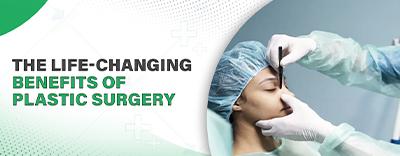
Plastic surgery goes beyond aesthetics—it can restore confidence, improve mental health, and enhance overall quality of life through cosmetic and reconstructive procedures.
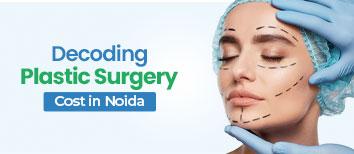
Plastic surgery cost in Noida depends on the procedure type, surgeon expertise, hospital infrastructure, and post-surgery care.


Subscribe to our
© Copyright 2026. All Rights Reserved by Felix Healthcare Private Limited
Design and development by :


 +(91)9667064100
 Emergency : +(91)9667064100