 Emergency:
  WhatsApp

Subscribe to our
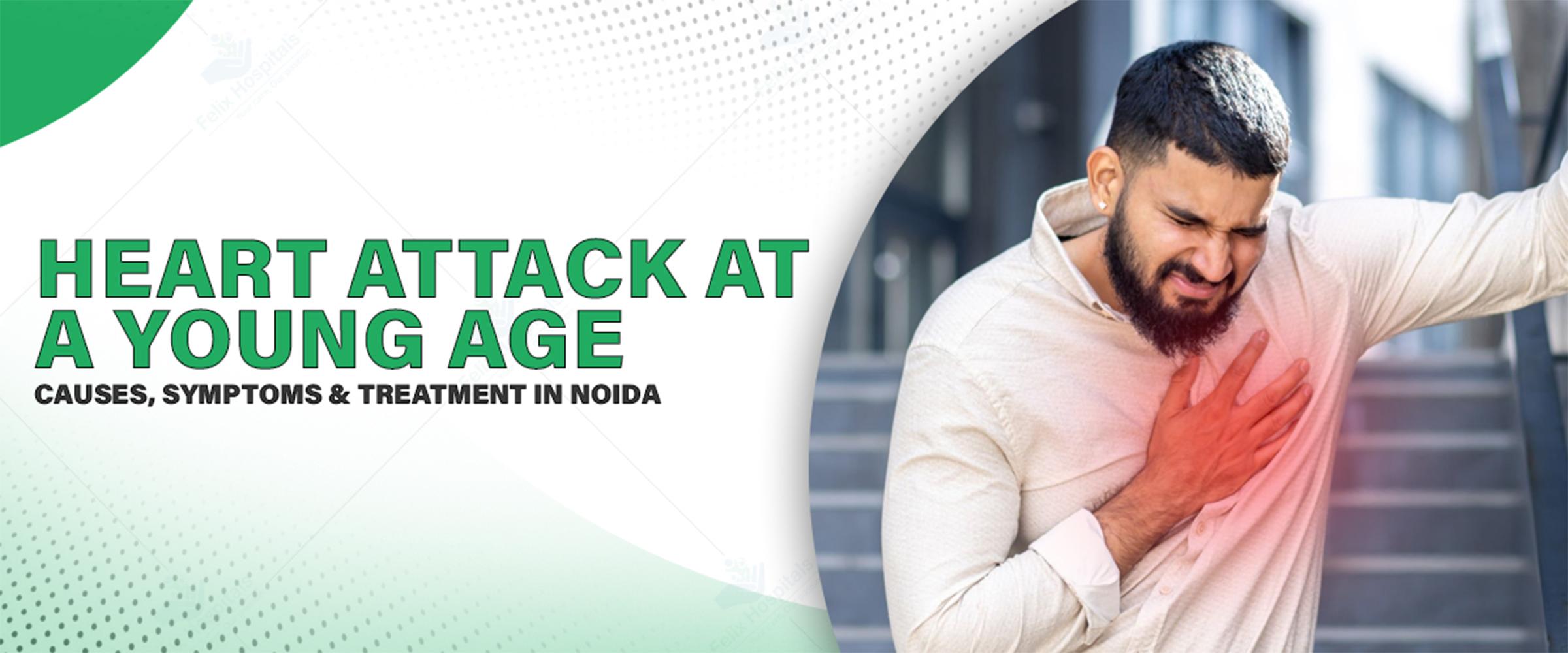
Many young adults are presenting themselves to the hospital with chest pain, assuming it's stress, only to find out they've had a heart attack in early life.
Those were times when heart attacks were only an "older person's problem." The truth now in Noida is very different, and more alarmingly, in an urgent manner. Emergency departments are seeing increasing numbers of people in their twenties and thirties with cardiac incidents, unthinkable a generation ago. The numbers are staggering - recent medical data reveal that nearly 25% of heart attacks among Indian men now occur before the age of 40, and women are on a similar, alarming trajectory.
This transformation is not an isolated phenomenon. It is directly linked to how we live, work, and deal with stress levels in the modern-day urban metropolises like Noida and Greater Noida. The synergistic interaction of high-stress occupations, processed food, sedentary lifestyles, and toxin exposures has created what cardiologists call a "perfect storm" for early cardiac events. If you experience strange chest pain, unexplained exhaustion, or shortness of breath, don't dismiss these symptoms as work stress. Testing at a heart attack treatment hospital Noida can be literally a lifesaver.
Don't dismiss chest pain or unexpected fatigue - these can be warning signs. Call emergency services immediately by calling +91 9667064100.
A heart attack, commonly known as myocardial infarction, is when blood to a portion of the heart muscle is cut off, most often by a clot within one of the coronary arteries. It's the reality that young adult heart attacks are likely to arrive with no warning signs that older patients have that makes them so alarming.
The new urban lifestyle in Noida and other big cities has greatly changed our risk factors for heart attack in early life. In contrast to earlier generations who spent decades accumulating cardiovascular disease, the young adults of today have a condensed timeline because of the additive effect of several stressors occurring at the same time. The additive effect of air pollution, work stress, sleep deprivation habits, and changes in dietary habits leads to vascular inflammation that may initiate cardiac events much earlier than anticipated.
Several situations affect younger individuals living in urban areas in various ways:
Chronic Stress: The pressure cooker work culture of Noida's corporate world results in continually high levels of cortisol, which over time, weaken the blood vessels
Unhealthy Dietary Practices: Packaged food dependence, high salt intake, and non-regular working professional dietary practices
Sedentary Behavior: Desk work and long commutes reduce physical activity to hazardous levels
Substance Abuse: Smoking, heavy alcohol use, and illicit drug use greatly elevate cardiac risk
Premature Atherosclerosis: Artery plaque formation that occurs much earlier due to lifestyle factors
Diabetes and Insulin Resistance: Rising exponentially in young adults due to dietary and lifestyle factors
Hypertension: Frequently undiagnosed since young individuals seldom check regularly for their blood pressure.
Young adults have special risk factors that the previous generations did not have:
Air Quality: Noida air pollution directly causes cardiovascular inflammation
Work Environment: Long working hours and low activity level with highly stressful jobs
Social pressures: Financial stress, relationship stress, and social media comparisons
Genetic Predisposition:
Family History: First-degree relatives with premature heart disease significantly raises risk
Genetic Disorders: Familial hypercholesterolemia or other genetic disorders of cardiovascular health

The presentation of heart attack in earlier years is a variation from the classical presentation in older individuals:
Chest pain or pressure: Can be described as squeezing, fullness, or burning as contrasted with sharp pain
Shortness of Breath: With or without pain in the chest, typically warranted as poor fitness
Upper Body Pain: Pain in arms, back, neck, jaw, or stomach
Nausea and Vomiting: particularly common in the female, mistaken for food poisoning
Extreme Fatigue: Sudden, unexpected weakness that will not be relieved by resting
Dizziness or Light-headedness: Lightheadedness, especially when exerting oneself
Cold Sweats: Unusual sweating not associated with temperature or exercise
Indigestion-type Pain: Typically due to acidity or gastric problems
Never rule out potential warning signs, especially if you are:
Repeating chest pain for more than a few minutes
Abrupt shortness of breath
Radiating pain to arm, neck, or jaw
Abrupt onset of severe fatigue plus other symptoms
Syncope or near-syncopal spells
Time is critical in a heart attack - every minute, more heart muscle is damaged.
Advanced treatment for heart attacks in Noida hospitals uses high-tech diagnostic machines that are made just for young patients:
Electrocardiogram (ECG): Finding electrical changes that show damage to the heart
Blood Tests: Find out what enzymes are released by the heart muscle after it is damaged.
Chest X-ray: Rules out other reasons for chest pain
Advanced Diagnostics: An echocardiogram uses ultrasound to check how well the heart is working and find problems.
Cardiac Catheterisation: Shows clear pictures of the coronary arteries
CT Angiography: A way to look for blockages in blood vessels without surgery
Noida's hospitals offer full cardiac care for young adults:
Medications that break up blood clots: Thrombolysis therapy to break up blood clots
Primary Angioplasty: Angioplasty done in an emergency to open up blocked arteries
Putting in stents: Putting in small mesh tubes to keep arteries open.
Long-term care: Medicines that lower cholesterol, lower blood pressure, and thin the blood
Cardiac Rehabilitation: Programs that help people change their lifestyles and exercise
Regular Monitoring: Regular monitoring to prevent the recurrence of cardiac events
To stop young heart attacks, change your whole way of life:
Changes to Your Diet:
Eat a Mediterranean-style diet that includes a lot of fruits, vegetables, whole grains, and healthy fats.
Cut down on added sugars, processed foods, and salt.
Eating healthy keeps your blood sugar levels stable.
Exercise:
Every week, try to get at least 150 minutes of moderate-intensity exercise.
Do both strength training and cardiovascular training.
If you don't move much, start slowly.
Stress Management:
Try yoga, meditation, or guided breathing exercises.
Keep a good balance between work and life and get enough sleep.
Get counselling if you have long-term stress or anxiety.
Call Felix Hospitals today to make an appointment for a cardiac assessment if you have risk factors or worrying symptoms.
Young adult cardiac attacks are come out public health problem that requires urgent concern and action. The good news is that most heart attacks in young people can be avoided by making changes to their lifestyles and finding out what puts them at risk ahead of time. Just because you live in Noida doesn't mean you have to accept a higher risk of heart disease.
If you carry risk factors or have more than one warning sign, do not wait to visit the best cardiologist in Noida. Lifestyle modification and early treatment prevent what would otherwise be an emergent life-threatening condition. Your future self will thank you that you are taking proactive steps.
Best Echocardiogram (heart ultrasound) Test in Noida Sector-77
Best Echocardiogram (heart ultrasound) Test in Noida Sector-135
Best Echocardiogram (heart ultrasound) Test in Delhi NCR, New Ashok Nagar
Best Echocardiogram (heart ultrasound) Test in Greater Noida, Jagat Farm
Q1. How young is a heart attack, and how often do they happen?
Ans: Heart attacks in people under 40-45 years are "young," and approximately 25% of heart attacks in Indian males are now happening under the age of 40. This trend is increasing at 2% per annum, which is more common among urban residents of cities like Noida.
Q2. What are the main causes of heart attacks in young adults living in Noida?
Ans: Key risk factors include chronic stress, unhealthy diet with processed food, sedentary, air pollution, smoking, and genetic susceptibility. Urban lifestyle determinants specific to Noida play an important role in young professionals' early cardiac events.
Q3. What are the diagnosis and treatment of heart attacks in young adults in Noida?
Ans: Diagnosis is done with ECG, cardiac enzymes blood work, and imaging studies to determine heart damage rapidly. Treatment is done with emergency interventions such as angioplasty, stenting, and drugs, 24/7 cardiac emergency services being provided by Noida hospitals.
Heart disease is a significant health concern for women, often presenting unique challenges. Understanding the causes, symptoms, and treatment options is essential for early detection and effective management.
Heart disease is a significant health concern for women, often presenting unique challenges. Understanding the causes, symptoms, and treatment options is essential for early detection and effective management.


Subscribe to our
© Copyright 2026. All Rights Reserved by Felix Healthcare Private Limited
Design and development by :


 +(91)9667064100
 Emergency : +(91)9667064100