 Emergency:
  WhatsApp

Subscribe to our
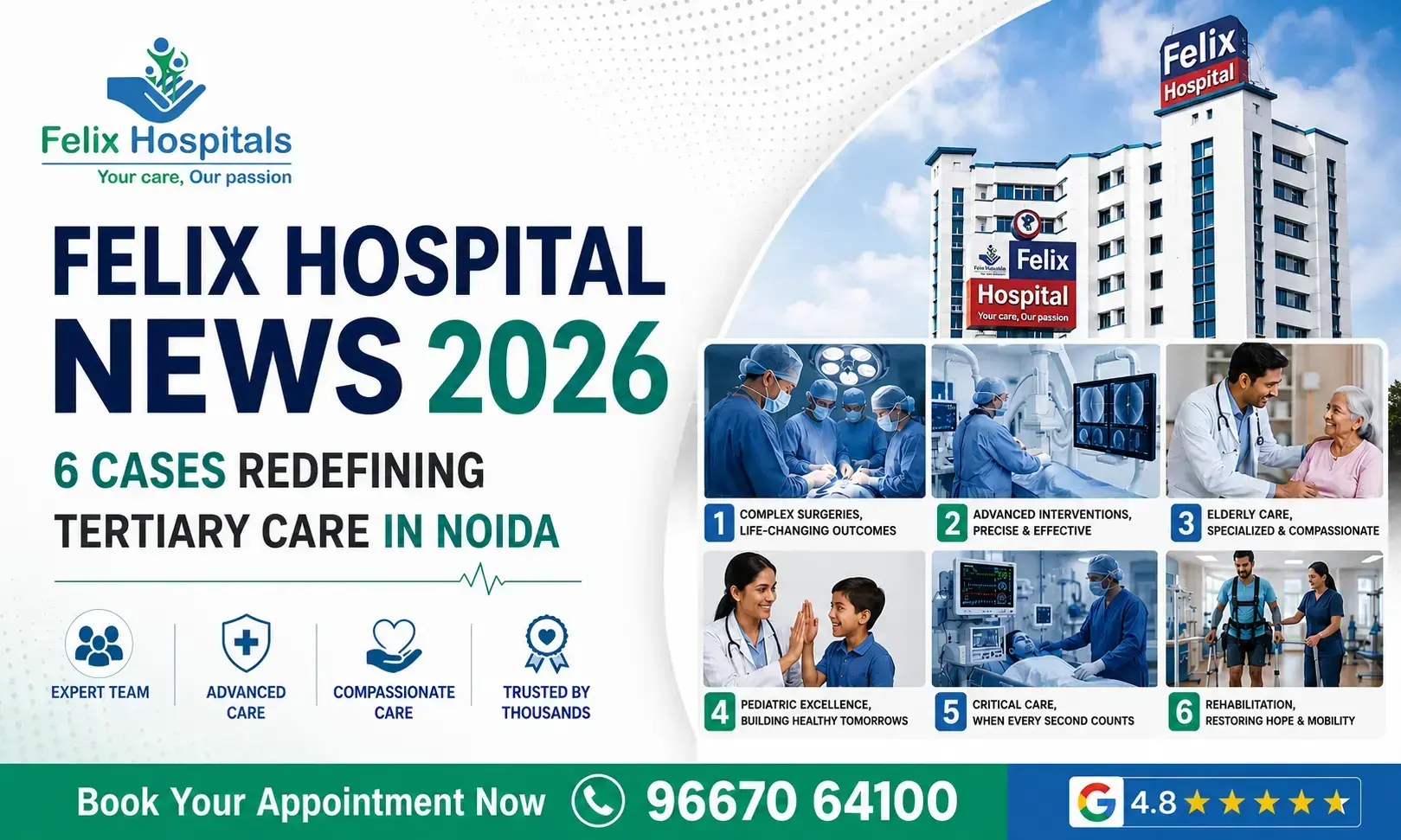
Quick Reference: Felix Hospital 2026 Clinical Cases
Case | Doctor | Specialty | Outcome |
Intestinal Bypass (Age 81) | Dr. Tabish | Gastroenterology | Scarless, no general anesthesia, discharged in 72 hrs |
High-Risk C-Section | Dr. Sangeeta Sharma | Obstetrics & Gynecology | Individualized plan, zero complications |
Bilateral TKR in HCV+ Patient | Dr. B.K. Shahu | Orthopedics | Single-sitting, full mobility in 24 hrs |
GCS 3 Coma + Multi-Organ Failure | Dr. Abhishek | Critical Care | Full neurological and organ recovery |
34-Week Preterm with Pneumonia | Dr. Avinash Kumar Jha | Neonatology | Respiratory rescue, infection-free at 2 months |
Idiopathic Intracranial Hypertension | Dr. Shishir Pandey | Neurology | Immediate vision restoration |
Patients in Delhi-NCR have shifted how they choose hospitals. Proximity no longer wins — documented outcomes do. What has emerged from Felix Hospital latest news this year is a pattern: cases referred as unmanageable at other centres are being reviewed, accepted, and resolved here.
Six cases from 2026 illustrate this pattern concretely. Each is physician-led, patient-consented, and documented with measurable outcomes.
Specialist: Dr. Tabish, Consultant Gastroenterologist
Yadram, 81, arrived at Felix Hospital Noida with a complete large intestinal blockage. Two other hospitals had already ruled out surgery — his physiological reserve was too low for general anesthesia. Six months of progressive digestive failure had left him severely distended and functionally unable to eat.
Dr. Tabish performed an Endoscopic Ultrasound-Guided (EUS) bypass under monitored sedation. The procedure creates an internal detour around the obstruction using precision stents, guided by real-time ultrasound imaging — no incision, no external scar, no general anesthesia required.
Yadram's digestive function was fully restored. He was discharged within 72 hours.
This case has spread widely through senior citizen and caregiver networks in Noida — which is why it became Felix Hospital viral news not through advertising, but through families sharing what they witnessed. It represents a documented clinical first for geriatric non-surgical intervention in the region.
Published with written patient consent.
Specialist: Dr. Sangeeta Sharma, Senior Consultant — Obstetrics & Gynecology
Payal, a first-time mother, had already consulted two facilities before arriving at Felix Hospital Noida. Her concern was not purely medical — she felt dismissed, unheard, and unprepared. That experience is more common than it should be, and it is a clinical problem, not just a service one. Anxiety in first-time mothers directly affects delivery outcomes.
Dr. Sangeeta Sharma implemented what the department calls a deep consultation model: 20 to 25 minutes per visit, with every maternal concern addressed systematically. When a C-section was determined to be the safest pathway, Payal was fully informed and prepared for it — not surprised by it.
Post-delivery, Dr. Bhavna from Paediatrics provided breastfeeding guidance and neonatal hygiene counselling, completing a handoff that is built into the protocol rather than left to chance.
This 360-degree continuity is what distinguishes Felix Hospital Noida news on maternity outcomes from standard birth announcements. The outcome is measured not just in a healthy delivery but in a mother who leaves prepared.
Specialist: Dr. F.K. Shah, Director — Orthopedics & Joint Replacement
Bala Devi presented with Grade IV bilateral arthritis — both knees were at end-stage degeneration — and she was HCV-positive. Most surgical teams decline this combination. The blood-borne pathogen status requires strict universal infection-control precautions throughout the procedure, and bilateral replacement in a single sitting adds anaesthetic complexity.
Dr. F.K. Shah performed the single-sitting bilateral Total Knee Replacement with full infection-control protocols active throughout. By replacing both knees in one session, overall anaesthetic exposure was halved compared to staged procedures.
Bala Devi was mobilised within 24 hours. Her husband, Ramveer Singh, noted that the nursing team's responsiveness throughout recovery matched the surgical outcome — a detail that keeps appearing in Felix Hospital latest news from the orthopaedics department.
Published with written patient consent.
Specialist: Dr. Abhishek, Critical Care & Anaesthesia Specialist
Surajmal was transferred from Saharanpur in a state of complete unresponsiveness. GCS 3 — the lowest measurable score on the Glasgow Coma Scale — means no eye opening, no verbal response, no motor response. Simultaneously, he was in acute liver and kidney failure, had active hematuria, and was in hypertensive crisis.
The critical care team's response was immediate and layered. Intubation and mechanical ventilation stabilised the airway. HRCT and CT Urography mapped the internal damage. A targeted antibiotic regimen addressed the infective component driving multi-organ stress.
Surajmal regained consciousness. Organ function normalised. He was eventually discharged.
His nephew, Sandeep Kumar, stated that Felix Hospital took on a case that had already been declined elsewhere. That statement is the reason this case has become the most discussed entry in Felix Hospital news 2026 — not because it was announced, but because the family shared it in their own words.
Published with written patient consent.
Specialist: Dr. Avinash Kumar Jha, Consultant Paediatrician & Neonatologist
Baby of Lyra was born at 34 weeks with congenital pneumonia and presented with secondary apnea — a sudden, complete cessation of breathing — in the delivery room. The margin for error in a case like this is measured in seconds.
The infant was resuscitated in the OT, intubated immediately, and transferred to the Level III NICU. Dr. Avinash Kumar Jha administered Surfactant Therapy — a targeted intervention that prevents immature air sacs from collapsing in underdeveloped lungs — and initiated 24-hour monitoring.
After seven days in the NICU, the infant achieved full respiratory stability. At the two-month follow-up, she was infection-free and growing normally.
This case is regularly cited in Felix Hospital breaking news today discussions about neonatal infrastructure in Noida because it demonstrates what a properly equipped Level III NICU actually makes possible — outcomes that a Level II unit structurally cannot deliver.
Published with written patient consent.
Specialist: Dr. Shishir Pande, Consultant Neurologist
A 30-year-old woman arrived at Felix Hospital with chronic severe headaches and progressive blurring of vision in her right eye. MRI and MR Venogram (MRV) imaging revealed tortuous optic nerves — a direct consequence of elevated cerebrospinal fluid pressure consistent with Idiopathic Intracranial Hypertension, also known as Pseudotumor Cerebri.
The condition is underdiagnosed because its presentation mimics migraines and its danger — permanent vision loss — is not always appreciated until significant damage has occurred.
Dr. Shishir Pande performed a therapeutic lumbar puncture with manometry, safely draining the excess CSF and relieving the pressure on the optic nerves. The patient's vision improved immediately following the procedure.
Speed of diagnosis and precision of intervention are the variables that determine outcome in IIH. This case reflects both — and it is one of the reasons Felix Hospital breaking news from the neurology department continues to draw referrals from across NCR.
Published with written patient consent.
None of these six outcomes are coincidental. Each required infrastructure that most hospitals in the region do not have: a Level III NICU, a Level III endoscopy suite with ultrasound integration, a critical care unit that accepts GCS 3 admissions, an orthopedic theatre equipped for bio-hazard protocols, and neurology diagnostics with MRV capability.
More than equipment, each case required a physician willing to take on complexity that other centres declined. That pattern — accepting the difficult case, building a plan around the individual patient, and delivering a documented outcome — is what Felix Hospital Noida news in 2026 consistently shows.
Felix Hospital latest news in 2026 covers six documented clinical outcomes: a scarless intestinal bypass in an 81-year-old, a GCS 3 coma reversal with multi-organ failure, bilateral knee replacement in an HCV-positive patient, a premature infant respiratory rescue, vision restoration in an IIH case, and a high-risk maternity delivery with full post-natal support. Each case is physician-led and patient-consented.
The case that has spread most organically as Felix Hospital viral news is Surajmal's recovery from a GCS 3 coma with simultaneous multi-organ failure. Families share it because it challenges what most people believe is survivable. The recovery was documented and the family spoke about it publicly — that combination drives genuine word-of-mouth.
Felix Hospital Noida news from 2026 documents Dr. Tabish's EUS-guided intestinal bypass on 81-year-old Yadram — no general anesthesia, no incision, discharged within 72 hours. For families managing surgical decisions for elderly relatives, this case directly addresses what was previously considered an impossible combination of age and procedural need.
Felix Hospital breaking news today from the ICU reflects a unit that accepts cases other hospitals classify as unsurvivable. The protocol under Dr. Abhishek combines rapid airway management, HRCT diagnostics, targeted antibiotic stewardship, and multi-specialist coordination — applied specifically to multi-organ failure and deep coma presentations.
Felix Hospital news 2026 documents Dr. F.K. Shah's single-sitting bilateral TKR in an HCV-positive patient — a case most teams decline. The outcome: full mobility restored in 24 hours, no infection, no staged procedure required.
Felix Hospital breaking news from neurology focuses on Idiopathic Intracranial Hypertension — elevated CSF pressure causing vision loss. Dr. Shishir Pande's team uses MRI and MRV for precision diagnosis, followed by manometry-guided lumbar puncture. Immediate vision improvement post-procedure is the documented outcome in the 2026 case.
Felix Hospital latest news from neonatology documents a 34-week premature infant with congenital pneumonia, resuscitated in the OT and stabilised over seven days in the Level III NICU using surfactant therapy. At two months, the infant was infection-free and developmentally on track.
Felix Hospital news highlights maternity cases because the model here is structurally different. Dr. Sangeeta Sharma's consultations are longer by design, delivery plans are individualised, and post-natal paediatric handoff is built into the care protocol — not added on request.
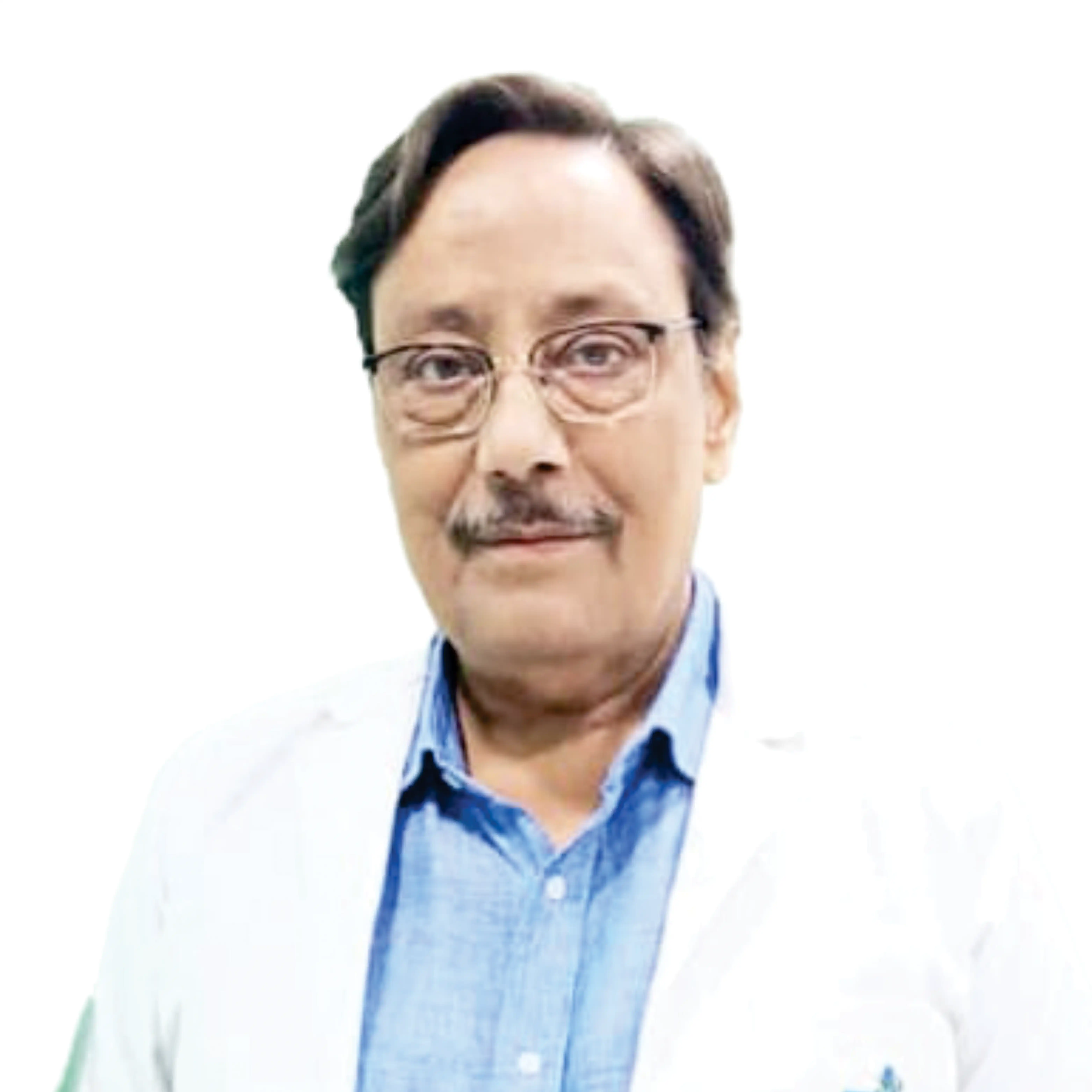
Dr. Ravi Sharma is a senior physician with 42+ years of experience, known for compassionate and comprehensive patient care in Noida.

Subscribe to our
© Copyright 2026. All Rights Reserved by Felix Healthcare Private Limited
Design and development by :


 +(91)9667064100
 Emergency : +(91)9667064100