 Emergency:
  WhatsApp

Subscribe to our
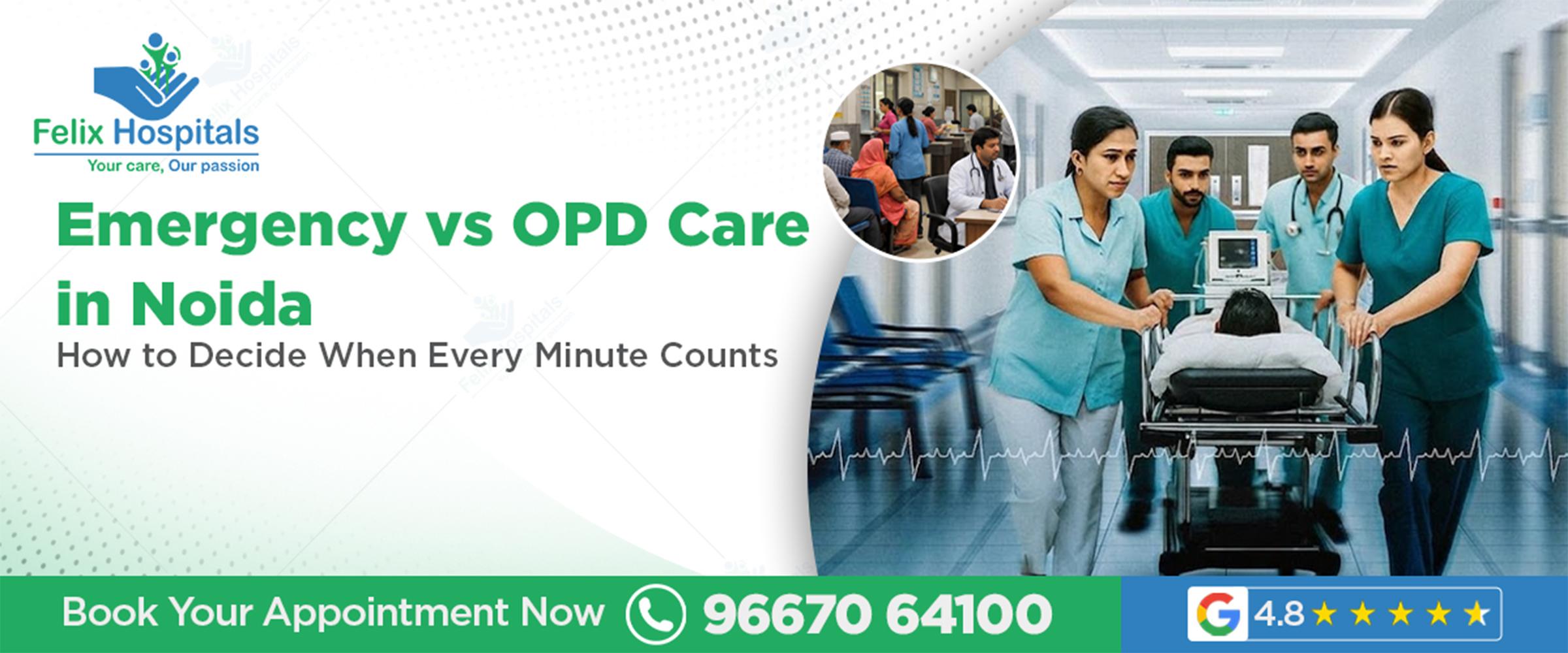
Knowing the difference between emergency vs OPD care will help with quick and safe healthcare decision-making when symptoms suddenly arise. Several patients are confused as to whether a medical problem can be entertained as a 'medical emergency' or whether it can wait for an appointment in the OPD. Selecting the correct medical service at the appropriate time can greatly influence the outcome of treatment and convalescence.
In congested city centers, hospitals often have a variety of services, including emergency and OPD. Get to know when to avail OPD services Noida hospitals and when you should head to the emergency department for a quick and appropriate medical attention.
Not sure whether your symptoms need urgent attention? Consult a doctor immediately to get the right guidance and treatment. Call +91 9667064100 for emergency doctor consultation in Noida.
Awareness of what constitutes an emergency vs OPD care allows patients to make an informed decision on where to seek treatment according to the severity of their symptoms. Emergency care treats conditions that are life threatening and require immediate medical attention, whereas routine health related matters and pre-planned meetings are covered by OPD services Noida.
The following are the main distinctions:
Emergency services are open 24 hours for urgent medical attention
OPD care consists of pre–scheduled consultations with experts
An emergency department treats a life-threatening injury or illness
OPD clinics conduct routine physical exams, follow-up visits, and treat minor illnesses
Critical care support and monitoring are also part of the emergency service
Round the clock 24-hour hospital services Noida found at hospitals are such that none of the doors of the emergency departments are ever closed to any patients.
Awareness of symptoms that need emergency care can enable people to receive timely care before their condition turns life-threatening. Emergency symptoms may arise suddenly and worsen quickly without treatment.
Signs of alert include:
Severe chest pain or pressure in the chest
Sudden breathing difficulty or shortness of breath
Uncontrolled bleeding, or deep wounds
Sudden weakness or numbness to one side of your body
Fainting or seizures
Severe head injuries or trauma
Prompt care at the hospital emergency services Noida may also enable the patient's condition to be stabilized and additional complications to be averted.
Knowing when to go to emergency vs OPD guides the patients on visiting the relevant healthcare system for their disease. Some medical problems call for immediate attention, and others can comfortably wait for a meeting.
When to visit emergency:
Sudden severe pain or injury
Difficulty breathing or choking
Heavy bleeding that won’t stop
An anaphylaxis
Stroke or heart attack symptoms
Mild fever/infections
General health check ups
Chronic diseases check up
Safe joint/muscle pain that the patient can wait for a day or two at home
Prescription refills
The correct decision enables them to be treated more quickly and by more appropriate medical personnel.
Knowing how to identify medical emergencies can enable families to act quickly when a major health problem arises. A number of emergencies arise suddenly and need prompt hospitalization.
Signs that are important include:
Sudden severe pain that rapidly intensifies
Trouble speaking, walking, or using your arms or legs
Constant vomiting or dehydration
High fever accompanied by confusion or seizures
Rapid identification of these symptoms enables the patient to come to the Noida hospital emergency services at the earliest.
Having the right healthcare facilities also matters while picking the services of the best hospital in Noida. Hospitals usually provide several amenities, such as outpatient department, emergency unit, diagnostic center and consulting by specialists.
Things to consider include:
Emergency facilities on site 24/7
Knowledgeable emergency care physicians available
Imaging and lab tests are among the diagnostic services
Specialists are available for follow-up care
Such hospitals that are equipped with emergency and OPD services, enables the patients to get complete care from a single roof.
Types of tests needed for an appropriate diagnosis play important role in hospital emergency services Noida where doctor has to make a quick judgement about a patient’s condition and start the treatment at the earliest. Emergency doctors conduct rapid assessments to stabilize patients and determine the cause of symptoms.
Test | Purpose |
Vital Signs Monitoring | Checks heart rate, blood pressure, and oxygen levels |
Blood Tests | Detects infections, organ problems, or electrolyte imbalance |
X-ray | Identifies fractures or lung problems |
CT Scan | Detects internal injuries or brain conditions |
ECG | Evaluates heart rhythm and detects heart attack signs |
These diagnostic procedures help emergency teams make quick and accurate treatment decisions.
Intervention strategies are different for emergency vs OPD care patients. Emergency departments are for acute stabilization, OPD services are for chronic disease management and primary care.
Rapid stabilization of breathing and circulation
Emergency medications or injections
Traumas and injuries management
Emergency surgery when required
Intensive monitoring in critical care units
Medical consultations and diagnosis
Medications for chronic conditions
Lifestyle and prevention advice
Referral for diagnostic tests
Review appointments for chronic diseases
Both these services co-ordinate to provide a holistic medical care to the patients.
Increasing knowledge of how to identify medical emergencies could also allow families to respond more quickly in an emergency situation. Early identification and intervention can make a significant difference in patient outcomes.
Prevention tips that may be helpful include:
Recognizing some of the common signals of heart attack and stroke
Make your emergency contact numbers easy to find
Aging, chronic conditions (such as diabetes, high blood pressure etc.) Not delaying when you have serious.
symptoms
Getting regular medical checkups to catch health problems early
Preparedness reduces risk and enhances response in an emergency.
If you are unsure whether your symptoms require urgent attention or a routine consultation, seeking professional guidance is the safest option.
Consult experienced doctors for emergency doctor consultation in Noida at hospitals offering 24-hour hospital services Noida. Call +91 9667064100 for immediate medical assistance.
The distinction between emergency vs OPD care enables recipients of healthcare to utilise appropriate services in situations of both medical urgency and non-urgent medical need. Although the OPD is for routine checkups and follow-ups, the emergency service is to deal with breath-taking situations where life-threatening injuries are attended to first.
Better awareness of these services and the early detection of alarm symptoms can prevent patients from treatment delay. When people use the correct healthcare service at the correct time, they get diagnosed sooner, treated better and end up healthier.
Yes, but emergency rooms are intended for the emergent care of medical conditions. For mild symptoms such as low grade fever or cold, it is more appropriate to attend OPD services Noida as it is less time consuming.
Almost all hospitals provide OPD services Noida during working days in the specific hours, however, some big hospitals provide the service on an extended OPD hours as well.
Patients should bring identification, their medical history, and a list of current medications if possible. But in a life-and-death situation, treatment comes before paperwork.
Yes, emergency departments serve patients of all ages—including children and elderly adults. Physicians are specifically trained to handle various medical emergencies according to the age and health status.
Emergency consultation is based on severity. Emergencies patients are dealt with immediately while non-emergency ones might have to wait a while as it depend on the flow on the hospital.
Get immediate, expert care for your child at the best pediatric emergency centers in Noida. Available 24/7, these facilities offer advanced treatment, experienced pediatricians, and specialized care for urgent child health issues.
Accidental and Emergency Services in Noida provide 24/7 urgent medical care, advanced trauma management, and rapid response to save lives when every second counts.
Noida mein cardiac emergency ke liye turant, vishwasniya aur expert care—aapke dil ki suraksha hamari zimmedari.
Diabetic coma is a life-threatening complication of diabetes that requires immediate medical attention. Learn about its early symptoms, causes, and emergency treatment options available in Noida to prevent serious health risks.


Subscribe to our
© Copyright 2026. All Rights Reserved by Felix Healthcare Private Limited
Design and development by :


 +(91)9667064100
 Emergency : +(91)9667064100