 Emergency:
  WhatsApp

Subscribe to our
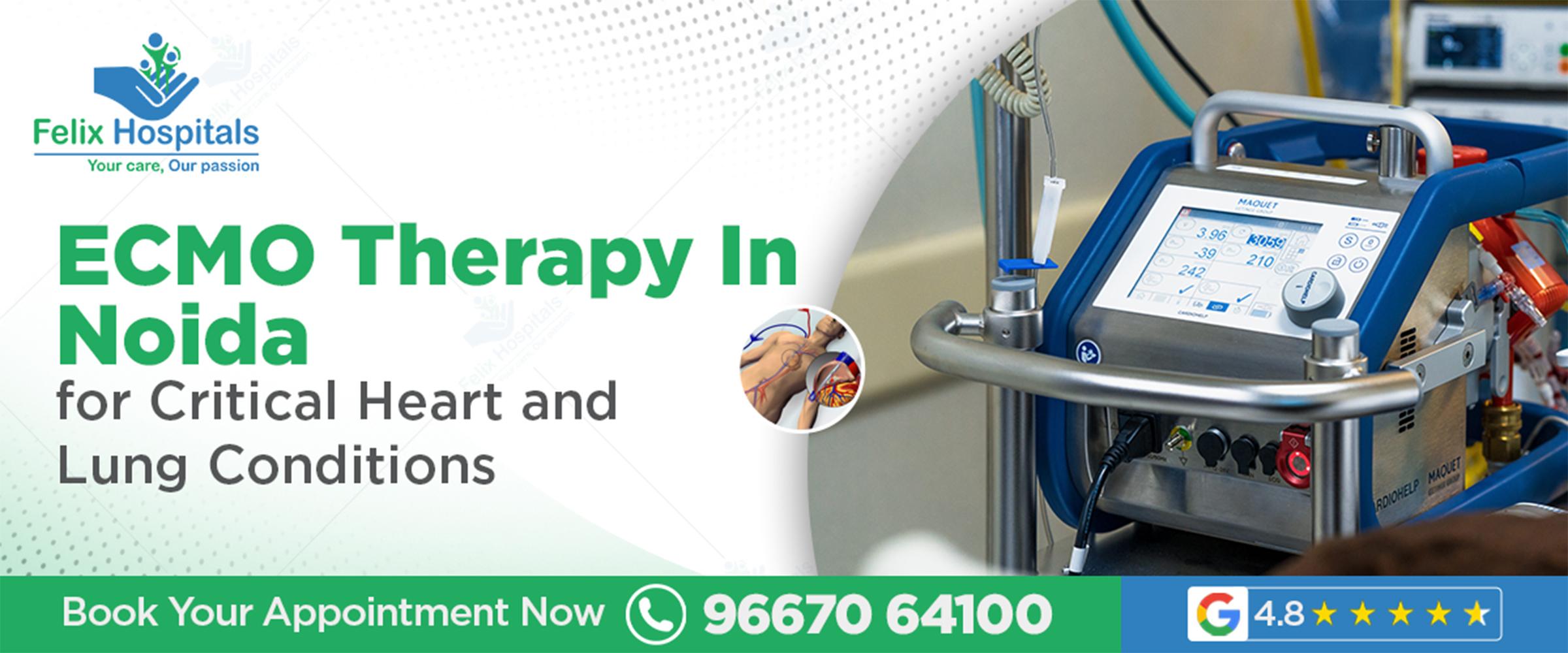
For situations in which the heart or the lungs is not in a position to function effectively with the current medical assistance, the therapy known as ECMO therapy (Extracorporeal Membrane Oxygenation) can be the lifesaving measure. This highly advanced therapy essentially replaces the functioning of the heart and the lungs temporarily so that the organs rest and recover. In extreme situations like pneumonia, cardiac arrest, or acute respiratory distress syndrome (ARDS), the ECMO offers the necessary assistance where the conventional therapies cease to be effective.
For the people and the families who require sophisticated cardiac or respiratory therapy, the treatment offered at the [best cardiology hospital in Noida] offers them a second chance at survival and recovery.
Your health is worth the best treatment—don't wait until it's too late. Call +91 9667064100 today to consult with an experienced specialist.
ECMO stands for Extracorporeal Membrane Oxygenation — the process where the blood is pumped out of the body to a machine that removes carbon dioxide and adds oxygen before it's returned. It's basically the implementation of an artificial lung and heart for severely compromised organs in the body.
It is commonly applied in intensive care units (ICUs) during the management of:
Severe cardiac failure
Respiratory failure resulting from injury or infection
Cardiac arrest
After-cardiac surgery complications
Severe respiratory infections like COVID-19 or the flu
ECMO uses the pump, the oxygenator, and the network of tubing to circulate the blood. This is how it functions:
Blood Extraction: Blood is withdrawn from a large vein using specialized cannulas.
Oxygenation: The carbon dioxide is stripped out of the ECMO circuit and the oxygen is delivered with an artificial lung.
Reinfusion: The enriched red blood is re-infused back into the patient's body, so the lungs and the heart rest and recover.
There are also two broad types of ECMO procedures that depend on which organ system is in need:
Applied in the event of severe cardiac and pulmonary failure. The device aids the cardiac and respiratory organs by providing the arteries with oxygenated blood.
Used primarily for lung failure, this type helps oxygenate the blood without taking over the heart’s function.
All the below mentioned types are judiciously chosen based on the status of the patient and the recommendation of the highest cardiology expert in Noida or critical care expert.
ECMO is also retained in reserve in cases where the conventional therapy or ventilation with medication becomes fruitless. A few of the conditions which may call for the use of ECMO include:
Severe pneumonia or ARDS
Heart failure after severe heart attack
Sepsis with multi-organ dysfunction
Congenital defects in the infant's heart
Lung transplantation preparation or recovery time
ECMO is life-saving and has many positive impacts including:
Giving the lungs and heart a rest: The machine assumes their workload and relieves stressed tissues.
Enhanced delivery of oxygen: Provides the target organs with oxygenated blood that continues.
Bridge to recovery or transplantation: Supports patients who undergo transplantation of the heart or lungs.
Better survival: Especially in the young or previously healthy patient with potentially reversible disease.
Just like any other sophisticated medical treatment, ECMO therapy also involves some risk potential which should be closely followed. They can be:
Bleeding or clotting disorders
Site infections at the cannula site
Kidney injury
Stroke or neurological complications
Mechanical malfunction of the ECMO circuit
Yet with constant surveillance by critical care specialists and appropriate intervention, such risks may be kept to a minimum.
Procedure for ECMO is done in the ICU in sterile environment:
The sedated patient is also attached to the ECMO machine through tubes that go deep into major arteries or veins.
It is activated in the oxygenator and significantly raises oxygenation within seconds.
The care team also closely watches oxygen, carbon dioxide, blood pressure, and heart rate.
Length of ECMO may be anything between several weeks to several days depending upon the response of the patient.
When the lungs and the heart begin to recover, the doctors then transition the ECMO support gradually.
Outcome following ECMO is condition-specific. The majority of the patients develop muscle wasting or weakness and rehabilitation therapy is thus recommended. The following may be embarked on in the follow-up:
Cardiac and pulmonary function tests
Physiotherapy and respiratory exercises
Nutritional guidance
Emotional and psychological counseling
Proper post-ECMO care significantly enhances long-term recovery and quality of life.
Patients with severe respiratory distress, long-term dependence on oxygen supplementation, or deterioration in cardiac function should be expediently referred to a critical care or cardiac specialist in Noida with expertise in the management of ECMO. Timely treatment reduces mortality and complications.
Get in touch with us at +91 9667064100 for professional consultation and ECMO assistance.
ECMO therapy is one of the most sophisticated modes of life support in existence today. In critically ill individuals with compromised cardiac or pulmonary function, it offers a valuable time frame for recovery when all other therapy has failed.
Under the care of highly qualified doctors and with modern infrastructure, ECMO treatment provides hope and long-term survival even in the most critical cases. Knowing its role, course of treatment, and results helps the families make knowledgeable choices during medical crises.
Q.1. How long can the patient be supported?
Ans. Time course varies with disease. Support for several days may be called for in some patients and weeks of support until return of organs in others.
Q. 2. Is ECMO painful?
Ans. No, the sedated or anaesthetized ECMO patients do not notice the pain in the process.
Q. 3. Does ECMO cure the heart or lung failure?
Ans. ECMO is not addressing the disease; it provides short-term support in such a way that the organs may recover or bridge the transplant or recovery.
Q. 4. What candidates exist for ECMO therapy?
Ans. Patients with severe but reversible cardiopulmonary disease or those listed for transplant are generally candidates for ECMO.
Q. 5. What is the Success Rate of ECMO?
Ans. Outcome depends on age and condition at the time of treatment and admission but with appropriate veterinary treatment most cases recover.
Q. 6. What about long-term side effects?
Ans. Some develop fatigue or weakness in muscles, but the majority return to full function with rehabilitation.
Q. 7. Can ECMO be used for COVID-19 patients?
Ans. Indeed, ECMO was successful in the severe cases of COVID-19 with respiratory failure where conventional ventilators failed
The primary goal of the Treadmill Stress Test is to evaluate how well the heart responds to increased physical activity
A stent procedure can be life-saving for those with blocked arteries. This guide walks you through the stent experience—from the angioplasty process to post-procedure recovery and lifestyle changes.
A pulmonologist plays a crucial role in helping patients dealing with serious or chronic breathing difficulties.
MRI (Magnetic Resonance Imaging) is an advanced diagnostic test used to detect problems related to the brain, spine, joints, and internal organs.

Subscribe to our
© Copyright 2026. All Rights Reserved by Felix Healthcare Private Limited
Design and development by :


 +(91)9667064100
 Emergency : +(91)9667064100