 Emergency:
  WhatsApp

Subscribe to our
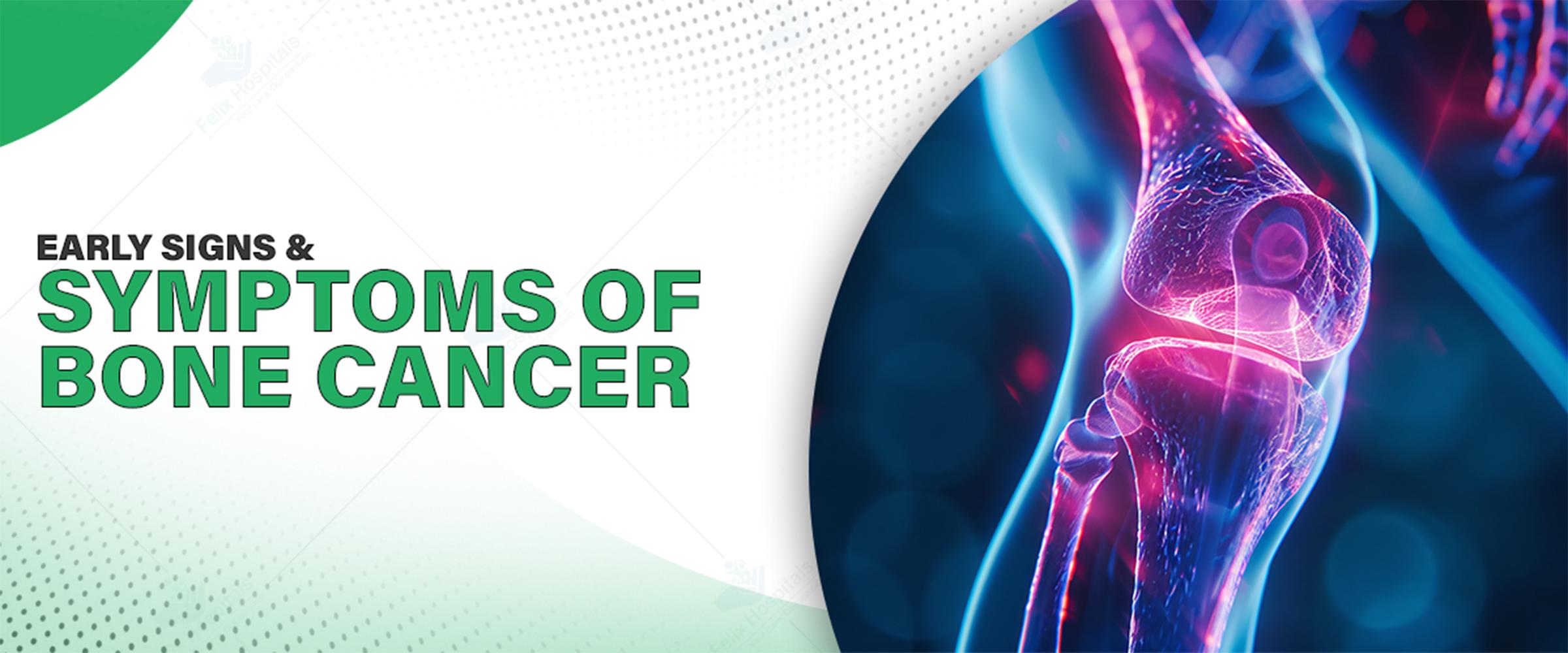
While bone cancer is uncommon, it is a severe disease that requires early diagnosis and treatment. Bone cancers are several distinct types that occur in your bones, and they vary in aggressiveness. Primary bone cancers that originate in your bone usually strike children, teens, and young adults. On the other hand, cancers from other organs—such as the breast, prostate, or lungs—move to the bones, referred to as secondary or metastatic bone cancer.
Bone cancer may involve several areas of the skeleton, particularly the long bones of the arms and legs. Surgery, radiation, and chemotherapy are some of the common treatments, depending on the stage and type. The symptoms in some instances may be similar to other prevalent diseases such as arthritis or sports injuries, which may give a false sense of security and delay diagnosis. This is why receiving treatment at the best oncology hospital in Noida can significantly impact early detection and successful treatment.
Seek the services of the top oncology hospital in Noida for prompt evaluation and specialized treatment. Call us today at +91 9667064100.
Bone cancer is a term that describes a set of cancers that begin in bone tissue. When cancer grows in a bone, it distorts normal bone shape and function. Although bone cancers may begin in any bone, they occur most often in large long bones like the thigh bone (femur), shin bone (tibia), or upper arm bone (humerus).
Cancers that develop in bone are referred to as primary bone cancers (or bone sarcomas). Other cancers—in the breast, prostate, or lung—may extend to bone; these are bony metastases. Primary bone cancers differ from metastatic bone cancers, which develop elsewhere but penetrate the bone at a later stage in their development.
Bone cancers are dangerous but not necessarily deadly—early diagnosis and treatment provide the best results.
Bone cancers are classified according to the cells from which they originate. Although still uncommon, knowledge of the distinctions facilitates informed decision-making regarding treatment:
Arises in bone-building cells and is the most common among teens. Frequently presents in adolescents when bone formation is active. Found frequently in long bones such as thigh and shin bones.
May affect bones or adjacent soft tissues. Affects mostly children and young adults, particularly during growth spurts. Tumors may appear in the pelvis, femur, or ribs.
Arises in cartilage-forming cells. More common in adults and frequently occurs in bones of the pelvis and shoulders.
Usually located at the base of the spine or skull. Although slow-growing, it is difficult to treat because of the delicate location.
Occurs in fibrous connective tissue near bones. It occurs in adults and can penetrate deep tissue if not caught early.
Usually benign but sometimes becomes cancerous. Adults may also encounter these tumors near their joints.
Undifferentiated Pleomorphic Sarcoma is a rapidly expanding tumor that can form in either bone or soft tissue, frequently affecting middle-aged and older adults.
Primary bone cancers occur in fewer than 1% of all cancers.
They're diagnosed more often in children, teenagers, and young adults.
Benign bone tumors such as osteochondromas and bone cysts are much more prevalent and usually benign.
Early diagnosis is rare because of non-specific symptoms that resemble common musculoskeletal conditions.
Even though bone cancer may initially mirror other common conditions like sports injuries or growing pain, rapid evaluation is essential. Consulting the best oncologist in Noida can help distinguish between benign and malignant causes quickly.
Persistent or worsening bone pain, especially at night or during activity
Swelling or a noticeable lump near a bone
Limited joint motion if the tumor is near a joint
Fatigue and spontaneous fevers
Persistent, unexplained weight loss
Patients often attribute these symptoms to be mere aches—missing early diagnosis.
Hereditary Genetic Syndromes: Also includes Li-Fraumeni syndrome and familial retinoblastoma
Previous Cancer Therapy: Previous exposure to radiation therapy or chemotherapy for other cancers
Benign Bone Disease: Such as rare conditions like Paget's disease, that raises long-term risk
Idiopathic Causes: Most instances occur with no detectable cause.
Precise diagnosis comprises several steps:
X‑rays to look for suspicious lesions or structural defects
MRI or CT scans for detailed pictures of bone and surrounding soft tissues
Bone scan or PET‑CT to determine whether cancer has infected other bones
Biopsy is the gold standard—surgical removal of tissue for microscopic examination to identify the cancer type
Enneking system: evaluates tumor grade and spread
AJCC staging: classifies cancer from Stage I (local) to Stage IV (metastasized)
These steps are crucial for deciding on the best treatment strategy.
The treatment plans are personalized based on the patient's diagnosis. Having the best oncology surgeon in Noida provides access to surgical finesse and wholistic care.
Limb-sparing methods are used whenever possible. Doctors can reconstruct the area with bone grafts or prosthetic implants.
Applied preoperatively to shrink tumors or postoperatively to kill leftover cancer cells. In certain situations, it can be a solitary treatment.
Most prevalent in osteosarcoma and Ewing sarcoma. Administered to shrink tumors before surgery and decrease recurrence risk after.
Multidisciplinary teams make optimal treatment timing and tracking a certainty.
Pain typically decreases when treatment is initiated.
Limb-sparing surgery: Complete recovery and restoration of mobility can take a year.
Amputation with prosthesis: Rehabilitation can take up to six months.
Chemotherapy side effects (fatigue, nausea) can last for weeks to months.
Recovery depends upon cancer type, the combination of treatments, and overall health.
Early diagnosis and aggressive treatment can greatly improve outcomes:
Enables limb-sparing operations and minimizes amputations
Minimizes chance of metastasis and life-threatening complications
Better functionality and quality of life over the long haul
Eases the emotional and physical burden accompanying advanced disease
Choosing timely care often determines whether a disease is manageable or leads to severe complications. Make an appointment for a checkup today.
Bone cancer may not be all that common; however, its impact on a person's life can be phenomenal if it is not caught early. From bone pain that is constant to swelling or tiredness that is inexplicable, the symptoms may be insidious initially but will escalate over time. Early diagnosis provides the greatest opportunity for successful treatment, and most individuals can go on to live normal lives after recovery with the right treatment.
Due to improvements in medicine, limb-sparing surgeries, specific therapies, and specialized oncological treatment, bone cancer prognosis is increasing. Whether you're worried about a new symptom or dealing with an active diagnosis, it's taking action early that is the only way to control risks. You must consult a known healthcare provider who can walk you through proper diagnosis, customized treatment, and extended care at an affordable cost in Noida. The recovery journey starts with knowledge and the correct medical professionals. For the best possible care for you or your loved ones, entrust only the finest oncology hospital in Noida.
Q1. Is bone pain always due to bone cancer?
Ans: Not always—it can result from injury or arthritis. But recurring or increasing bone pain, particularly at night or even after rest, must be investigated.
Q2. Can bone cancer be successfully treated?
Ans: Yes—most bone cancers can be treated or even cured with early treatment involving surgery, radiation, and chemotherapy.
Q3. How is bone cancer diagnosed?
Ans: Imaging studies (X-ray, MRI, CT) are employed in the diagnosis of bone cancer, after which a biopsy is done to identify the type and extent of cancer.
Q4. Are children more likely to get bone cancer than adults?
Ans: Yes—primary bone cancers such as osteosarcoma and Ewing sarcoma occur more frequently in children, adolescents, and young adults.
Q5. What are the long-term consequences of treatment?
Ans: They may restrict mobility or involve physical therapy. Rehabilitation and specialist care suit most patients well.
Bone fractures are common injuries from accidents or falls. While many heal well, complications can arise, affecting recovery. Learn more about these issues and treatments.
Advanced neurosurgery improves treatment for brain and spine disorders with better outcomes.
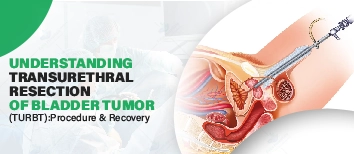
Bladder tumor (TURBT) is a serious condition that occurs when abnormal growths develop in the bladder, requiring transurethral resection to diagnose and treat effectively.

Subscribe to our
© Copyright 2026. All Rights Reserved by Felix Healthcare Private Limited
Design and development by :


 +(91)9667064100
 Emergency : +(91)9667064100