 Emergency:
  WhatsApp


Subscribe to our
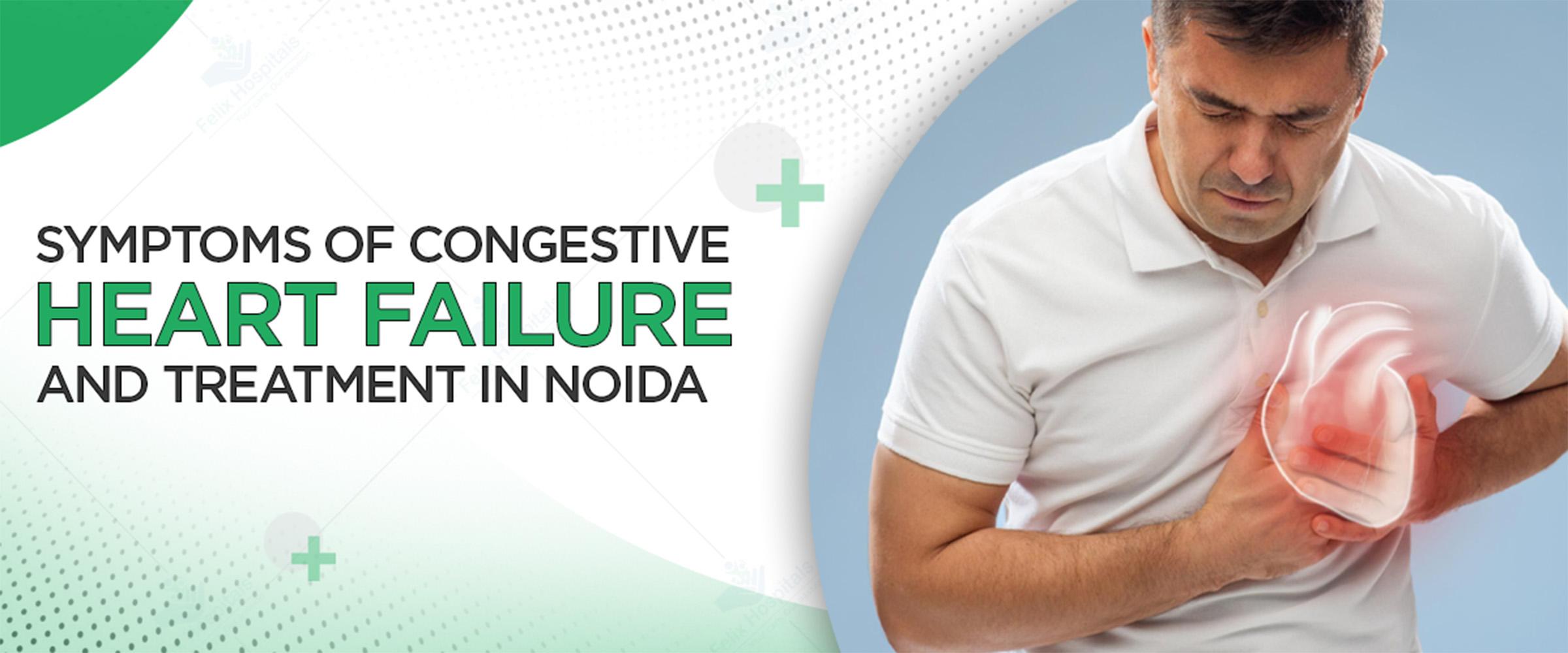
Heart failure is one of the serious medical conditions that require expert treatment and rapid intervention. To get the best congestive heart failure treatment in Noida, with outstanding cardiac care and treatment plans you should visit the best hospital for cardiac treatment. Having the priority of providing the best possible care to patients with heart failure and committed to achieving the best possible outcomes. The dedication to perfection in heart care and proficiency of some of the best cardiologist for congestive heart failure in Noida, India.
Early diagnosis saves lives. Contact our specialized heart care team for comprehensive congestive heart failure treatment in Noida at +91 9667064100.
CHF, also called heart failure, is the failure of the heart to pump enough blood to supply the body with its needs because the heart muscles have become weak or stiff. Although heart failure usually occurs on the left side, it may impinge on the pumping chambers of either side or both sides of the heart. This condition may occur gradually as a complication of other heart diseases without many early signs of congestive heart failure or may occur suddenly because of acute damage to the heart muscles.
Symptoms of congestive heart failure are:
Difficulty breathing
Fatigue
Swollen legs and feet
Abnormal heartbeats
Coughing with foamy or bloody sputum.
Incontinentia nocturnal.
Abdominal fluid builds up.
Unexpected weight gain
Nausea
Reduced hunger
Altered concentration
These are some of the warning signs of congestive heart failure which people should look out for.
Heart failure may be caused by:
Coronary artery disease (narrowing of the blood vessels in the heart)
High blood pressure
Congenital heart disease
Infections
The use of certain drugs (e.g., chemotherapy of cancer) over a long period.
Drug abuse
Genetic heart diseases
Arrhythmias (excessively slow or rapid heartbeats)
Diabetes
AIDS
Piling of iron or proteins in the body.
Alcohol consumption
Smoking
Obesity
Heart failure may have a number of types:
Left sided heart failure: Makes it hard to breathe.
Right-sided heart failure: It causes swelling, particularly in the legs.
Systolic heart failure: Difficulty in pumping blood.
Diastolic heart failure: Difficulties in filling the blood.
Healthcare providers use a complex assessment that involves physical examinations and other diagnostic tests to diagnose congestive heart failure:
Medical History and Physical Examination: Evaluate the symptoms, medical history, and risk factors. Monitoring the abnormal heart and lung sounds and swelling with a stethoscope.
Blood Tests: Diagnose heart-related conditions and determine specific proteins that are increased by heart failure.
Chest X-ray: This is to inspect the heart and lungs to determine whether they are enlarged and filled with fluid.
Electrocardiogram (ECG or EKG): Document the electrical activity of the heart to judge the rhythm and heart rate.
Echocardiogram: Visuals of the heart are made using sound waves, to determine size, structure and the flow pattern of the blood.
Ejection Fraction: Determine the percentage of blood expelled by a heart contraction, that is essential in the classification of heart failure.
Exercise Tests or Stress Tests: Checks the heart activity during physical activity or other times when it is impossible to exercise.
Cardiac CT Scan (CT Scan of the Heart): Scan that provides a detailed picture of the heart through X-rays that are cut across the heart.
Heart MRI Scan (Cardiac MRI): Prepare detailed images of the heart with the help of magnetic resonance imaging to evaluate structure and functioning.
Coronary Angiogram: A tube is inserted and dye is injected to see the arteries of the heart and also to identify obstruction of the heart.
Myocardial Biopsy: Small samples of heart muscle are removed and studied in case a particular heart muscle disease is suspected.
To describe the severity of heart failure, there is the technique of heart failure staging. Stages of congestive heart failure symptoms are:
Class I: No symptoms
Class II: The symptoms do not disrupt normal everyday activities and are associated with fatigue on exertion.
Class III: Symptoms disrupt everyday practices.
Class IV: The patient is characterized by severe symptoms such as shortness of breath even during rest.
Heart failure is not curable but when it is being managed, the treatment is aimed at both symptom relief and slowing down of the disease. The treatment depends on the type and stage of heart failure, underlying health conditions and patient needs. Congestive heart failure treatment options are :
Vasodilators: Expand the blood vessels to facilitate blood circulation and reduce blood pressure.
Diuretics: Decrease the retention of the fluid and decrease the workload of the heart.
Aldosterone inhibitors: Treat fluid retention and extend life.
ACE inhibitors or ARBs: Improve the work of the heart and extend the lifespan.
Digitalis glycosides: Enhance the contractions of the heart muscle.
Anticoagulants or antiplatelets (e.g., aspirin): Blood clots.
Beta-blockers: Enhance heart performance and prolong life -span.
Tranquilizers: Control anxiety and emotional issues of heart failure.
Coronary Bypass Surgery: Blocked arteries are replaced with an artery of another part of the body.
Surgery to correct Structural Heart Defects: Repair or replace defective valves.
Implantable cardioverter Defibrillators (ICDs): Control heartbeats.
Cardiac Resynchronization Therapy (CRT): Assist the chambers of the heart in pumping the blood.
Mechanical Circulatory Support (MCS): In order to enhance survival and quality of life, consider Ventricular Assist Devices (VADs).
Heart Transplant: It is performed to replace a failing heart with an organ donor heart.
Felix Hospital cardiac science centre has the latest state of the art technology that offers cardiac care programs to patients. We offer alternative therapies to end stage heart failure patients such as operation procedures such as pacemaker, ACD, CRT, Heart Hole surgeries (ASD, VSD, PDA), Paediatric Cardiac Surgery, Angioplasty/Angiography. We have state of the art Cath Labs, operation theatres and other heart care facilities in our hospitals.
Procedures used in the treatment of heart failure include:
ECMO
Heart Hole Surgery (ASD, VSD, PDA)
Angioplasty/Angiography
Cardiac Surgery
Paediatric Cardiac Surgery, Paediatric Cardiology.
Vascular Intervention and Surgeries.
Stroke Prevention Surgery
Heart Transplant
Left Ventricular Assist Dream (LVAD).
Felix Hospital centre of cardiac sciences, we are reputed to be giving excellent treatment to various heart problems. We also have the use of sophisticated diagnostic equipment to give accurate and accurate results.
Manage congestive heart failure effectively with the guidance of top heart specialists in Noida. Book your appointment today at +91 9667064100.
Congestive heart failure treatment in Noida is specialized and compassionate to their patients, who will deal with heart failure, and as such, our primary concern will be to provide the highest level of care to our patients and to treat them effectively, as we labor hard to ensure the well-being of everyone dealing with heart failure.
Q1: Is there a cure of congestive heart failure?
Ans: CHF is not curable and all the treatments can control the condition and enhance symptoms. Therapies include drugs, dietary and medical implants.
Q2: How does one treat congestive heart failure first line?
Ans: ACE inhibitors, ARBs, beta-blockers, and diuretics are normally used as the first-line drugs. These aid in enhancing the functioning of the heart and control of the symptoms.
Q3: Is heart failure diagnosed using ECG?
Ans: ECG may show signs of CHF, but other tests such as echocardiogram or stress test may also be required to make a conclusive diagnosis.
Q4: Is CHF a permanent illness?
Ans: Yes, CHF is a lifelong disease that typically has to be treated all your life. With proper treatment, a large number of patients can lead active lives.
Felix Hospital is the Best heart failure surgery hospital in Noida. Here, we understand the critical nature of heart health.
Heart failure in women often manifests with subtle symptoms, making it easy to overlook critical warning signs.


Subscribe to our
© Copyright 2026. All Rights Reserved by Felix Healthcare Private Limited
Design and development by :


 +(91)9667064100
 Emergency : +(91)9667064100