 Emergency:
  WhatsApp


Subscribe to our
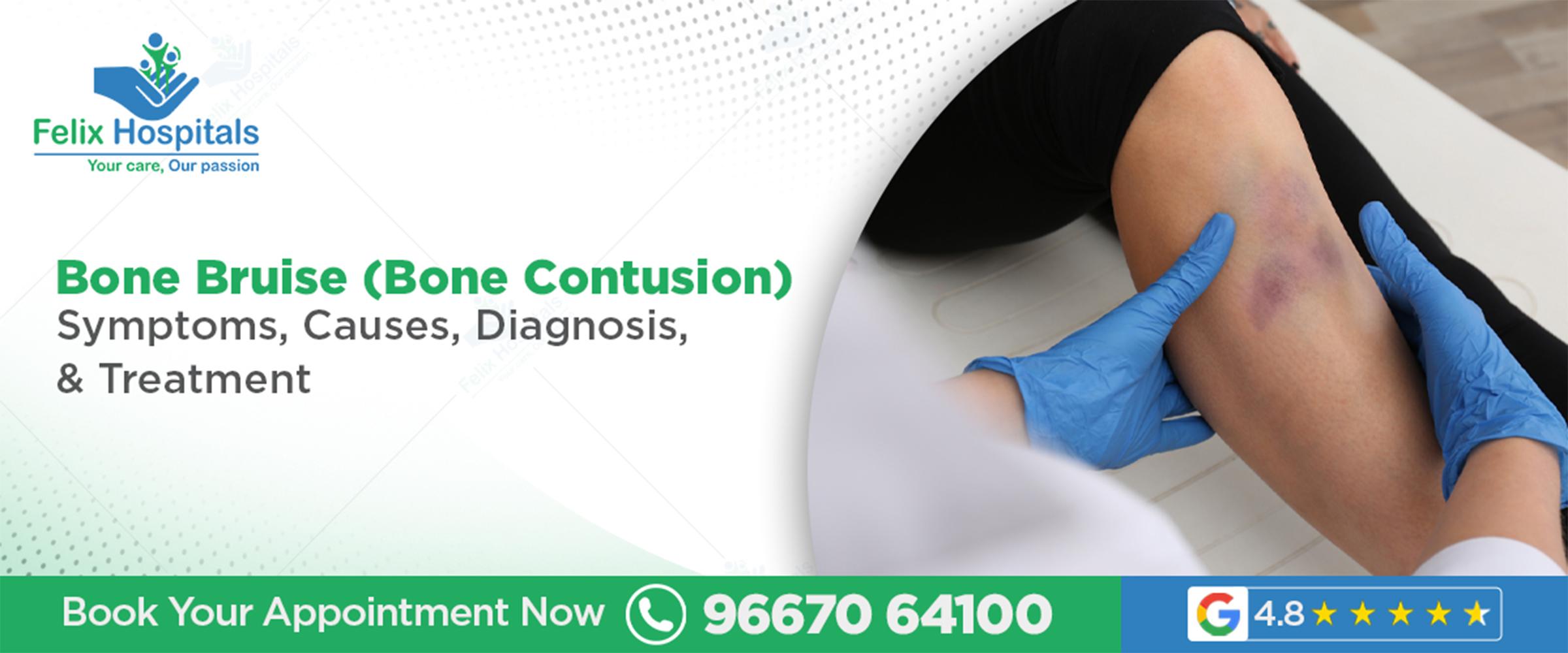
Fractures are often a sign of a serious bone injury, but not all serious bone injuries show a break. A bone bruise, also known as a bone contusion, is a painful condition that happens when the bone tissue is damaged but not completely broken. It is often missed. A lot of people go about their daily lives thinking they have a small injury, which can make their symptoms worse and slow down their recovery. Regular checkups with the best ortho doctor in Noida help make sure that your joints heal properly and don't have problems in the future. This guide explains the condition and includes medical information about symptoms, diagnosis, treatment, and recovery.
Start your recovery with expert orthopedic care and guided physiotherapy for safe and complete healing. Book your appointment today: +91 9667064100
Collagen and minerals make up bones, which are living tissues. They can get micro-damage when they are hit suddenly or put under stress over and over again. A lot of people want to know what a bone bruise is. After having pain that didn't go away even though the X-rays were normal. When small blood vessels inside a bone break, it causes bleeding and swelling in the bone tissue. This is called a bone bruise. The bone doesn't break all the way, but the inside gets hurt.
Muscle bruises are not as bad as bone bruises, and they usually take longer to heal. It often takes advanced imaging to figure out what the injury is because it is inside the body.
People often confuse bone bruises with sprains or small injuries. Some people may not notice the injury at first because the early symptoms are similar to muscle strain. But if you don't treat bone bruises, the pain can last longer and the healing process can take longer.
Bone bruises happen a lot in:
Knees
Ankles
Hips
Wrists
Shoulders
A lot of the time, these injuries happen in sports, falls, and car accidents. Research in sports medicine shows that almost 80% of ACL injuries have bone bruises. Research indicates that knee bone bruises rank among the most prevalent sports-related bone injuries. Getting enough rest and going through rehabilitation can greatly improve recovery outcomes and stop long-term joint damage.
Knowing what caused the injury can help you avoid getting hurt again. High-impact trauma or repeated stress on the bone can cause bone bruises.
Some common causes are:
Injuries and crashes in sports
Falls or accidents that happen quickly
Injuries from twisting
Too much use during hard workouts
Direct hits while doing something physical
People who are athletes or who are active are more likely to get hurt.
Many patients are unsure of the difference between a bone bruise and a fracture because the symptoms can be similar. Both injuries hurt and swell, but they are different in how bad they are and how they are treated.
Some of the most important differences are:
Bone bruise: Small damage that doesn't break
Fracture: A crack or break in a bone that can be seen
Bone bruise: X-rays don't always show it
Fracture: X-rays usually show it
Bone bruise: Rest and therapy will help it heal.
Fracture: May need surgery or casting
A correct diagnosis makes sure that the right treatment is given. Accurate diagnosis ensures proper treatment.
Noticing early signs can help keep problems from getting worse. The symptoms of a bone contusion may differ based on the site and intensity of the injury.
Some common signs are:
Pain that goes deep
Swelling around the hurt area
Pain when touched
Stiffness and less movement
Pain that gets worse when you move
A bone bruise usually hurts longer than a soft tissue injury.
A lot of patients ask, "Can a bone bruise be serious?" because symptoms can last for weeks. Most bone bruises heal without problems, but severe cases can make it hard to move and do daily tasks.
Some problems that could happen are:
Pain that lasts a long time
Stiff joints
Higher chance of breaking bones
Damage to cartilage
Getting treatment early can help stop problems from getting worse.
A correct diagnosis is necessary for a successful recovery. A lot of people need an MRI to find out if they have a bone bruise because X-rays can't see them.
Doctors might suggest:
A physical exam
X-ray to make sure there are no broken bones
MRI scan for detailed pictures
Check for movement and strength
The most accurate test for confirming bone bruises is an MRI.
Sports medicine research shows that bone bruises are present in nearly 80% of ACL injuries. Studies also reveal that knee bone bruises are among the most common sports-related bone injuries. Proper rest and rehabilitation significantly improve recovery outcomes and prevent long-term joint damage.
These findings highlight the importance of early diagnosis and guided treatment.
Patients often look for the best way to treat a bone bruise so they can heal quickly and safely. The goal of treatment is to ease pain, control swelling, and let the bone heal.
Standard medical care includes:
Rest and change of activity
Ice therapy to help with swelling
Elevation and compression
Painkillers
Physical therapy and getting better
The severity of the injury and the quality of care both play a role in recovery.
How long does it take for a bone bruise to heal? is one of the most common questions. The time it takes to heal depends on how bad the injury is and where it is.
Typical time frame for recovery:
Mild bruises: 3 to 6 weeks
Moderate bruises last for 6 to 12 weeks.
Severe bruises last for a few months.
Rest and rehabilitation make healing go faster.
A lot of people want to know how to treat a bone bruise at home so they can heal faster. Along with medical advice, home care is very important.
Advice for home care:
Don't do activities that put weight on your body
Use ice packs often
Raise the hurt limb
If your doctor says so, use supportive braces.
Do the exercises that have been given to you
Don't ignore pain that won't go away.
The knee is the joint that is most often hurt. After sports injuries, a lot of people look for treatment for bone bruises in the knee.
The treatment includes:
Not being able to put weight on it
Braces to support the knees
Exercises for physiotherapy
Slowly getting back to normal activities
Rehabilitation done right keeps joints from getting worse.
Physiotherapy helps you get your strength and range of motion back after the first healing phase.
Some of the benefits are:
Better movement of the joints
Made the muscles around it stronger
Lessened stiffness
Stopping the injury from happening again
Guided exercise is very important for getting better.
Athletes often get bruises on their bones. Careful rehabilitation is needed for sports injury bone bruises to avoid getting hurt again.
Tips for recovering from sports:
Follow exercise plans that are graded
Don't rush back to sports
Make the muscles that support you stronger
Keep doing the right warm-up exercises
Being patient is very important for a safe return to activity.
Getting medical care on time stops problems from getting worse. Going to Noida's Best Orthopaedic Hospital makes sure that you get the right diagnosis and the right treatment.
Early care is helpful:
Shorten the time it takes to heal
Keep joints from getting hurt
Make it easier to move
Stay away from long-term pain
Professional care makes recovery go better.
Seeing the best orthopaedic doctor in Noida makes sure that you get personalised care and a plan for your recovery.
A specialist can:
Confirm the diagnosis
Plan rehab programs
Keep an eye on how well the healing is going
Avoid problems
Expert care helps you get better faster.
It's just as important to stop injuries from happening in the future.
Ways to keep things from happening:
Get ready for exercise
Use the right sports gear
Make muscles and joints stronger
Keep your bones healthy and strong
Don't train too much
Good habits lower the risk of getting hurt.
Regular checkups with the best ortho doctor in Noida help make sure that your joints heal properly and don't have problems in the future.
Follow-up care is helpful:
Keep an eye on how well you're recovering
Find problems early
Help people safely get back to their normal activities
Regular checkups help with full recovery.
If you have bone pain, swelling, or limited movement that doesn't go away after an injury, don't ignore it. Early orthopaedic evaluation can stop problems from getting worse over time. Call now to set up your consultation: +91 9667064100
A bone bruise may not seem as bad as a fracture, but ignoring pain that doesn't go away can make healing take longer and make joint problems more likely. Early diagnosis, rest, physiotherapy, and guided rehabilitation are all very important for full recovery. Getting timely care at the Best Orthopaedic Hospital in Noida and seeing the best orthopaedic doctor in Noida will help you get the right diagnosis, heal faster, and protect your joints for a long time.
Limited walking may be allowed, but excessive weight-bearing can delay healing.
No, MRI is usually required for accurate diagnosis.
Severe untreated cases may increase the risk of joint problems.
Yes, physiotherapy helps restore strength and prevent stiffness.
If pain lasts more than a week after injury, medical evaluation is recommended.
Dr. Keshav Goel is a leading Orthopedic Surgeon with 10+ years of experience and 2000+ independent surgeries. He specializes in computer-assisted joint replacement and arthroscopic surgeries of the knee, shoulder, and hip. Recognized among the Best Orthopedics in Noida, his expertise includes complex trauma care, ACL reconstruction, meniscal injuries, pelvic fractures, frozen shoulder, and sports injuries, offering comprehensive bone and joint care.
Orthopedics is a specialized branch that takes care of your musculoskeletal problems related to joints, bones, muscles, spine, ligaments, and tissues.
Looking for the best orthopedic hospital in Noida for hip replacement surgery? Get expert care, advanced technology, and faster recovery from top orthopedic specialists—all under one roof.
Explore common orthopedic problems in senior citizens, their diagnosis, and advanced treatment options available in Noida for better mobility and healthy aging.


Subscribe to our
© Copyright 2026. All Rights Reserved by Felix Healthcare Private Limited
Design and development by :


 +(91)9667064100
 Emergency : +(91)9667064100