 Emergency:
  WhatsApp



Subscribe to our
Quick Answer
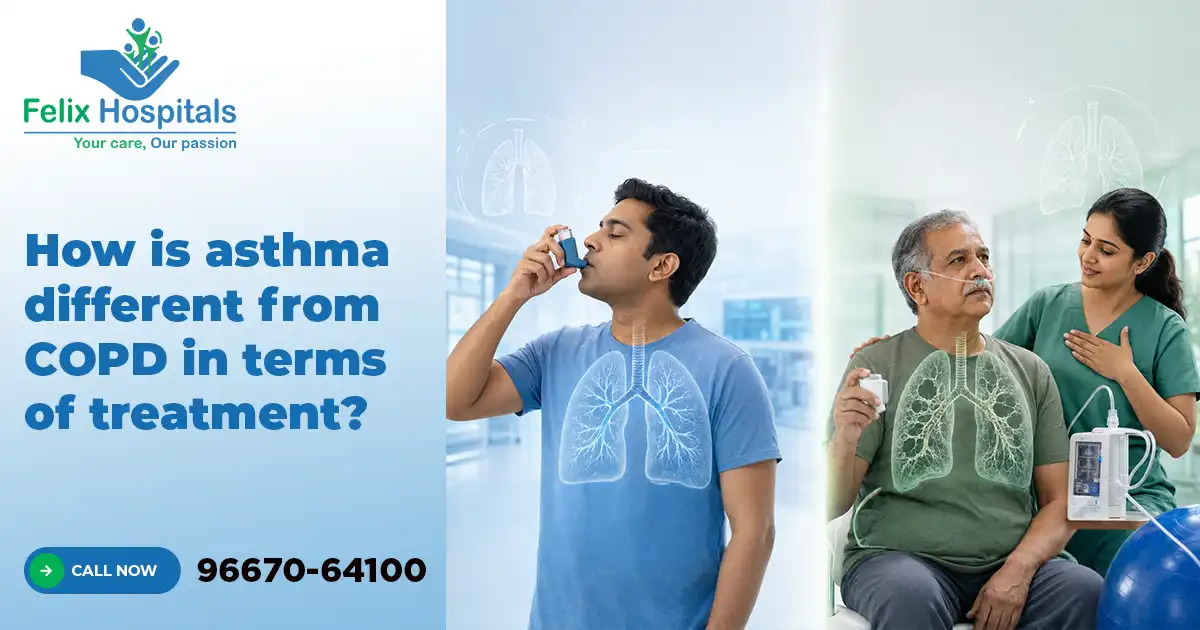
Breathing problems are becoming increasingly common due to factors like air pollution, allergies, smoking, and environmental changes. Two of the most common chronic respiratory conditions affecting millions of people worldwide are Asthma and Chronic Obstructive Pulmonary Disease (COPD).
Although both conditions affect the lungs and may cause similar symptoms like coughing, wheezing, and shortness of breath, they are different in terms of their causes, progression, and treatment approaches. Understanding the COPD and asthma difference helps patients receive the right diagnosis and appropriate care.
Asthma is a chronic respiratory condition in which the airways become inflamed, narrow, and sensitive to certain triggers. This inflammation makes it difficult for air to move in and out of the lungs, leading to breathing difficulties.
Asthma symptoms can often improve with proper treatment because airway narrowing is usually reversible. People of all ages can develop asthma, but it commonly begins during childhood.
Chronic Obstructive Pulmonary Disease (COPD) is a long-term progressive lung disease that causes permanent narrowing of the airways and damage to lung tissue. It mainly includes two conditions:
Unlike asthma, COPD-related lung damage is usually not completely reversible. However, proper treatment can help control symptoms, improve breathing, and slow disease progression.
Understanding the causes is an important part of knowing the COPD and asthma difference.
Asthma develops due to a combination of genetic and environmental factors.
Common causes and triggers include:
People with asthma usually have sensitive airways that react strongly to certain triggers.
COPD is mainly caused by long-term exposure to substances that damage the lungs.
Major causes include:
Unlike asthma, COPD usually develops gradually over many years.
Asthma and COPD symptoms can overlap, but their pattern and severity are different.
Common Symptoms of Asthma
Asthma symptoms may appear suddenly and vary from person to person.
Common symptoms include:
Asthma symptoms may improve between attacks, and many patients have normal breathing when symptoms are controlled.
COPD symptoms usually develop slowly and worsen over time.
Common symptoms include:
In advanced COPD, patients may experience difficulty breathing even during rest.
The main COPD and asthma difference lies in the nature of airway damage and how the lungs respond to treatment.
Feature | Asthma | COPD |
Nature of Disease | Inflammatory airway disease | Progressive lung disease |
Common Causes | Allergies, genetics, environmental triggers | Smoking, pollution, occupational exposure |
Age of Onset | Often begins in childhood or young adulthood | Usually develops after age 40 |
Airway Damage | Mostly reversible | Usually permanent |
Symptoms Pattern | Symptoms come and go | Symptoms gradually worsen |
Treatment Goal | Control inflammation and prevent attacks | Slow disease progression and improve breathing |
While both conditions require medical management, the treatment approach varies significantly.
Asthma treatment focuses on reducing airway inflammation, controlling symptoms, and preventing asthma attacks. Since asthma symptoms can often be reversed, many patients can achieve good control with proper treatment.
1. Inhaled Corticosteroids (ICS)
The most important long-term treatment for asthma is inhaled corticosteroids. These medicines reduce inflammation inside the airways and help prevent asthma flare-ups. Doctors may prescribe these medications regularly depending on asthma severity.
2. Bronchodilators for Quick Symptom Relief
Asthma patients may experience sudden breathing difficulty. Short-acting bronchodilators provide quick relief by relaxing airway muscles. These are commonly known as rescue inhalers.
3. Combination Inhalers
For moderate to severe asthma, doctors may recommend combination inhalers which help in maintaining long-term airway control.
4. Allergy Management
Since allergies are common asthma triggers, treatment may include:
Reducing exposure to dust mites, pollen, smoke, and pollution can significantly improve asthma control.
5. Biologic Therapy for Severe Asthma
Patients with severe asthma that does not respond well to standard treatments may benefit from biologic medicines.
These advanced therapies target specific immune pathways involved in asthma inflammation.
Unlike asthma, COPD causes long-term structural changes in the lungs. Treatment focuses on controlling symptoms, improving lung function, reducing exacerbations, and slowing disease progression.
1. Long-Acting Bronchodilators
The foundation of COPD treatment is long-acting bronchodilator therapy. These medications relax airway muscles and help patients breathe more easily. Many COPD patients require daily inhaler therapy.
2. Combination Inhalers
Patients with frequent COPD flare-ups may require combination inhalers. Triple inhaler therapy may reduce exacerbations in selected COPD patients.
3. Pulmonary Rehabilitation
A major difference between COPD and asthma treatment is the importance of pulmonary rehabilitation.
This includes:
Pulmonary rehabilitation improves exercise capacity and daily functioning.
4. Oxygen Therapy
Some patients with advanced COPD develop low oxygen levels.
Long-term oxygen therapy may be recommended to:
5. Smoking and Pollution Control
Stopping smoking is one of the most important steps in COPD management.
Patients should also avoid:
Lifestyle changes play a major role in slowing COPD progression.
A common question is:
"Are inhalers used for both asthma and COPD?"
Yes, inhalers are used for both conditions, but the purpose differs.
In Asthma:
In COPD:
Yes. Some people develop a condition known as Asthma-COPD Overlap (ACO).
Patients with ACO may have features of both diseases, such as:
Treatment usually combines approaches used for both asthma and COPD.
Regardless of the diagnosis, healthy habits support better lung health.
Quit Smoking
Smoking damages lung tissue and worsens respiratory symptoms.
Maintain Healthy Weight
Excess weight can increase breathing difficulty.
Exercise Regularly
Physical activity improves lung capacity and endurance.
Avoid Air Pollution
People with respiratory diseases should monitor pollution levels and reduce outdoor exposure during poor air quality.
Follow Vaccination Recommendations
Vaccines such as influenza and pneumonia vaccines may help reduce respiratory infections.
The key difference between COPD and asthma is that asthma is mainly an inflammatory and often reversible airway condition, whereas COPD is a progressive disease involving permanent lung changes.
Asthma treatment focuses on controlling inflammation, preventing attacks, and managing triggers. COPD treatment focuses on improving airflow, reducing symptoms, preventing flare-ups, and slowing disease progression.
Whether someone has COPD and asthma, accurate diagnosis and personalized treatment from a qualified pulmonologist are essential for better lung health and improved quality of life.
Asthma and COPD are different diseases. Asthma can often be controlled and may have reversible symptoms, while COPD is generally progressive and causes permanent lung changes.
Asthma does not directly become COPD, but some long-term asthma patients, especially smokers, may develop persistent airflow limitations similar to COPD.
Asthma is usually more responsive to treatment because airway changes are often reversible. COPD requires long-term management because lung damage is generally permanent.
No. Both may use inhalers, but asthma treatment focuses more on controlling inflammation, while COPD treatment focuses more on improving airflow and preventing exacerbations.
Doctors usually use:
Consult a respiratory specialist if you experience:
Dr. Priyadarshi Jitendra Kumar is a General Physician and Pulmonologist with 20+ years of experience in diabetes, thyroid, hypertension, and respiratory care.
Lung cancer is a serious condition that starts in the lungs and can spread to other parts of the body.

Early lung cancer symptoms and timely treatment can save lives.


Subscribe to our
© Copyright 2026. All Rights Reserved by Felix Healthcare Private Limited
Design and development by :


 +(91)9667064100
 Emergency : +(91)9667064100