 Emergency:
  WhatsApp


Subscribe to our
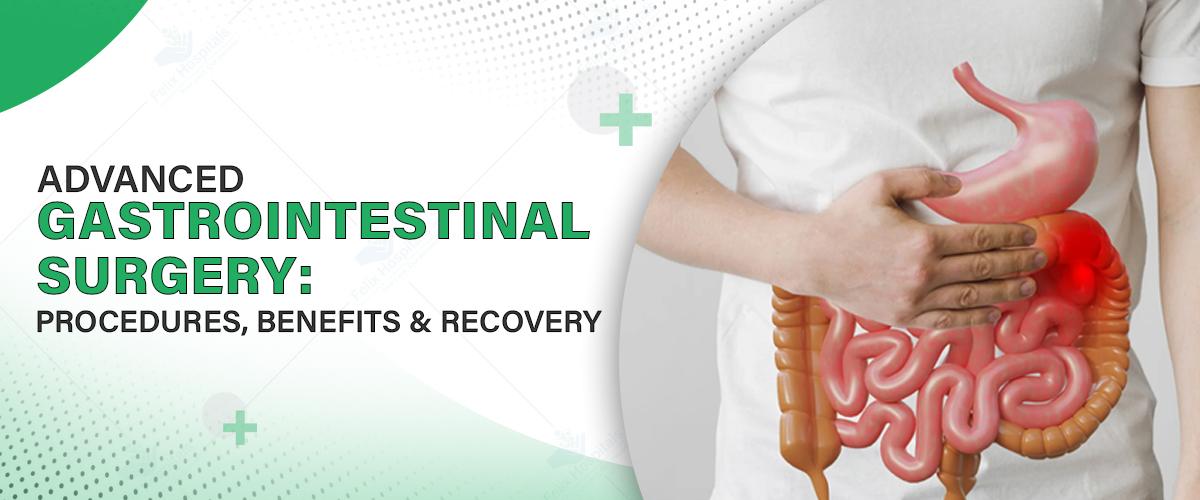
l recovery in 4–6 Digestive disorders impact millions of individuals globally and tend to disrupt everyday life with chronic pain, discomfort, and malnutrition. Although most gastrointestinal (GI) disorders can be treated with medication, diet, and lifestyle modifications, some patients need surgery to regain health and avoid complications.
Advanced gastrointestinal surgery involves specialized procedures intended to cure complicated or chronic conditions of the digestive system. Most such surgeries are minimally invasive, involving laparoscopic or robotic procedures, which minimize recovery time, scarring, and post-operative complications. The best GI surgery hospital in Noida can treat any condition, including hernias, chronic acid reflux, and more complex conditions like colorectal cancer.
Are you in need of specialized surgical care? Schedule a consultation now at Noida's top GI surgery hospital by calling +91 9667064100.
Advanced gastrointestinal surgery covers a broad spectrum of intricate procedures aimed at the organs that are responsible for digestion — the esophagus, stomach, intestines, liver, pancreas, gallbladder, and colon. They treat issues which cannot be treated with medication or non-surgical treatments.
Types of advanced GI surgery are:
Laparoscopic GI surgery (keyhole surgery)
Esophageal surgery for GERD, Barrett's esophagus, or achalasia
Gastric surgery for ulcers or tumors
Colorectal surgery for cancer, diverticulitis, or IBD
Pancreatic or liver surgery
Gallbladder removal
Bariatric surgery for obesity-related GI problems
The type of surgery would depend on the diagnosis, severity, and overall health of the patient.
Most gastrointestinal problems start mildly but may worsen if left untreated. Some common symptoms that may suggest surgical evaluation include:
Severe or chronic belly pain
Swallowing difficulties or pain
Persistent acid reflux or heartburn
Blood in stool or ongoing constipation
Unusual, unexplained weight loss
Vomiting, bloating, or nausea that recurs often
Yellow color to the skin or eyes (jaundice)
Ongoing fatigue or anemia due to hidden bleeding
If you notice any of these symptoms, seek immediate medical help for proper diagnosis and treatment.
There are some risk factors that raise the chances of getting GI disorders. Knowledge about them aids prevention as well as early intervention:
Poor eating habits (low-fiber, high-fat, or spicy diets)
Obesity and lack of exercise
Smoking and heavy drinking
Personal or family history of gastrointestinal cancer or disease
Chronic infection with H. pylori
Long-standing IBD or GERD
Stress and specific autoimmune disorders
Early screening is the way to go, particularly if you've got a personal or family history of GI problems.
Quit looking for "the best gastrointestinal surgeon near me" because professional diagnoses, beginning with a history and physical examination, are more common in Noida. Physicians apply a combination of imaging and lab tests, such as:
Endoscopy or colonoscopy to visually examine internal organs
Ultrasound and CT/MRI scans for structural information
Blood tests to test for infection, inflammation, or anemia
Stool tests for parasites, blood, or inflammatory markers
Biopsy to rule out or confirm cancer
Precise diagnosis enables proper treatment and avoids avoidable complications.
Surgery is not necessary for every digestive disorder. Mild to moderate conditions are treated with:
Medications – Antacids, antibiotics, anti-inflammatories, or immunosuppressants
Dietary modifications – Fiber increase, probiotics, or elimination diets
Lifestyle modifications – Weight loss, smoking cessation, and stress reduction
Physical therapy or pelvic floor exercises for functional problems
However, if these methods are ineffective or if the condition becomes serious or life-threatening, such as in cases of cancer, obstruction, or perforation, surgery is the only option.
Discover gastrointestinal surgery treatment options designed for your situation. Based on the diagnosis, the surgery method can differ:
Tiny cuts, faster recovery, small scarring
Usually applied in hernia repair, gallbladder removal, and small cancers
Indicated for complicated conditions such as large tumors, perforations in emergencies, or malignant cancers
For long-standing GERD, ulcers, or tumors
Aids in cancer, IBD (Crohn's disease or ulcerative colitis), and diverticulitis
For liver cysts, tumors, or bile duct obstructions
Weight-loss Bariatric Surgery
Aids in obesity-related GI complications such as fatty liver and GERD
Each operation is meticulously planned and executed by skilled GI surgeons with state-of-the-art technology.
Surgery can be life-altering. Advantages are:
Total elimination of chronic digestive symptoms
Enhanced quality of life and energy
Improved nutrient uptake and metabolism
Potential prevention or elimination of cancerous tissue
Less reliance on lifelong medication
Short hospital stays for minimally invasive techniques
Early surgery can significantly reduce complications and improve outcomes.
Recovery is manageable, though it takes time. What to expect:
Hospital stay: 1–7 days, depending on procedure
Pain management: Managed with medication and supportive care
Dietary support: Liquid diet first, and then progress to solids
Follow-ups: Wound care, imaging, and blood work
Return to daily activity: Light activity 1–2 weeks after; ful weeks
You will get specific recovery guidelines, including diet plans, exercise tips, and long-term care tips from your surgery team.
Don't neglect chronic digestive symptoms. Book an appointment with the top GI surgeon in Noida and gain control over your digestive health today.
Leading-edge gastrointestinal surgery isn't merely symptom treatment—it's about regaining health, self-assurance, and overall well-being. Thanks to innovations in surgical procedures and diagnostics, today's patients are enjoying improved results, quicker healing, and few complications. Whether you're faced with chronic acid reflux, gallstones, or an intricate GI malignancy, skilled surgical treatment can make a substantial impact.
At our reliable GI surgery hospital in Noida, we offer best-in-class care, customized treatment plans, and empathetic care during your process. Curious about the cost of gastrointestinal surgery in Noida? Talk to our team for an honest quote and consultation with a specialist GI surgeon. Take the first step to a healthier tomorrow—your gut will bless you!
Q1. How can I tell if I require GI surgery or medication?
Ans: When symptoms do not go away on medication or if tests reveal severe problems such as tumors, blockage, or inflammation, surgery could be required. A GI specialist will determine.
Q2. Is laparoscopic GI surgery always an option?
Ans: Laparoscopic surgery is preferred but not always an option. Complicated or emergency situations might need open surgery depending on your situation.
Q3. Will I be on a special diet following GI surgery?
Ans: Yes, you begin with liquids and advance to solids over time. Dietary requirements are based on the procedure and how well you're healing.
Q4. How long does it take to recover from GI surgery?
Ans: 2 to 6 weeks is standard for most procedures. Minimally invasive surgeries tend to heal more quickly than open surgeries.

Learn about open and laparoscopic pyeloplasty, their benefits, and when they’re used to treat kidney blockage.
A gastrointestinal fistula is an abnormal opening that develops between the stomach, intestines, or other digestive organs, often causing leakage of digestive fluids. Treatment typically involves infection control, nutritional support, medications, and in


Subscribe to our
© Copyright 2026. All Rights Reserved by Felix Healthcare Private Limited
Design and development by :


 +(91)9667064100
 Emergency : +(91)9667064100