 Emergency:
  WhatsApp


Subscribe to our
Quick Answer: Can Vegetarians Get Enough Protein?
Yes, A well-planned vegetarian diet can easily meet daily protein needs through lentils, dairy, soy, nuts, and seeds. Most adults need roughly 0.8 to 1 gram of protein per kilogram of body weight per day, more if you exercise regularly. The key is variety and consistency, not a single superfood.
Have a nutrition question? Call Felix Hospitals: +91-9667064100, 24x7 Patient Care.
Protein needs vary by body weight, age, and activity level, but general guidance from nutrition bodies gives a useful starting point.
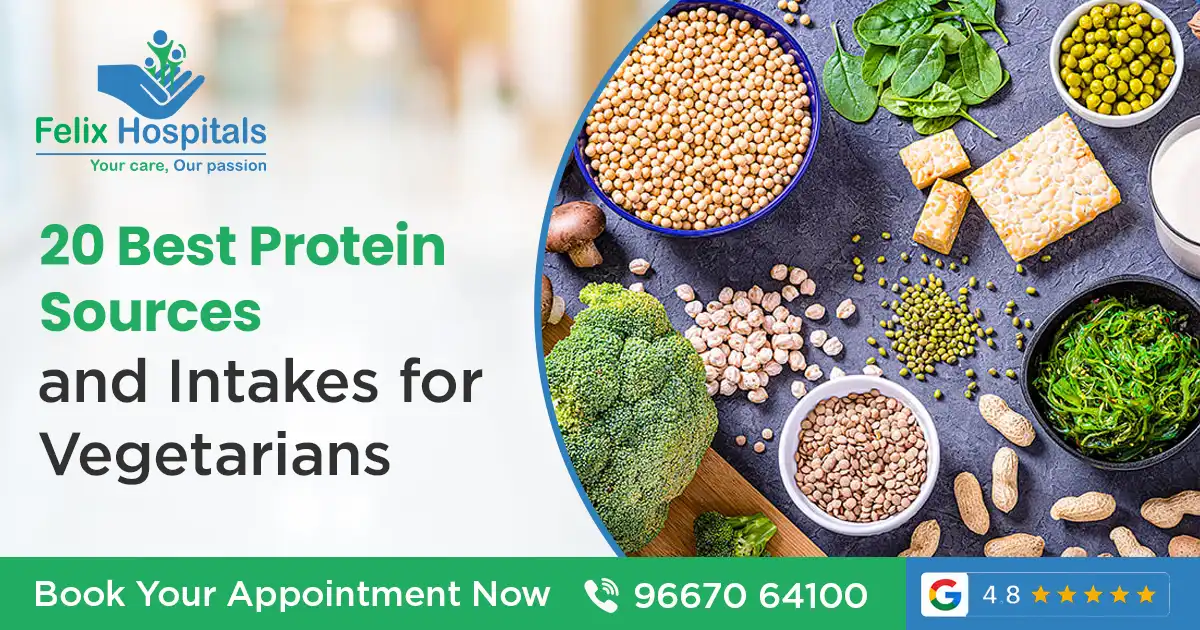
A high vegetarian protein diet built from a mix of sources across the day, rather than one large protein-heavy meal, is generally easier for the body to use well.
1. Lentils (Dal)
A daily staple in Indian kitchens, lentils provide a solid base of protein along with fibre.
2. Chickpeas (Chana)
Versatile in curries, salads, and snacks, chickpeas are one of the most accessible high protein foods vegetarian diets rely on.
3. Rajma (Kidney Beans)
Pairs well with rice for a more complete amino acid profile, a classic and effective combination.
4. Paneer
A concentrated dairy protein source, useful for those who want protein without relying heavily on legumes.
5. Tofu
A soy-based option that absorbs flavor well and works in both Indian and international recipes.
6. Soy Chunks (Soya Nuggets)
Among the highest protein sources by weight in any vegetarian kitchen, useful for curries and stir-fries.
7. Greek Yogurt or Hung Curd
Higher in protein than regular yogurt, a simple addition to breakfast or snacks.
8. Milk
A consistent, easy source of protein when consumed regularly through the day.
9. Cottage Cheese
Similar to paneer in protein content, useful as a savory or mildly sweet snack.
10. Almonds
A convenient snack that combines protein with healthy fats, easy to carry through the day.
11. Peanuts
An affordable, widely available protein rich vegetarian food, useful in chutneys, snacks, and curries.
12. Pumpkin Seeds
Small but protein dense, easy to sprinkle over salads or eat on their own.
13. Chia Seeds
Useful in smoothies or soaked overnight, adding both protein and fiber.
14. Quinoa
A complete protein containing all essential amino acids, a good rice substitute for those building a high vegetarian protein diet.
15. Oats
A practical breakfast option that adds steady protein along with fibre.
16. Green Peas
An underrated vegetable source of protein, easy to add to most Indian dishes.
17. Sprouts (Moong, Chana)
Easy to digest and protein dense, a common and effective breakfast or snack choice.
18. Whole Wheat (Atta)
Contributes meaningful protein when eaten as a daily staple through rotis and bread.
19. Broccoli
Higher in protein than most vegetables, a useful addition to a varied vegetarian plate.
20. Spinach (Palak)
A leafy green that adds both protein and iron, especially useful for vegetarians at risk of iron deficiency.
Food | Approximate Protein per 100g |
Soy chunks | Around 50g, one of the highest plant sources |
Lentils (cooked) | Around 9g |
Paneer | Around 18g |
Peanuts | Around 25g |
Greek yogurt | Around 10g |
Quinoa (cooked) | Around 4 to 5g |
Chickpeas (cooked) | Around 9g |
These are approximate values and can vary slightly by brand and preparation method. They are meant as a general reference, not a precise nutritional label.
Experienced Dietitian Team
Comprehensive Nutrition Support
Patient-Centred Care
Call Felix Hospitals: +91-9667064100, 24x7 Patient Care
General protein intake guidance in this article is consistent with recommendations from the Indian Council of Medical Research (ICMR), the National Institute of Nutrition (NIN), and international nutrition bodies including Harvard Health and the British Heart Foundation.
Lentils, paneer, soy chunks, and chickpeas are practical, affordable, and easy to include in everyday Indian meals.
Yes, with adequate total protein intake and resistance exercise, a vegetarian diet built from varied sources can support muscle gain effectively.
Both are good options. Paneer has slightly more protein and fat per 100 grams, while tofu is lower in fat and suitable for those avoiding dairy.
Focus on combining lentils, dairy, soy, nuts, and seeds across meals rather than depending on any single food.
Protein alone does not treat iron deficiency. Pairing iron rich foods like spinach with vitamin C sources improves absorption, but a doctor should evaluate and guide treatment for anaemia.
Dt. Shivani Ahlawat is a Dietician specializing in personalized nutrition plans, weight management, and healthy lifestyle guidance for overall well-being.
Mothers think a lot, when it comes to giving right nutrition to her baby. And she also has many questions like
Urological health is vital for well-being, influenced by diet and exercise. Good nutrition and activity help prevent conditions like UTIs, kidney stones, and cancers.


Subscribe to our
© Copyright 2026. All Rights Reserved by Felix Healthcare Private Limited
Design and development by :


 +(91)9667064100
 Emergency : +(91)9667064100