 Emergency:
  WhatsApp

Subscribe to our
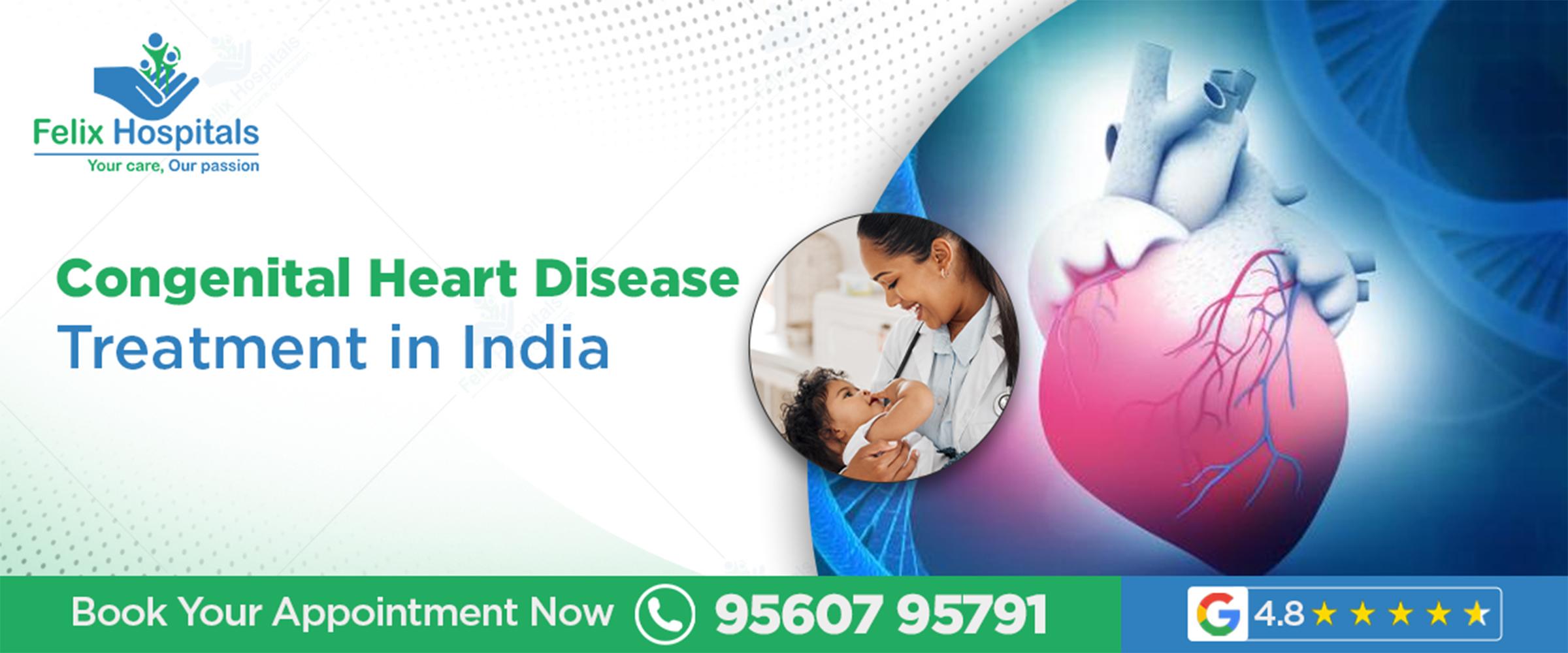
Congenital Heart Disease (CHD) refers to structural abnormalities in the heart that are present at birth. These defects can affect the heart walls, valves, arteries, or veins, leading to altered blood flow, oxygenation, and overall cardiovascular function. While some defects are mild and asymptomatic, others require early intervention to prevent complications such as heart failure, delayed growth, or life-threatening arrhythmias.
India has become a globally preferred destination for the treatment of congenital heart defects due to the combination of highly skilled pediatric and adult cardiac surgeons, state-of-the-art heart centres, and internationally recognised treatment protocols. Advanced imaging technologies, minimally invasive procedures, and structured rehabilitation programs ensure excellent outcomes for patients from all over the world.
Schedule Congenital Heart Disease Treatment at Felix Hospital, Noida India Call Us: +919560795791 And WhatsApp +919560795791 us now. Our team will help you book the best treatment and arrange your medical visa hassle-free.
Congenital heart defects are diverse, and treatment is tailored to the type and severity of the condition. Common types include:
Atrial Septal Defect (ASD)
A hole in the wall separating the two atria, allowing oxygen-rich and oxygen-poor blood to mix.
Ventricular Septal Defect (VSD)
A hole in the wall separating the two ventricles, often requiring early surgical repair in infants.
Patent Ductus Arteriosus (PDA)
Persistence of a fetal blood vessel that normally closes after birth, potentially causing heart strain and lung problems.
Tetralogy of Fallot (TOF)
A complex defect involving four abnormalities: VSD, pulmonary stenosis, right ventricular hypertrophy, and overriding aorta.
Transposition of the Great Arteries (TGA)
The positions of the pulmonary artery and aorta are switched, impairing oxygen delivery.
Coarctation of the Aorta
Narrowing of the aorta, leading to high blood pressure and heart strain.
Other Complex or Rare Defects
Including single ventricle physiology, truncus arteriosus, or pulmonary atresia, which may require staged surgeries or heart transplantation.
The exact cause of most congenital heart defects remains unknown, but several factors increase risk:
Understanding these risk factors helps doctors counsel families and plan timely interventions.
Symptoms vary depending on the defect type and severity. Early detection, especially in infants and children, is crucial. Common signs include:
Early recognition allows timely treatment and reduces the risk of long-term complications.
If left untreated, CHD can lead to serious health issues, including:
Timely treatment significantly lowers these risks and improves quality of life.
Diagnosis of congenital heart defects involves a combination of physical assessment, imaging, and laboratory tests:\
Indian heart centres provide these advanced diagnostic facilities with international standards of accuracy and safety.
Treatment is customised based on the type, severity, and age of the patient. Options include:
Certain defects may initially be managed with drugs to reduce symptoms, control blood pressure, or prevent heart failure.
Techniques such as cardiac catheterization allow closure of small defects or balloon dilation of narrowed vessels without open-heart surgery.
Open-heart surgeries remain the standard for complex defects. Common procedures include patch repair of septal defects, valve reconstruction, or complete correction of complex defects such as Tetralogy of Fallot.
Some CHD patients require valve surgery if structural anomalies affect valve function.
Rarely, severe congenital defects not amenable to repair may require transplantation.
Indian cardiac centres have internationally trained surgeons who perform these procedures with precision and high success rates.
The cost of CHD treatment in India is significantly lower than in the US, Europe, or the Middle East, making it an attractive option for international patients. Costs vary depending on:
Despite variations, India provides transparent pricing and high-quality care without compromising on international safety and outcome standards.
India is recognized globally for pediatric and adult cardiac care, offering a unique combination of affordability, expertise, and advanced technology:
Experienced Cardiac Surgeons: Specialists trained in India and abroad with vast experience in complex CHD cases.
State-of-the-Art Facilities: Advanced ICUs, cath labs, and imaging technology.
Multidisciplinary Heart Teams: Cardiologists, cardiac surgeons, anesthetists, and rehabilitation specialists collaborate to provide comprehensive care.
International Patient Support: English-speaking coordinators, medical visa assistance, and personalised travel planning.
High Success Rates: Outcomes comparable to top global cardiac centres.
Shorter Waiting Times: Quick access to treatment, essential for urgent pediatric cases.
These factors make India a reliable and convenient destination for families seeking CHD treatment abroad.
Post-treatment recovery depends on the type of procedure and patient age. Typically:
International patients benefit from structured follow-up programs that allow continued care after returning home.
Congenital Heart Disease is a life-altering condition that requires timely diagnosis and expert management. India offers world-class treatment for CHD through highly skilled surgeons, advanced technology, and internationally recognised protocols. For international patients, India provides an ideal balance of affordability, quality, and comprehensive care, ensuring safe treatment, faster recovery, and long-term heart health.
Yes, Indian cardiac centres follow internationally accepted protocols with highly experienced surgeons and modern infrastructure.
Most patients plan a stay of 2–4 weeks, including surgery, recovery, and initial follow-up.
Yes, follow-up can be coordinated via teleconsultations and local cardiologists for continued care.
Yes, many centres offer catheter-based interventions and minimally invasive surgeries with excellent outcomes.
Early diagnosis, type of defect, experienced surgeons, and structured post-operative care are key determinants.
Sudden cardiac arrhythmias can be life-threatening when they occur without warning. For patients at high risk of dangerous heart rhythm disturbances, timely intervention can mean the difference between life and death. AICD Implantation in India has emerge
Sudden cardiac arrhythmias can be life-threatening when they occur without warning. For patients at high risk of dangerous heart rhythm disturbances, timely intervention can mean the difference between life and death. AICD Implantation in India has emerge
India has become a leading destination for Balloon Septostomy, especially for newborns and infants with complex congenital heart defects requiring urgent intervention. With advanced pediatric cardiac units, experienced pediatric cardiologists, and cost-ef

India has become a preferred destination for Balloon Valvuloplasty, offering advanced interventional cardiology care, experienced specialists, and cost-effective treatment aligned with global standards
Subscribe to our
© Copyright 2026. All Rights Reserved by Felix Healthcare Private Limited
Design and development by :


 +(91)9667064100
 Emergency : +(91)9667064100