 Emergency:
  WhatsApp

Subscribe to our
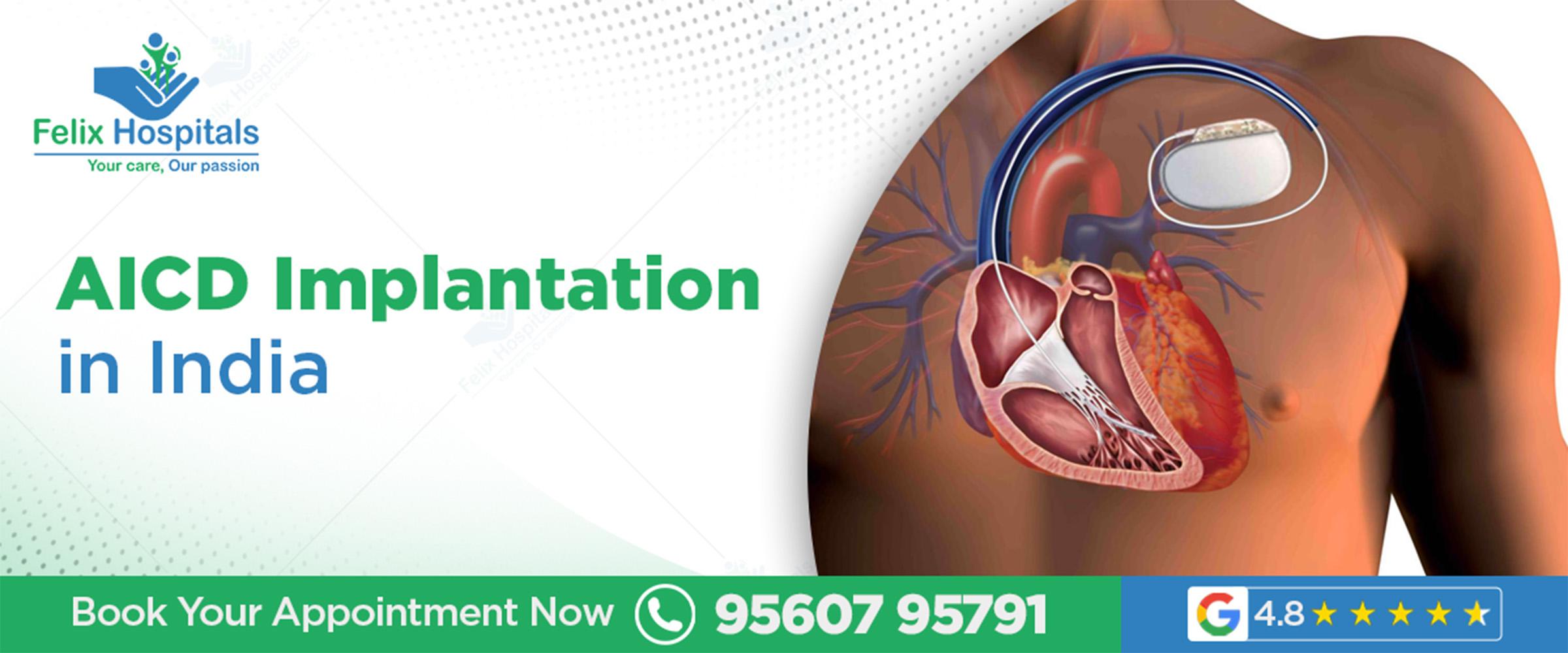
Sudden cardiac arrhythmias can be life-threatening when they occur without warning. For patients at high risk of dangerous heart rhythm disturbances, timely intervention can mean the difference between life and death. AICD Implantation in India has emerged as a trusted option for international patients seeking advanced cardiac care, experienced specialists, and globally aligned treatment protocols at accessible costs.
India’s leading cardiac centres combine cutting-edge technology with internationally trained cardiologists, offering comprehensive care for patients requiring life-saving implantable devices. From diagnosis to long-term follow-up, international patients receive structured, transparent, and coordinated care throughout their treatment journey.
Schedule AICD Surgery at Felix Hospital, Noida India Call Us: +919560795791 And WhatsApp +919560795791 us now. Our team will help you book the best treatment and arrange your medical visa hassle-free.
Understanding the Function of Automatic Implantable Cardioverter Defibrillator is essential for patients considering this treatment. An AICD is a small electronic device implanted under the skin, usually near the collarbone, that continuously monitors the heart’s rhythm.
When the device detects a dangerously fast or irregular heartbeat, it delivers a controlled electrical shock to restore a normal rhythm. Unlike a pacemaker, which primarily regulates slow heartbeats, an AICD is designed to prevent sudden cardiac arrest caused by ventricular arrhythmias.
Key Functions of an AICD:
Continuous heart rhythm monitoring
Automatic detection of life-threatening arrhythmias
Delivery of corrective electrical therapy when required
Storage of heart rhythm data for clinical review
Patients may be advised to undergo AICD implantation if they:
Have survived sudden cardiac arrest.
Suffer from recurrent ventricular tachycardia or fibrillation.
Have weakened heart muscles due to cardiomyopathy.
Are at high risk due to inherited or structural heart conditions.
Early evaluation and timely implantation significantly improve survival rates and long-term outcomes.
The Automatic Implantable Cardioverter Defibrillator Implantation Procedure is a minimally invasive cardiac intervention performed under local anesthesia with sedation or general anesthesia, depending on patient condition.
Pre-procedure assessment: Cardiac imaging, ECG, blood tests, and risk evaluation
Device placement: A small incision is made below the collarbone
Lead insertion: Thin wires are guided through veins into the heart chambers
Device connection: The AICD generator is connected to the leads
Testing: The device is tested to ensure accurate rhythm detection
Closure: The incision is closed and dressed
The procedure typically takes 1–2 hours, and most patients are mobilized within 24 hours.
The Benefits of Automatic Implantable Cardioverter Defibrillator extend beyond immediate rhythm correction, offering long-term protection and peace of mind for patients and families.
Key Benefits:
Reduces the risk of sudden cardiac death
Provides immediate response to dangerous arrhythmias
Allows patients to lead active, monitored lives
Improves long-term survival rates
Enables remote monitoring and follow-up
For international patients, these benefits are further enhanced by India’s integrated cardiac rehabilitation and follow-up programs.
Like any medical procedure, AICD implantation carries potential risks. Understanding Automatic Implantable Cardioverter Defibrillator Risks and Complications helps patients make informed decisions.
Possible Risks Include:
Infection at the implant site
Bleeding or bruising
Lead displacement
Inappropriate shocks
Rare device malfunction
Leading hospitals in India minimize these risks through strict infection-control protocols, advanced imaging guidance, and experienced electrophysiology teams.
Recovery is generally smooth, with most patients discharged within 2–3 days. Initial precautions include:
Patients are usually able to return to normal daily activities within a short period, following their doctor’s guidance.
The Cost of AICD Implantation in India is one of the key reasons international patients choose the country for treatment. While costs vary based on device type and hospital infrastructure, India offers significant savings compared to many Western nations.
Factors Affecting Cost:
Type of AICD device (single, dual, or CRT-D)
Hospital facilities and location Surgeon and cardiology team expertise
Length of hospital stay
Despite the affordability, quality standards remain on par with international healthcare benchmarks.
India has become a preferred destination for advanced cardiac device implantation due to several compelling factors:
Key Advantages:
Dedicated care coordinators assist with visas, accommodation, language support, and post-treatment planning.
Patients with an AICD can lead fulfilling, active lives with certain precautions. Regular follow-ups, lifestyle modifications, and adherence to medical advice ensure optimal device performance.
Modern AICDs allow remote monitoring, enabling international patients to stay connected with their treating doctors even after returning home.
Long-Term Monitoring and Follow-Up
Routine device checks are essential to:
Monitor battery life
Review stored heart rhythm data
Adjust device settings if needed
AICD implantation is a life-saving intervention for patients at high risk of sudden cardiac arrhythmias. With advanced infrastructure, experienced specialists, and globally aligned protocols, India offers a safe, effective, and patient-focused destination for this critical cardiac procedure.
International patients benefit not only from clinical excellence but also from coordinated care pathways that support recovery, rehabilitation, and long-term heart health. Choosing AICD implantation in India ensures access to timely, reliable, and compassionate cardiac care.
FAQs
Yes, leading Indian hospitals follow international electrophysiology standards with experienced cardiac specialists.
Most patients require a stay of 7–10 days, including implantation, monitoring, and initial follow-up.
Yes, follow-ups can be coordinated through teleconsultations and routine device checks with local cardiologists.
After recovery, most patients can resume normal activities and travel safely with minimal lifestyle adjustments.
Depending on usage and device type, AICD batteries typically last 5–10 years before replacement.

Subscribe to our
© Copyright 2026. All Rights Reserved by Felix Healthcare Private Limited
Design and development by :


 +(91)9667064100
 Emergency : +(91)9667064100